Artwork
Diana and Callisto
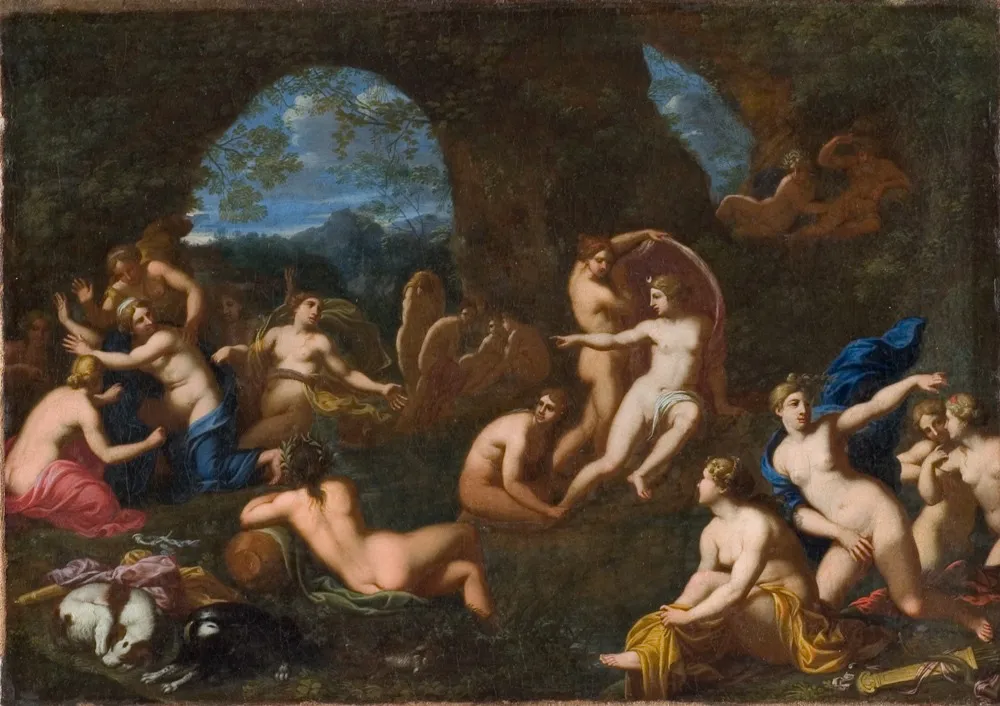
Diana and Callisto is an oil painting by the Flemish Baroque painting artist Johannes van Haensbergen. It dates from 1691 and is held in the collection of the Statens Museum for Kunst.
About this work
Subject & Meaning
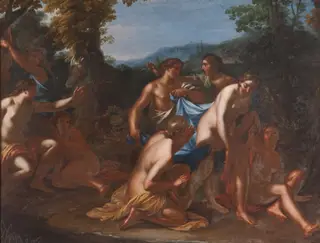
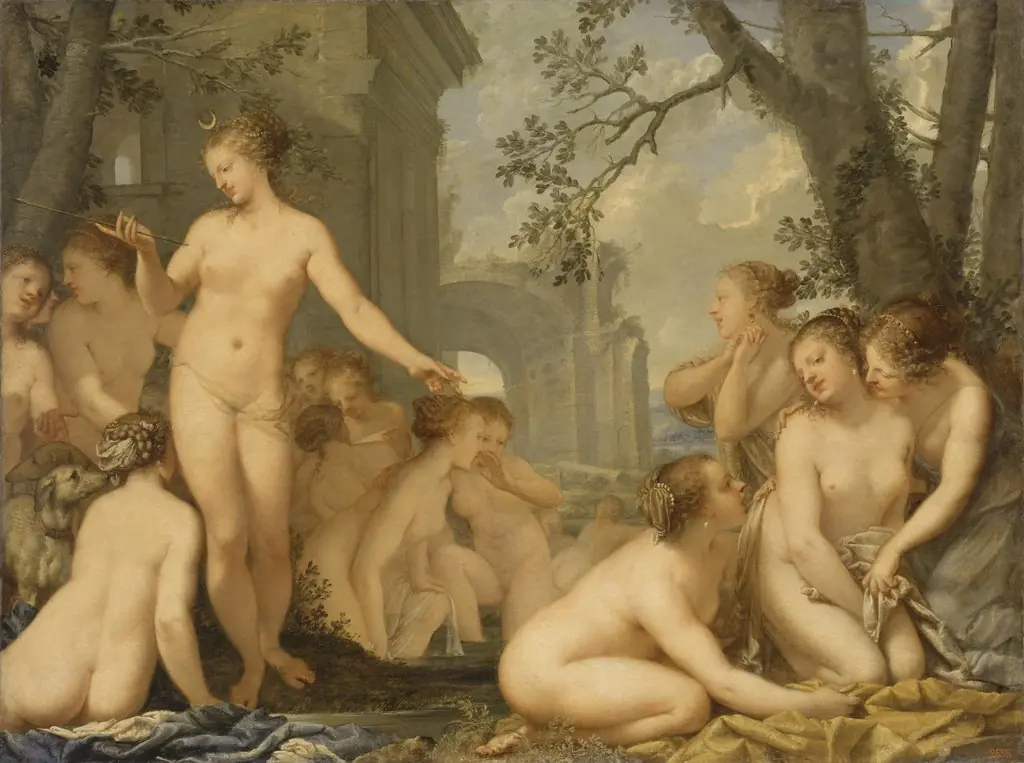
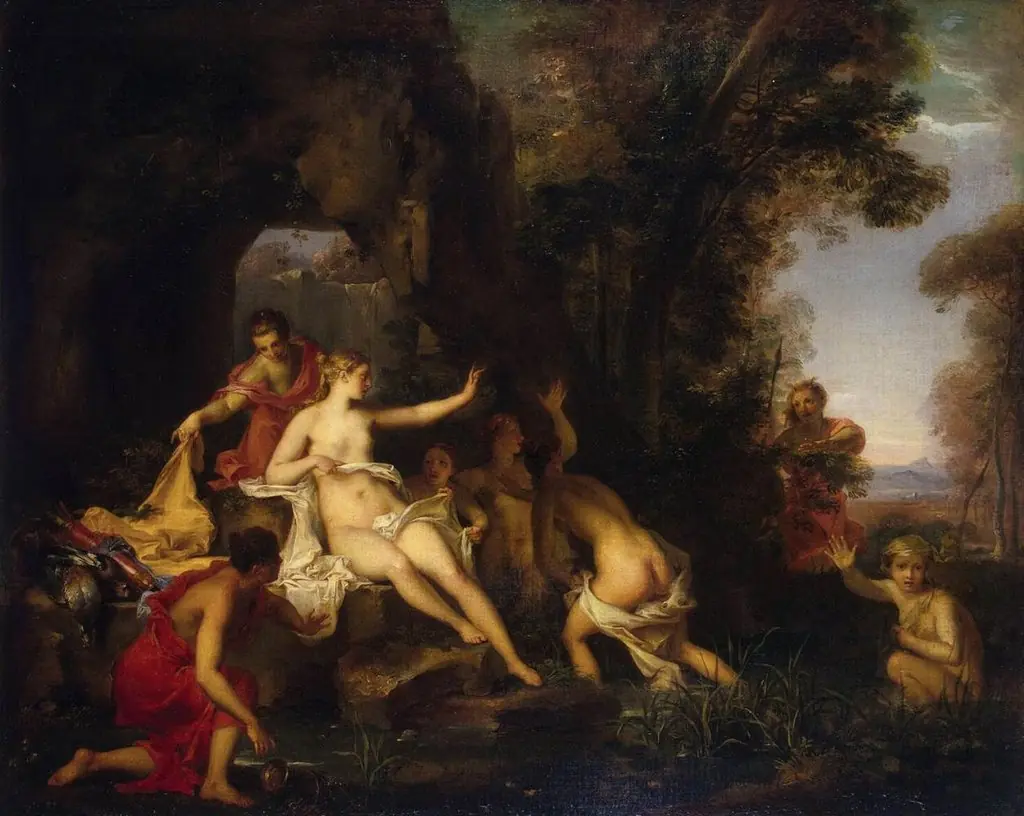
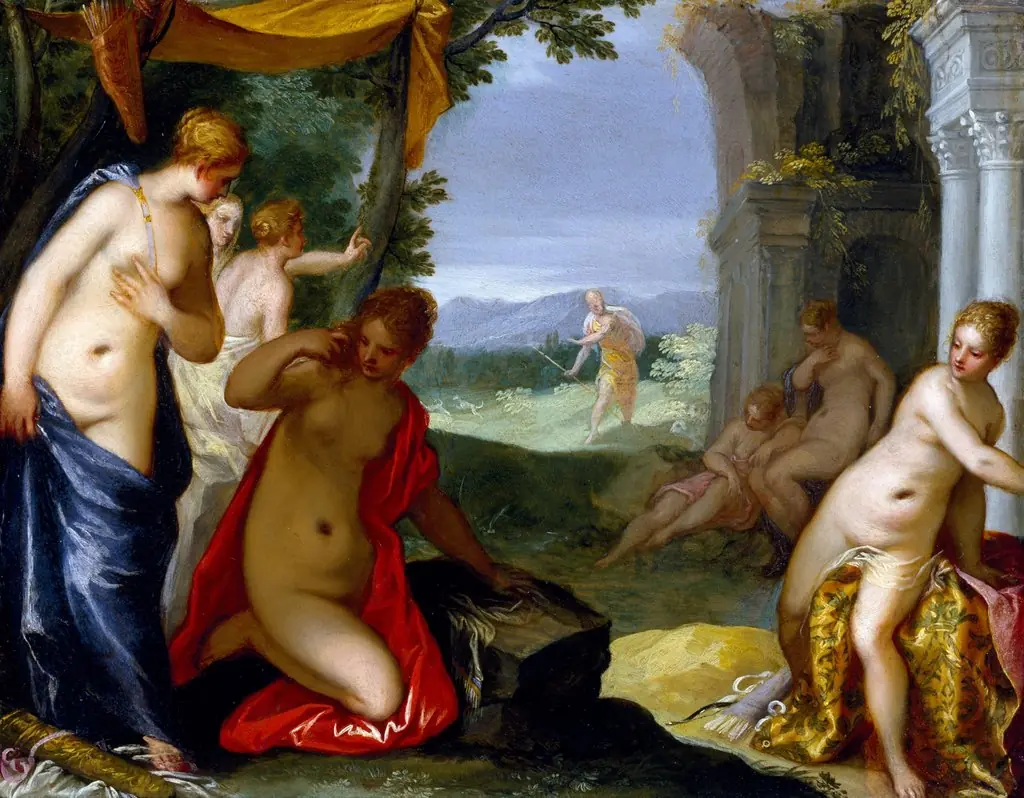
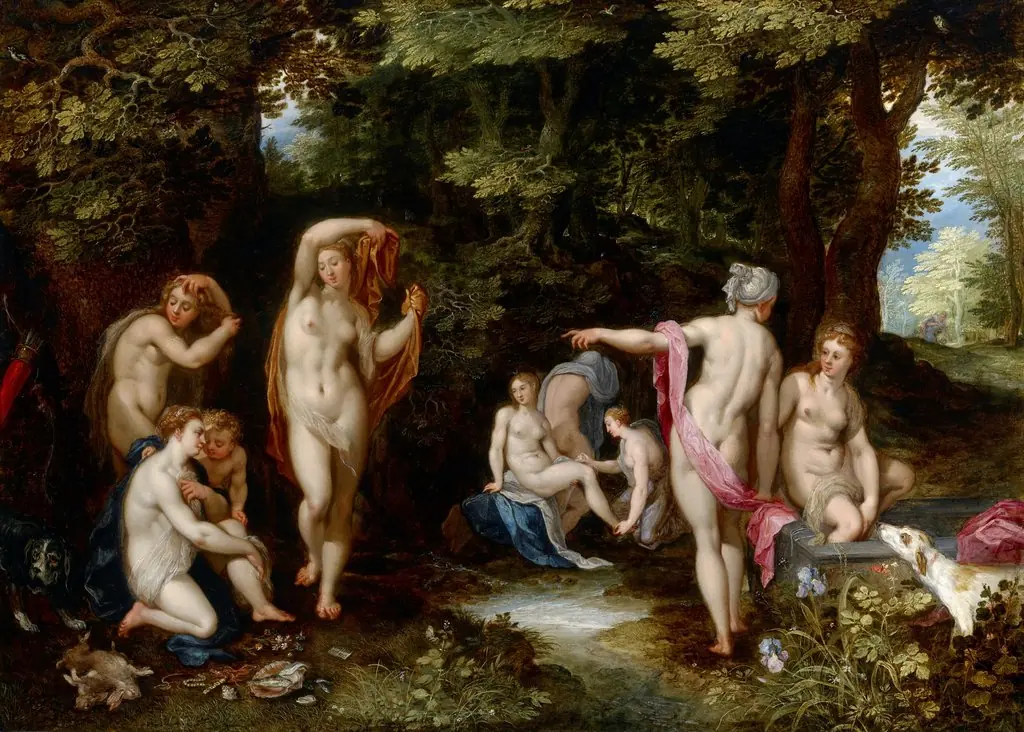
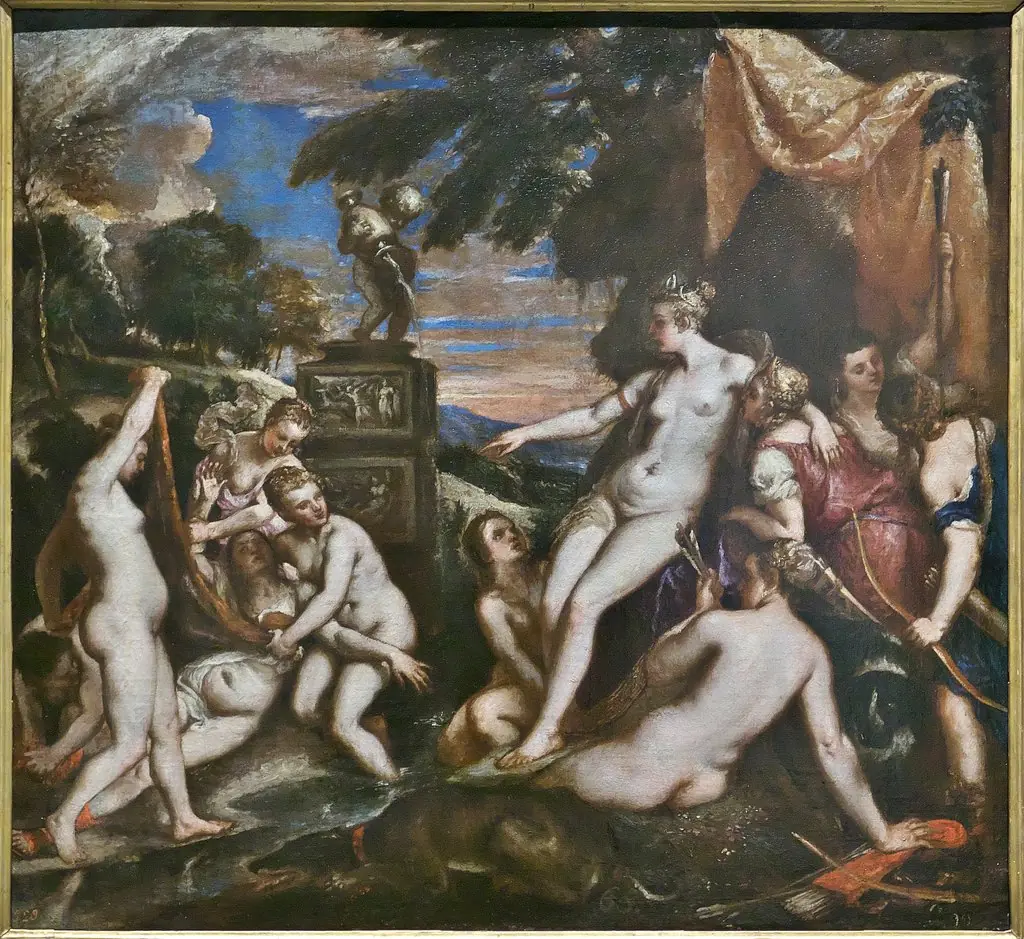
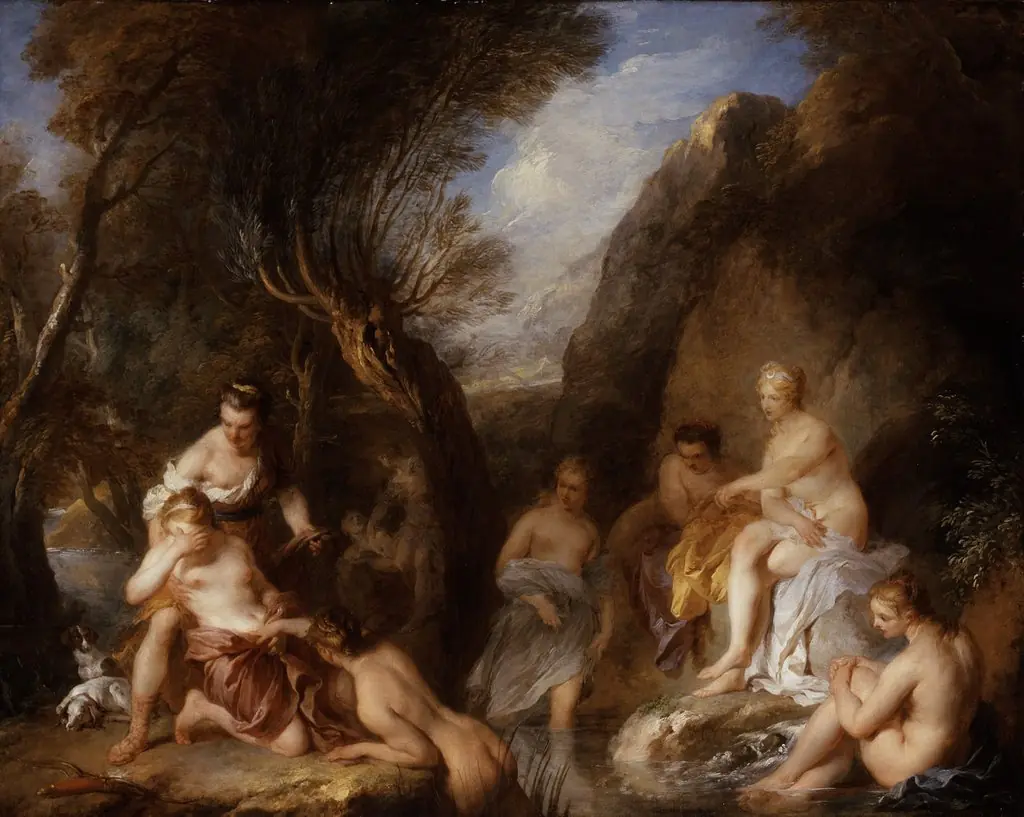
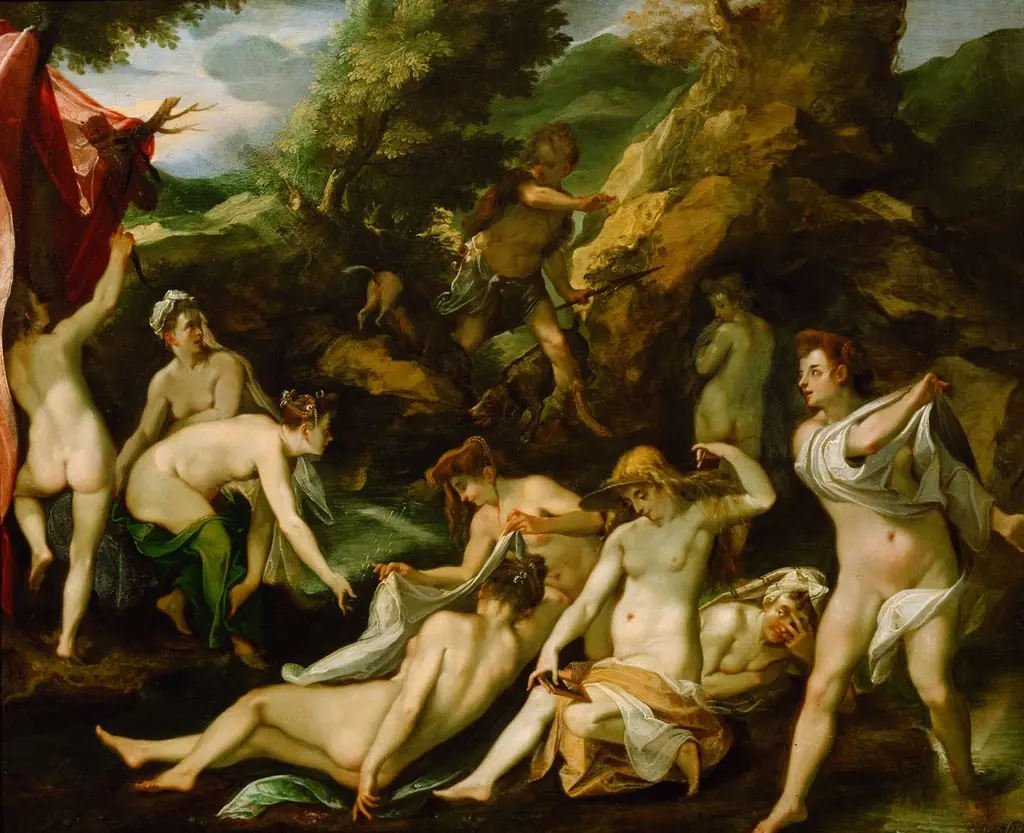
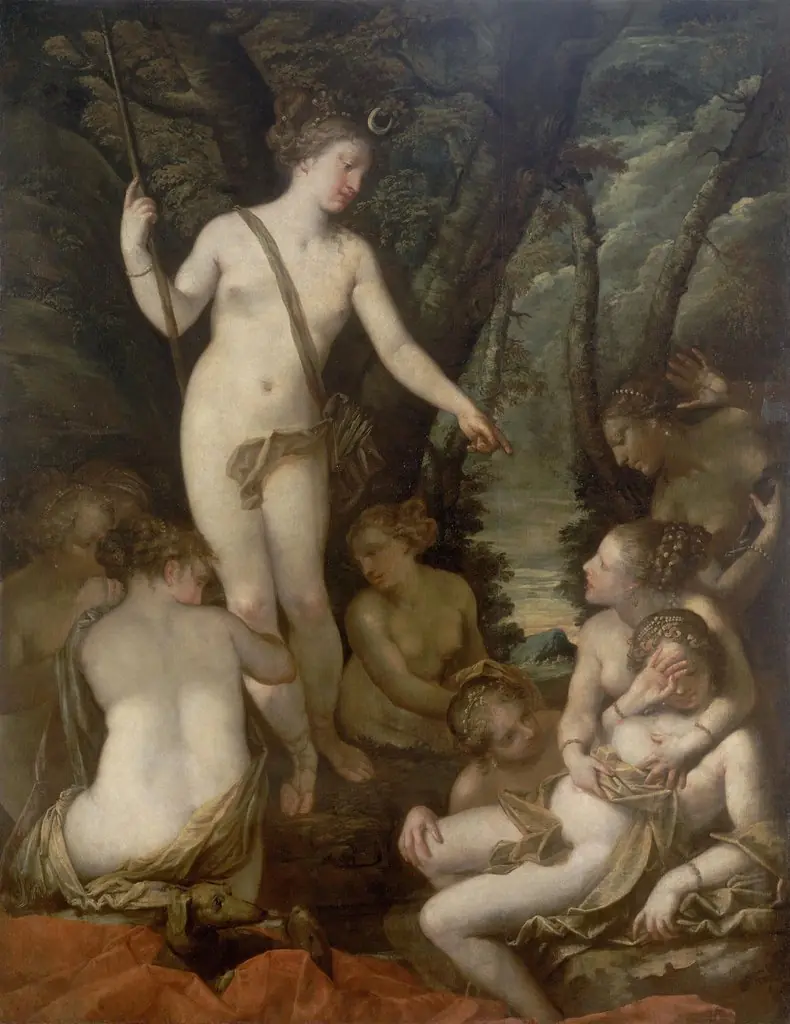
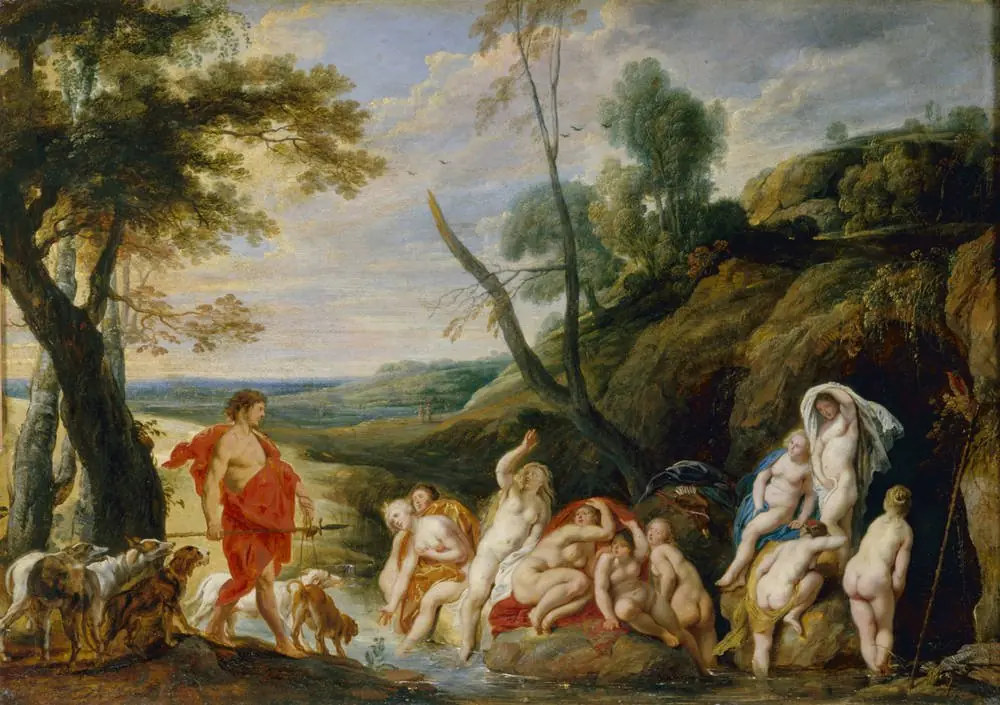
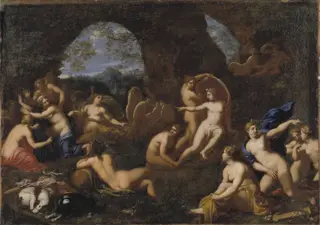
The painting portrays the mythological encounter between the goddess Diana and the nymph Callisto, capturing the moment of revelation and subsequent punishment.
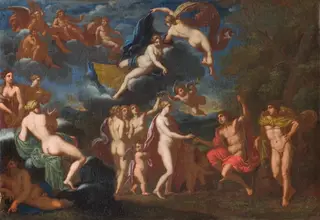
The painting portrays the mythological encounter between the goddess Diana and the nymph Callisto, capturing the moment of revelation and subsequent punishment. In the composition, Diana stands poised with her hounds and a hunting spear, while Callisto, depicted in a vulnerable pose, is shown being surprised by the goddess’s wrath. The work draws on classical mythological themes to explore ideas of chastity, divine retribution, and the fragility of innocence, reflecting Baroque interpretations of myth as moral allegory.
Technique & Style
Diana and Callisto is executed in oil paint on canvas, a standard support for late seventeenth-century Dutch cabinet pictures of mythological subjects. The work is classified as a painting and belongs to the mythological genre. Its substantial dimensions, 365 cm in height by 525 cm in width, indicate a large-scale composition. The handling and stylistic qualities of the painting are not described in the available sources.
History & Provenance
Johannes van Haensbergen created the mythological painting Diana and Callisto in 1681. Executed in oil on canvas, the work measures 365 cm in height and 525 cm in width. The painting is currently held in the collection of the Statens Museum for Kunst.
Context
Johannes van Haensbergen painted Diana and Callisto in 1681, a mythological work depicting the goddess surprised by the nymph's pregnancy. The painting, measuring 365.0 cm by 525.0 cm, is housed in the Statens Museum for Kunst, where it has been part of the collection since its creation. Its reception is noted for embodying Dutch Golden Age approaches to mythological narrative, emphasizing chiaroscuro and sensual realism in line with contemporaries like Jan Steen.
Scholarship highlights its significance within van Haensbergen's oeuvre as an example of 17th-century Dutch mythological painting, reflecting the era's fascination with classical narratives rendered in intimate domestic settings. The work's placement in the museum's collection underscores its recognized cultural value within European art history.
Overview
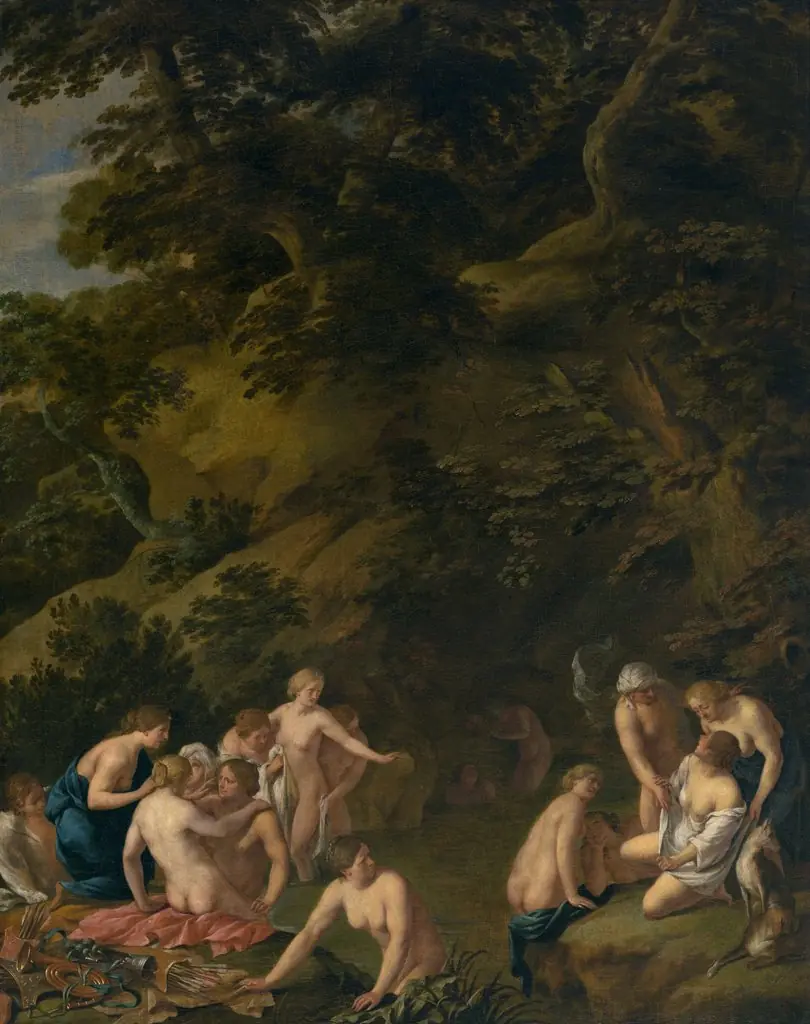
Johannes van Haensbergen’s 1691 oil painting Diana and Callisto presents a mythological scene set in a wooded glade. A group of nude figures surrounds a central tree pierced by an opening, while dogs and other small animals occupy the forest floor. The composition is rendered in a vivid palette dominated by greens and blues, emphasizing the natural setting and the bodies’ anatomical precision.
Artist & collection

Artist
Dutch artist Johannes van Haensbergen painted mythological scenes in the late 1600s, often on copper panels.