Artwork
Egypt and Nubia, Volume II: Entrance to the Tombs of the Kings of Thebes, Bab-El-Malouk
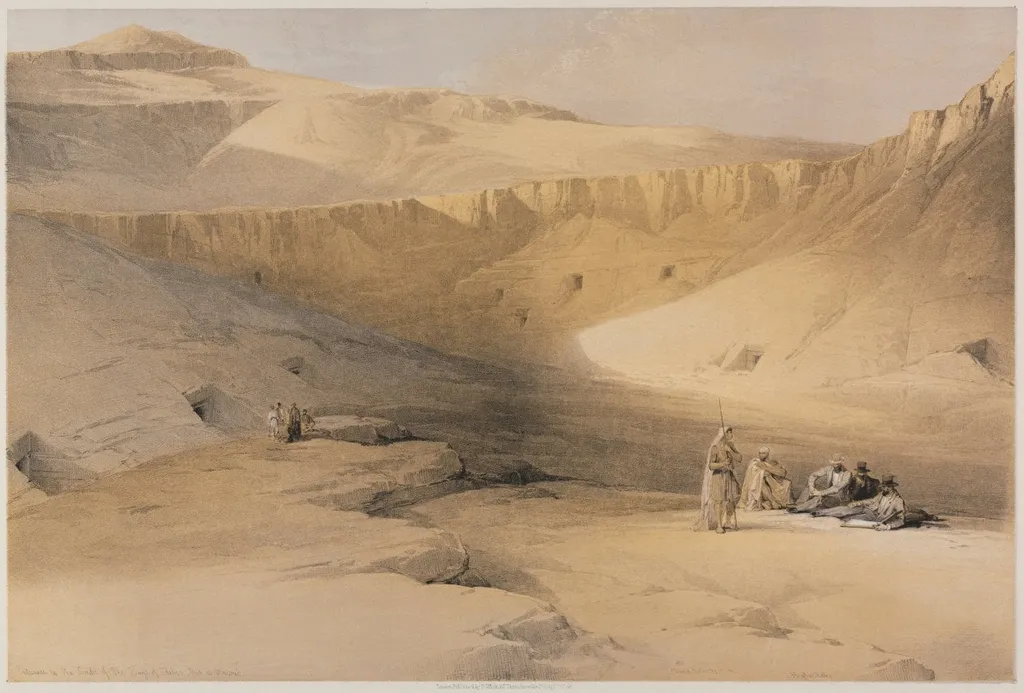
Egypt and Nubia, Volume II: Entrance to the Tombs of the Kings of Thebes, Bab-El-Malouk is a print by the Romanticist artist Louis Haghe. It dates from 1848 and is held in the collection of the Cleveland Museum of Art. This print, 'Entrance to the Tombs of the Kings of Thebes, Bab-El-Malouk', is part of a series depicting Egyptian landscapes and monuments.
- Accession no.
- 2012.151
- Credit line
- Bequest of John Bonebrake
About this work
Overview
This print, 'Entrance to the Tombs of the Kings of Thebes, Bab-El-Malouk', is part of a series depicting Egyptian landscapes and monuments. It showcases the capabilities of 19th-century color lithography.
Subject & Meaning
The scene depicts a tomb entrance carved into rocky cliffs, with two figures standing at the threshold, one holding a lantern and the other gesturing towards the interior.
Technique & Style
The print was created using color lithography, a technique that allowed for the reproduction of complex, multi-colored images. The resulting work is characterized by its vivid colors and detailed rendering.
History & Provenance
The print is based on a watercolor by David Roberts, which was then translated into a lithograph by Haghe. It is now held at the Cleveland Museum of Art.
Context
The print was part of a larger series of works documenting the landscapes and monuments of Egypt and Nubia, catering to European interest in the region during the mid-19th century.
Artist & collection

Artist
Louis Haghe (17 March 1806 – 9 March 1885) was a lithographer and watercolourist from the Netherlands and then the United Kingdom.

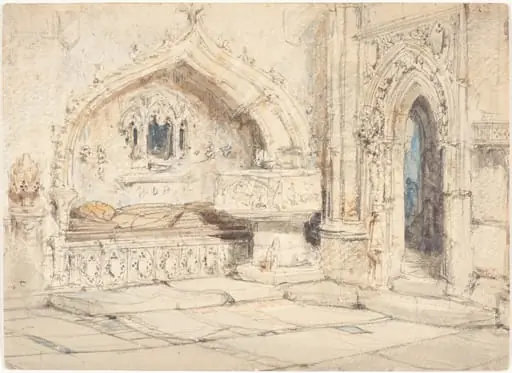 Interior of a Church with a Wall Tomb and Medieval Font
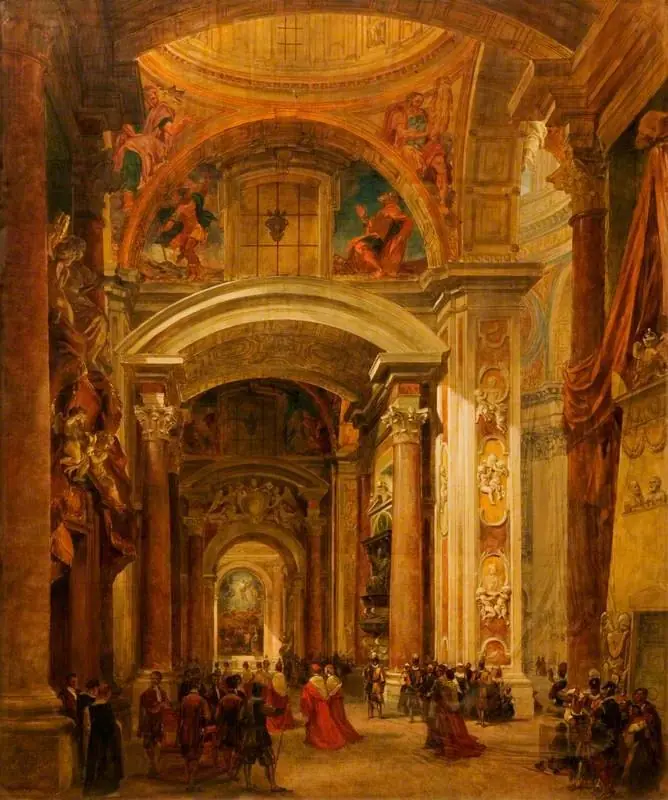 Interior of St Peter's, Rome
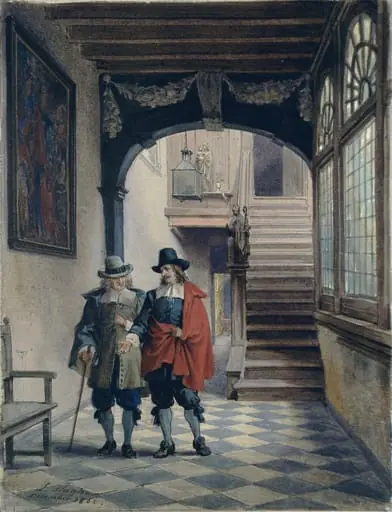 The Corridor, Brewer's Hall, Antwerp
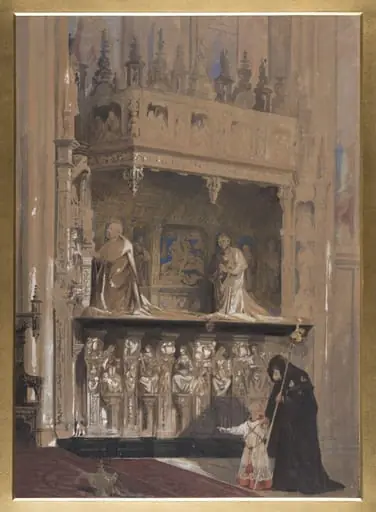 Monument of the Cardinald D'Amboise in Rouen Cathedral
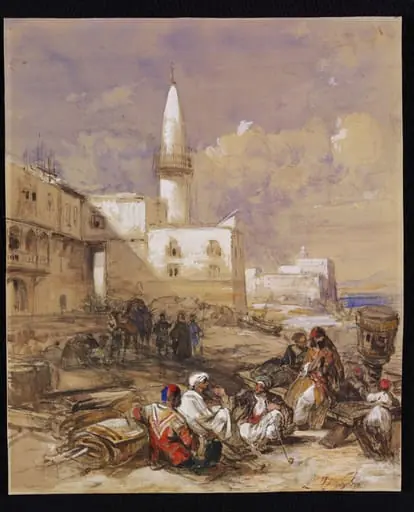 The Quay at Suez
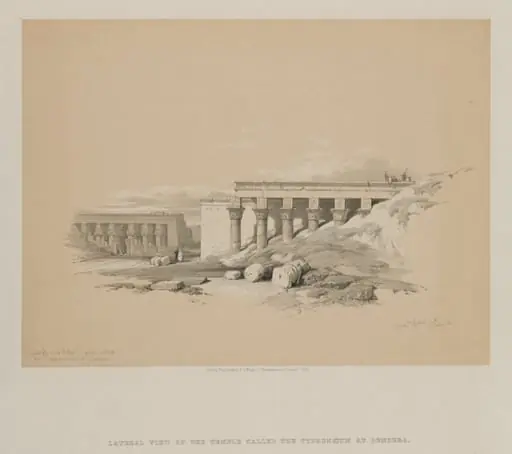 Egypt and Nubia, Volume II: Lateral View of the Temple called The Typhonoeum at Dendera
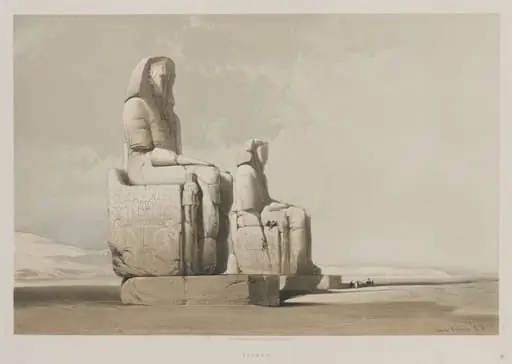 Egypt and Nubia, Volume I: Thebes
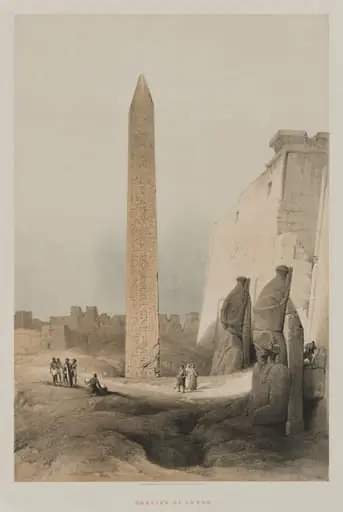 Egypt and Nubia, Volume I: Luxor
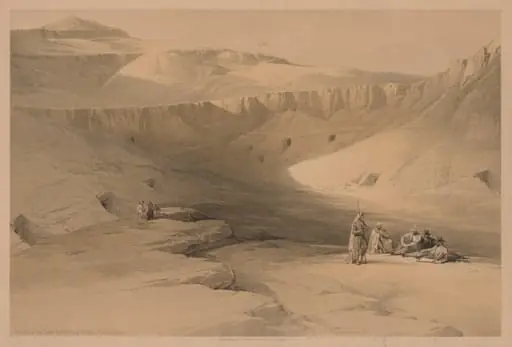 Egypt and Nubia: Volume II - No. 34, Entrance to the Tombs of the Kings of Thebes, Biban-el-molook
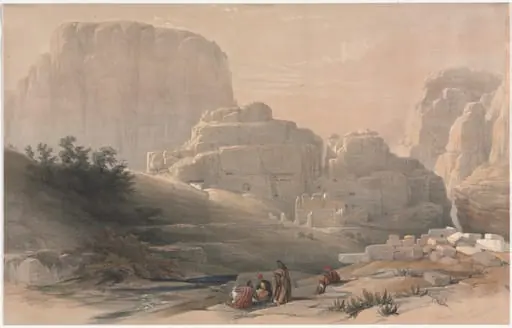 Petra, Lower End of the Valley, Viewing the Acropolis
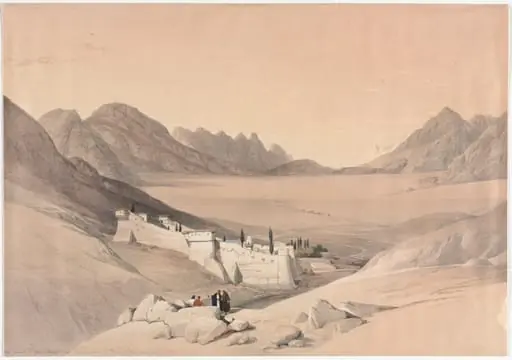 The Convent of St. Catherine, Mount Sinai, Looking towards the Plain of the Encampment
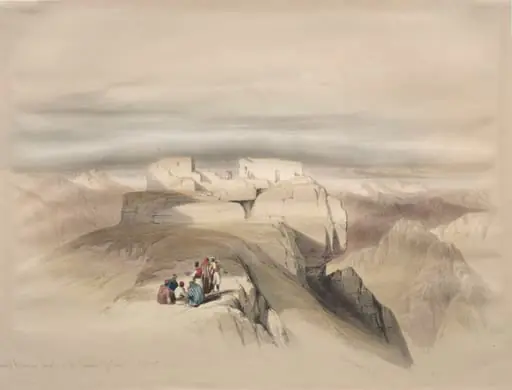 Christian and Mahomedan Chapels on the Summit of Sinai
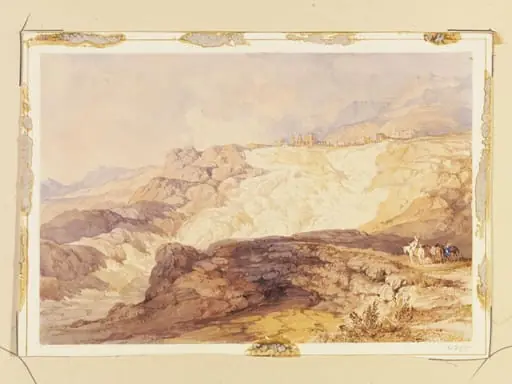 The Ruins of Hierapolis
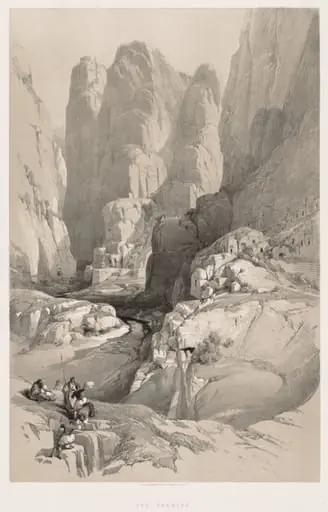 The Holy Land, Syria, Idumea, Arabia, Egypt & Nubia (Vol. III): Entrance to Petra
 Entrance to Petra, the Theatre
 Ascent of the Lower Range of Sinai