Artwork
St. Nicholas, Cole Abbey, Queen Victoria Street
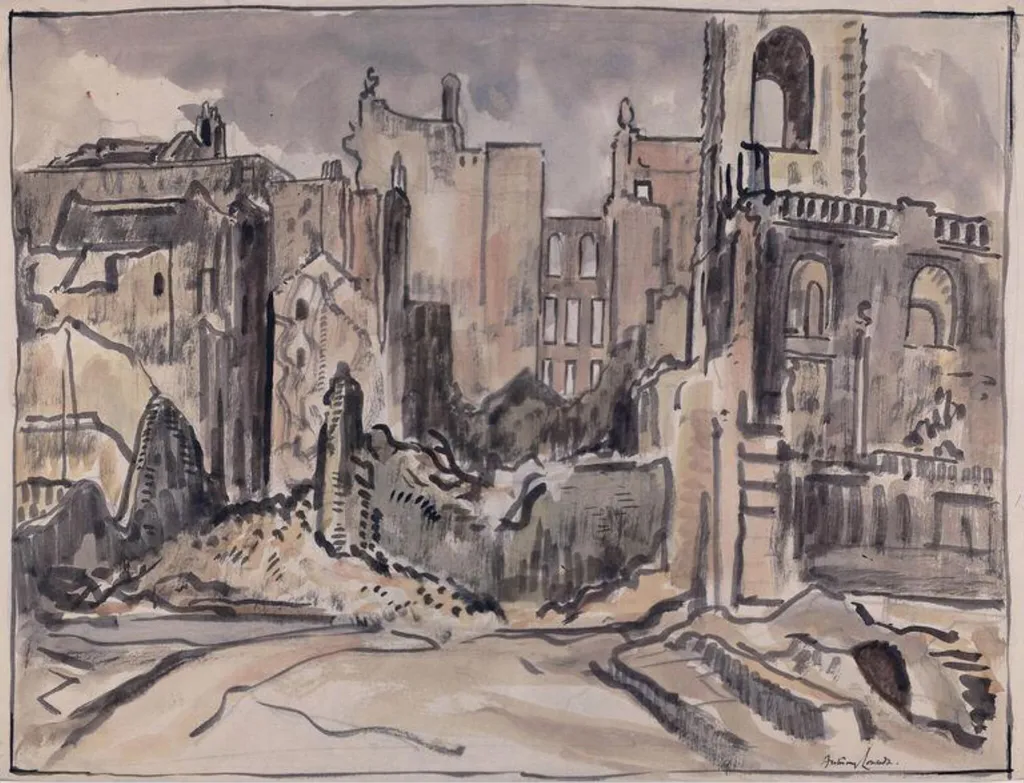
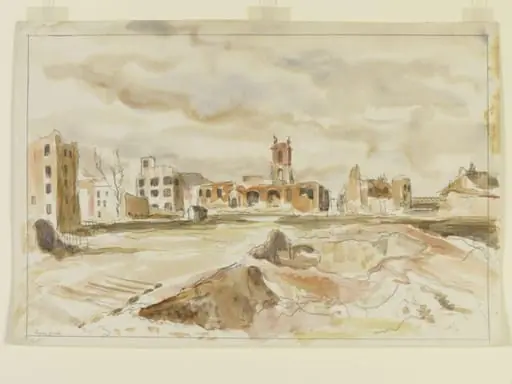
St. Nicholas, Cole Abbey, Queen Victoria Street is a watercolor work on paper by the Contemporary Realist artist Lousada. It dates from 1941 and is held in the collection of the Victoria and Albert Museum.
About this work
Overview
The composition presents a quiet urban landscape, rendered in muted tones that convey both the physical presence of the building and the atmosphere of the era.
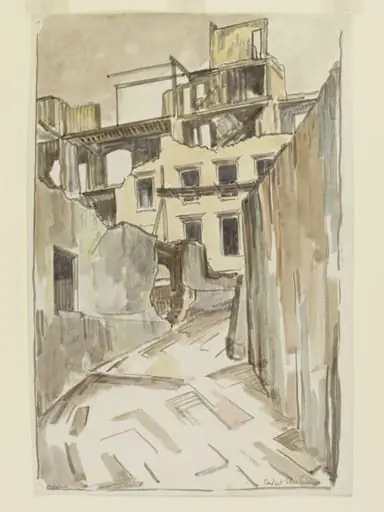
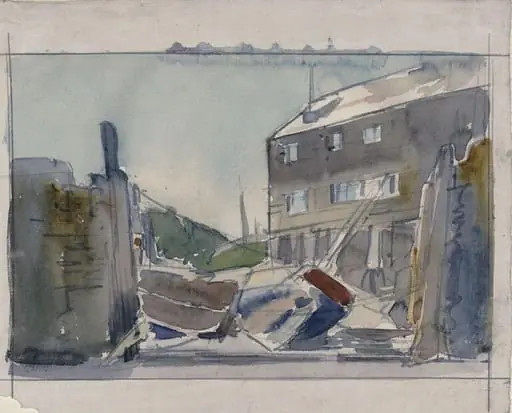
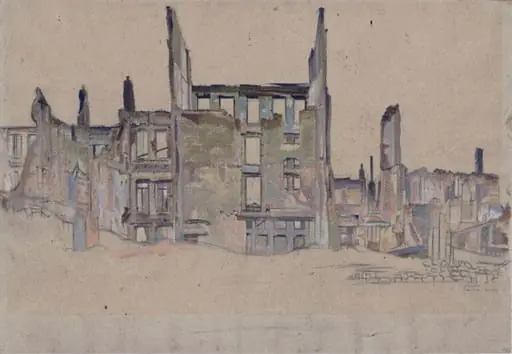
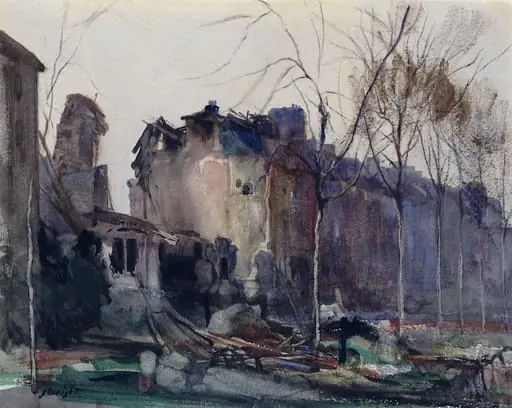
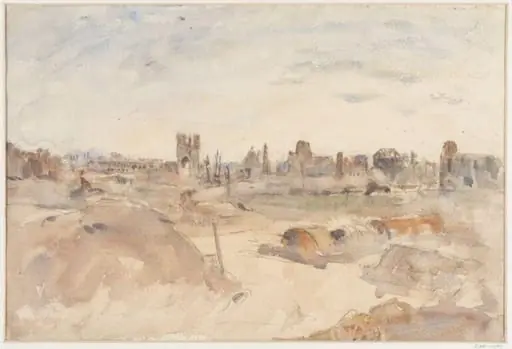
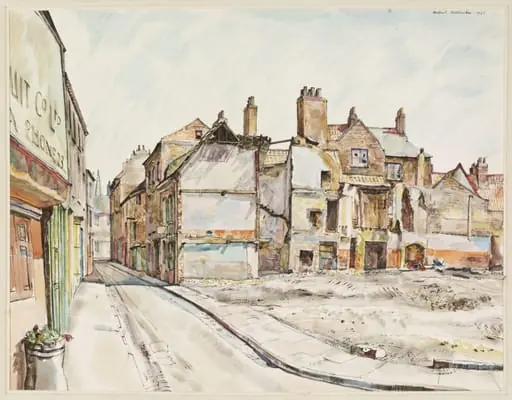
Painted in 1941, this watercolour by Lousada captures the church of St. Nicholas, Cole Abbey, located on Queen Victoria Street in London. Executed during the Second World War, the work bears the artist’s signature along with official press and censorship markings, reflecting the wartime regulation of visual media. The composition presents a quiet urban landscape, rendered in muted tones that convey both the physical presence of the building and the atmosphere of the era.
Subject & Meaning
The painting centers on the historic stone structure of St. Nicholas Church, its arches and columns standing as a relic amid surrounding modern buildings. Chimneys and a distant steeple suggest a layered cityscape shaped by time and conflict. The absence of human figures and the subdued palette imply a contemplative mood, possibly reflecting the stillness and uncertainty of London during wartime, where heritage structures endured amid change and destruction.
Technique & Style
Lousada employed watercolour to achieve subtle gradations of gray and soft edges, allowing the architecture to emerge through layered washes rather than sharp lines. The medium’s transparency lends a sense of atmospheric depth, while the restrained palette reinforces the somber tone. Textural variation in the stonework and sky is suggested through controlled wet-on-dry techniques, avoiding overt detail in favor of evocative suggestion.
History & Provenance
Created in 1941, the work was subject to wartime censorship protocols, as indicated by the official stamps on the piece. Its survival suggests it was deemed suitable for public circulation, possibly as part of a documentary or archival effort. The painting’s provenance remains tied to its wartime context, with no record of public exhibition until later archival interest emerged.
Context
At the time of its creation, London was under regular aerial bombardment, and many historic buildings stood vulnerable amid urban redevelopment. St. Nicholas, Cole Abbey, though damaged in the Blitz, remained standing, making it a quiet symbol of endurance. Lousada’s depiction aligns with a broader trend among artists documenting the city’s changing face during the war, prioritizing observation over drama.
Legacy
The painting contributes to a modest but significant body of wartime watercolours that record London’s architectural resilience. While not widely exhibited, it holds value as a primary visual record of a specific place at a specific moment. Its quiet realism offers a counterpoint to more dramatic war imagery, preserving the ordinary persistence of urban life under duress.
Artist & collection
Artist
These three watercolours show London landmarks caught in the Blitz. Lousada painted St. Nicholas Cole Abbey, Conduit Street at Savile Row, and St. Giles Cripplegate shortly after the 1941 bombings, their washes still…