Artwork
Waratah
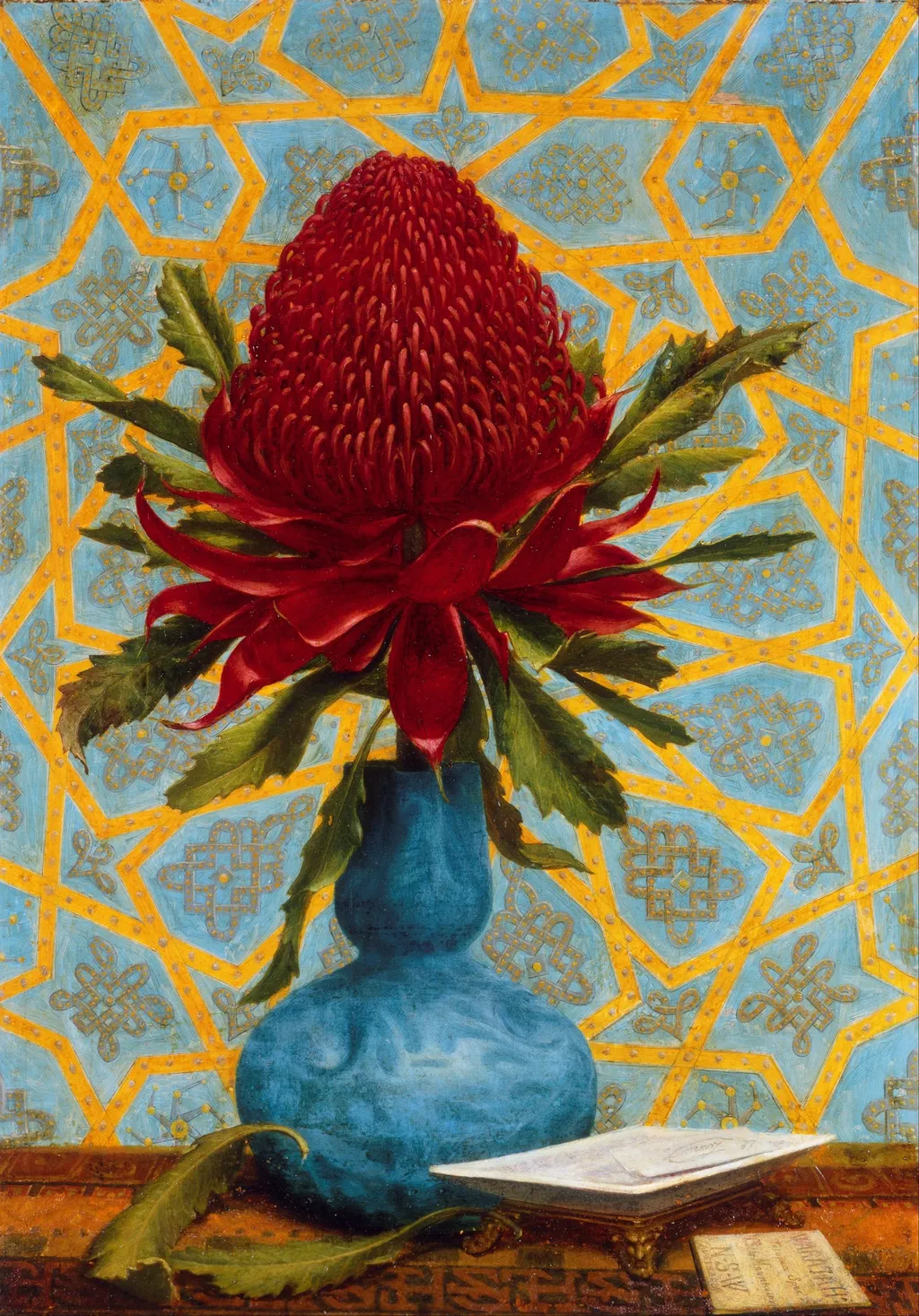
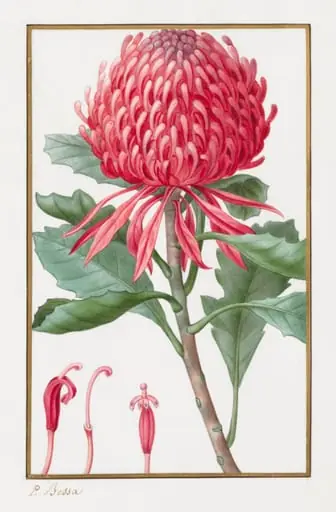
Waratah is an oil painting by the Post-Impressionist artist Lucien Henry. It dates from 1894 and is held in the collection of the Art Gallery of New South Wales.
About this work
Overview
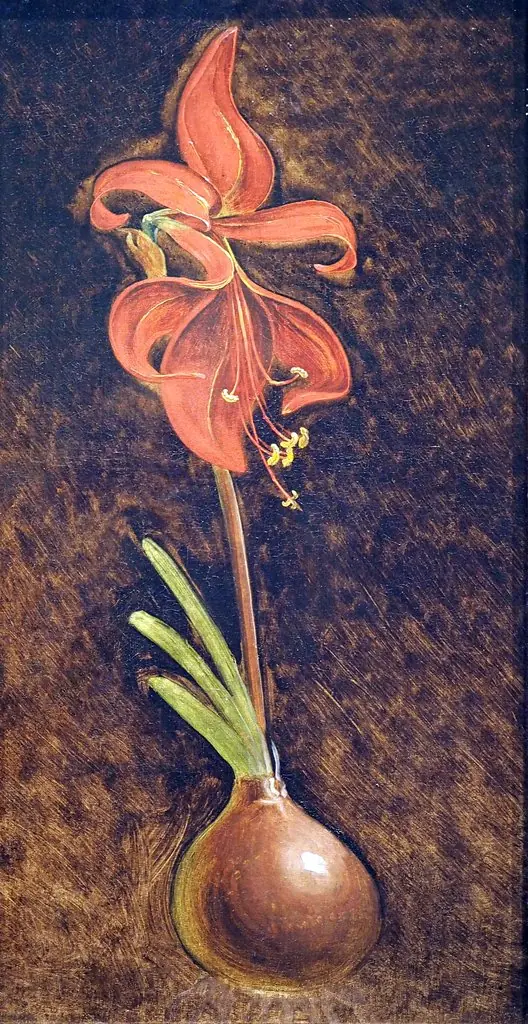
Waratah is an 1894 oil painting by Lucien Félix Henry, a French artist and socialist then based in Sydney. The work features a prominent, detailed representation of the waratah flower, native to Australia, set against a patterned background.
Subject & Meaning
The painting focuses on the waratah, a symbol of Australia, meticulously rendered in red with intricate details. Surrounding elements, a simple blue vase, green leaves with visible veins, and a light blue and yellow background, serve to highlight the flower's centrality.
Technique & Style
Executed in oil paint, Waratah showcases Henry's post-impressionist approach through vivid, contrasting colors and detailed naturalism, particularly in the flower and leaves, against a more subdued, patterned backdrop.
History & Provenance
Created during Henry's Sydney period, following his involvement in the Paris Commune, Waratah is now part of the Art Gallery of New South Wales's collection.
Own this work as a print
Artist & collection

Artist
Lucien Félix Henry (22 May 1850 - 10 March 1896), was a French painter, who was active in Sydney.