Artwork
Lycean Tombs in the Xanthus Valley
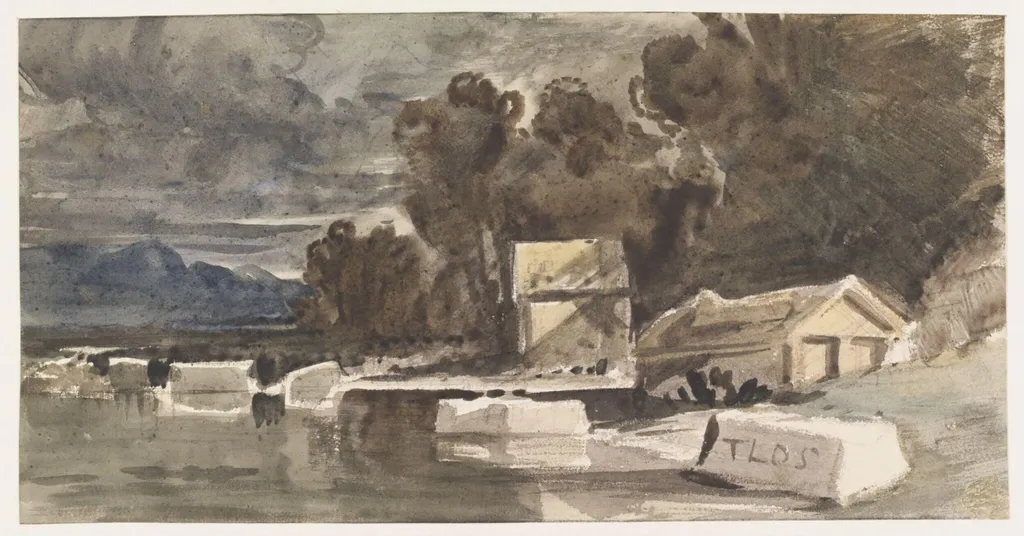
Lycean Tombs in the Xanthus Valley is a watercolor work on paper by the British Romanticist artist William James Müller. It dates from 1844 and is held in the collection of the Victoria and Albert Museum.
About this work
Overview
This watercolour depicts a serene, misty landscape in the Xanthus Valley, featuring tombs, simple buildings, a calm river, and softly rendered trees and hills. The artwork is attributed to William James Müller, though its creation may also be linked to one of his pupils.
Subject & Meaning
The scene conveys a sense of peaceful abandonment, with the misty, muted environment and loose brushstrokes evoking a mysterious, timeless quality. The tombs, set amidst natural serenity, subtly underscore themes of transience and the intersection of nature and human legacy.
Technique & Style
Characterized by loose, sketchy brushstrokes and soft, earthy tones, the painting prioritizes capturing mood over detailed representation. This approach aligns with Romantic-era aesthetics, emphasizing emotional and atmospheric depth.
History & Provenance
The work bears a Johnson studio mark, suggesting potential authorship by a pupil of Müller. Acquired by the collection from Prue Heathcote-Williams in October 1972 for £40, its exact location within the Xanthus Valley remains uncertain.
Artist & collection



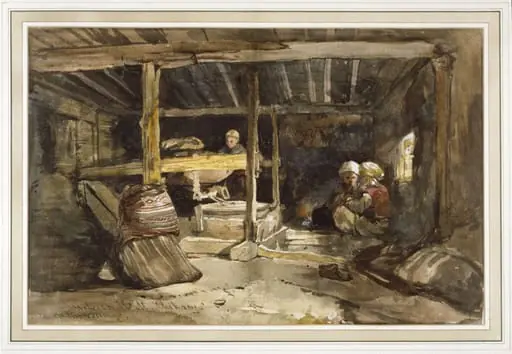
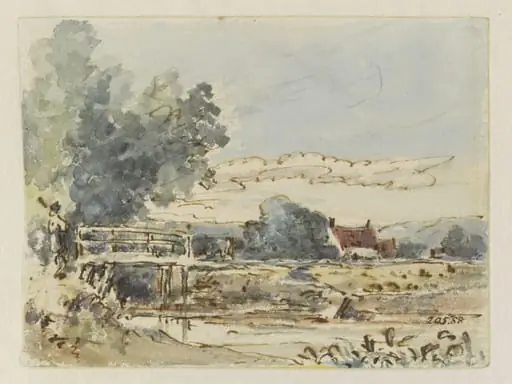
- A bridge over a stream, with a cottage behind
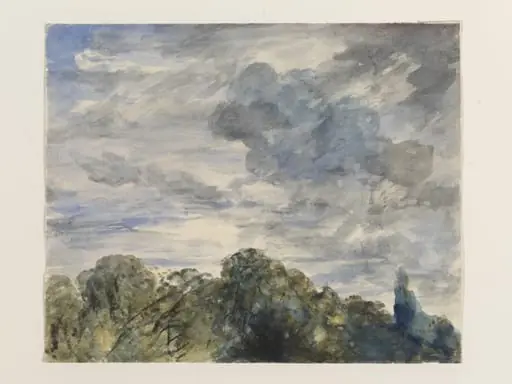 Study of sky effect
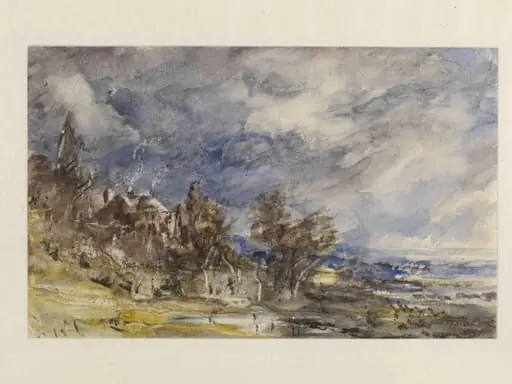 Hampstead Heath, from near Well Walk
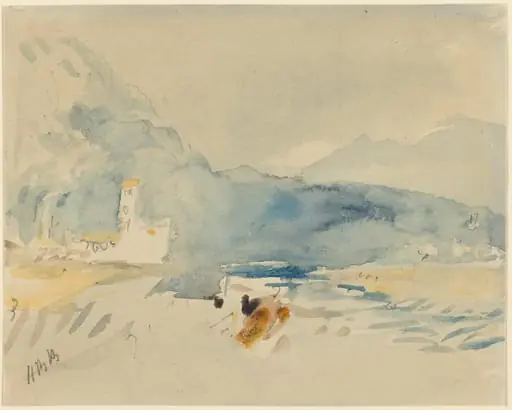 A Landscape with Mountains and a Stream
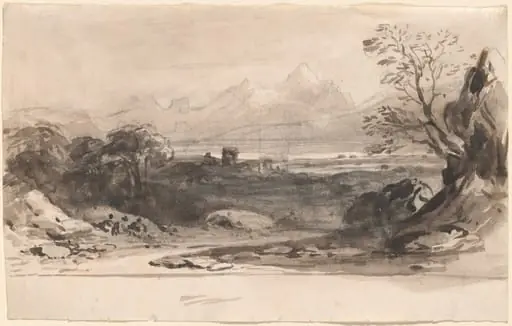 Landscape with Ruins
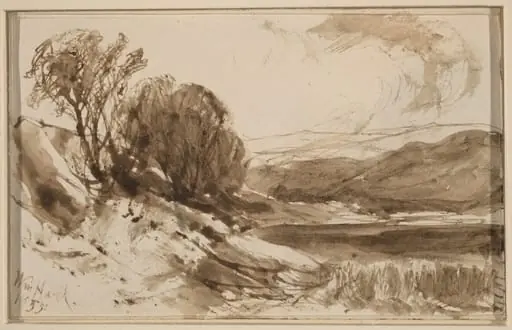 Hilly Landscape with Trees
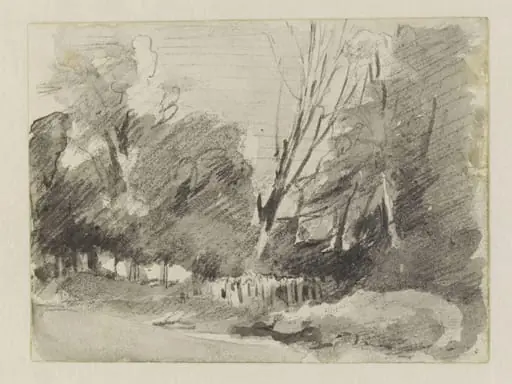 Two sketches on one sheet: a countryman walking, and a group of people beside two donkeys.
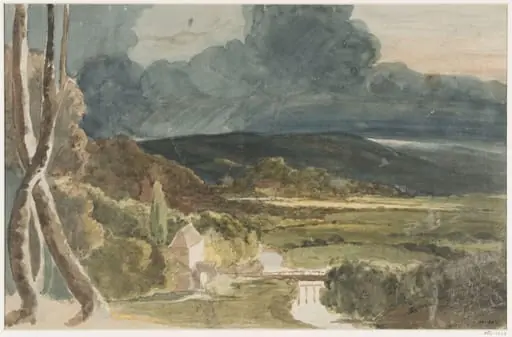 Landscape with river and mountains
 Landscape with pond
 View over hilly country, with a stormy sky
 A barn, trees and a grey horse, near East Bergholt
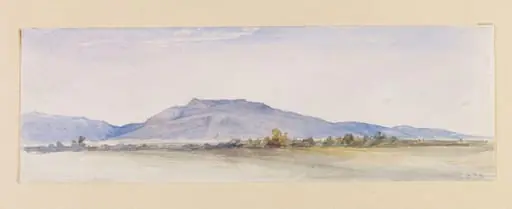 The Xanthus Valley, Lycia