Artwork
The Xanthus Valley, Lycia
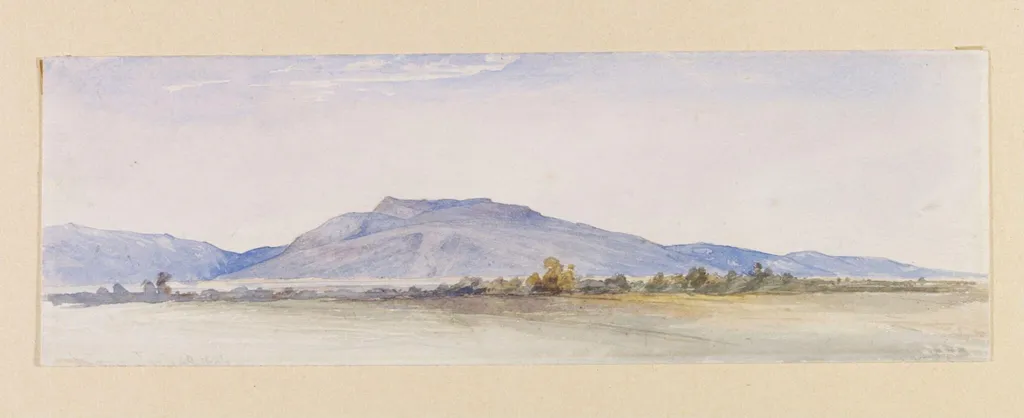
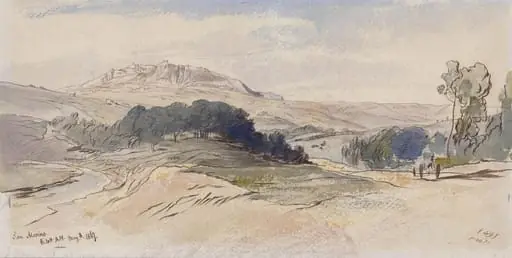
The Xanthus Valley, Lycia is a watercolor work on paper by the British Romanticist artist Harry John Johnson. It dates from 1844 and is held in the collection of the Victoria and Albert Museum. This watercolour painting depicts a serene landscape of the Xanthus Valley in Lycia, created using soft colours and loose brushstrokes.
About this work
Overview
This watercolour painting depicts a serene landscape of the Xanthus Valley in Lycia, created using soft colours and loose brushstrokes.
Subject & Meaning
The scene shows a tranquil valley with rolling hills, a flat plain, and sparse vegetation, evoking a sense of calmness and emptiness. The view is likely from near Tlos, along the Esen Çay river.
Technique & Style
The artist employed quick, loose brushstrokes, particularly on the hills, suggesting work done outdoors. The soft colour palette, dominated by blues, greens, and light browns, contributes to the overall serene atmosphere.
History & Provenance
The painting relates to the artist's travels in Lycia with William Müller. It was acquired from Holder in September 1970 for £4. A faint pencil sketch on the reverse suggests the artist's preparatory process.
Artist & collection
Artist
Henry John Johnson, usually known as Harry was an English landscape and water colour painter.

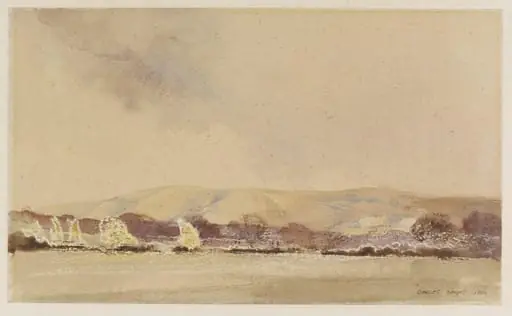 Fields and Woods South of Ditchling
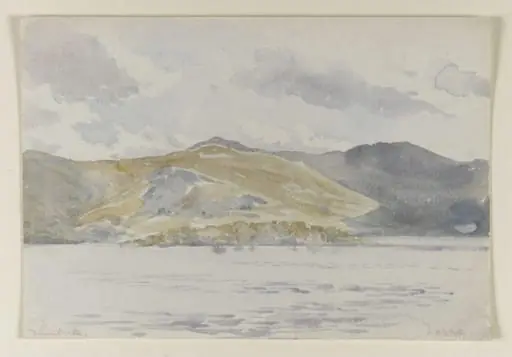 Derwentwater
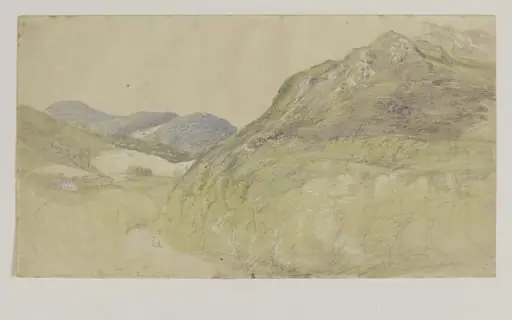 Near the Travellers Rest Inn, Dolgelly
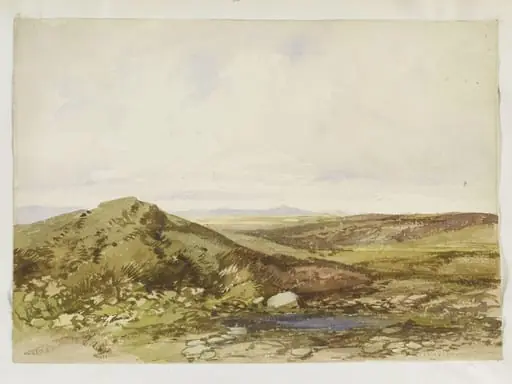 Watercolour in album of 51 drawings and watercolours by James Duffield Harding
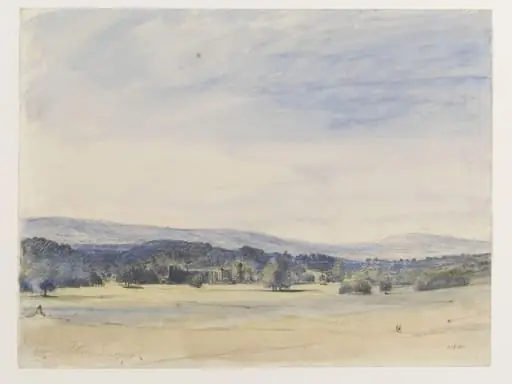 The ruins of a Cowdray House
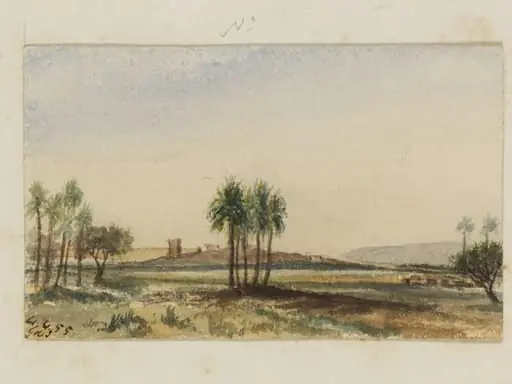 `Temple of Denderah. Distant view from bank of River. Upper Egypt'
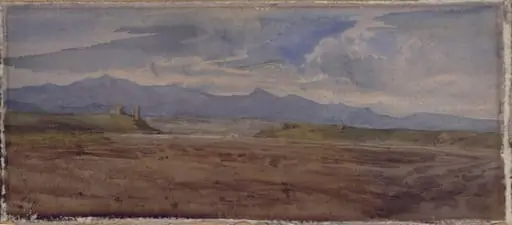 Ruin in Campagna
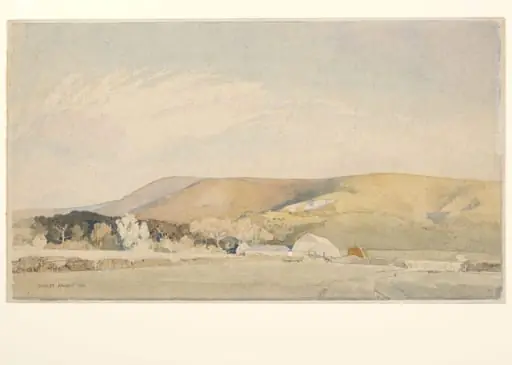 Lodge Barn, near Ditchling
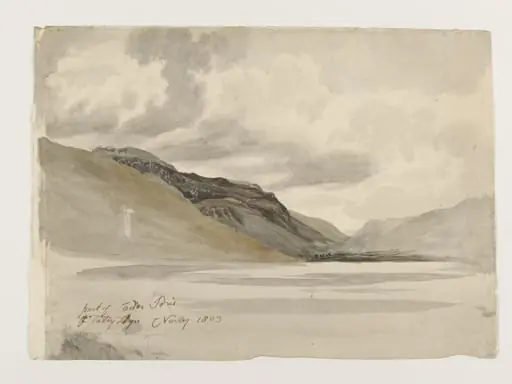 Part of Cader Idris and Tal-y-Llyn
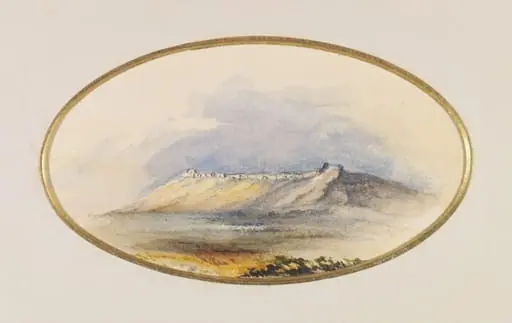 Nineveh -
 San Marino 6.40 AM. May 8. 1867