Artwork
Abraham in Aegyptum (Abraham in Egypt)
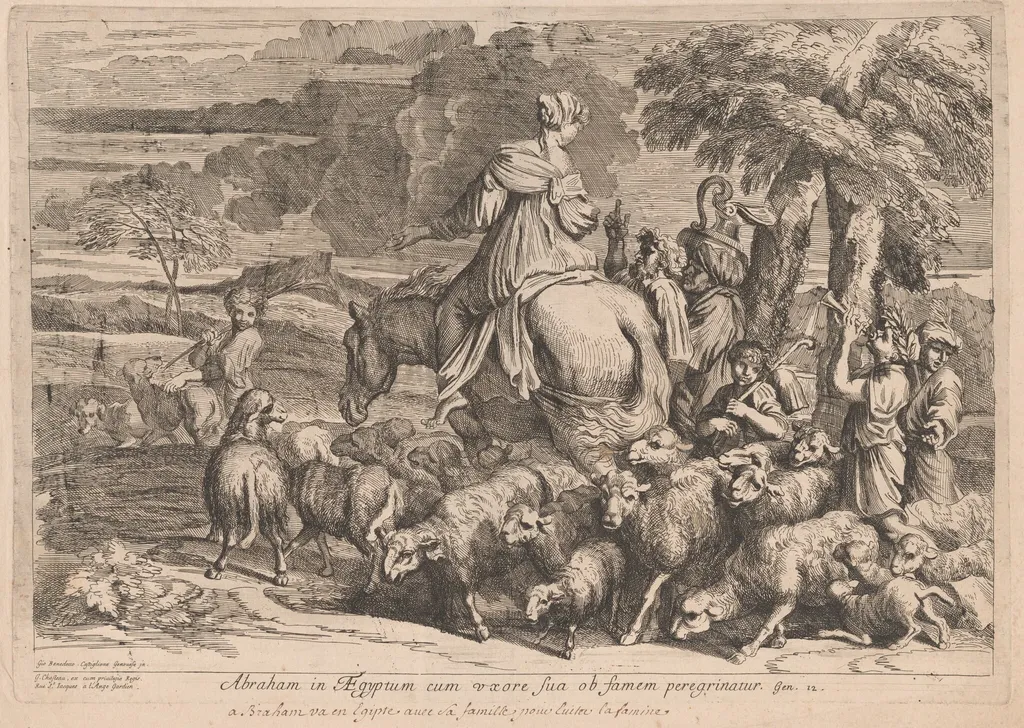
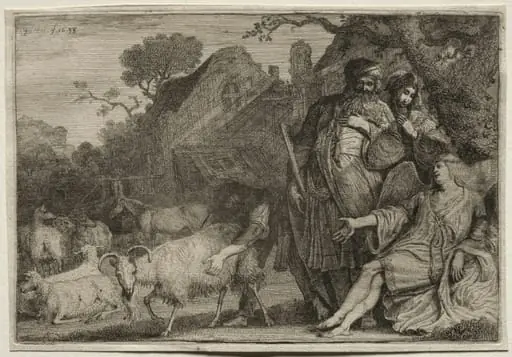
Abraham in Aegyptum (Abraham in Egypt) is an ink print by the Baroque artist Claude Macé. It is held in the collection of the National Gallery of Art.
- Inscription
- Inscribed:lower left in plate: Gio. Benedetto. Castiglione Genovese in. / G. Chasteau, ex. cum privilegio Regis. / Rue St. Jacques a l'Ange Gardien; lower center in plate: Abraham in AEgyptum cum uxore sua ob famen peregrinature. Gen. 12. ; by later hand, lower center in pen and brown ink: aBraham va en Egypte avec sa famille pour luiter lafamine
About this work
Overview
Abraham in Aegyptum (Abraham in Egypt) is an etching on laid paper created by Claude Macé around 1660. The print is part of the collection at the National Gallery of Art, Washington.
Subject & Meaning
The etching depicts a biblical scene, showing Abraham's journey in Egypt. A woman sits on a rock surrounded by sheep and goats, while two men stand nearby, set against a backdrop of figures, trees, and a winding river.
Technique & Style
The artist used etched lines to convey depth and texture, emphasizing the clothing of the figures and the fur of the animals. The technique involves using a needle to create the design on the plate, allowing for detailed renderings.
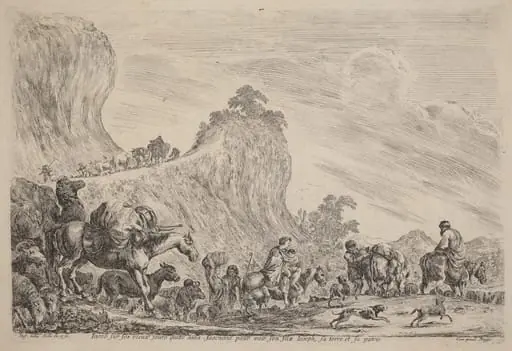
Own this work as a print
Artist & collection

- The Departure of Jacob to Egypt
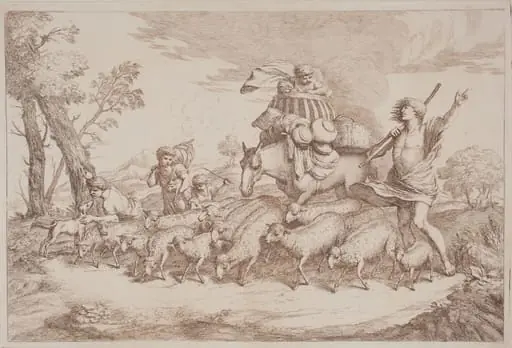 A Pastoral Journey with a Child in a Basket on Horseback
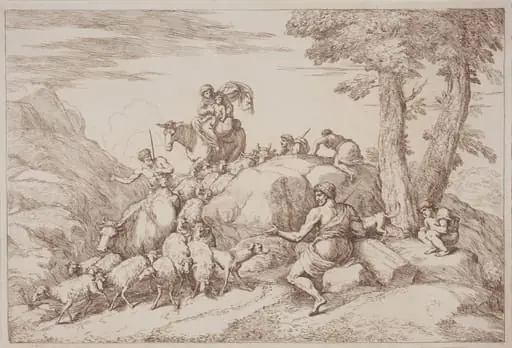 A Pastoral Journey with a Mother and Child on Horesback and an Elderly Shepherd Seated
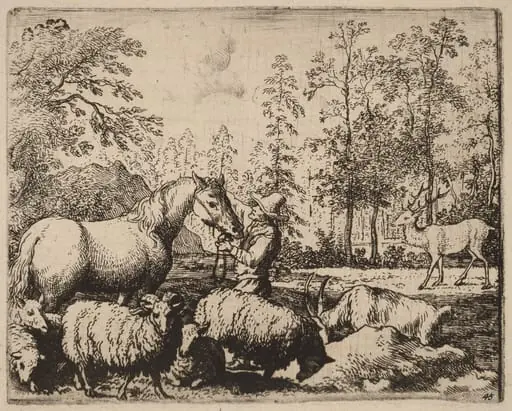 The Horse and the Stag
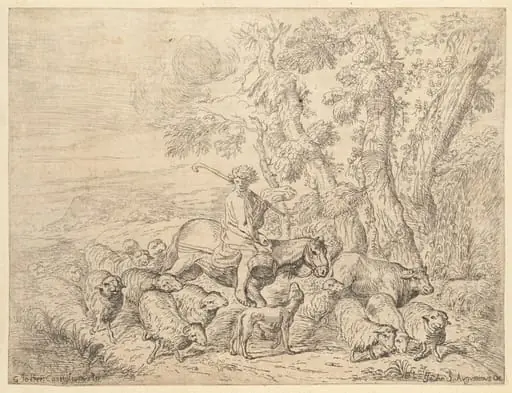 Shepherd on Horseback
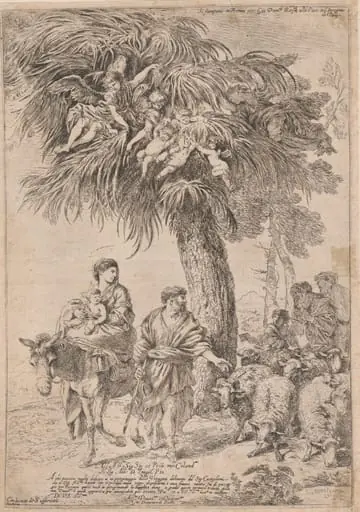 The Flight into Egypt
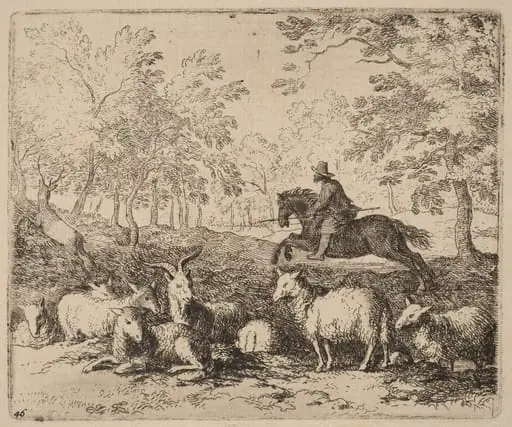 The Horse Forced to Pursue the Stag
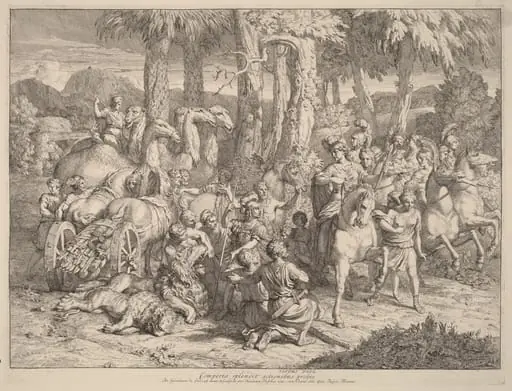 Semiramis on the Lion Hunt
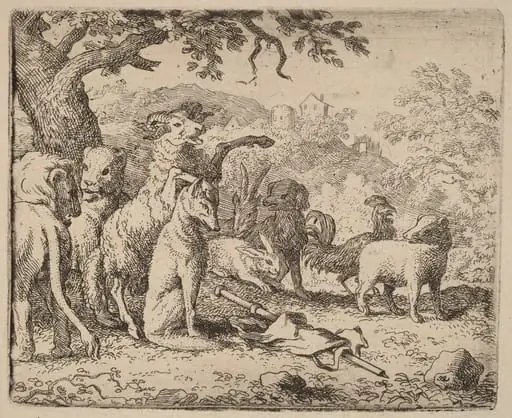 The Ram Blesses Reynard
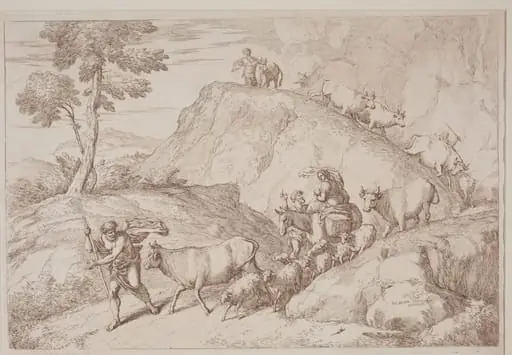 An Elderly Shepherd Leading the Flock
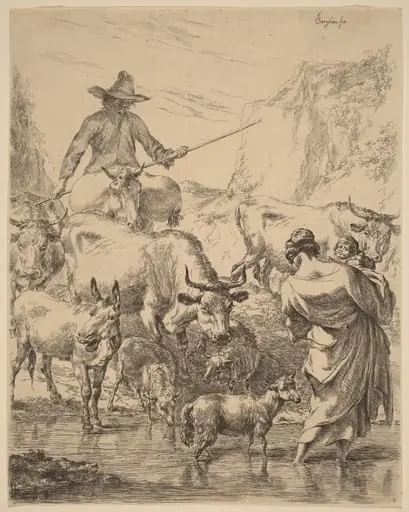 Herd Crossing the Brook
 An Angel Foretells the Birth of Abraham's Son