Artwork
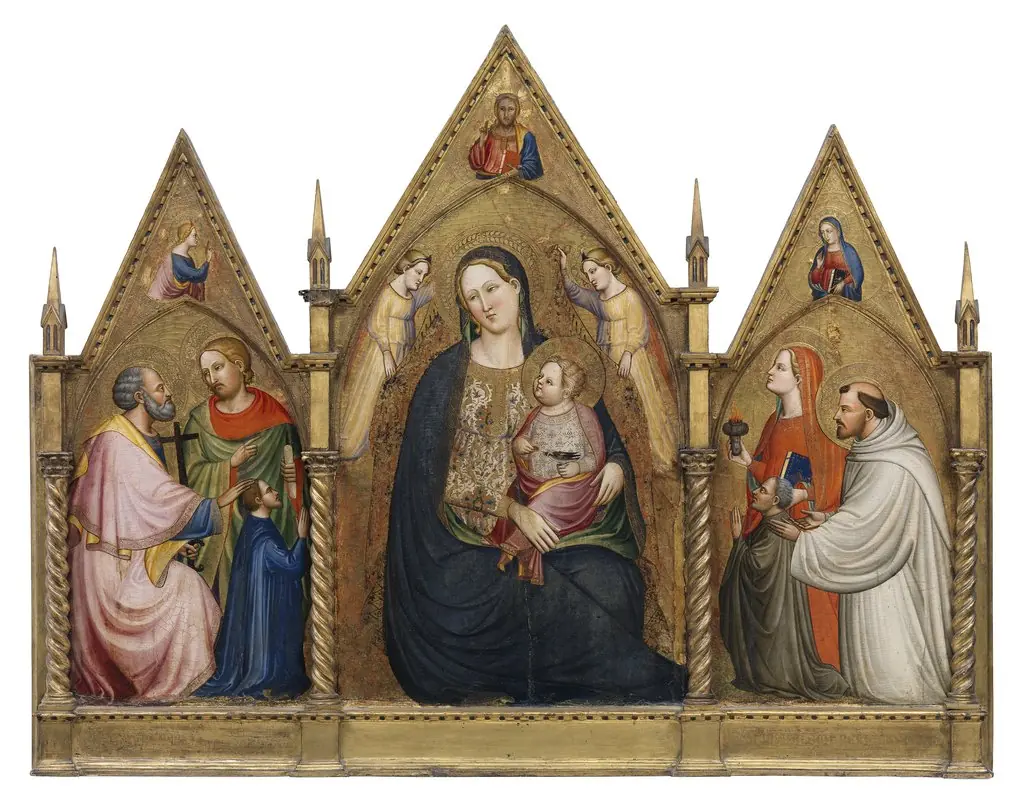
Triptych with the Virgin and Child, and Saints Mary Magdalene and Ansanus
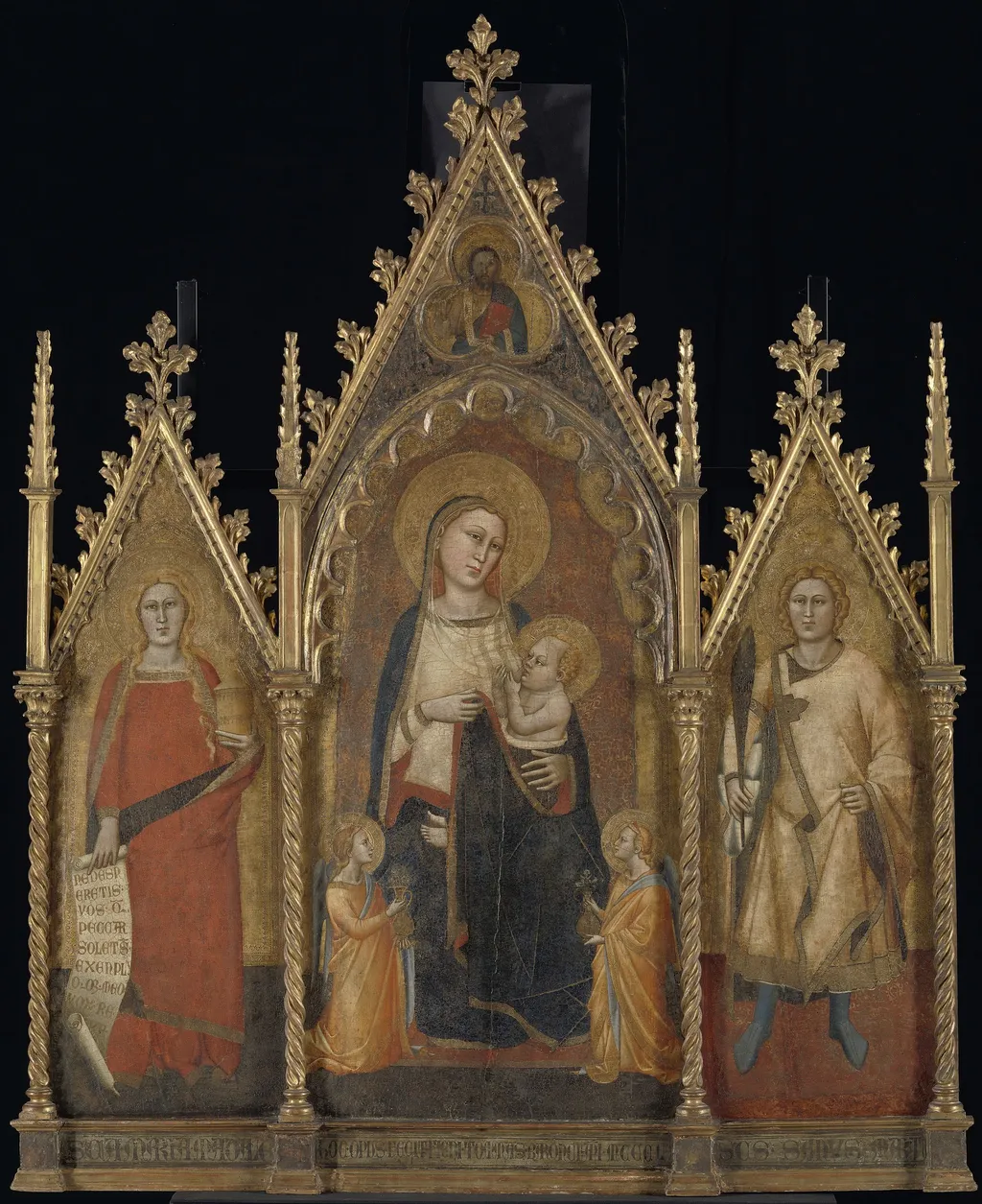
Triptych with the Virgin and Child, and Saints Mary Magdalene and Ansanus is an oil painting by the Italo Byzantine artist Orcagna. It dates from 1350 and is held in the collection of the Rijksmuseum.
About this work
Subject & Meaning
The composition features the Virgin Mary holding the Christ Child, who is depicted performing a gesture of blessing.
Created in 1350 by Orcagna, this religious triptych centers on the Madonna and Child as its primary subject. The composition features the Virgin Mary holding the Christ Child, who is depicted performing a gesture of blessing. Flanking this central sacred pair are two specific saints: Mary Magdalene and Ansanus.
The presence of angels further enriches the iconography of the panel. Executed in tempera and gold on wood, the work functions as a devotional object, visually uniting these holy figures to represent key elements of Christian theology and veneration within the Florentine tradition.
Technique & Style
Created in Florence around 1350, this triptych is executed on a wood panel support using tempera and gold leaf, with later additions of oil paint. The work measures approximately 145 centimeters in height and 119 centimeters in width, reflecting the substantial scale typical of mid-14th-century Florentine religious altarpieces. Stylistically, the piece adheres to the Gothic tradition, depicting the Madonna and Child flanked by saints Mary Magdalene and Ansanus within a structured architectural framework.
The inclusion of gold highlights the sacred nature of the subjects, while the tempera medium provides the distinct matte finish associated with the period before the widespread adoption of oil techniques. The composition centers on the blessing gesture of the Christ Child, emphasizing the devotional function of the polyptych.
History & Provenance
The triptych was executed in Florence around 1350, as indicated by the dated inception of 1350-01-01 and the artist’s activity recorded in contemporary sources. It was created as a devotional panel for the San Ansano Chapel of Santa Maria Maggiore, intended to display the Virgin and Child flanked by Saints Mary Magdalene and Ansanus. The work combines tempera, oil paint, gold leaf and wood, reflecting the material practice of Orcagna’s workshop.
After its completion it entered the collection of the Cultural Heritage Agency of the Netherlands and was subsequently distributed among the Rijksmuseum, the Führermuseum, the Munich Central Collecting Point and the Chiesa di Santa Maria Maggiore, where it remains today.
The Triptych with the Virgin and Child, and Saints Mary Magdalene and Ansanus is currently held by the Rijksmuseum in Amsterdam. Its provenance includes the Cultural Heritage Agency of the Netherlands Art Collection, the Stichting Nederlands Kunstbezit, and the Dienst Verspreide Rijkscollecties, reflecting its status within the Dutch national collections. Historical records indicate the work was once part of the Führermuseum collection and passed through the Munich Central Collecting Point, suggesting a complex wartime trajectory.
Prior to its arrival in the Netherlands, the altarpiece was located in the San Ansano Chapel of the Chiesa di Santa Maria Maggiore in Florence. The painting, created on wood with tempera and gold, was accessioned into the Rijksmuseum's holdings, where it remains a significant example of mid-14th-century Florentine religious art.
Overview
Orcagna's Triptych with the Virgin and Child, and Saints Mary Magdalene and Ansanus, created around 1350, is a religious panel painting. This work exemplifies the artistic trends prevalent in Florence during the mid-14th century, blending traditional Italo-Byzantine elements with local stylistic conventions. It presents a central devotional image flanked by two saints, characteristic of altarpieces from this period.
Context
Orcagna, also known as Andrea di Cione, was a versatile Florentine artist active across painting, sculpture, and architecture during the Trecento. His contributions extended to significant civic and ecclesiastical projects, including the Florence Cathedral and the façade of Orvieto Cathedral. This triptych reflects his engagement with the prevailing artistic language of his time, demonstrating the multifaceted skills expected of a major workshop master.
Own this work as a print
Artist & collection
Artist
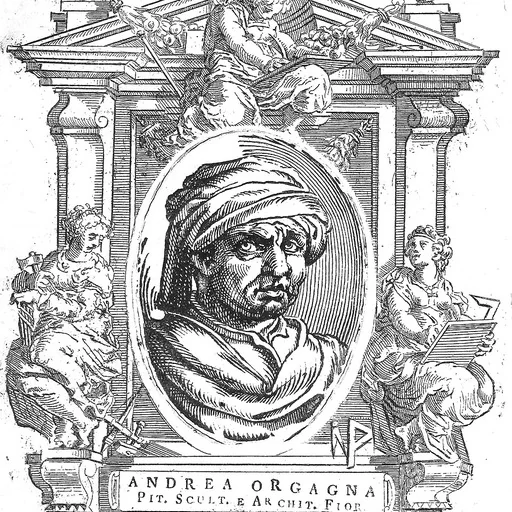
Andrea di Cione di Arcangelo (c. 1308 – 25 August 1368), better known as Orcagna, was an Italian painter, sculptor, and architect active in Florence. He worked as a consultant at the Florence Cathedral and supervised…

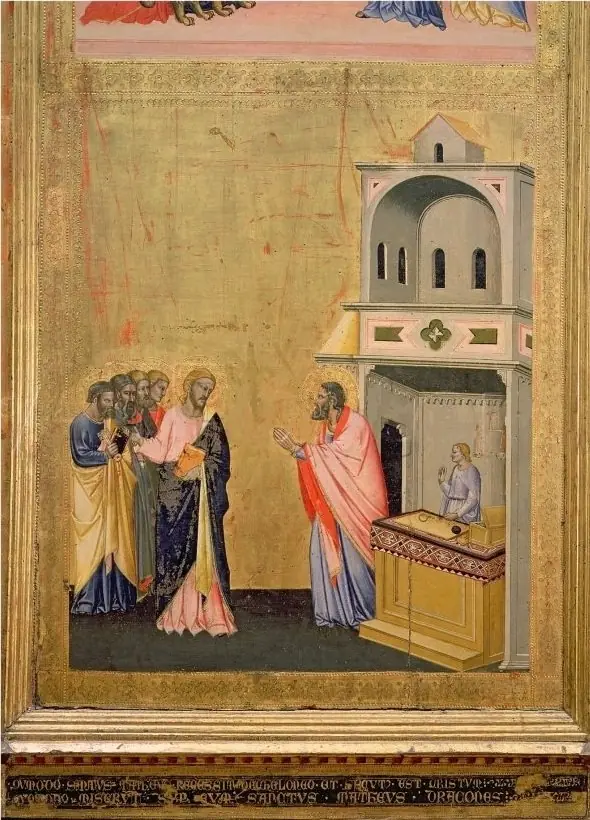
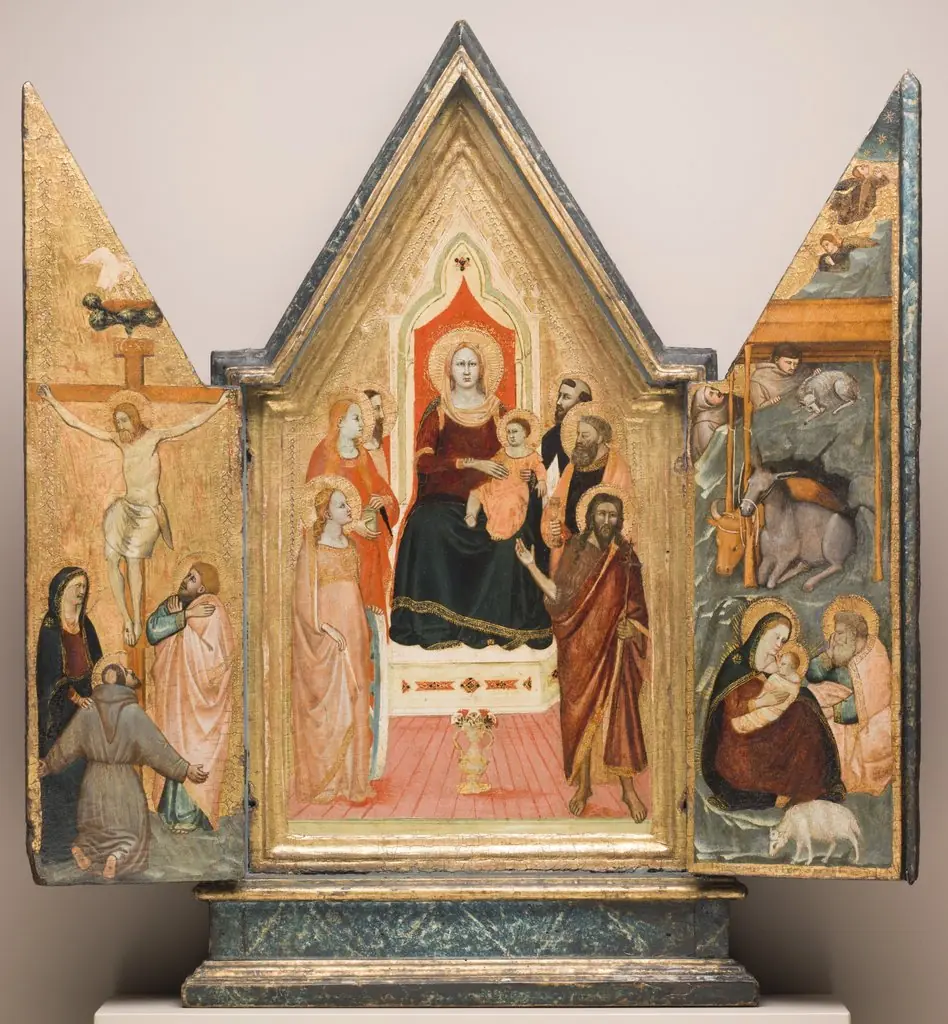 Virgin Enthroned with Saints, Nativity and Crucifixion
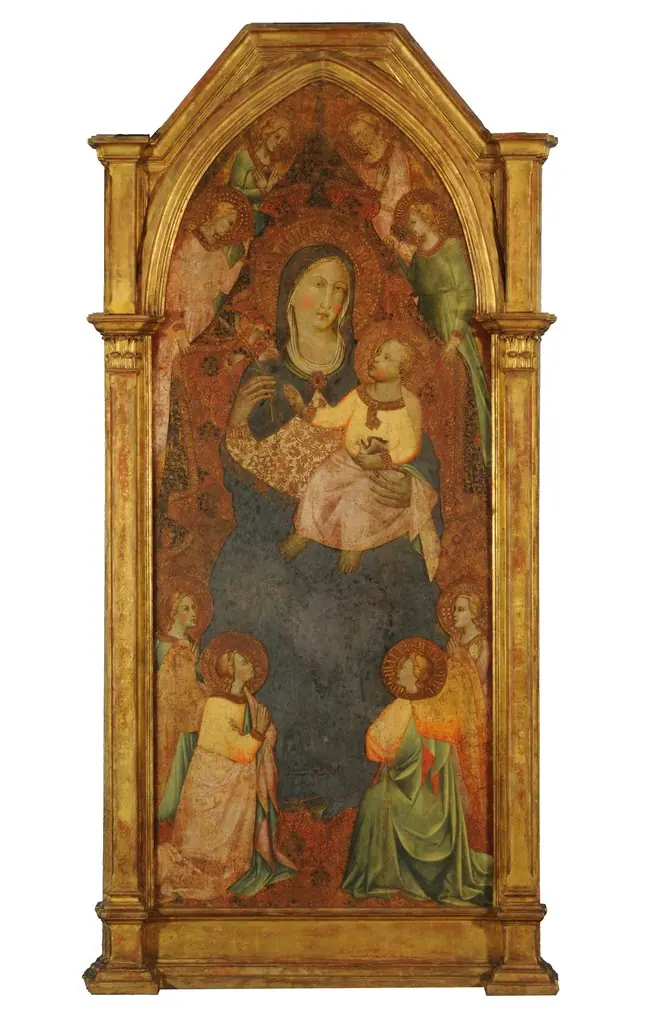 Virgin with child
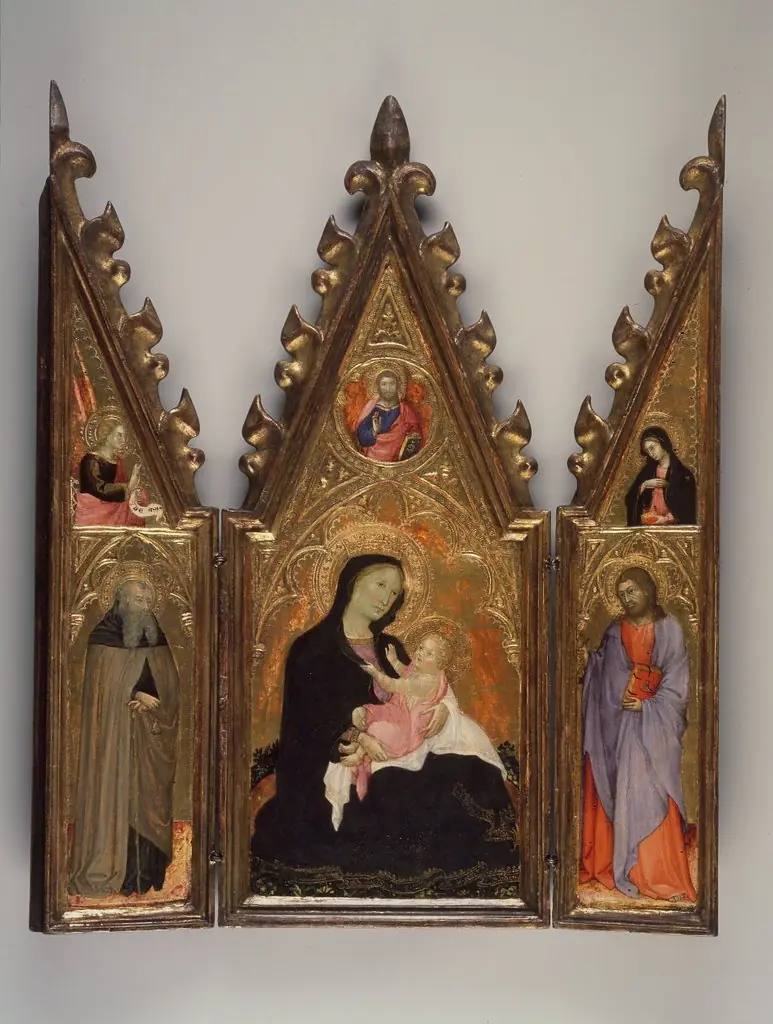 Madonna of Humility, portable altarpiece
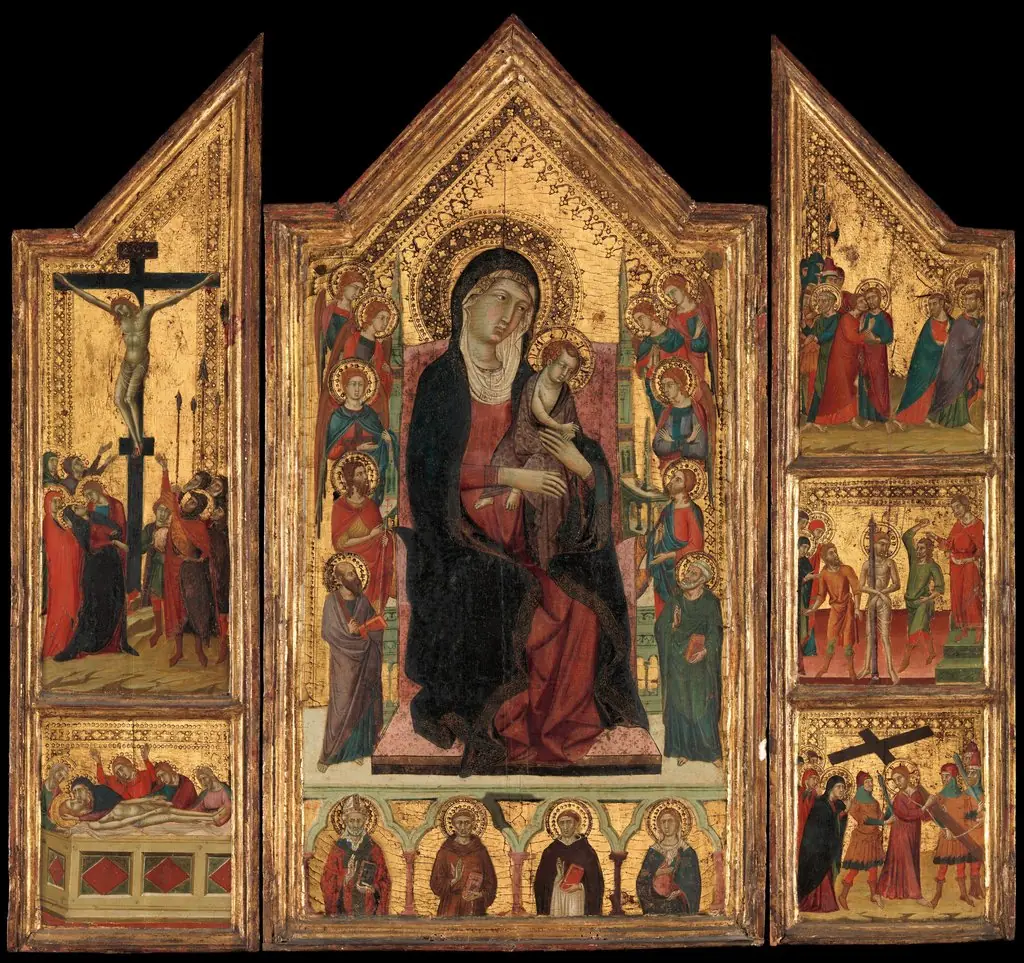 Madonna and Child Enthroned
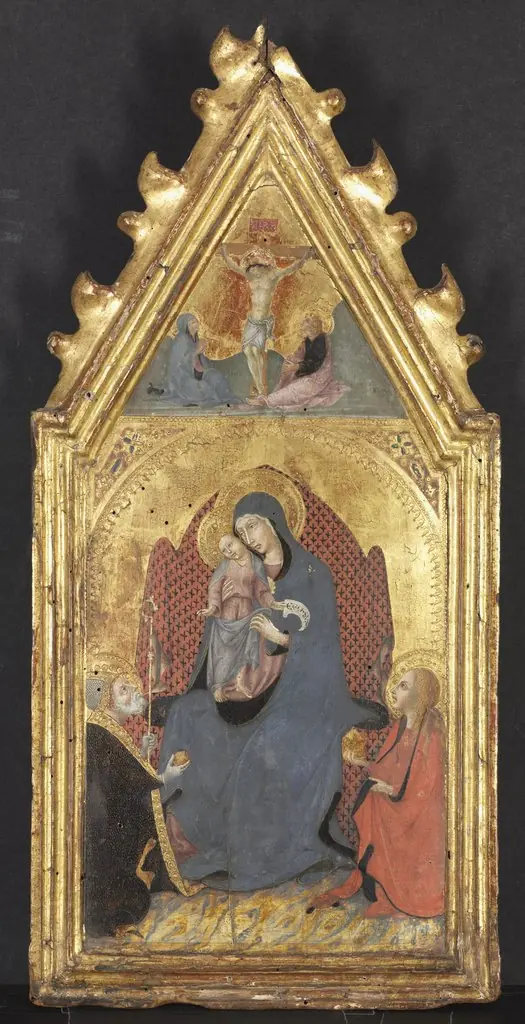 Virgin and Child Adored by Saints Mary Magdalene and Nicolas of Bari; Christ Crucified with the Virgin and Saint John the Evangelist
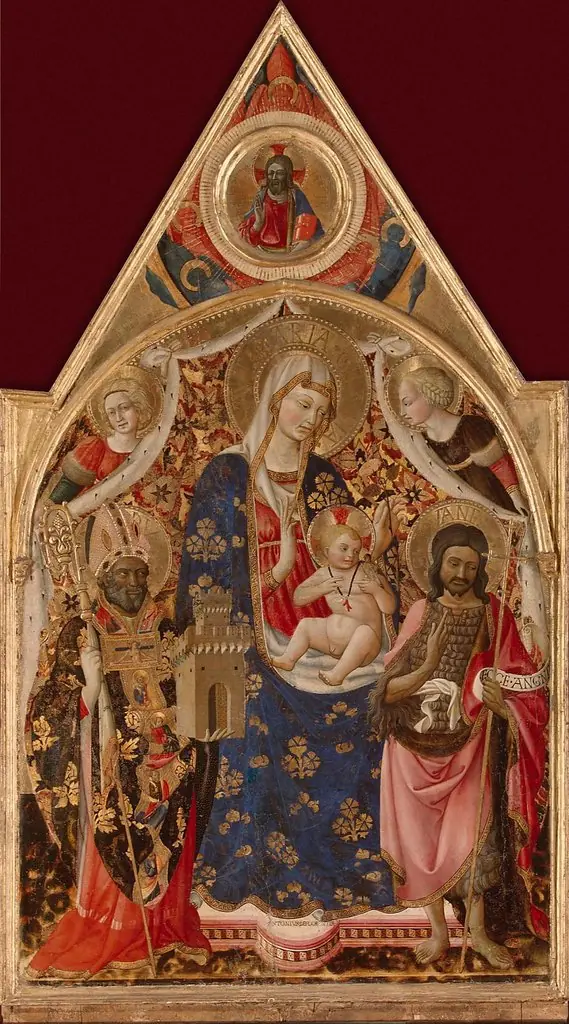 Madonna and Child, with a Bishop, St John The Baptist and Angels
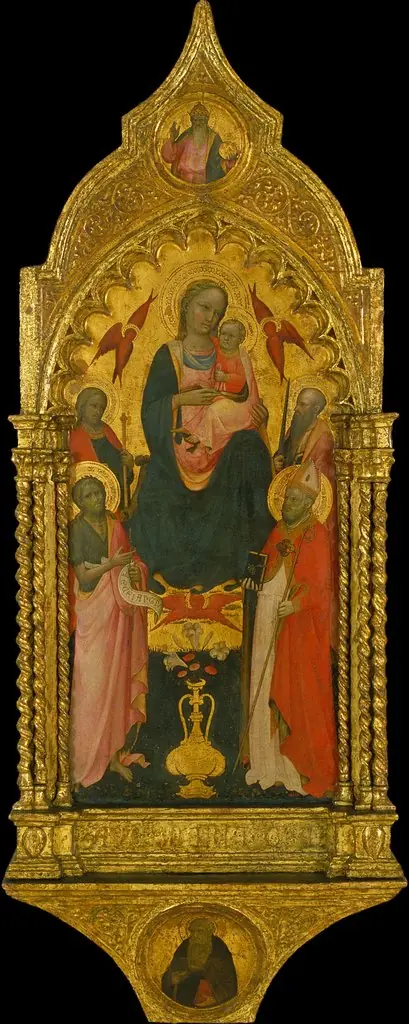 Virgin and Saints
 The Virgin and Child with Saints and Donors