Artwork
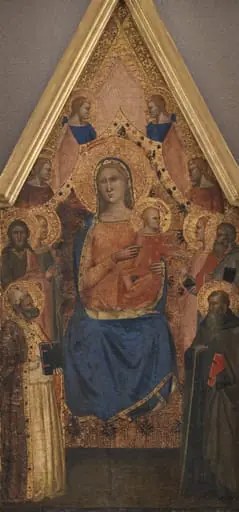
The Virgin and Child with Saints and Donors
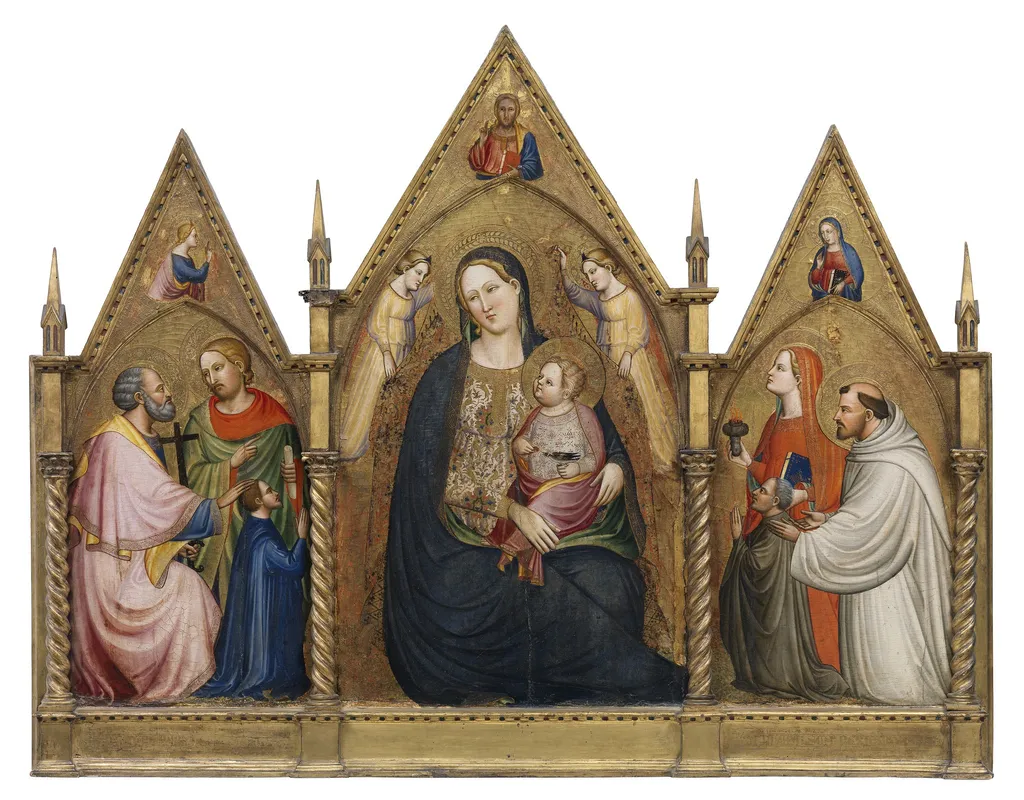
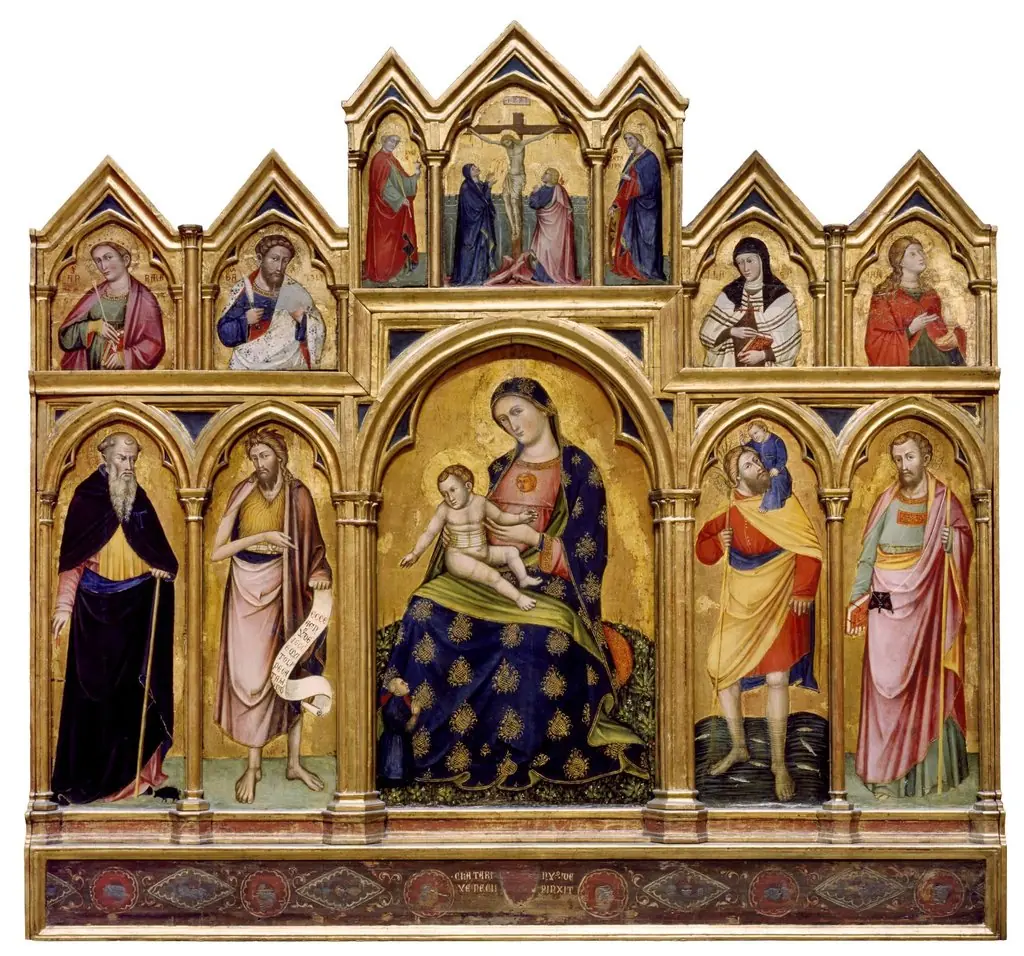
The Virgin and Child with Saints and Donors is an unspecified painting by the Italo Byzantine artist Tommaso del Mazza. It is held in the collection of the National Gallery of Ireland.
About this work
Overview
Painted around 1400 by Tommaso del Mazza, this devotional panel depicts the Virgin Mary enthroned with the Christ Child, flanked by saints and kneeling donors.
Painted around 1400 by Tommaso del Mazza, this devotional panel depicts the Virgin Mary enthroned with the Christ Child, flanked by saints and kneeling donors. Executed in tempera and gold leaf on wood, the work reflects the devotional priorities of late medieval Florence. It is currently held in the collection of the National Gallery of Ireland, where it serves as an example of early 15th-century Italian religious art.
Subject & Meaning
The Virgin, seated centrally in a regal posture, holds the Christ Child, who blesses the viewer. Surrounding figures include saints, likely chosen for their intercessory roles, and two donors, probably patrons who commissioned the work, kneeling in prayer. Their inclusion signifies a spiritual contract: earthly devotion in exchange for heavenly favor. The composition reinforces the Virgin’s role as mediator between humanity and the divine.
Technique & Style
The painting employs tempera on wood, enhanced with extensive gold leaf for halos and decorative elements. Figures are rendered with fine detail in their garments, which feature richly patterned fabrics and vibrant pigments. While the background is flat and unmodeled, the arrangement of figures creates a shallow but deliberate spatial hierarchy, typical of the Italo-Byzantine tradition transitioning toward early Renaissance naturalism.
History & Provenance
The painting likely originated in a Florentine church or private chapel, commissioned by a wealthy family seeking spiritual benefit. Its movement to Ireland is undocumented prior to its acquisition by the National Gallery of Ireland, though its stylistic features align with Florentine workshop practices of the early 1400s. It has remained in the gallery’s collection since at least the mid-20th century.
Context
Created during a period when devotional imagery was central to religious life, the painting reflects the enduring influence of Giotto’s innovations and the lingering conventions of Byzantine iconography. In Florence, such panels were common in domestic and ecclesiastical settings, serving both as objects of prayer and as markers of social status through patronage.
Legacy
Though Tommaso del Mazza was not among the most renowned artists of his time, this work preserves the visual language of early Quattrocento Florentine piety. It offers insight into how lay devotion was visually structured, bridging the gap between medieval symbolism and the emerging humanist concerns of the Renaissance. Its preservation allows continued study of regional workshop practices and donor portraiture.
Own this work as a print
Artist & collection

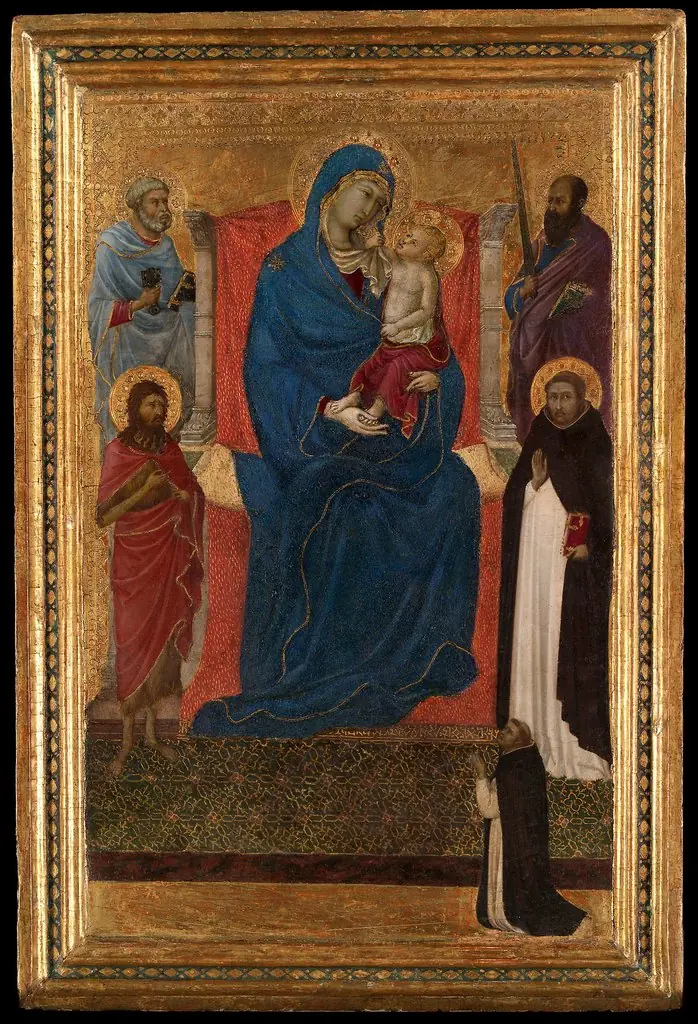
 Madonna and Child Enthroned with Four Saints
![Madonna and Child with the Blessing Christ, and Saints Mary Magdalene and Catherine of Alexandria with Angels [entire triptych], by Pietro Lorenzetti](https://artifactworldgallery.com/img/pietro-lorenzetti--madonna-and-child-with-the-blessing-christ-and-saints-mary-m--f78e415f61769b64-w320.webp) Madonna and Child with the Blessing Christ, and Saints Mary Magdalene and Catherine of Alexandria with Angels [entire triptych]
Madonna and Child with the Blessing Christ, and Saints Mary Magdalene and Catherine of Alexandria with Angels [entire triptych]![Madonna and Child with the Blessing Christ, and Saints Peter, James Major, Anthony Abbott, and a Deacon Saint [entire triptych], by Martino di Bartolomeo](https://artifactworldgallery.com/img/martino-di-bartolomeo--madonna-and-child-with-the-blessing-christ-and-saints-peter--2c53e26d577a363b-w320.webp) Madonna and Child with the Blessing Christ, and Saints Peter, James Major, Anthony Abbott, and a Deacon Saint [entire triptych]
Madonna and Child with the Blessing Christ, and Saints Peter, James Major, Anthony Abbott, and a Deacon Saint [entire triptych]![Madonna and Child Enthroned with Four Saints and Eighteen Angels [middle panel], by Puccio di Simone](https://artifactworldgallery.com/img/puccio-di-simone--madonna-and-child-enthroned-with-four-saints-and-eighteen-an--24dd12ad513d60ea-w320.webp) Madonna and Child Enthroned with Four Saints and Eighteen Angels [middle panel]
Madonna and Child Enthroned with Four Saints and Eighteen Angels [middle panel]![Saint Anthony Abbot [left panel], by Puccio di Simone](https://artifactworldgallery.com/img/puccio-di-simone--saint-anthony-abbot-left-panel--b93626e2d00b6158-w320.webp) Saint Anthony Abbot [left panel]
Saint Anthony Abbot [left panel] Triptych with the Virgin and Child, and Saints Mary Magdalene and Ansanus
 Madonna and Child Enthroned
 Madonna and Child, with a Bishop, St John The Baptist and Angels
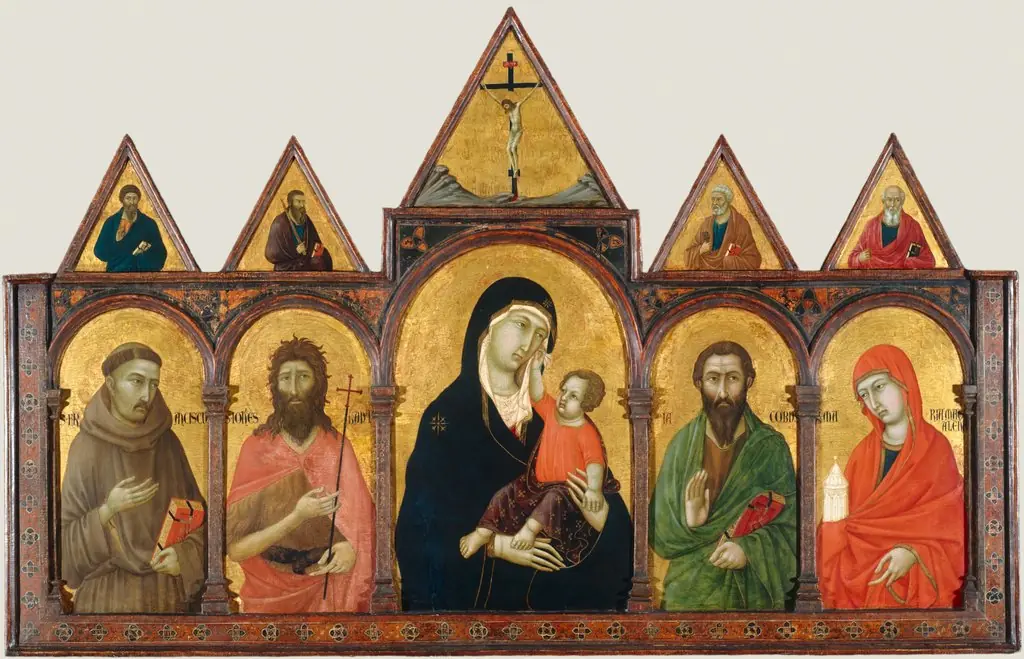
 Madonna and Child, Crucifixion and Saints