Artwork
Maria Francisca Bia (1809-89). Weduwe van Reinier Engelman, echtgenote van Johan Eduard de Vries, actrice en zangeres, in het kostuum van Juffer Serklaas uit het gelijknamige toneelstuk van Hendrik Ja
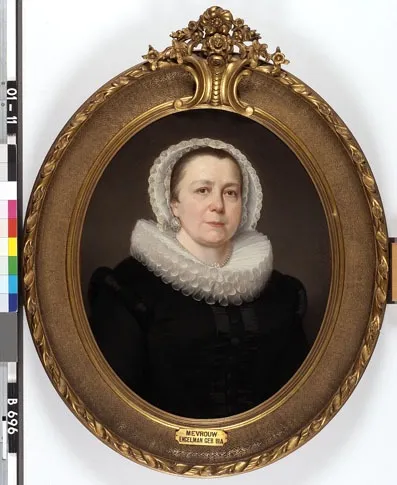
Maria Francisca Bia (1809-89). Weduwe van Reinier Engelman, echtgenote van Johan Eduard de Vries, actrice en zangeres, in het kostuum van Juffer Serklaas uit het gelijknamige toneelstuk van Hendrik Ja is an oil painting by the Biedermeier artist Hendrik Alexander Sangster. It dates from 1866 and is held in the collection of the Rijksmuseum.
About this work
Subject & Meaning
The iconography centers on the fusion of the real-life performer with her stage persona, freezing a moment of her career as a celebrated actress and singer.
The painting depicts Maria Francisca Bia, a Dutch actress and singer, portrayed in the specific costume of the character Juffer Serklaas. This role originates from a play of the same name by Hendrik Janssen, for which the actress performed. Created by Hendrik Alexander Sangster in 1866, the work functions as a theatrical portrait that captures the sitter not merely as herself, but embodied within a dramatic literary figure.
The iconography centers on the fusion of the real-life performer with her stage persona, freezing a moment of her career as a celebrated actress and singer.
Technique & Style
The painting is executed in oil on canvas, measuring 70 cm in height and 57 cm in width. The handling reflects mid-19th-century portrait conventions, with smooth blending and careful delineation of facial features and costume details to convey the subject’s likeness and social role.
The stylistic treatment emphasizes naturalism, particularly in the rendering of Maria Francisca Bia’s physiognomy and the detailed depiction of her theatrical costume as Juffer Serklaas. The composition balances realism with a restrained, dignified presentation of the sitter, consistent with contemporary Dutch portrait practices.
History & Provenance
Hendrik Alexander Sangster executed this oil on canvas portrait in 1866, depicting the actress Maria Francisca Bia in her costume as Juffer Serklaas. The work measures 70 by 57 centimeters. Historical records indicate that the painting was owned by Wilhelmina Engelman.
It subsequently entered the collection of the Cultural Heritage Agency of the Netherlands and is currently held in the depot of the Rijksmuseum.
The portrait of Maria Francisca Bia painted by Hendrik Alexander Sangster in 1866 is part of the Rijksmuseum's collection, listed under inventory number SK-A-2578. It has been exhibited in the museum's historical displays, including the exhibition "Portraits from the 19th Century" held in 2018.
Context
Maria Francisca Bia (1809-89) was the subject of a 1866 portrait painted by Hendrik Alexander Sangster, depicting her in the costume of Juf Serklaas from the eponymous play by Hendrik Ja. The work, classified as an oil on canvas portrait, is housed in the Rijksmuseum's collection and was originally owned by Wilhelmina Engelman. It was created for the Cultural Heritage Agency of the Netherlands Art Collection and remains part of the Rijksmuseum depot.
Scholarship on the piece emphasizes its role within 19th-century Dutch portraiture and its representation of theatrical costume in visual art.
Overview
Hendrik Alexander Sangster’s 1866 oil portrait presents Maria Francisca Bia, a Dutch actress and singer of the mid‑nineteenth century. In the composition she appears in the costume of Juffer Serklaas, the titular role from Hendrik Ja’s contemporary drama. The work is part of the Rijksmuseum’s collection and exemplifies the period’s interest in theatrical portraiture.
Artist & collection
Artist
Hendrik Alexander Sangster (1825–1901) was an artist, born in Nijkerk.

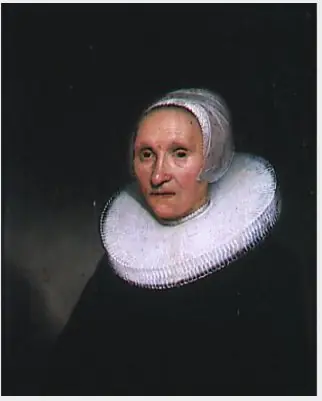
- Portrait of a Lady Aged 55
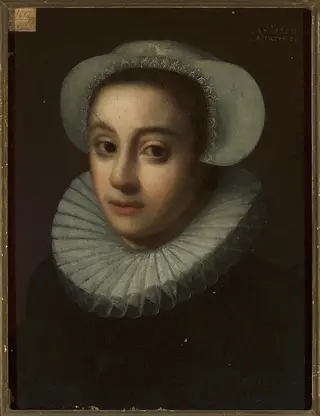 Portrait of a woman
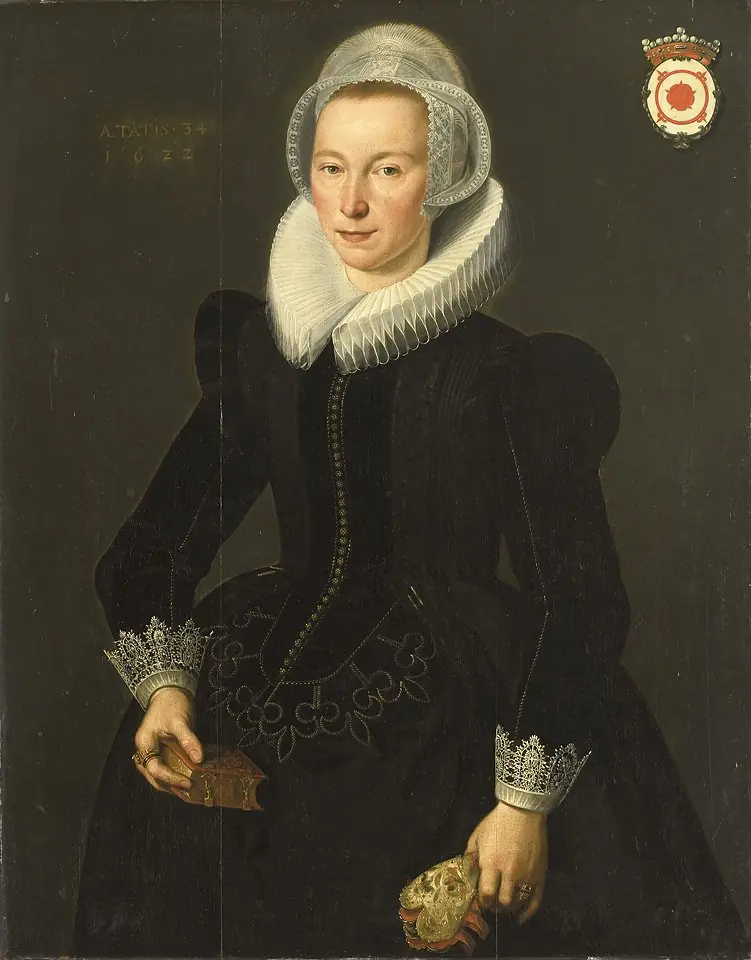 Portrait of Grietje Adriaensdr Grootes (1588-1624)
 Portrait of the mother of the artist Justus Sustermans
 Portrait of a Woman Standing beside a Chair
 Portrait of an unknown woman
 Portrait of Maritge Jansdr. Pesser
 Portrait of Adriana Perez
 Portrait of Lady Raleigh (née Elizabeth Throckmorten) (1565-1647)
 Portrait of Teresa Kicka
 Soția lui J.G. Graf
 Portrait of a woman