Artwork
Title page to Thomas Fuller, Holy State
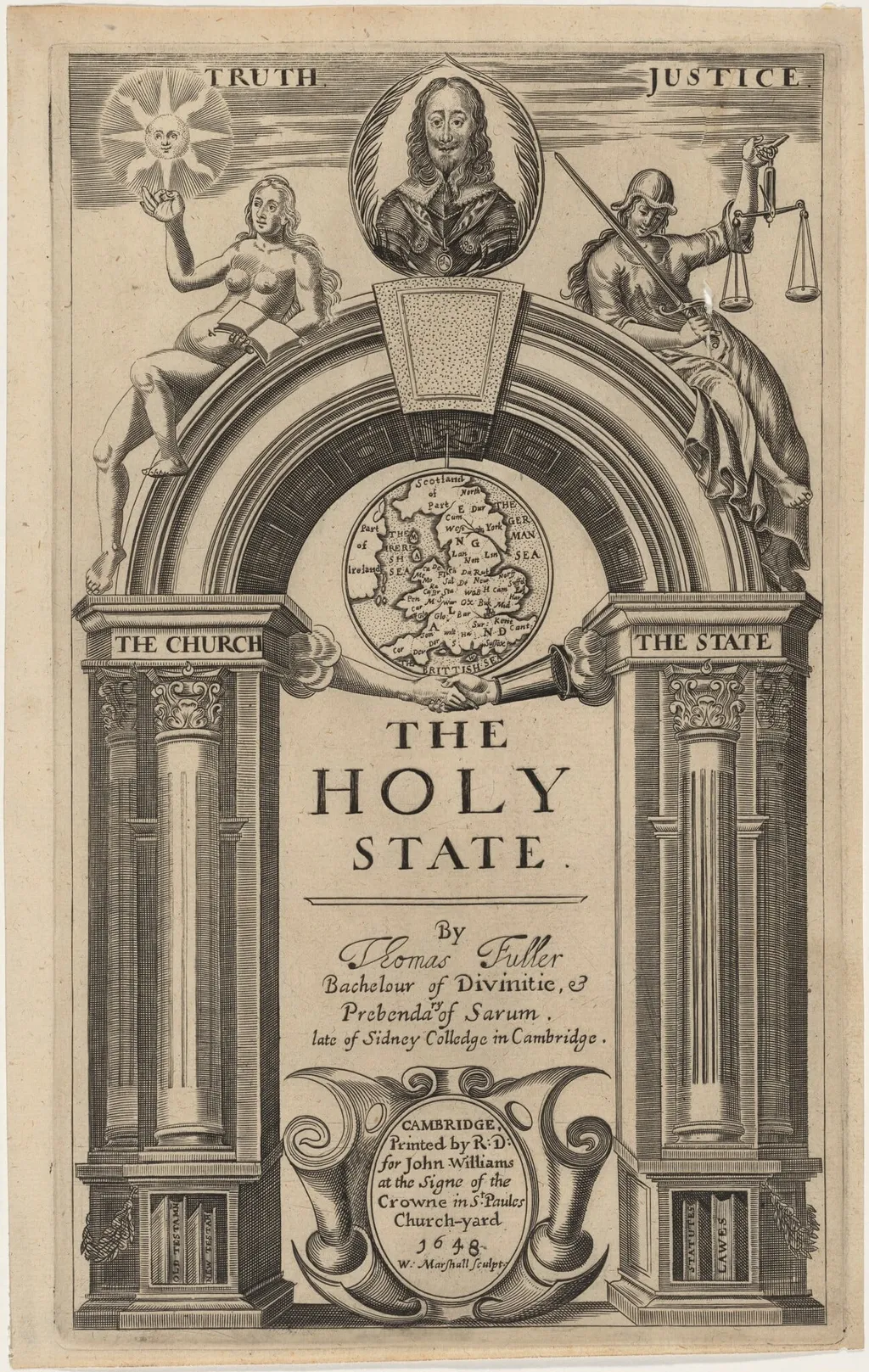
Title page to Thomas Fuller, Holy State is an ink print by the Renaissance artist William Marshall. It dates from 1623 and is held in the collection of the National Gallery of Art.
About this work
Below, a map of Britain is surrounded by text, with two columns labeled "The Church" and "The State.
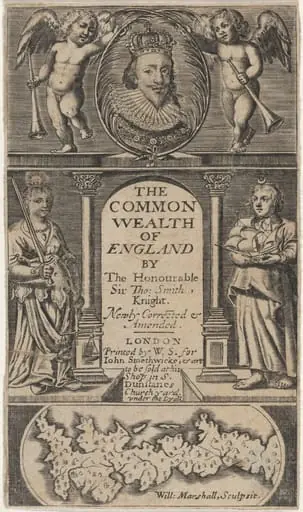
This engraving shows a grand archway with two figures on either side. On the left, a woman holds a sunburst while sitting on a cloud. On the right, a man holds a set of scales.
Above them, a portrait of a man sits in the center. Below, a map of Britain is surrounded by text, with two columns labeled "The Church" and "The State." The title reads The Holy State.
The map shows hands clasping over Britain, symbolizing unity. The text names Thomas Fuller as the author, printed in 1648.
Look up engraving to see how artists carved these detailed lines.
Overview
This 1623 engraving by William Marshall serves as the title page for Thomas Fuller’s 1648 publication, The Holy State. It combines allegorical imagery with cartographic elements to frame the book’s theme: the relationship between religious and civil authority. The composition is structured vertically, with symbolic figures above a detailed map of Britain, all enclosed by inscribed text that anchors the work in its scholarly context.
Subject & Meaning
The engraving presents two allegorical figures: a woman seated on a cloud, holding a sunburst, representing divine illumination or the Church; and a man with scales, symbolizing justice or the State. Above them, a portrait likely depicts Fuller himself, linking authorship with the ideals presented. Below, clasped hands over the map of Britain suggest harmony between spiritual and temporal powers, reinforcing the book’s central thesis of balanced governance.
Technique & Style
Executed in fine-line engraving, the image displays meticulous detail in drapery, facial features, and topographical elements. The use of linear precision characteristic of early 17th-century English printmaking allows for clarity in symbolic elements. The composition is hierarchically arranged, with celestial figures dominating the upper register and terrestrial elements below, reflecting contemporary conventions in emblematic design and moral allegory.
History & Provenance
Though engraved in 1623, the image was first used as a title page in the 1648 edition of Fuller’s work, indicating its reuse across editions. William Marshall, known for his collaboration with publishers and his skill in translating textual themes into visual form, likely produced it under commission. The delay between creation and publication suggests the image was held in reserve, possibly awaiting a suitable textual context.
Context
Created during a period of political and religious tension in England, the engraving reflects contemporary efforts to articulate a stable social order. The emphasis on unity between Church and State aligns with pre-Civil War ideals of harmony, even as such notions would soon be challenged. The map of Britain as a central motif underscores the national scope of Fuller’s inquiry into moral governance.
Legacy
As a representative example of early modern English print culture, this title page illustrates how visual symbolism was employed to convey complex theological and political ideas to a literate public. Its reuse in multiple editions demonstrates its effectiveness as an emblematic frontispiece. Though not widely studied today, it remains a tangible artifact of how print mediated intellectual discourse in the 17th century.
Own this work as a print
Artist & collection

- Title Page to the Bible
 Title Page to the Bible
 Title Page to "The History of Great Britaine" by John Speed
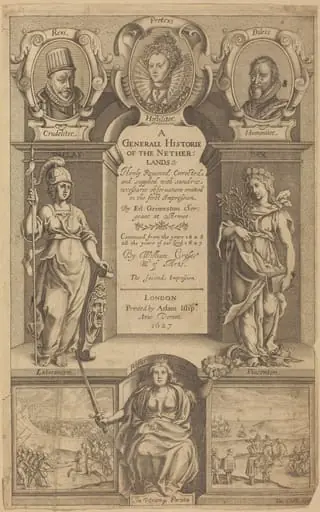 Frontispiece
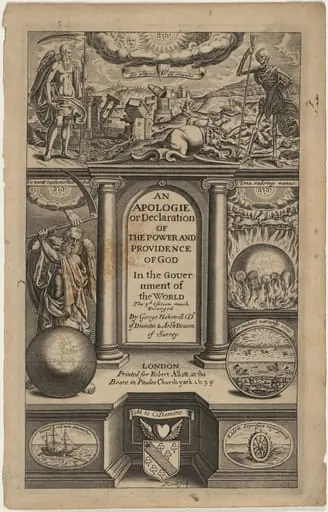 Title Page to An Apologie, or Declaration of the Power and Providence of God
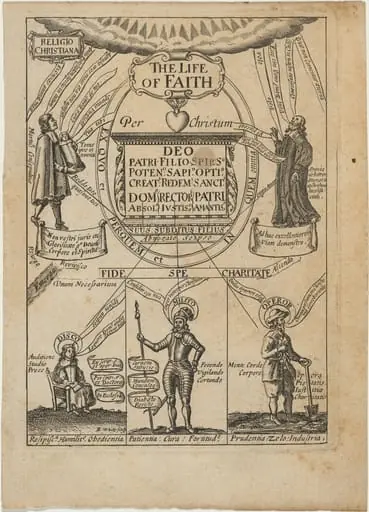 Title Page to The Life of Faith by Richard Baxter
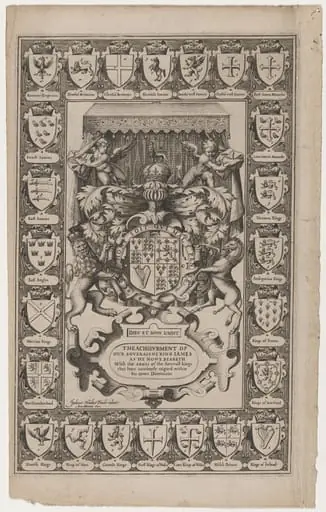 Title Page for the Achievement of our Soveraigne King James
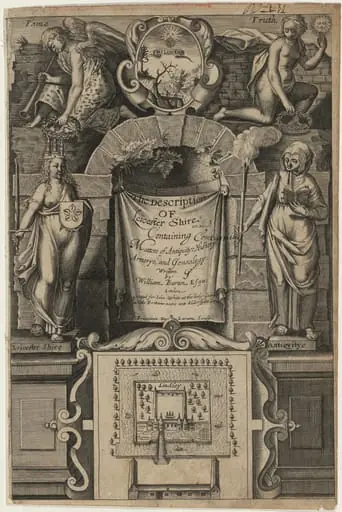 Frontispiece to William Burton, Description of Leicestershire
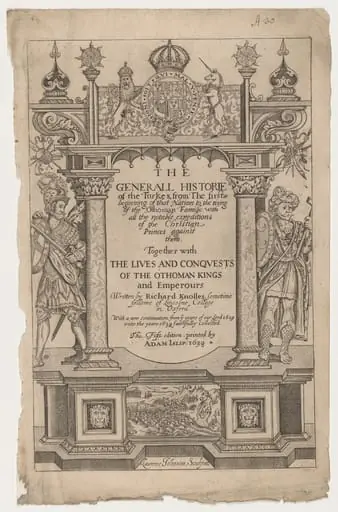 Title Page for R. Knolles Generall Historie of the Turkes
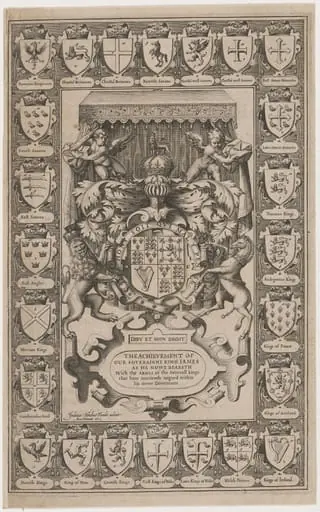 Title Page for the Achievement of our Soveraigne King James
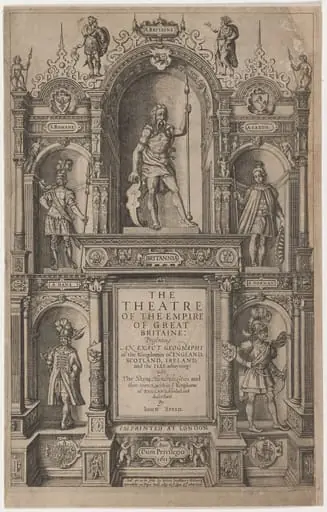 Title Page to "The Theatre of the Empire of Great Britaine" by John Speed
 Title Page to Sir Thomas Smith, The Commonwealth of England