Artwork
The Lamentation
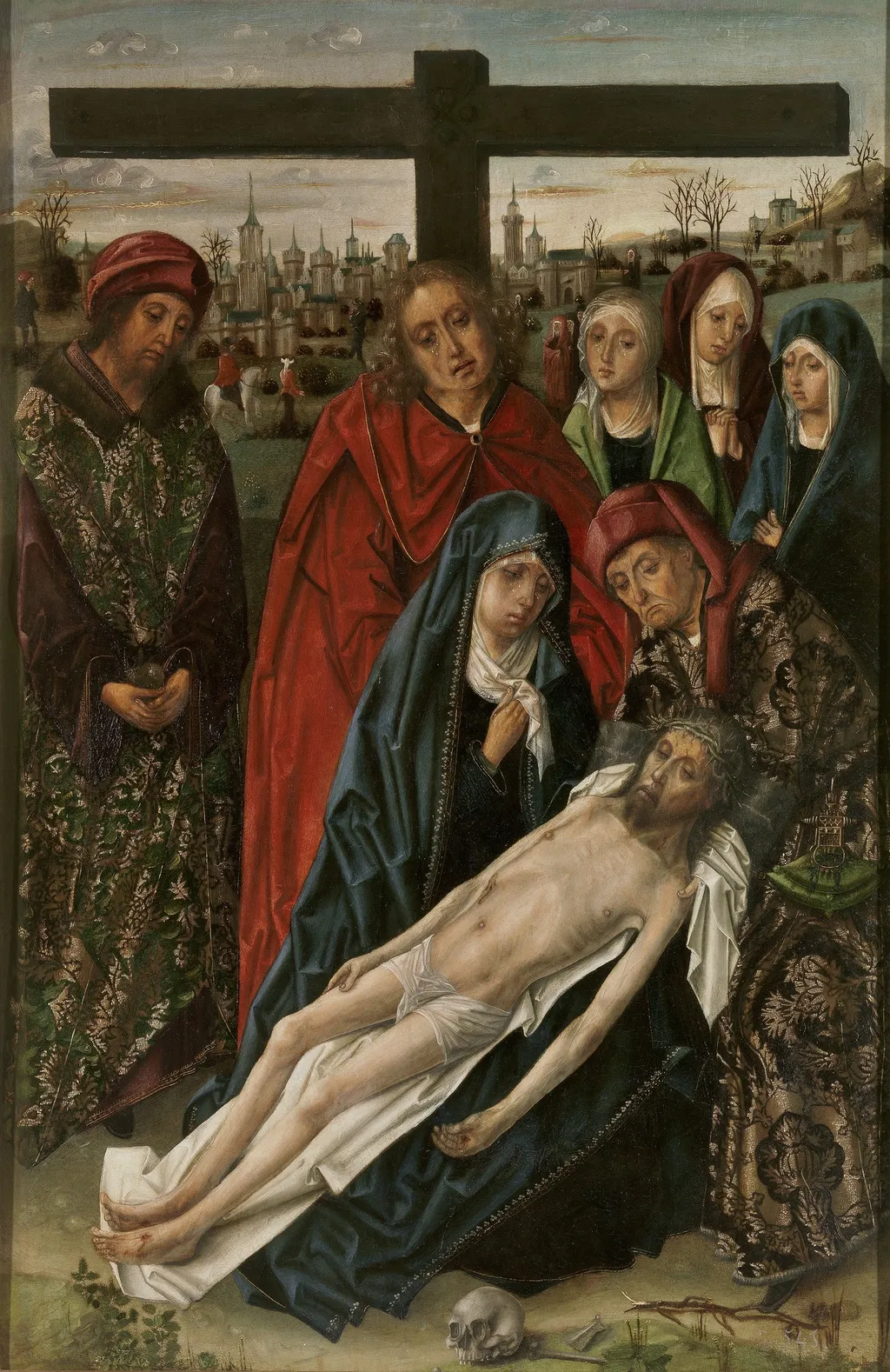
The Lamentation is a mixed painting by the Italo Byzantine artist Maestro de los Luna. It dates from 1496 and is held in the collection of the Museo del Prado.
About this work
Subject & Meaning
Executed in mixed technique on panel around 1496, it passed through the Museo de la Trinidad before entering the Museo del Prado, where it is now held.
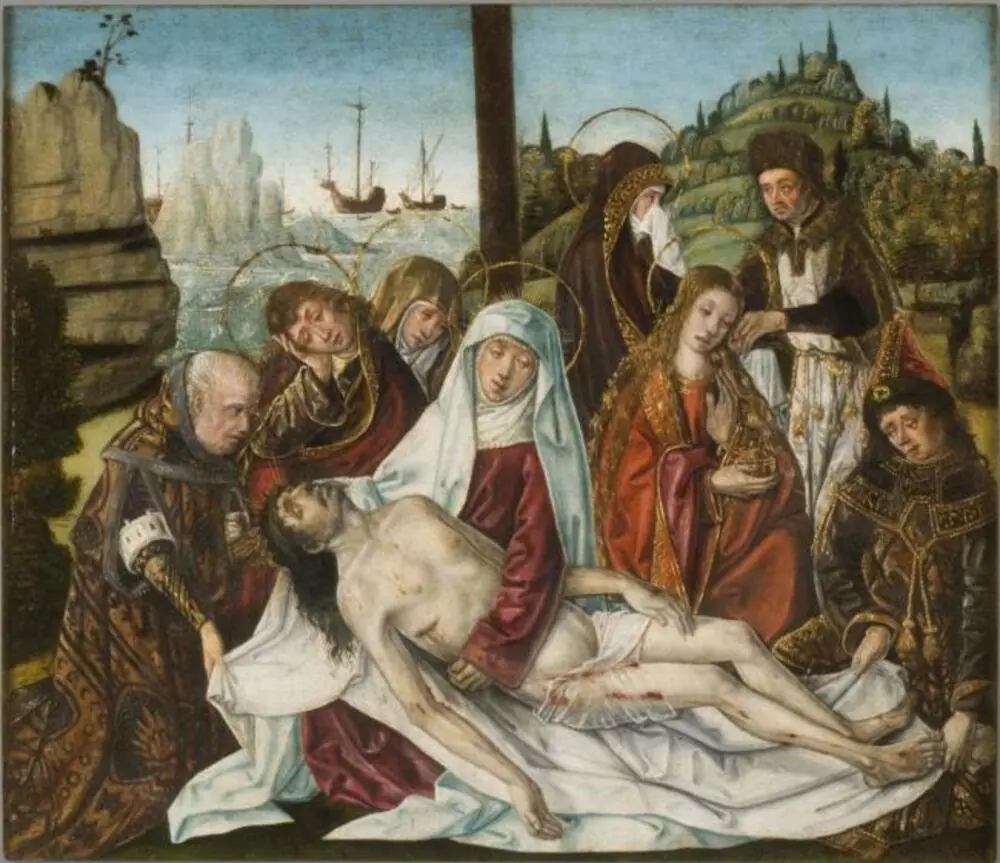
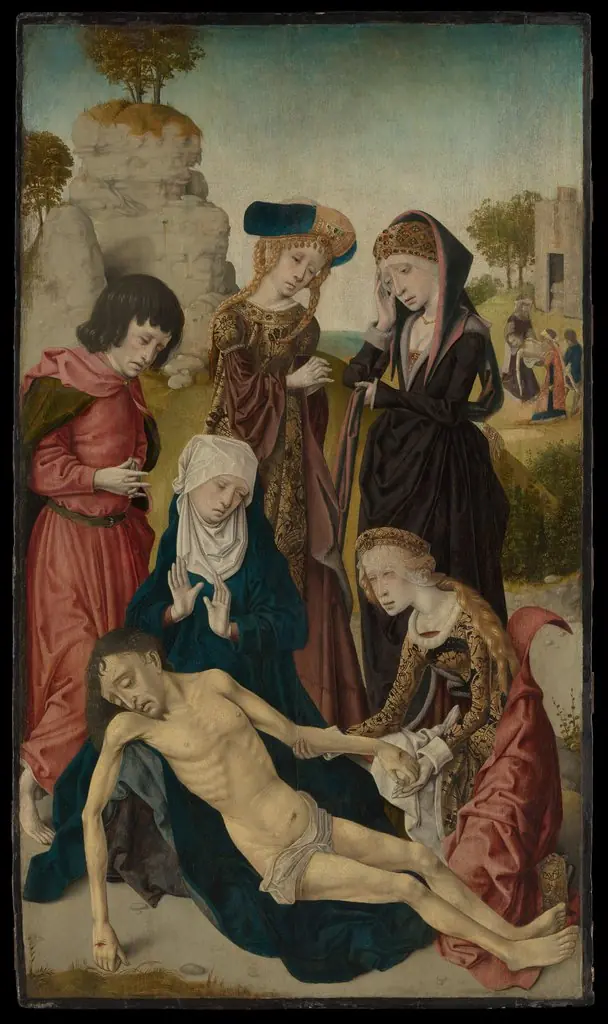
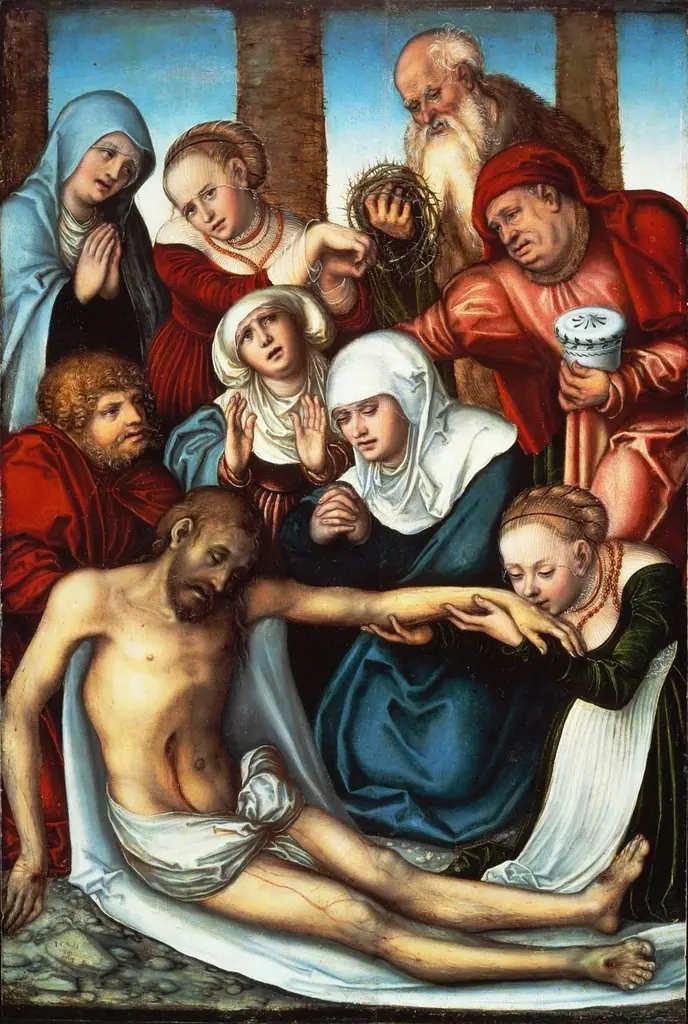
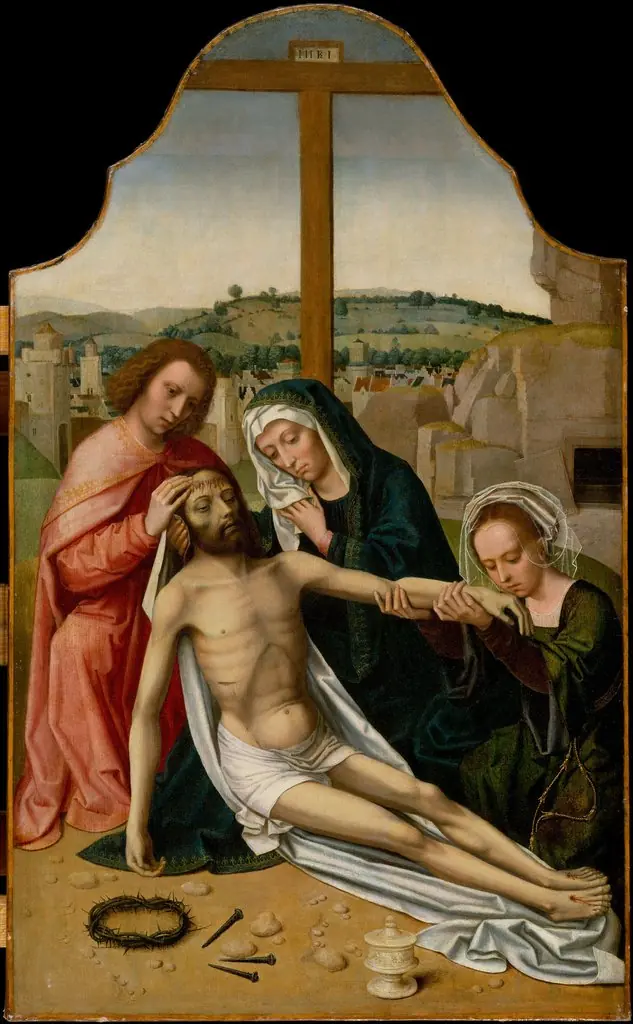
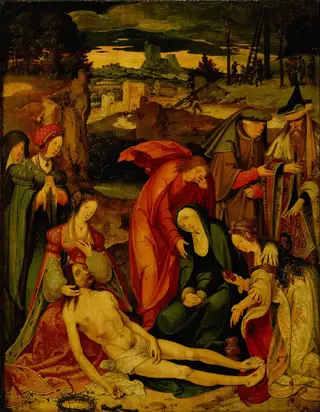
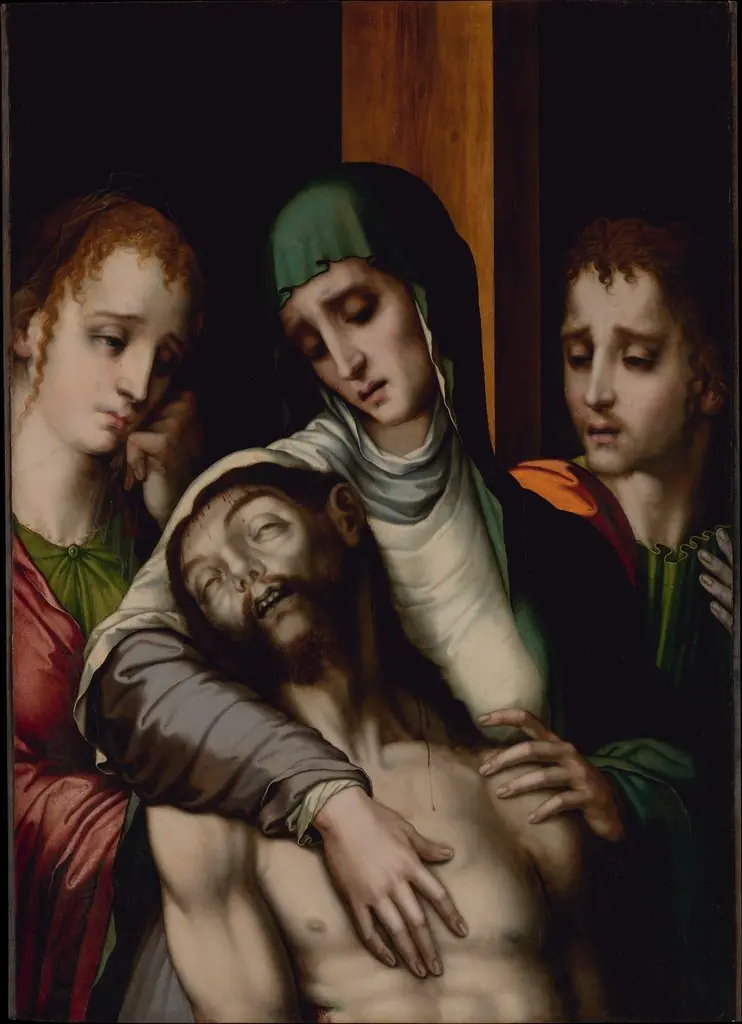
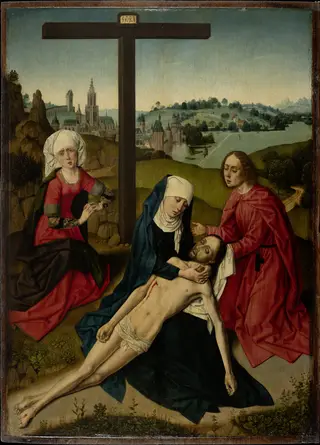
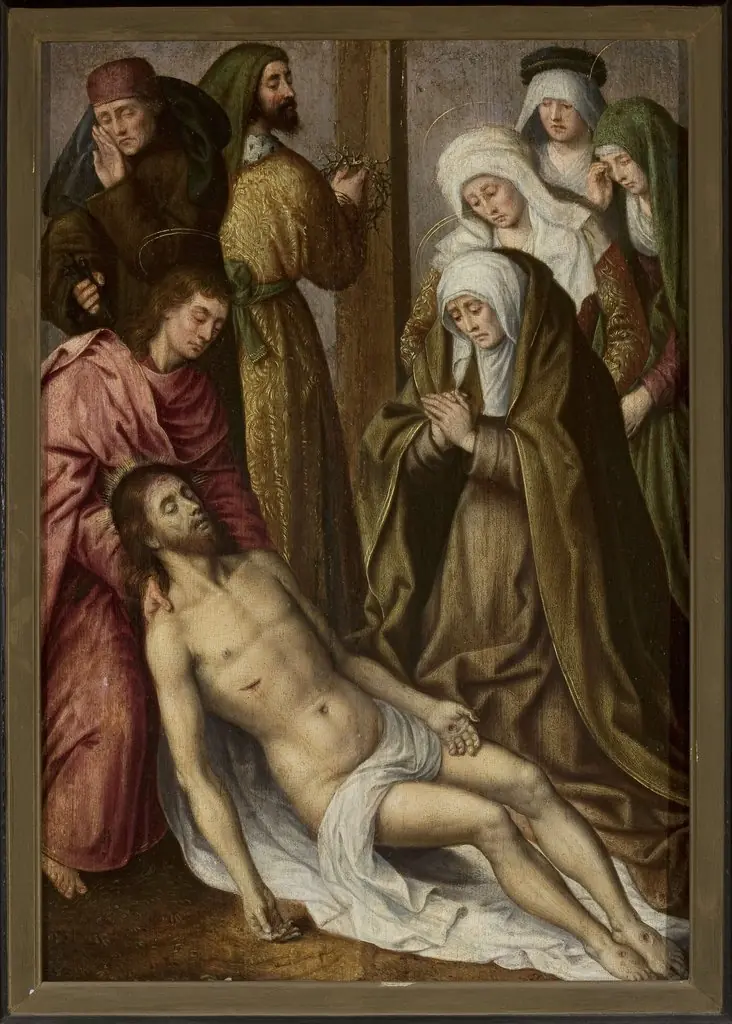
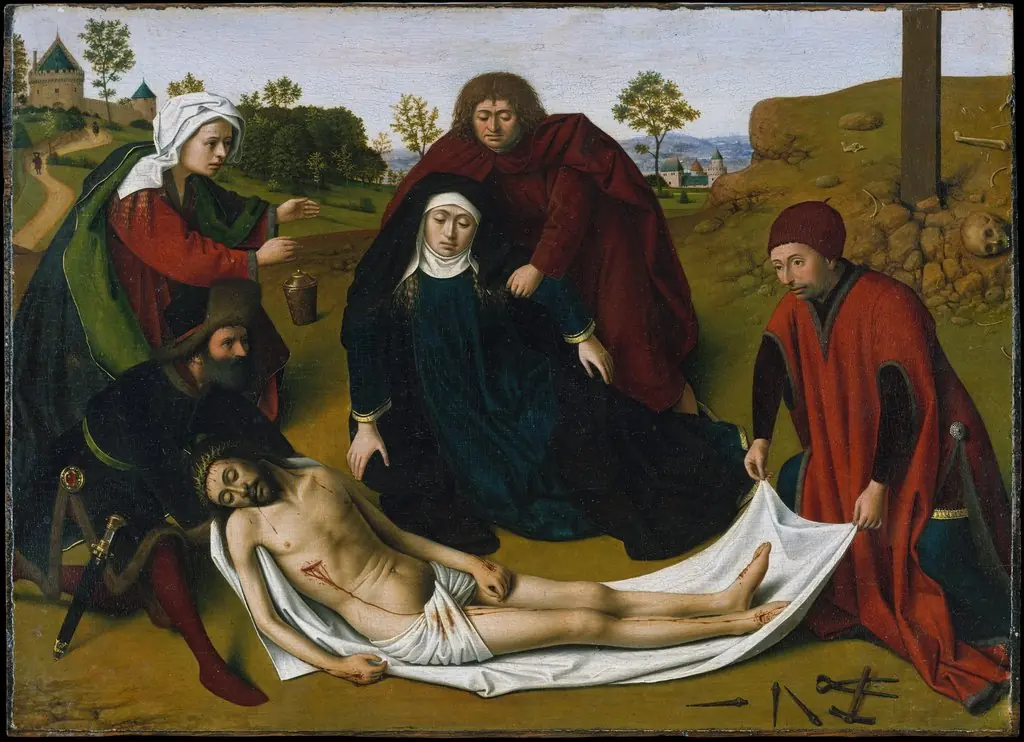
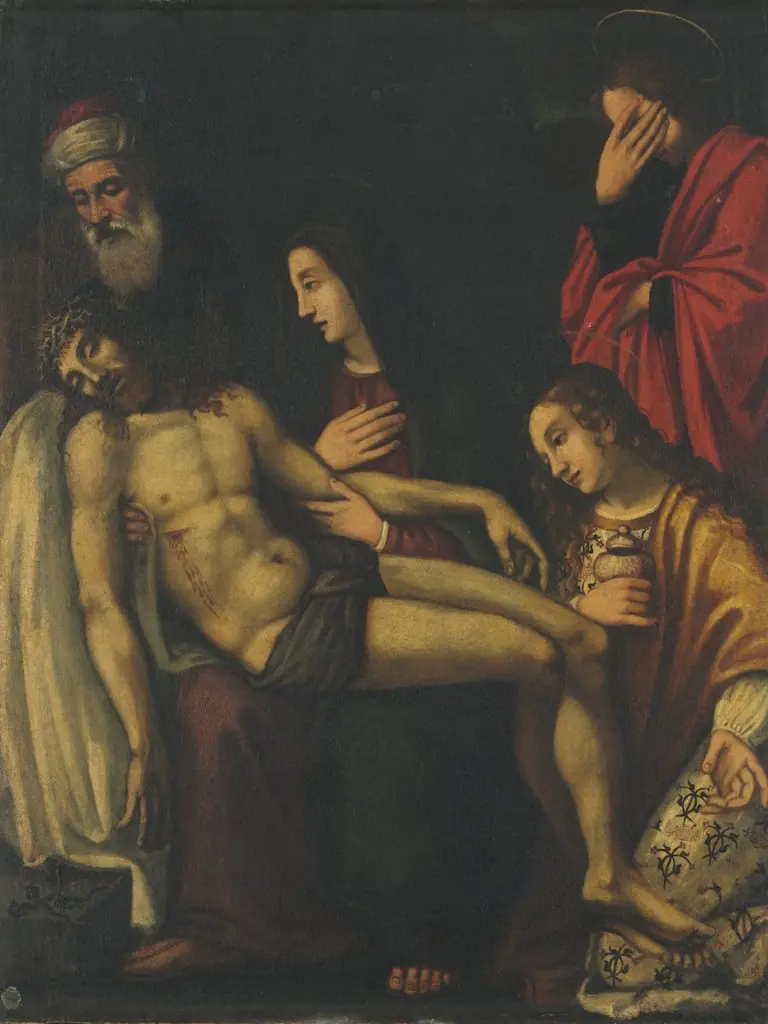
The Lamentation depicts the moment of mourning after the Crucifixion, showing the dead Christ surrounded by grieving figures. Central to the composition are the Virgin Mary, Joseph of Arimathea, Nicodemus, and a skull that serves as a memento mori, while the True Cross appears as a symbolic reminder of the sacrifice. The work belongs to the genre of religious painting and reflects the devotional focus on Christ's suffering characteristic of the period.
Executed in mixed technique on panel around 1496, it passed through the Museo de la Trinidad before entering the Museo del Prado, where it is now held.
Technique & Style
The work employs a mixed technique on a wooden panel support, measuring 105 cm in height and 71 cm in width. The composition centers on the Lamentation of Christ, with subsidiary figures including a skull, the True Cross, Joseph of Arimathea, Nicodemus, and the Virgin Mary. The handling aligns with late fifteenth-century Aragonese practice, characterized by refined figural modeling and a muted palette that emphasizes narrative clarity over dramatic effect.
The layered application of tempera and oil-based glazes produces subtle tonal transitions, particularly in the rendering of drapery and physiognomy.
History & Provenance
The Lamentation was created around 1496 by the anonymous master known as the Maestro de los Luna and is classified as a mixed-technique panel painting. It entered the collection of the Museo de la Trinidad before being transferred to the Museo del Prado, where it is now held and catalogued among the museum's religious paintings. The panel measures 105 cm in height by 71 cm in width. No specific accession number, original commission, or exhibition history is recorded in the available sources.
Overview
The Lamentation is a painting from 1496 by the artist known as Maestro de los Luna. Executed in a mixed technique, this work portrays the somber moment following the crucifixion, where a group of figures gathers around the deceased body of Jesus Christ. It is a significant example of late 15th-century religious art and is housed in the collection of the Museo del Prado.
Own this work as a print
Artist & collection
Artist
Maestro de los Luna, also called the Master of don Álvaro de Luna, is the conventional name given to an anonymous Spanish painter active in Toledo and Guadalajara in the late fifteenth century, roughly between 1483 and 1495.