Artwork
Hl. Ambrosius
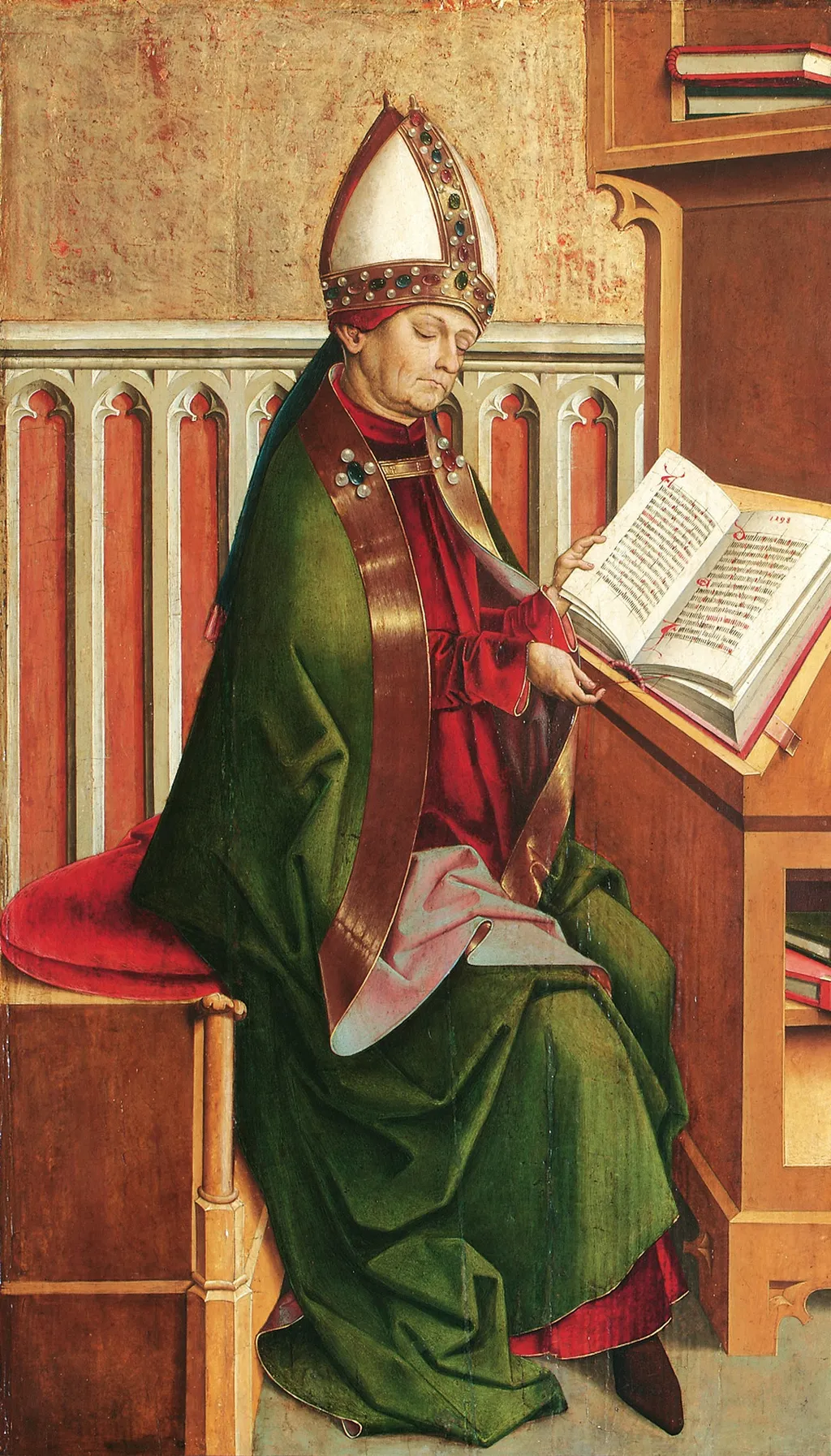
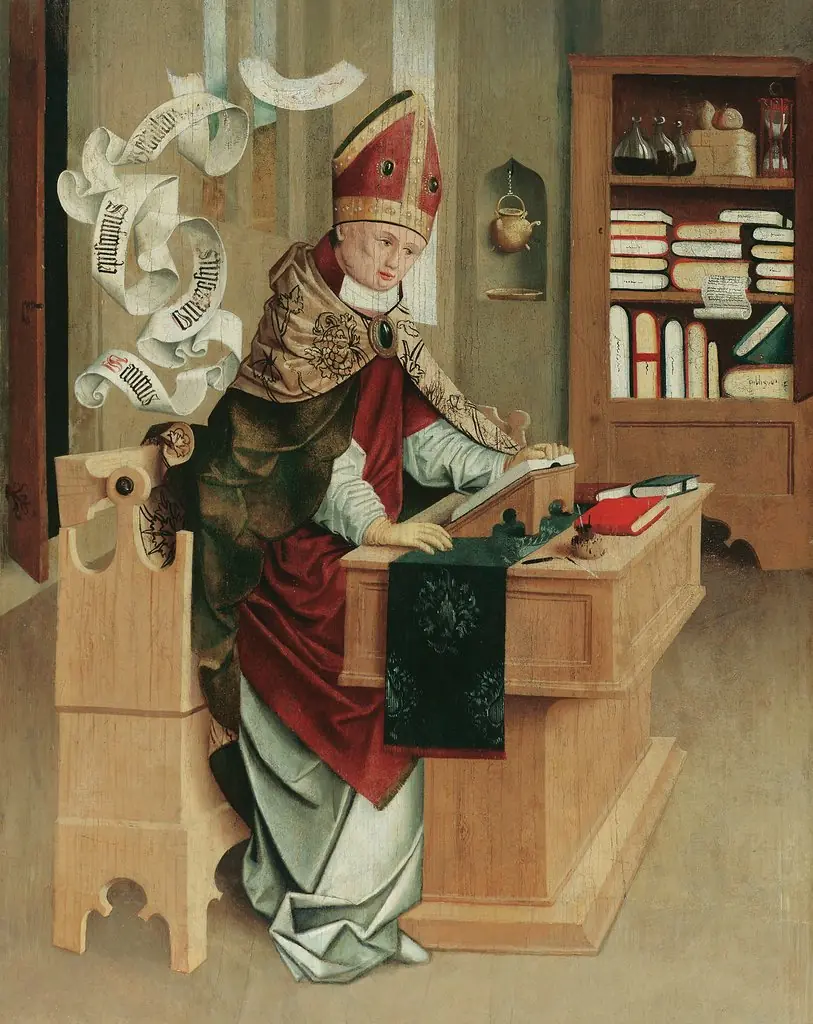
Hl. Ambrosius is an unspecified painting by the Northern Renaissance artist Master of Großgmain. It dates from 1500 and is held in the collection of the Kunsthistorisches Museum. Hl.
About this work
Overview
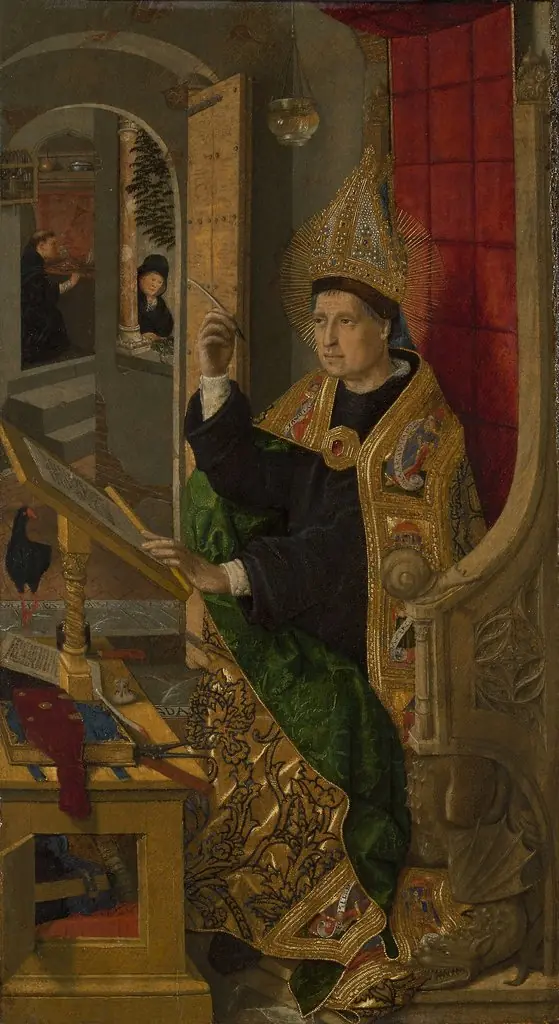
Ambrosius is a panel painting by the anonymous Master of Großgmain, dated 1498, depicting Saint Ambrose, Bishop of Milan.
Hl. Ambrosius is a panel painting by the anonymous Master of Großgmain, dated 1498, depicting Saint Ambrose, Bishop of Milan. Executed in oil on panel, the work measures 67 by 39.5 centimeters and is held in the collection of the Belvedere in Vienna. The painting belongs to a series of Church Father panels produced around 1498 for an unidentified multi-part altarpiece, and it stands as a significant example of late Gothic Austrian panel painting, distinguished by its absorption of Netherlandish oil painting techniques and meticulous attention to material detail.
Subject & Meaning
The painting portrays Saint Ambrose of Milan (c. 339-397), one of the four Latin Church Fathers, in his episcopal role. He is shown seated in three-quarter profile facing right, absorbed in reading a large folio resting on a wooden lectern. His tall white mitre is adorned with jewels and a gold band, while a dark green cloak with gold lining and a jeweled morse at the chest signify his episcopal authority. Beneath the cloak, a red garment is visible. The saint sits on a wooden stool with a red cushion, positioned before a Gothic arcade with pointed arches and red infill that runs horizontally across the background. To the right, a wooden bookcase or repository contains additional books, suggesting a study environment. The golden background indicates that the panel was originally designed as an interior wing of a multi-part altarpiece. The open book displays lines of text with red initials and bears the visible date "1493" on the right page, though the painting itself is dated 1498. The iconography emphasizes Ambrose's identity as a learned churchman and theologian, the teacher who baptized Augustine of Hippo, and a pivotal figure in the establishment of church authority over temporal rulers.
Technique & Style
The Master of Großgmain executed Hl. Ambrosius in oil on panel, employing a smooth and precise brushwork technique that demonstrates exceptional skill in rendering textile textures, architectural details, and the three-dimensional quality of precious materials. The palette is dominated by deep green, crimson red, warm browns, and gold, with light falling evenly from the left to model the folds of fabric and the saint's downward-gazing face. The surface exhibits fine craquelure consistent with its age. Particular attention is paid to the realistic depiction of surfaces: the gold trim, pearls, and gemstones shimmer convincingly, with the jewels rendered with particular three-dimensional effect. The still-life arrangement of books in the repository and the detailed Gothic tracery of the arcade demonstrate the artist's engagement with Netherlandish oil painting traditions and their characteristic delight in detail. The polished, detailed finish and the careful observation of materials, surfaces, and small details such as inscriptions on garment borders required an extraordinary painting technique that the Master of Großgmain introduced into Salzburg and Austrian panel painting.
History & Provenance
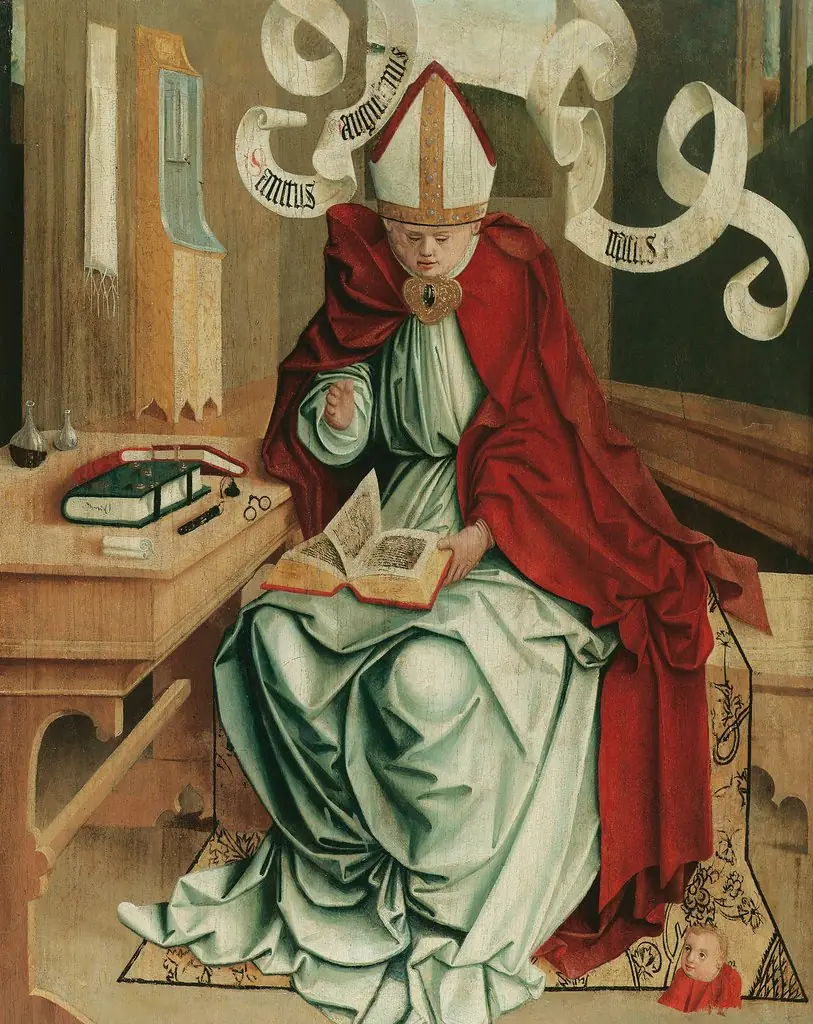
The Hl. Ambrosius was painted around 1498 as part of a series of Church Father panels for an unidentified multi-part altarpiece. Two panels from this series, depicting Saints Ambrose and Augustine, are preserved in the Belvedere; a third panel depicting Saint Gregory is also known to have belonged to the group. The painting entered the collection of the Belvedere in Vienna, where it is now held, and is part of the museum's medieval collection. At the time of documentation, the two panels of Saints Ambrose and Augustine were on display in the exhibition "Rueland Frueauf d. Ä. und sein Kreis" and were scheduled to be presented subsequently in the permanent exhibition.
Context
The Master of Großgmain is an anonymous painter named after four large-format altarpiece panels in the parish church of Großgmain, approximately 15 kilometers southwest of Salzburg. He belongs to that generation of late Gothic artists who engaged with Flemish (Old Netherlandish) oil painting and its particular attention to detail, introducing these insights into Salzburg and Austrian panel painting. His art shows connections with the painters Rueland Frueauf the Elder and the Younger, who were active in Passau and Salzburg, yet it also bears immediate Netherlandish characteristics in color and technique. The linear perspective is not yet uniformly applied, creating a somewhat unfolded spatial impression. The Master of Großgmain is considered one of the most dazzling painter personalities of the late Gothic period, and his works count among the most beautiful and valuable late Gothic art treasures of Austria and the southern German region. Within the broader Großgmain group, art historians have debated the number of hands involved. Otto Demus proposed three distinct painter personalities within the group, assigning the Church Fathers panels and the Death of the Virgin to the most conservative master, "A." Other scholars such as Eva Maria Zimmermann and Elfriede Baum have debated chronology and attribution, with some side panels attributed to a pupil or assistant. The fact that specific characteristics of different masters could appear within a single panel suggests that multiple masters collaborated within larger medieval workshop groups.
Legacy
The Hl. Ambrosius and its companion panels represent a crucial transmission point for Netherlandish oil painting techniques into Central European art. The Master of Großgmain's absorption of Flemish detail culture and his extraordinary technique for rendering materials and surfaces established a standard for quality in late Gothic Austrian panel painting. The Großgmain altarpiece panels, including those in the Belvedere, remain among the most significant surviving works of late Gothic art in the region, testifying to the cosmopolitan artistic connections between Salzburg, Passau, and the Netherlands at the turn of the sixteenth century.
Artist & collection

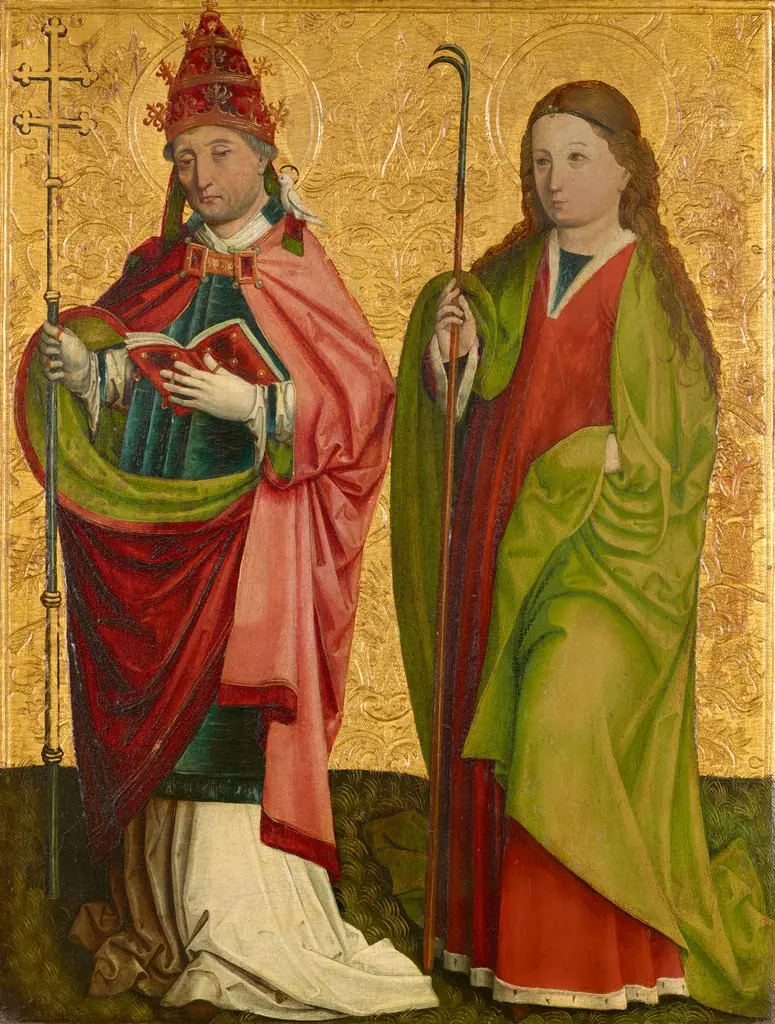 Rechter Flügel des sog. Pretschlaipfer-Triptychons: Hll. Gregor und Agathe (Innenseite); Hll. Erasmus und Barbara (Außenseite)
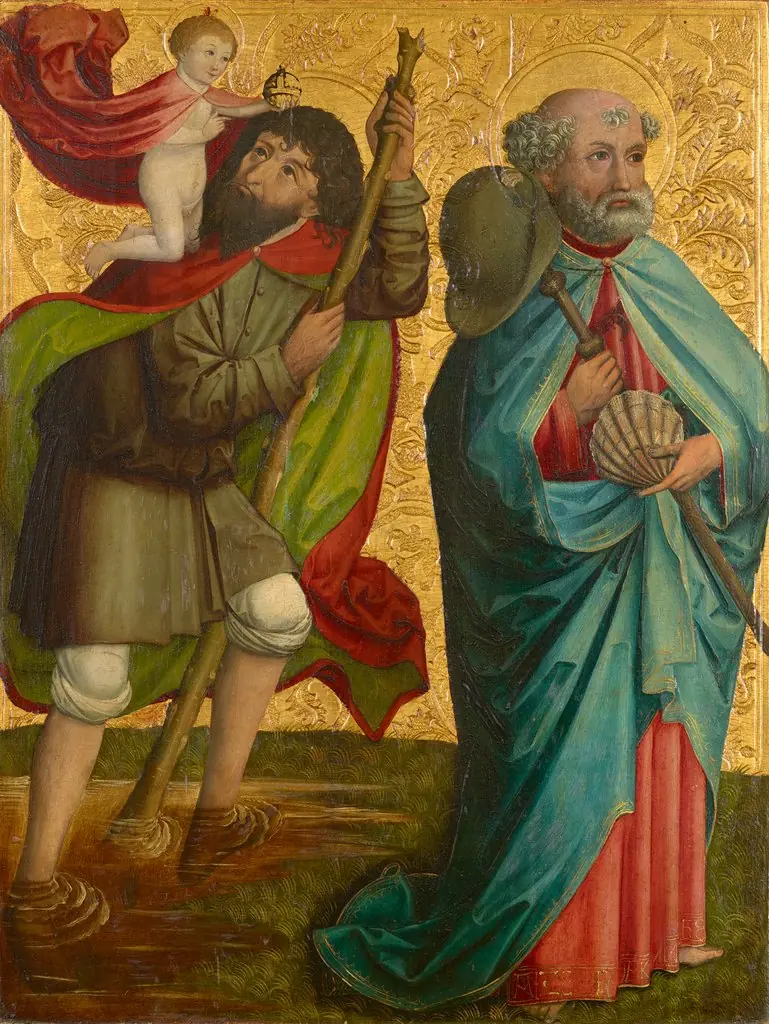 Linker Flügel des sog. Pretschlaipfer-Triptychons: Hll. Christophorus und Jakobus Major (Innenseite); Verkündigung an Maria (Außenseite)
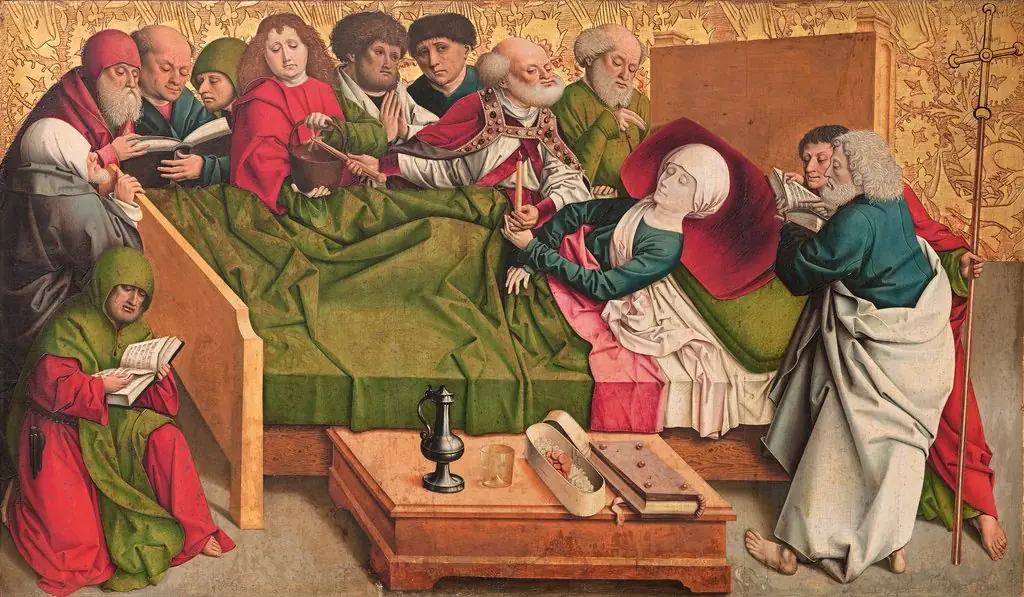 Marientod, Mitteltafel des sog. Pretschlaipfer-Triptychons
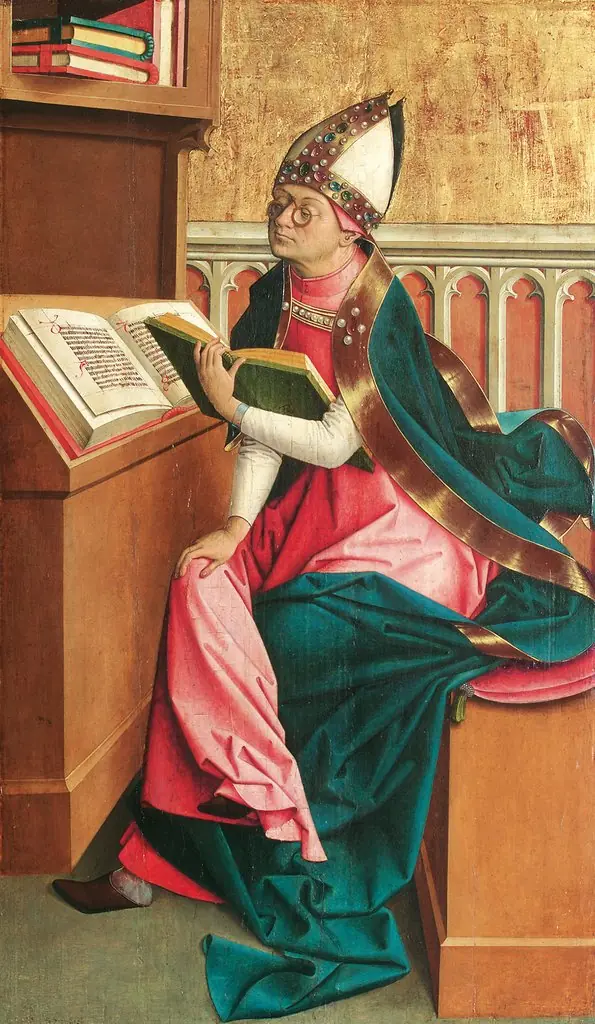
- Hl. Augustinus