Artwork
Saint Augustine
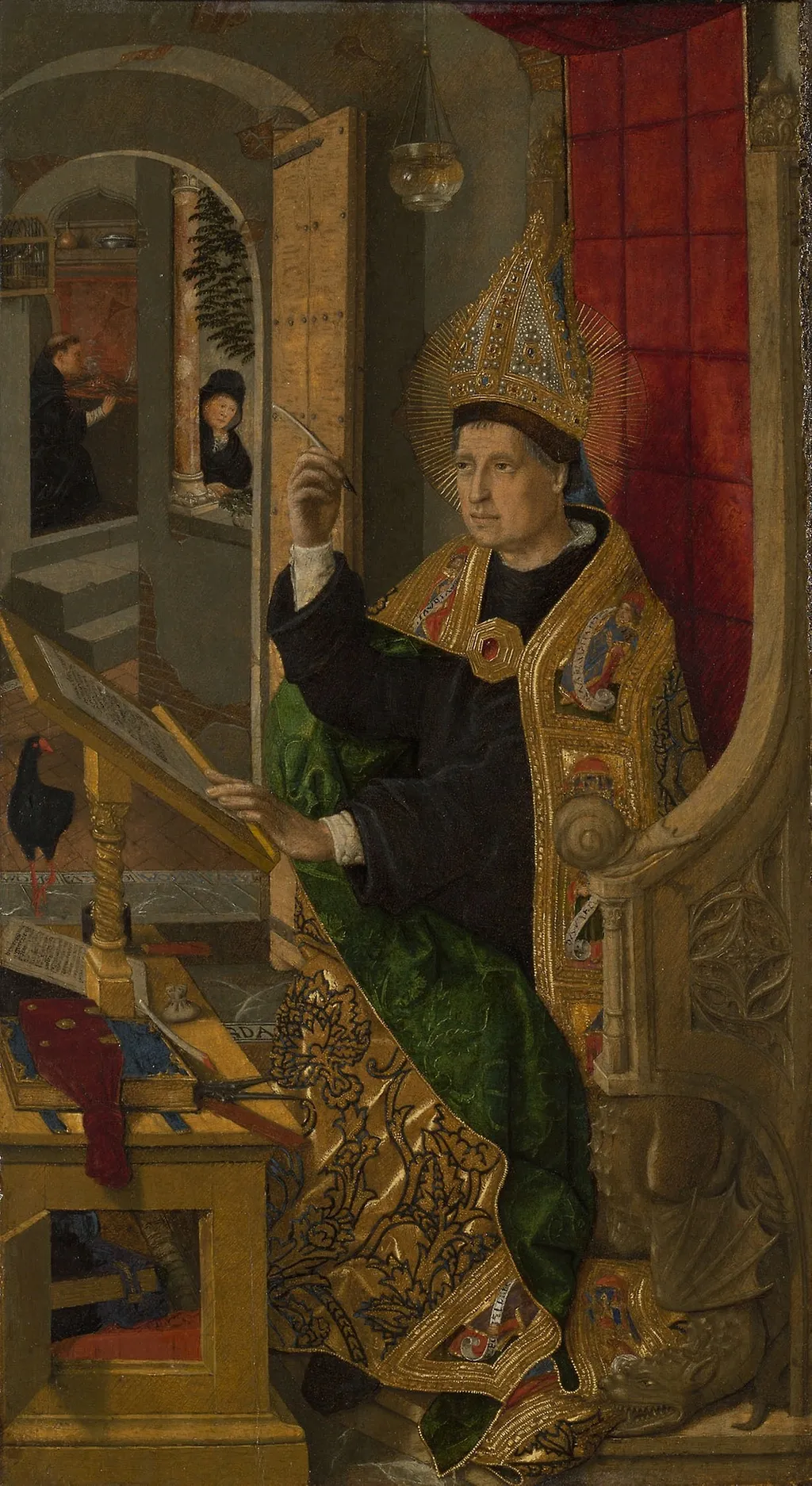
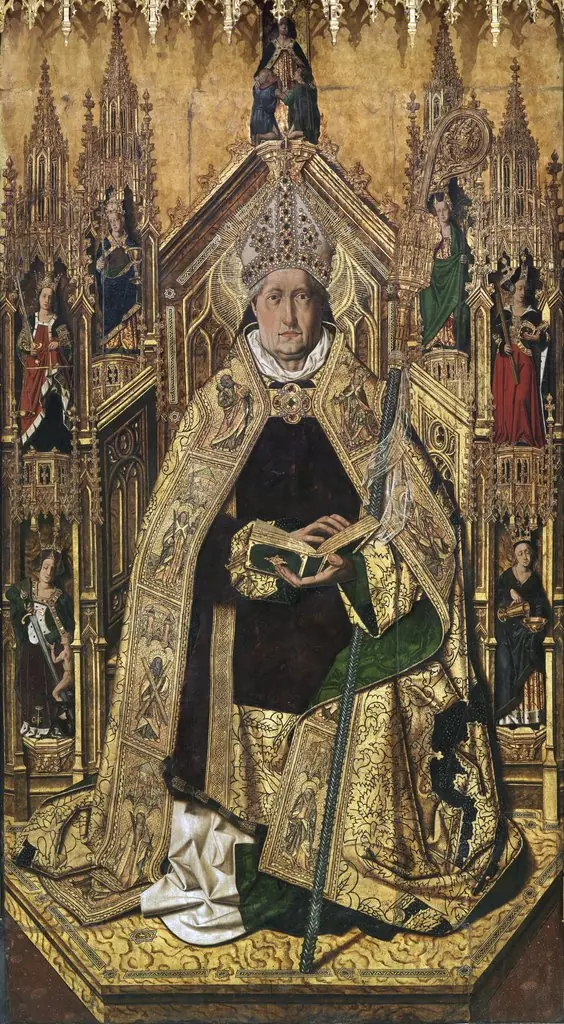
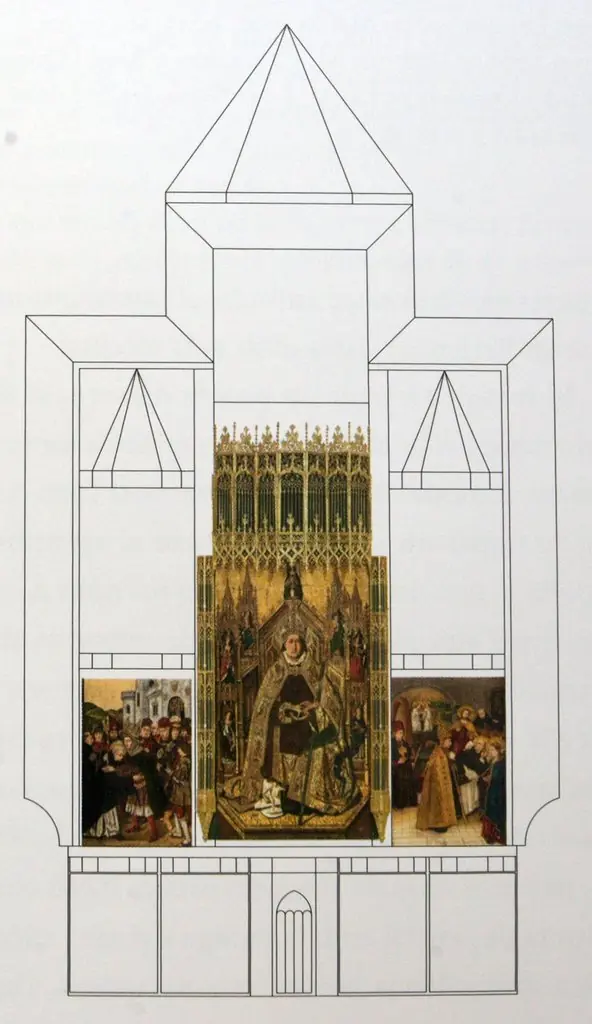
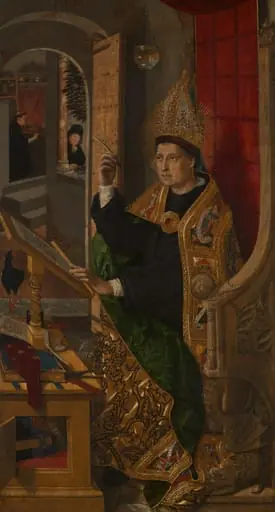
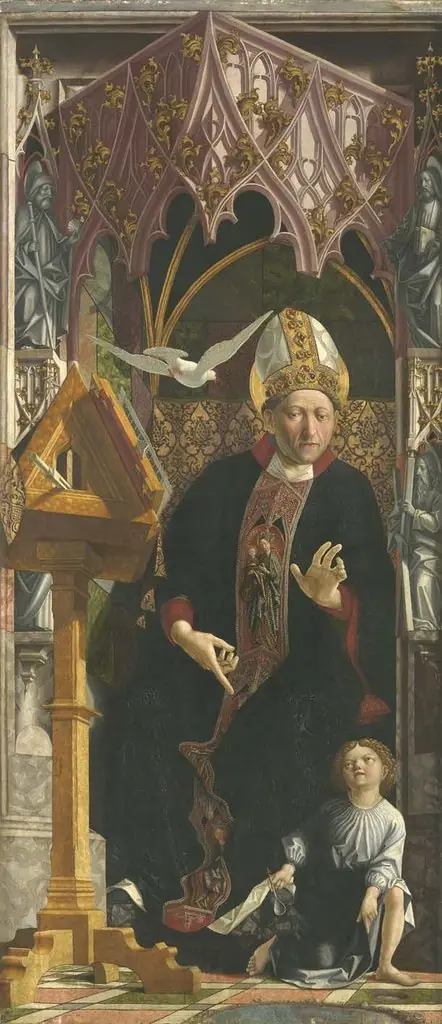
Saint Augustine is an oil painting by the High Renaissance artist Bartolomé Bermejo. It dates from 1491 and is held in the collection of the Art Institute of Chicago.
About this work
Subject & Meaning
The work embodies themes of contemplative scholarship and monastic devotion, reflecting the devotional practices of late‑15th‑century Spanish spirituality.
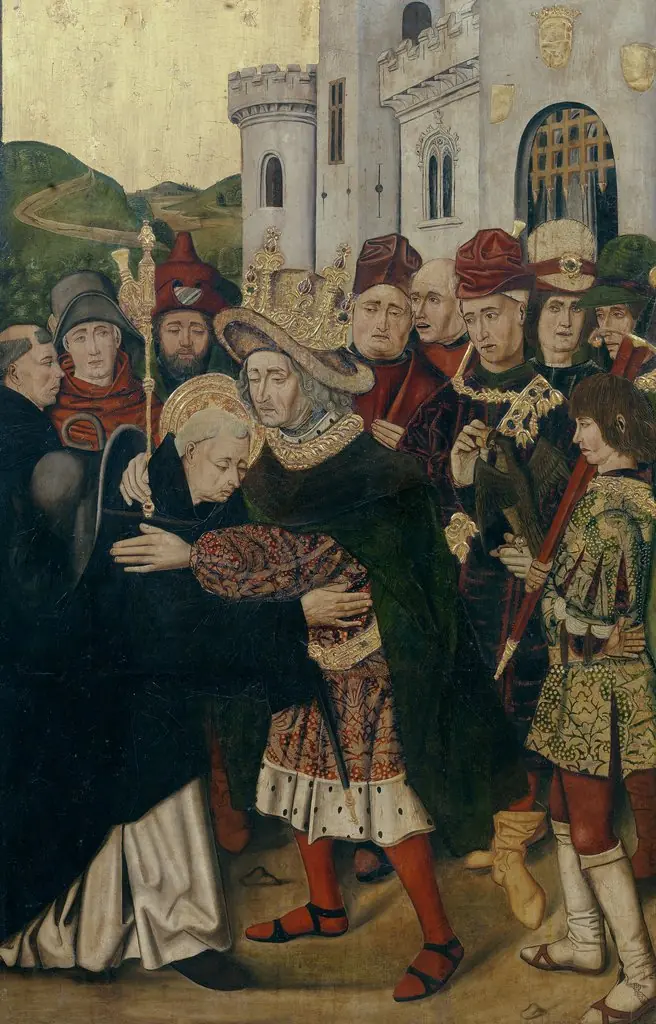
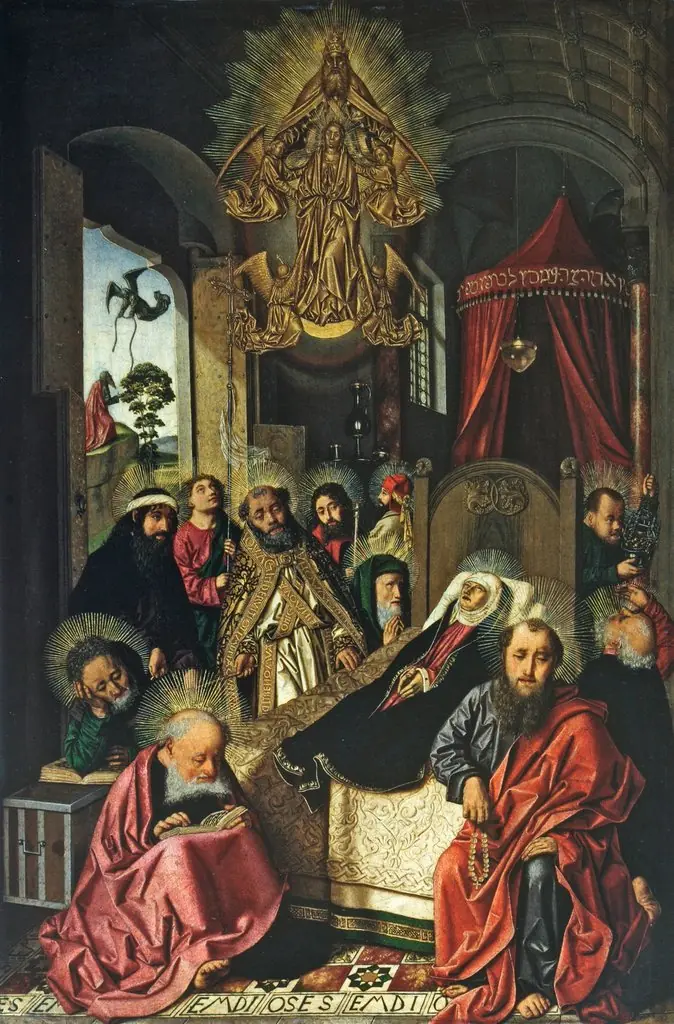
The panel portrays Augustine of Hippo, identifiable by his bishop’s mitre and the flaming heart symbolizing divine love, while Benedict of Nursia appears nearby as a secondary figure. The work embodies themes of contemplative scholarship and monastic devotion, reflecting the devotional practices of late‑15th‑century Spanish spirituality. Executed in oil on panel, the painting measures 48.2 cm in height and 26.8 cm in width, and is housed in the collection of the Art Institute of Chicago.
Technique & Style
Bartolomé Bermejo executed Saint Augustine in 1481 using oil paint applied to a wooden panel support. The work measures 48.2 cm in height and 26.8 cm in width, characteristic of the Renaissance religious art genre. The painting depicts Augustine of Hippo alongside Benedict of Nursia, rendered with the formal precision typical of the artist's style during this period.
History & Provenance
The work was created in 1481 by Bartolomé Bermejo for a religious context, depicting Augustine of Hippo. It was painted in oil on panel and measures 48.2 cm by 26.8 cm. The painting entered the collection of the Art Institute of Chicago, where it remains on display in the Renaissance gallery. Its creation is documented in contemporary records as part of Bermejo's mature period, reflecting his mastery of devotional imagery.
The provenance chain confirms continuous ownership by the museum since acquisition, with no recorded private sales or transfers. The work was commissioned for a religious foundation in Spain before being exported to the United States in the early twentieth century, a transition documented in acquisition files. Its dating relies on stylistic analysis and archival evidence of the artist's workshop activity in 1481.
The painting Saint Augustine by Bartolomé Bermejo, created in 1481, is housed in the collection of the Art Institute of Chicago. It entered the museum's holdings with an accession number that is not specified in the source documentation. The work has been included in exhibitions focused on Renaissance religious art at the institution, though specific exhibition titles and dates are not provided in the available records.
The piece measures 48.2 cm in height and 26.8 cm in width, depicting Augustine of Hippo alongside Benedict of Nursia in a religious composition rendered in oil paint on panel.
Context
Bartolomé Bermejo's 1481 oil painting Saint Augustine, housed at the Art Institute of Chicago, occupies a pivotal position within his oeuvre and the broader Renaissance religious art tradition. The work depicts Augustine of Hippo alongside Benedict of Nursia, reflecting contemporary devotional practices centered on saintly intercession. Art historians situate it within Bermejo's mature period, characterized by intricate detail and narrative complexity, particularly in its depiction of sacred figures against richly textured backgrounds.
Its presence in a major modern collection underscores ongoing scholarly interest in Northern Renaissance artists' contributions to Iberian visual culture, though specific critical commentary on this piece remains less documented than on his more widely studied works.
Overview
This oil painting, created by Bartolomé Bermejo in 1491, is a representation of Saint Augustine. It is currently held at the Art Institute of Chicago.
Artist & collection

Artist
Bartolomé Bermejo was a Spanish painter who adopted Flemish painting techniques and conventions and so is considered as an artist of the Hispano-Flemish style.