Artwork
The Assumption of the Virgin
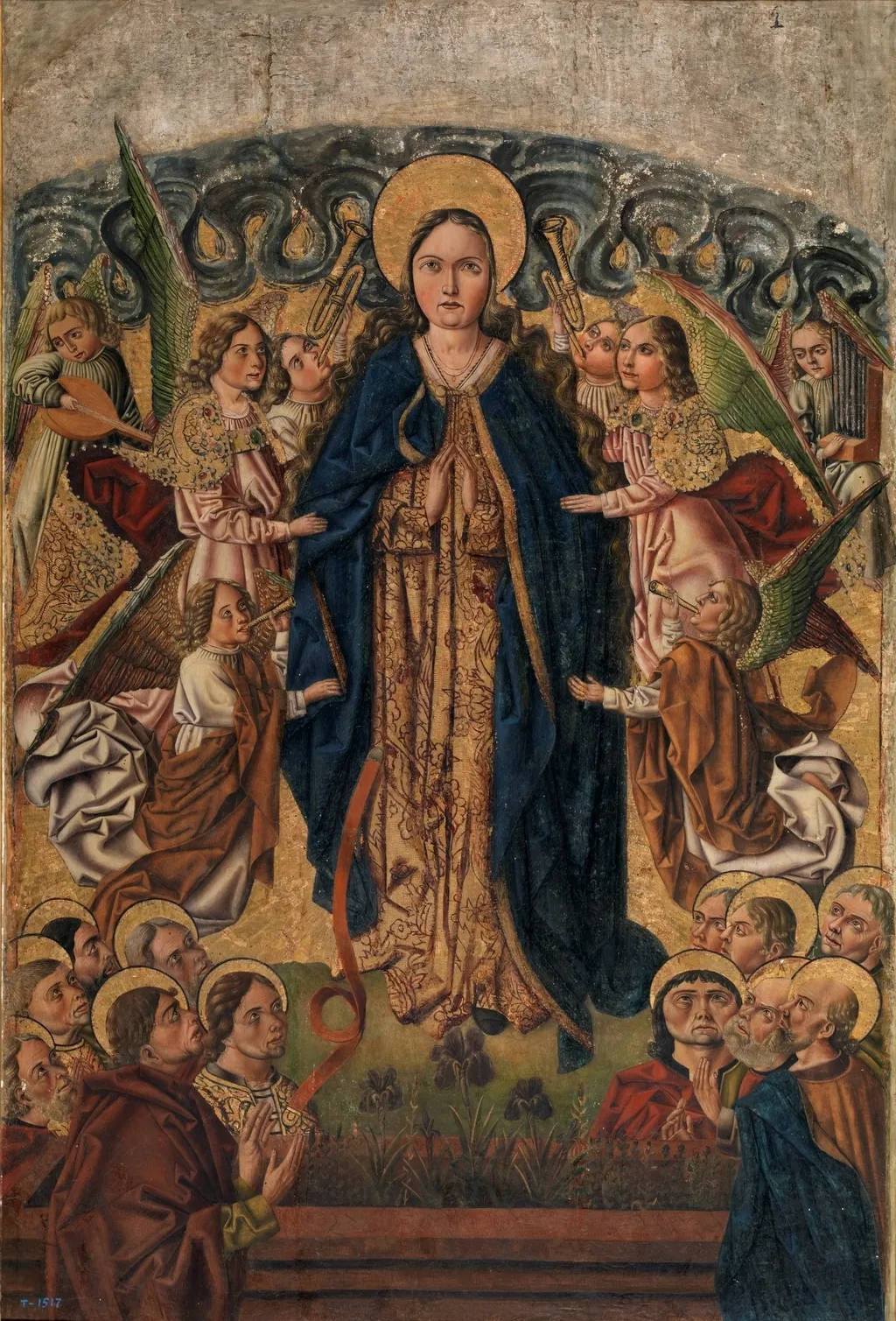
The Assumption of the Virgin is an unspecified painting by the Northern Renaissance artist Master of the Once Mil Vírgenes. It dates from 1496 and is held in the collection of the Museo del Prado.
About this work
Subject & Meaning
Such musical instruments function as iconographic markers of the divine realm, reinforcing the sacred atmosphere surrounding Mary's ascent.
The painting depicts the Assumption of the Virgin Mary, the moment in Christian tradition when Mary is bodily taken up into heaven at the end of her earthly life. Classified as religious art, the work centers this Marian subject as its main theme.
Within the composition, a lute appears among the depicted elements, an instrument commonly associated with celestial harmony and angelic musicians in late medieval and early Renaissance depictions of heavenly scenes. Such musical instruments function as iconographic markers of the divine realm, reinforcing the sacred atmosphere surrounding Mary's ascent.
Together, the Assumption narrative and the symbolic presence of heavenly music convey the work's devotional meaning: a visual celebration of Mary's glorification and the triumph of the sacred over the earthly.
Technique & Style
The panel is executed in oil on poplar, with the figures rendered in a smooth, blended handling typical of late fifteenth-century Flemish practice. The composition is organized in a rising diagonal, from the recumbent apostles at the lower left to the ascending Virgin at the upper right, creating a rhythm that guides the viewer’s eye upward.
Formal qualities include a cool, silvery palette with careful attention to translucent drapery and delicate highlights on metallic objects such as the lute and crown. The landscape recedes in delicate atmospheric perspective, while the cloud-borne Virgin is framed by a mandorla of golden rays, emphasizing her divine elevation.
History & Provenance
The painting known as The Assumption of the Virgin was created in 1490 by the artist identified as the Master of the Once Mil Vírgenes. This religious work, which depicts the Assumption of Mary, is currently held in the collection of the Museo del Prado, where it is also located. The piece measures 156 cm in height and 105 cm in width.
The work is held in the Museo del Prado, Madrid, where it remains in the permanent collection.
Its inventory record at the Museo del Prado is not specified in the cited sources. The painting entered the museum’s holdings as part of its historical collection, aligned with the institution’s focus on Spanish and Flemish early Netherlandish works.
Overview
The Assumption of the Virgin, painted in 1496 by the anonymous Master of the Once Mil Vírgenes, is a devotional work now in the collection of the Museo del Prado. The composition centers on the Virgin Mary ascending on a cloud, surrounded by a retinue of angels and observed by a group of terrestrial figures below.
Context
The painting reflects the devotional climate of post‑Reconquista Spain, when Marian cults were especially prominent. Its inclusion of musical angels aligns with contemporary liturgical practices that linked music to heavenly worship, while the earthly observers embody the faithful’s aspiration to share in the Virgin’s exaltation.
Own this work as a print
Artist & collection
Artist
Master of the Once Mil Vírgenes
Master of the Once Mil Vírgenes is the conventional name given to an anonymous Spanish painter known only through surviving work, with no documented identity.

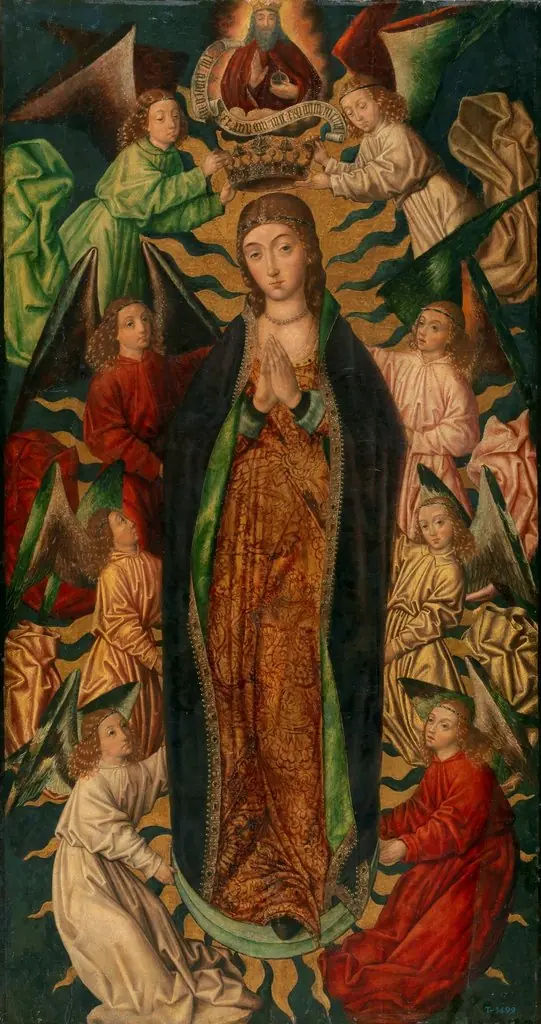 The Assumption and Coronation of the Virgin
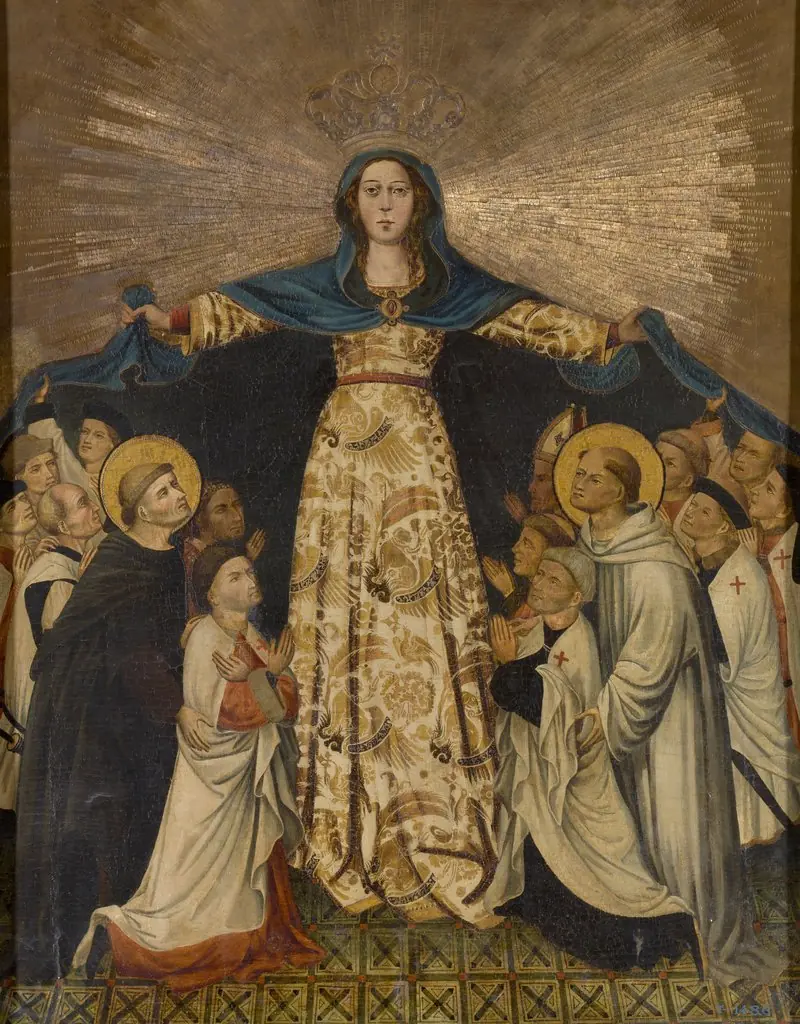 Nuestra Señora de Gracia y los grandes maestres de Montesa
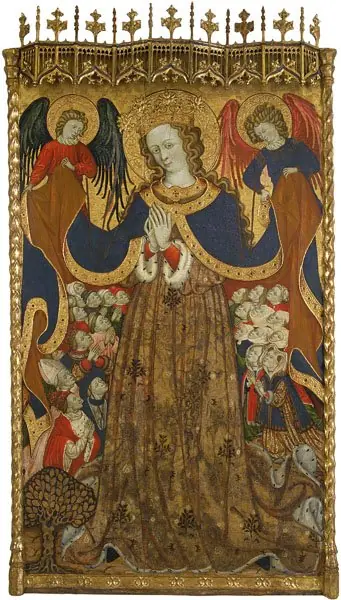 Our Lady of Mercy
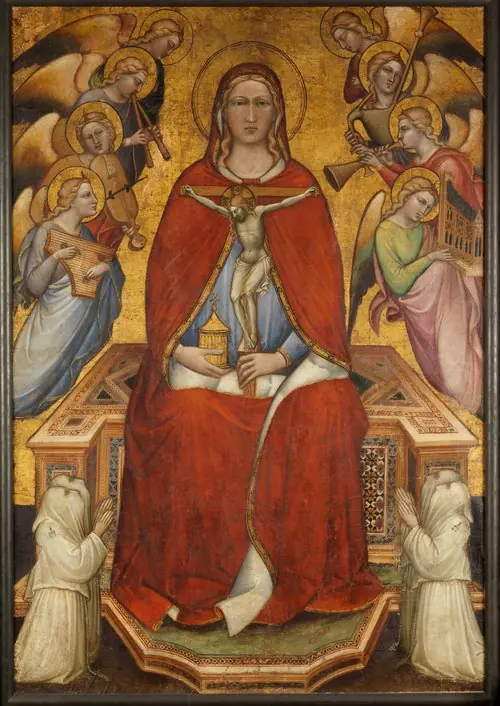 Processional Banner
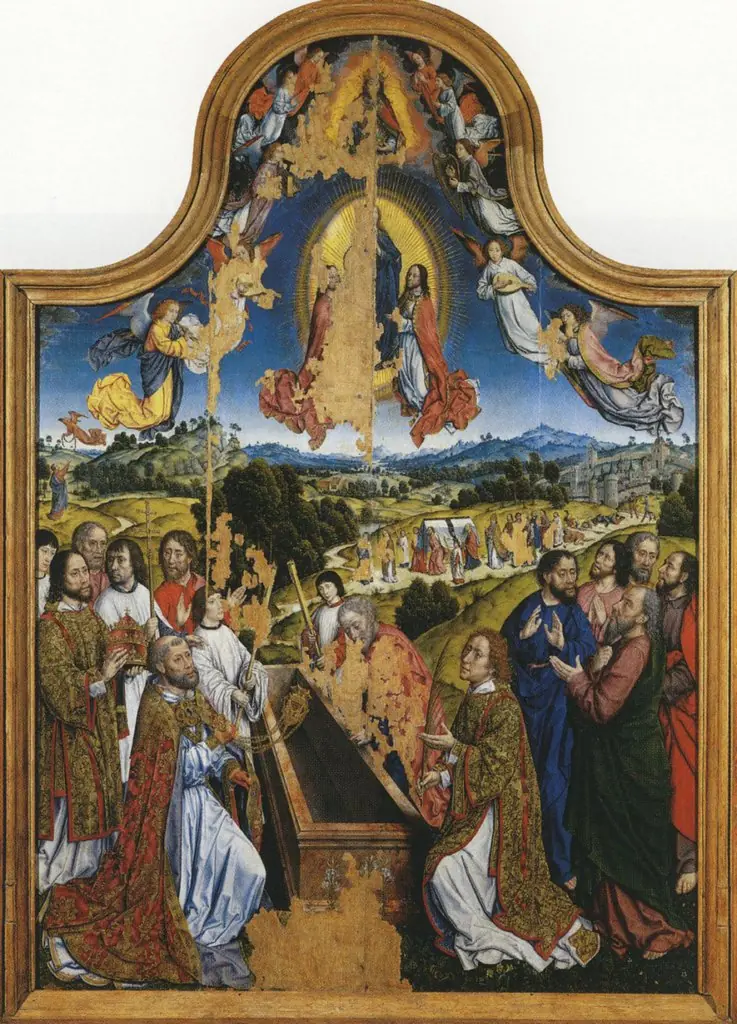 Assumption of the Virgin
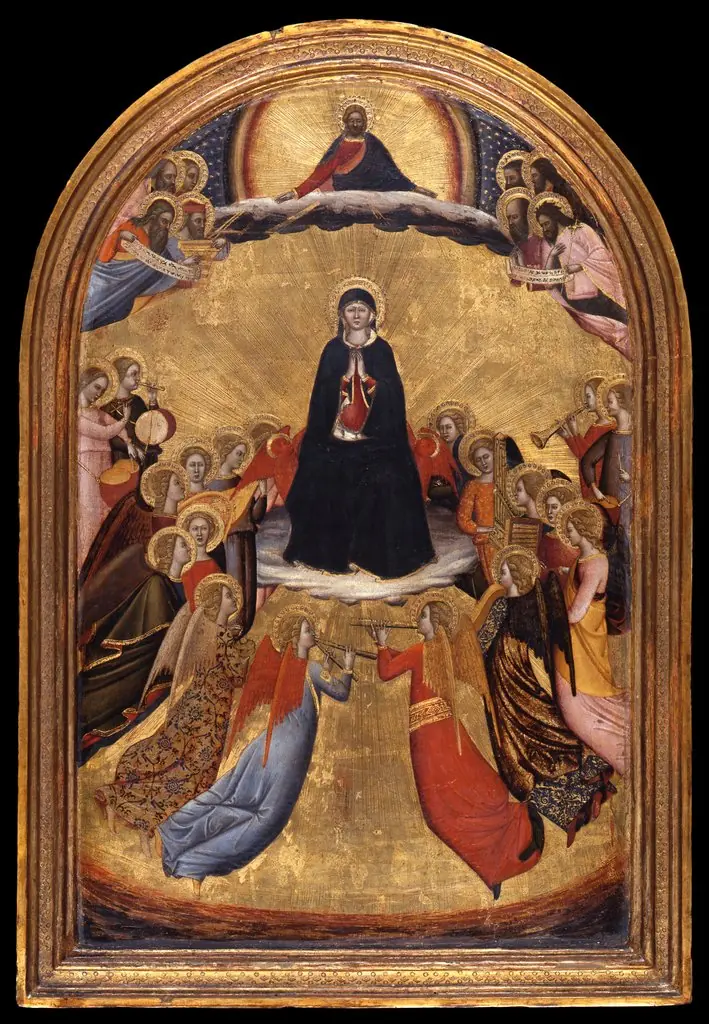 The ascension of Mary
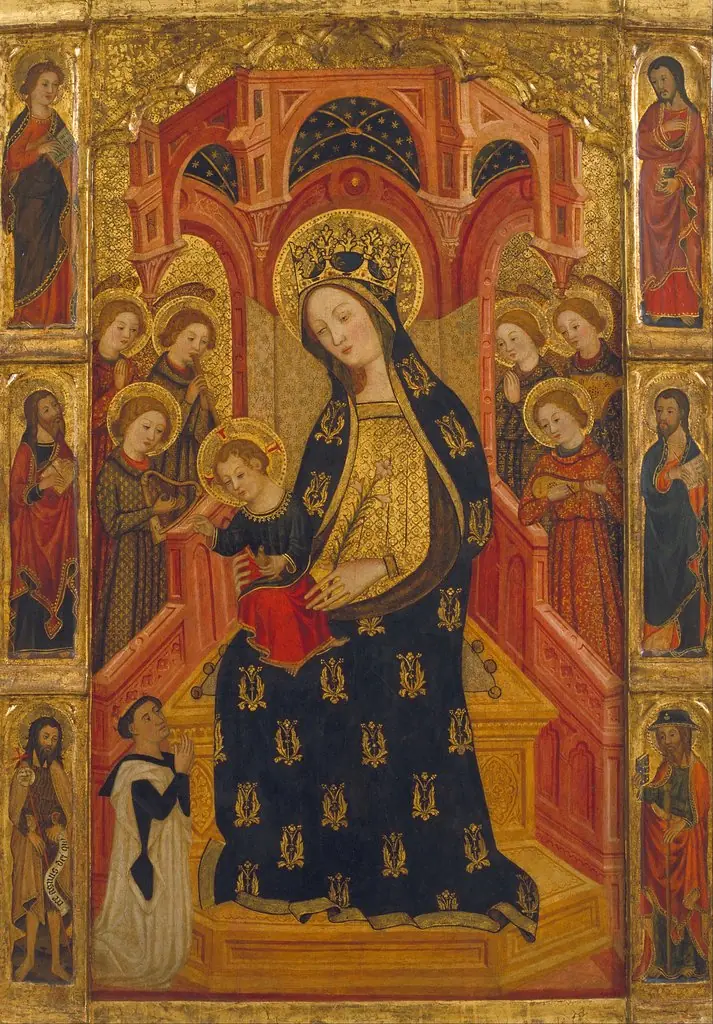 Virgin of the Angels
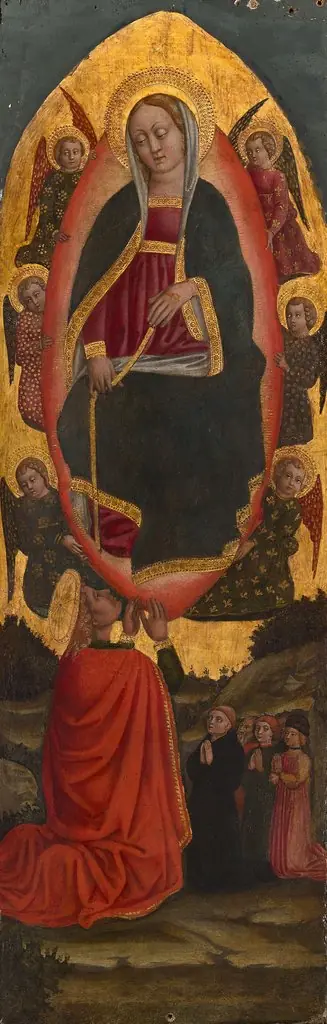 The Assumption of the Virgin with Saints from an Augustinian altarpiece
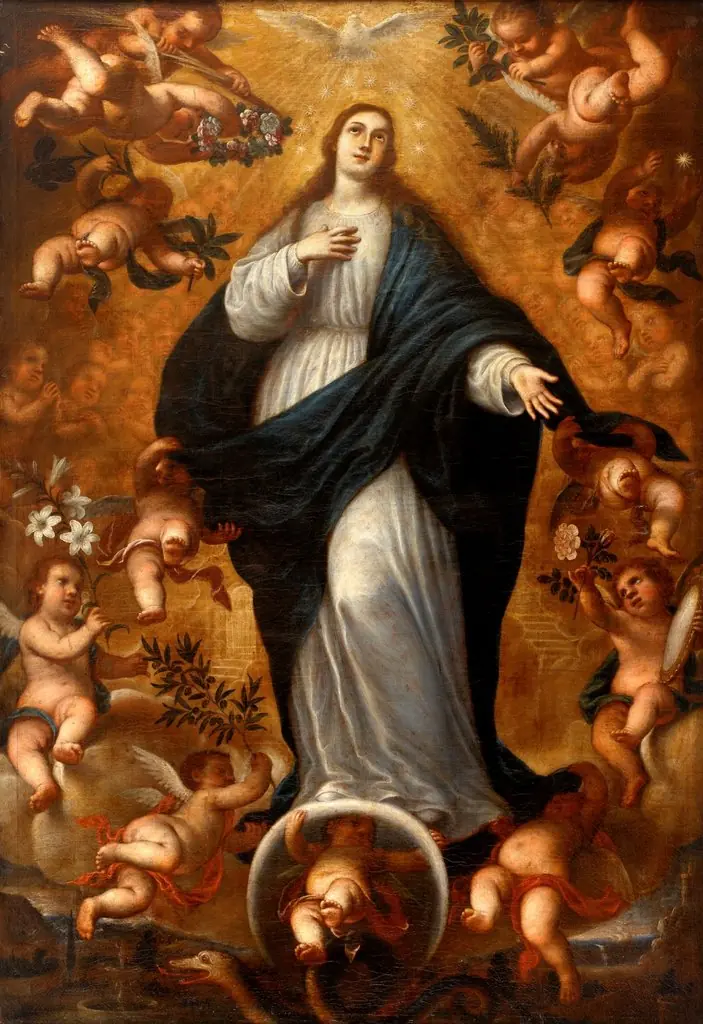 La Purísima
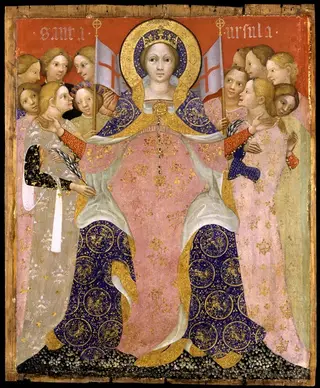 St Ursula
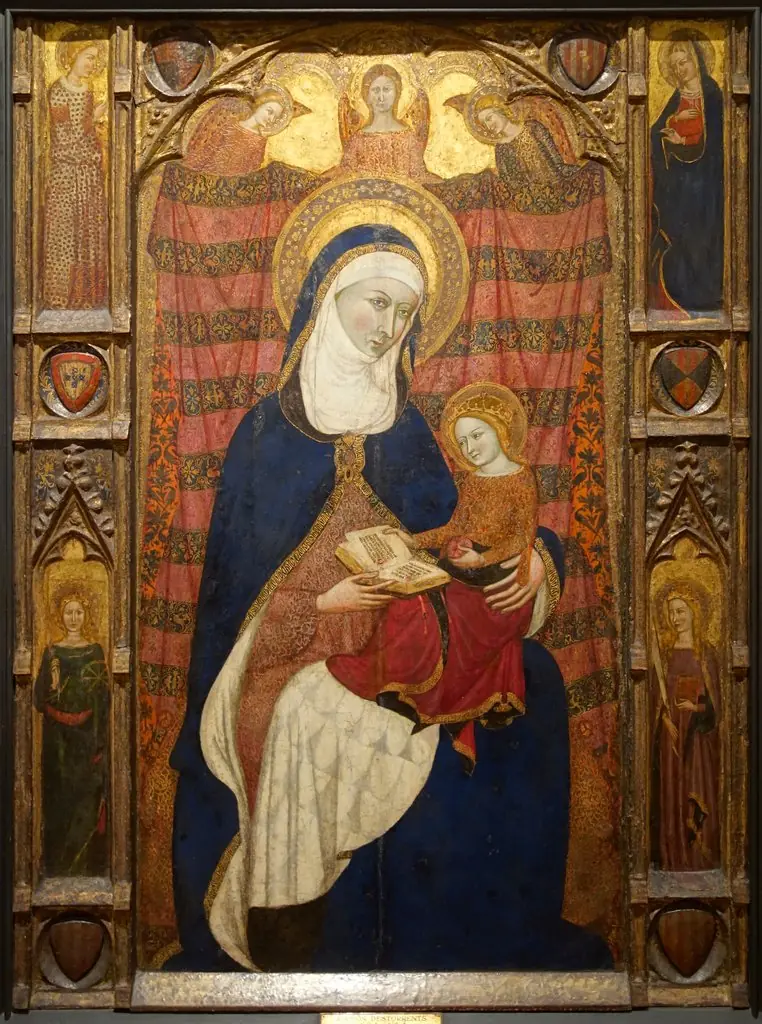 Retaule de Santa Anna i la Mare de Déu
- The Assumption of the Virgin