Artwork
The Coronation of the Virgin
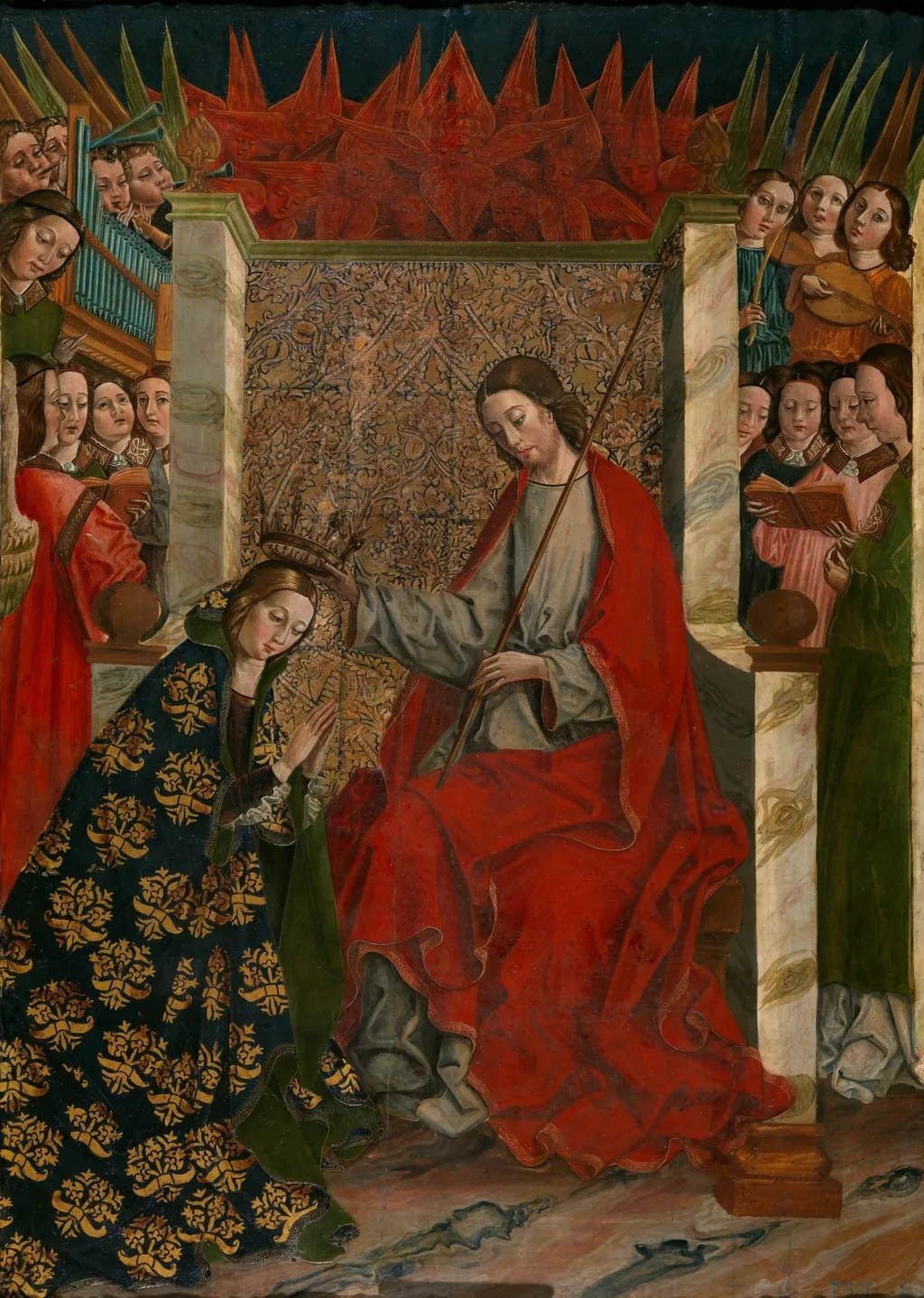
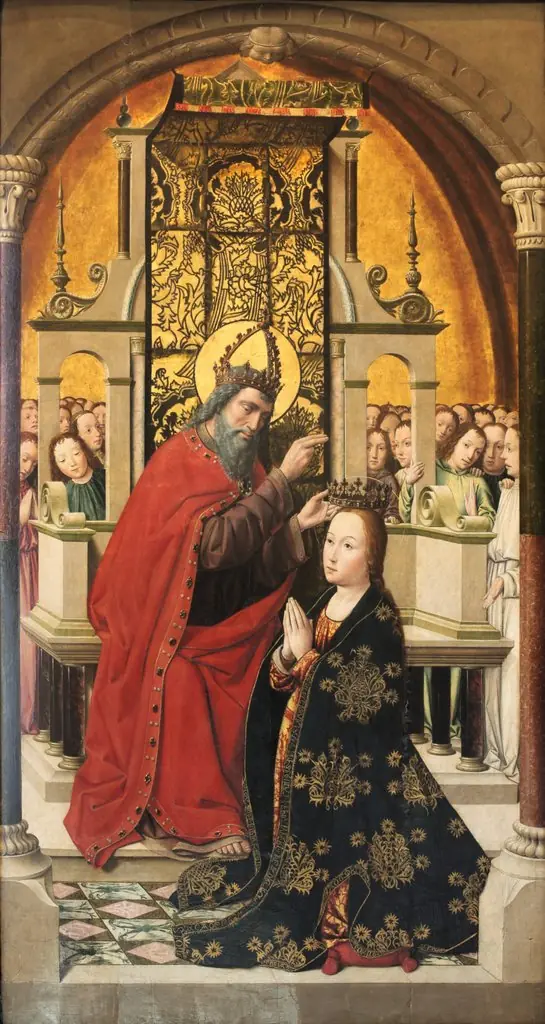
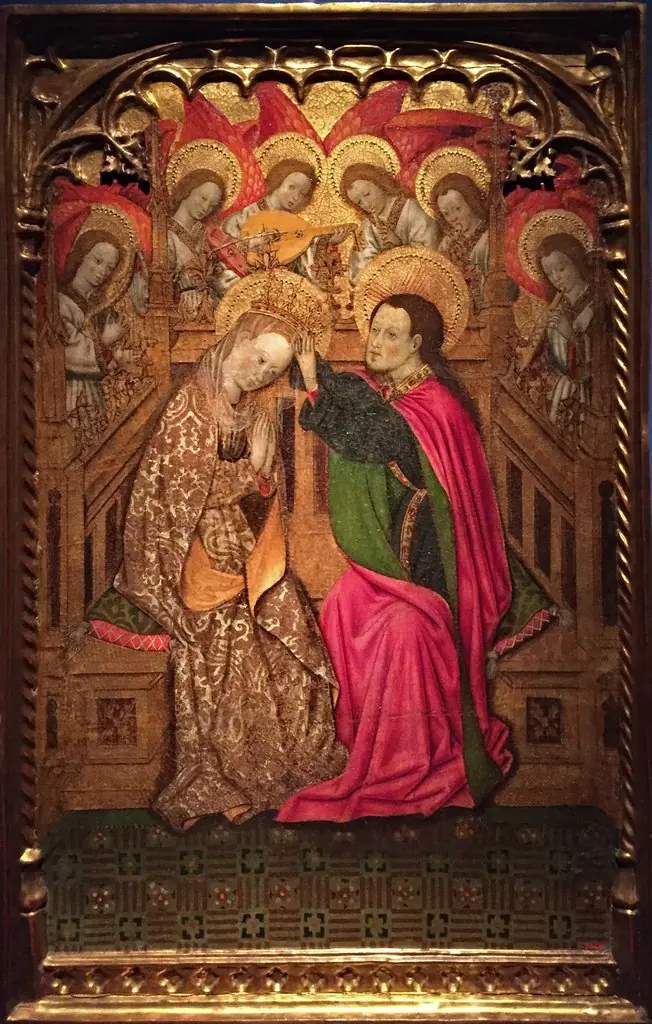
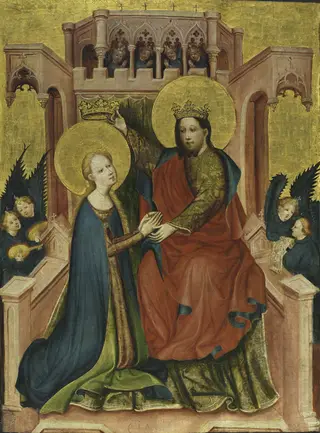
The Coronation of the Virgin is a mixed painting by the Northern Renaissance artist Master of the Once Mil Vírgenes. It dates from 1496 and is held in the collection of the Museo del Prado.
About this work
Subject & Meaning
The scene centers on the placement of a crown upon Mary’s head, symbolizing her exalted status and role as intercessor between humanity and the divine.
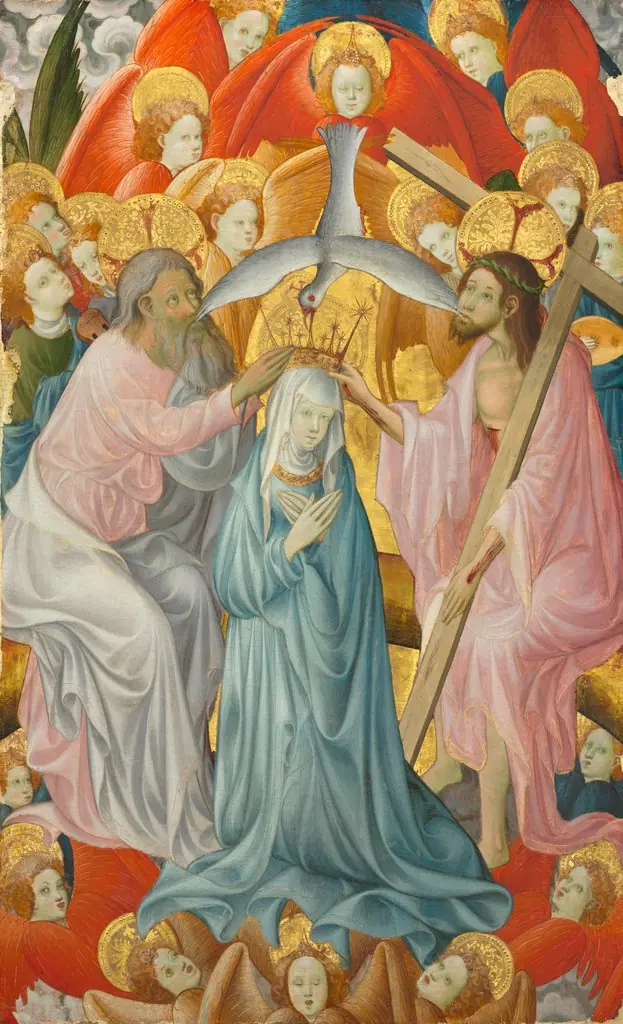
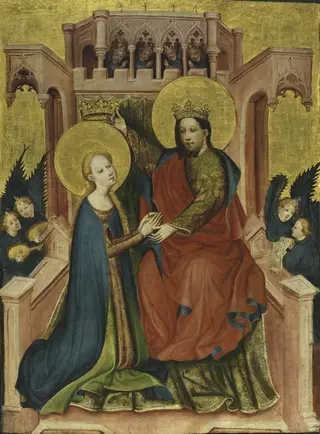
The painting depicts the Coronation of the Virgin, a traditional Christian subject in which the Virgin Mary is crowned as Queen of Heaven by Christ or, in some traditions, by the Trinity. The scene centers on the placement of a crown upon Mary’s head, symbolizing her exalted status and role as intercessor between humanity and the divine. Musical instruments such as a vihuela, lute, and natural trumpet appear in the composition, likely referencing the celestial harmony associated with the heavenly court and the glorification of the event.
A book is also present, suggesting Mary’s wisdom and the sacred texts that affirm her elevated position in Christian theology.
Technique & Style
Created in 1490, The Coronation of the Virgin is executed in a mixed technique on a panel support. The work measures 129 cm in height and 95 cm in width. As a religious painting, its formal composition depicts specific iconographic elements including a crown, a book, and musical instruments such as a vihuela, a lute, and a natural trumpet.
The piece is currently held by the Museo del Prado, having been transferred from the Museo de la Trinidad.
History & Provenance
The Coronation of the Virgin was created in 1490 by the Master of the Once Mil Vírgenes, executed in mixed technique on panel. The work entered the collection of the Museo de la Trinidad and is now held by the Museo del Prado, where it is located. No further details of its commission, intermediate ownership, or acquisition history are documented in the available sources.
The painting The Coronation of the Virgin by the Master of the Once Mil Vírgenes is housed in the Museo del Prado in Madrid, where it is listed as part of the museum's collection. Its dimensions are 129 cm in height and 95 cm in width, and it was created in 1490 using a mixed technique on panel. The work is catalogued under the main subject 'Coronation of the Virgin' and falls within the religious art genre. The available records do not mention any specific exhibition history for this piece.
Context
The Coronation of the Virgin, painted in 1490 by the Master of the Once Mil Vírgenes, exemplifies late‑15th‑century Spanish devotional art. Executed in mixed technique on panel (129 × 95 cm), the work belongs to the religious genre and is housed in the Museo del Prado. Its composition, featuring Marian crowning with attendant musicians, reflects contemporary devotional practices.
Scholarship treats the painting as a pivotal example of the Master’s output, illustrating the synthesis of Iberian iconography with broader European trends in Marian imagery. Critical assessment underscores its technical sophistication and role in understanding the evolution of religious panel painting in Spain.
Legacy
The Coronation of the Virgin, painted circa 1490 by the Master of the Once Mil Vírgenes, exemplifies religious painting in mixed technique on panel, measuring 129 cm × 95 cm. It features distinctive musical instruments and attributes associated with the Virgin’s coronation.
Its inclusion in the Museo del Prado’s collection has sustained scholarly interest, positioning the work as a reference point for studies of late‑Gothic Spanish art and its transition toward Renaissance motifs. The painting’s iconography and technique continue to inform assessments of early Spanish artistic identity.
Overview
This painting, titled The Coronation of the Virgin, was created in 1496 by the artist known as the Master of the Once Mil Vírgenes. Executed in a mixed technique, the work is a religious depiction centered on a significant moment in Christian iconography. It is currently housed in the collection of the Museo del Prado, where it represents a notable example of late 15th-century Iberian art.
Own this work as a print
Artist & collection
Artist
Master of the Once Mil Vírgenes
Master of the Once Mil Vírgenes is the conventional name given to an anonymous Spanish painter known only through surviving work, with no documented identity.