Artwork
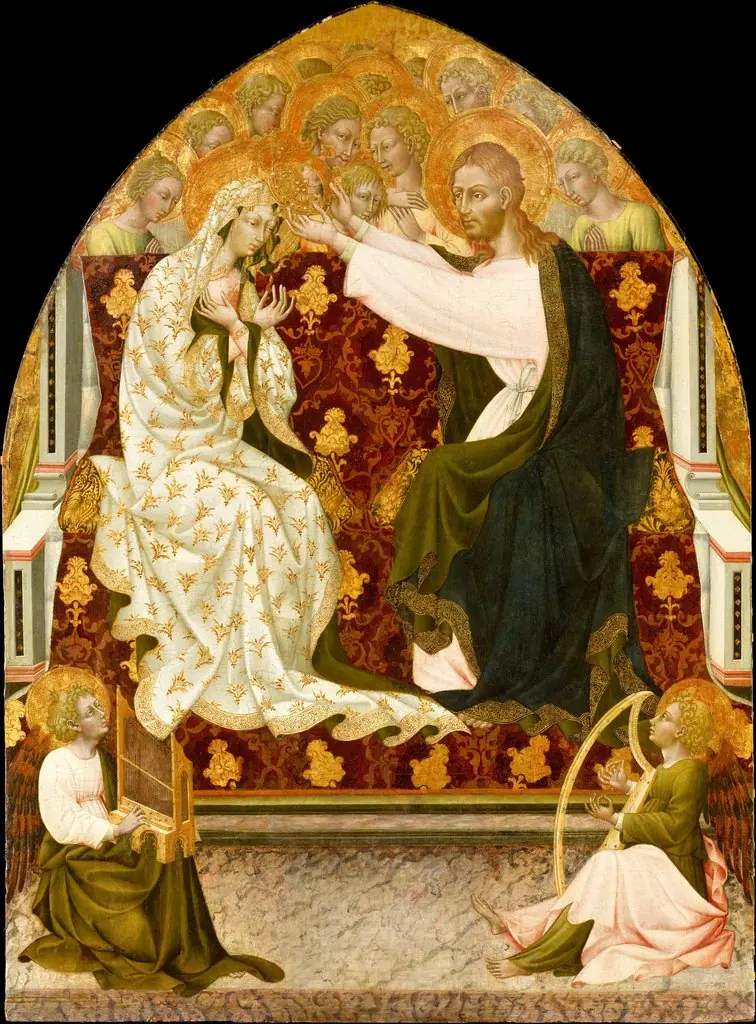
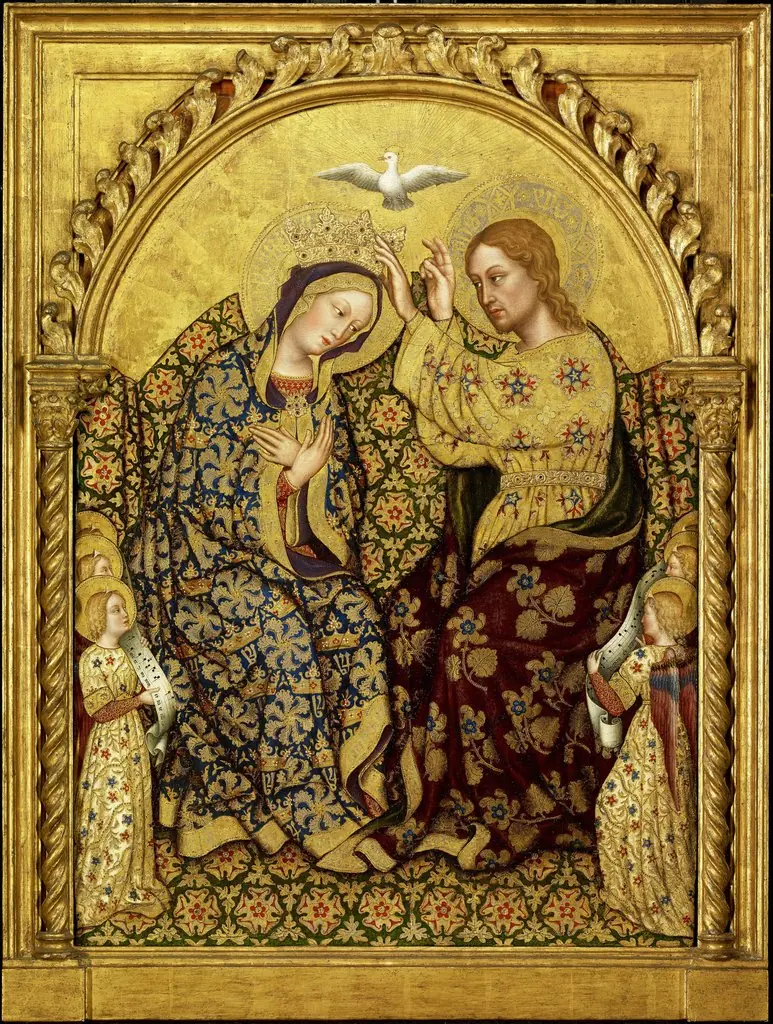
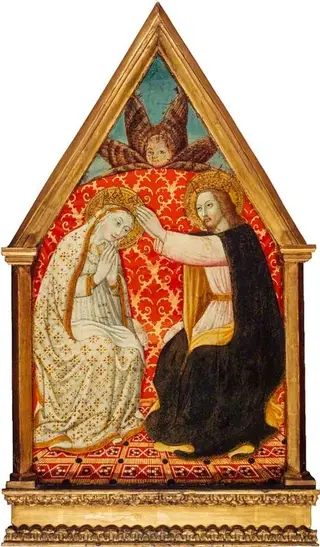
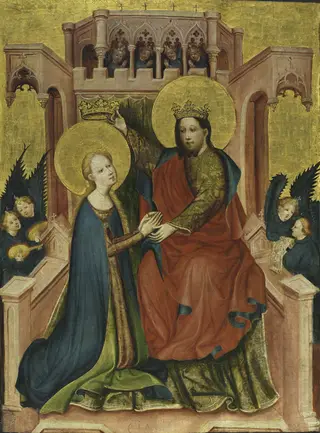
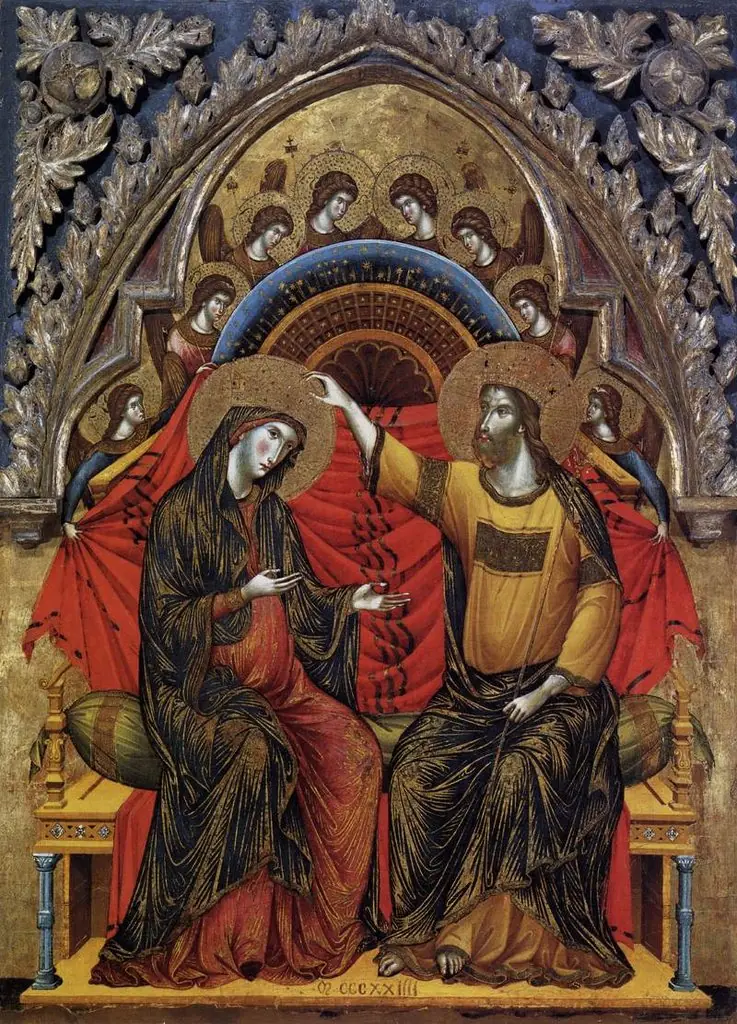
The Coronation of the Virgin
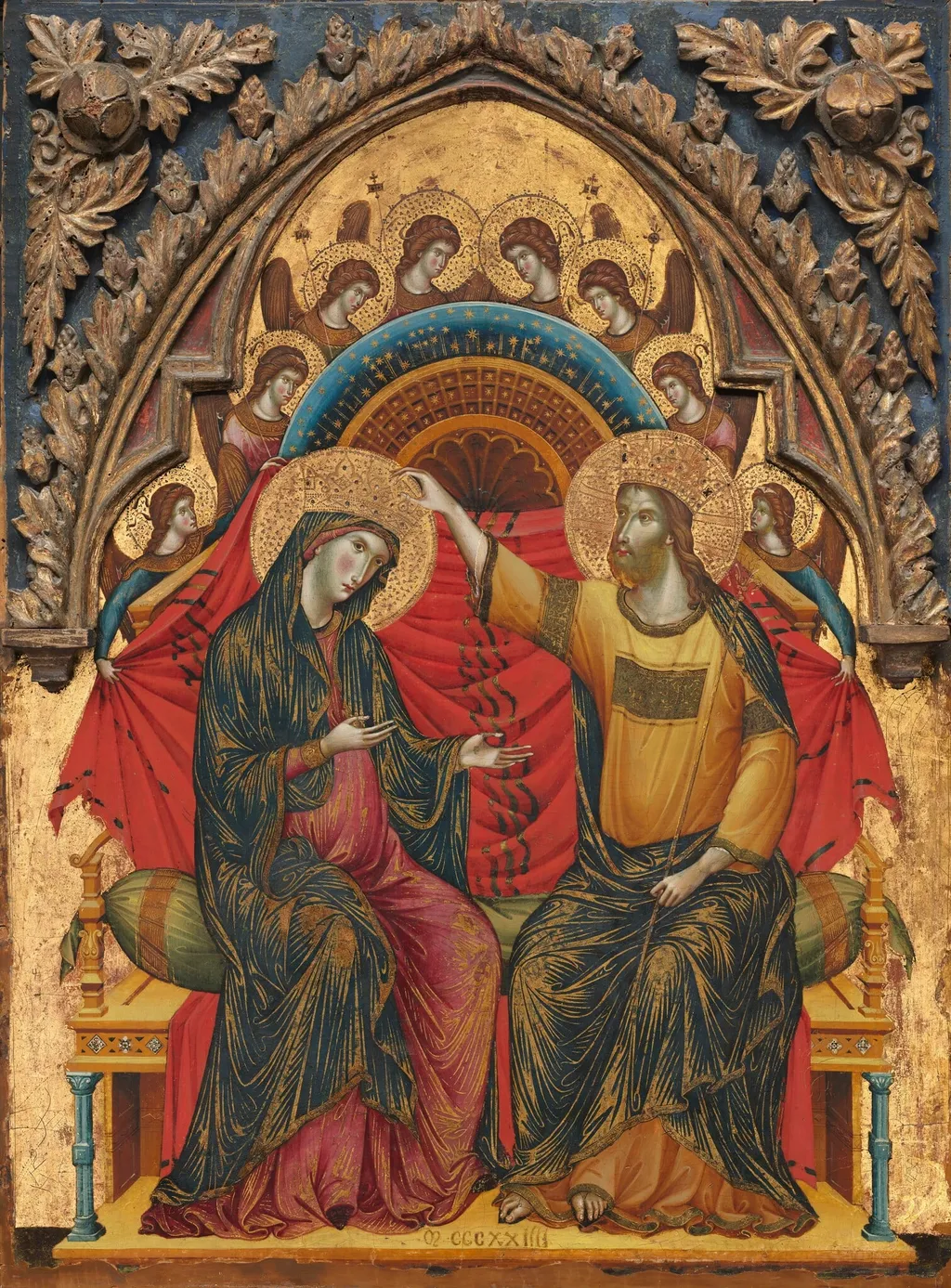
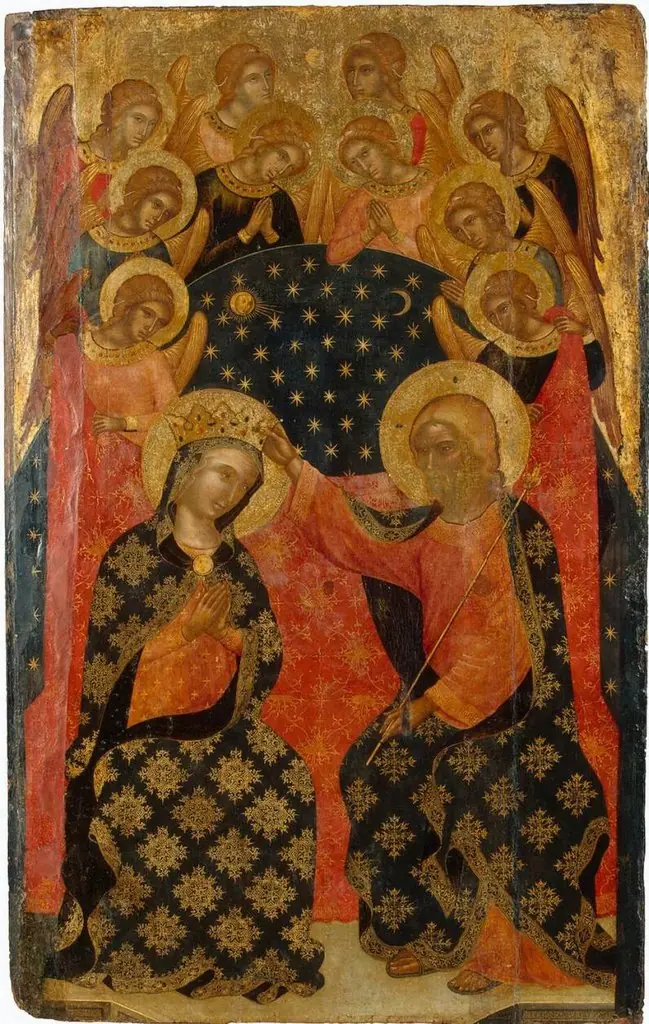
The Coronation of the Virgin is a tempera painting by the Byzantine icon painting artist Master of the Washington Coronation. It dates from 1324 and is held in the collection of the National Gallery of Art.
- Inscription
- Inscribed:on the base of the throne: MCCCXXIIII [1]
About this work
Subject & Meaning
The painting portrays the Coronation of the Virgin, showing the Virgin Mary being crowned by Christ amid a host of angels, a standard medieval image that emphasizes her queenship and intercessory role.
The composition follows established iconographic conventions: Mary stands within a celestial mandorla, angels present crowns, and Christ bestows it, symbolizing heavenly glory and mariological devotion.
Executed circa 1324 by the Master of the Washington Coronation, the work exemplifies Italian Gothic religious painting and reflects the theological themes of the period.
History & Provenance
Agnew & Sons (London) and Rudolf Heinemann (New York); Agnew's share was later sold to Heinemann, after which the work passed through M.
The Coronation of the Virgin is dated to 1324 and executed in tempera on a poplar panel by the Master of the Washington Coronation, an artist active circa 1300–30. Its early provenance traces the painting from Antonio Dal Zotto in Venice to Dr. J. Carl (or Carlo) Broglio in Paris. On 27 July 1950 it was purchased jointly by Thos.
Agnew & Sons (London) and Rudolf Heinemann (New York); Agnew's share was later sold to Heinemann, after which the work passed through M. Knoedler & Co. In February 1952 the Samuel H. Kress Foundation acquired it (then attributed to Paolo Veneziano) and presented it to the National Gallery of Art later that year.
The Coronation of the Virgin is held in the National Gallery of Art, Washington, D.C., as part of the Samuel H. Kress Collection. Its provenance traces the work from Antonio Dal Zotto in Venice, to Dr. J. Carl Broglio in Paris, then to a joint purchase by Thos. Agnew and Sons and Rudolf Heinemann in July 1950, followed by sale to M. Knoedler and Co., acquisition by the Kress Foundation in February 1952, and gift to the NGA later that year. The provided sources do not document any exhibition history for the painting.
Context
The Coronation of the Virgin, painted circa 1324 by the Italian Master of the Washington Coronation, exemplifies early trecento religious art and reflects the stylistic concerns of Paolo Veneziano's circle. Scholarship situates the work within the broader Venetian workshop tradition, noting its sophisticated tempera technique on poplar panel and its iconographic emphasis on celestial hierarchy. Provenance research traces the painting from Antonio Dal Zotto's collection through the Broglio family to Thomas Agnew & Sons, Rudolf Heinemann, and ultimately the Samuel H. Kress Foundation, which gifted it to the National Gallery of Art in 1952.
This trajectory underscores the artwork's significance as a representative piece of Italian Gothic painting and its integration into mid-20th-century American museum collections.
Legacy
The Coronation of the Virgin entered the National Gallery of Art in 1952 via the Samuel H. Kress Foundation, becoming a central piece of its Italian Renaissance collection and attracting scholarly interest documented in provenance research. Its well-recorded ownership by Thomas Agnew & Sons, Rudolf Heinemann and the Kress Foundation underscores its status as a thoroughly documented example of 14th-century Italian Gothic art. Inclusion in the Kress Collection has established it as a key work for the study of the Master of the Washington Coronation.
Overview
The Coronation of the Virgin is a tempera painting on poplar panel, created by an anonymous Italian artist known as the Master of the Washington Coronation. Active in Venice around 1324, this painter produced a work that visually embodies the religious themes and artistic conventions of the early 14th century. The panel depicts the Virgin Mary receiving her crown from Christ, a significant moment in Christian iconography, rendered with the stylistic characteristics prevalent in Venetian art of the era.
Technique & Style
The painting was executed using tempera on a poplar panel, a common medium and support in early Italian art, known for its vibrant colors and fine detail. The artist's style reflects the strong influence of Byzantine iconography, a dominant artistic tradition in 14th-century Italy, particularly in Venice. This is evident in the formal composition and the stylized representation of figures. The work adheres to the specific artistic conventions of early Venetian painting, showcasing the regional aesthetic.
Own this work as a print
Artist & collection
Artist
Master of the Washington Coronation
The Master of the Washington Coronation is a poorly known Italian painter who was active in Venice around 1324.