Artwork
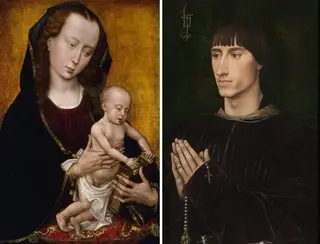
Diptych: ''Virgin and Child'' and ''Portrait of Willem van Bibaut''
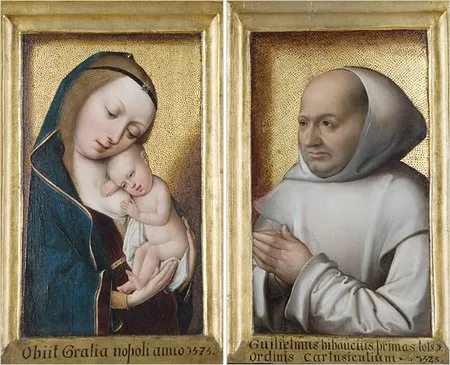
Diptych: ''Virgin and Child'' and ''Portrait of Willem van Bibaut'' is an oil painting by the Mannerist artist Master of the portrait of Willem van Bibaut. It dates from 1530 and is held in the collection of the Rijksmuseum. This oil painting, known as the Bibaut Diptych, dates to approximately 1523.
About this work
This painting is a diptych with two panels. It was made around 1523 by the Master of the portrait of Willem van Bibaut. The painting is now in a private collection, but it was on loan to the Rijksmuseum in 2016, which is a museum that holds many oil paintings from this time period, including works by the Master of the portrait of Willem van Bibaut, an artist you can learn more about next.
Subject & Meaning
The reverse of the portrait panel features the Five Holy Wounds, a subject the monk wrote about, further linking the object to his specific spiritual practices.
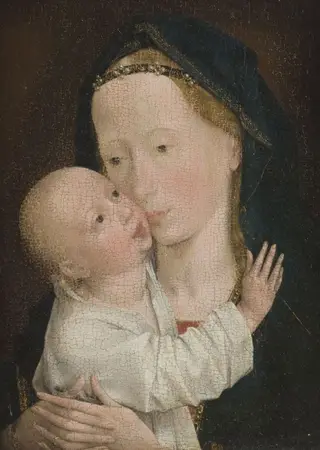
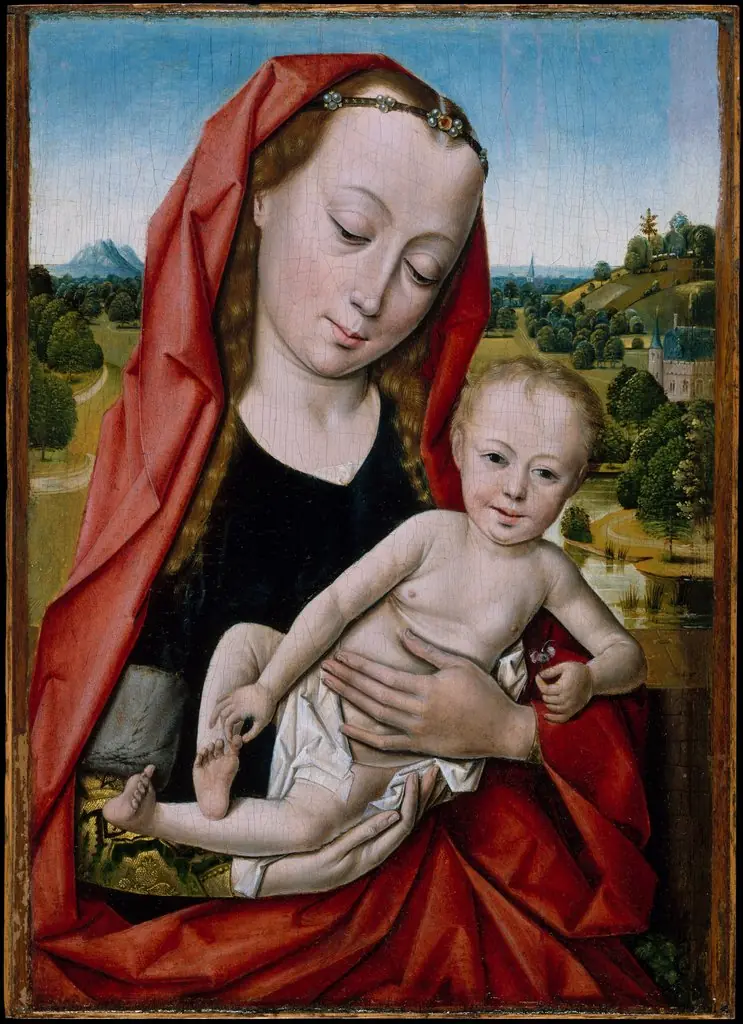
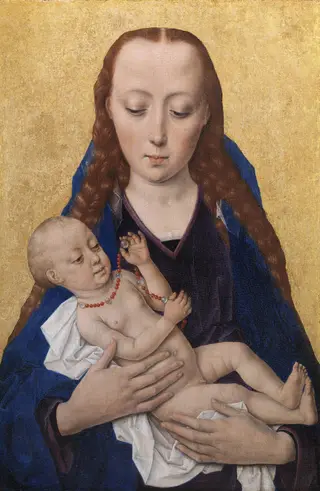
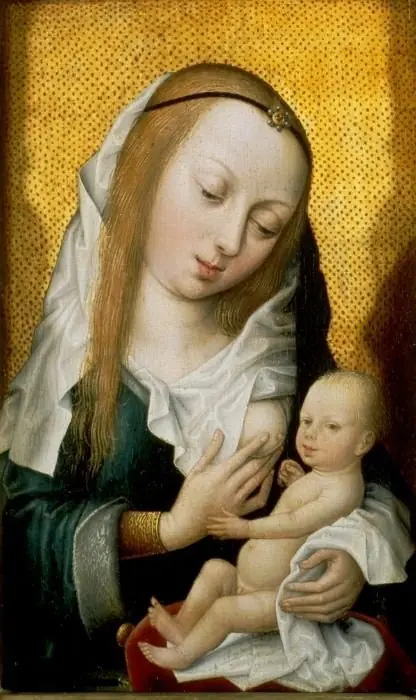
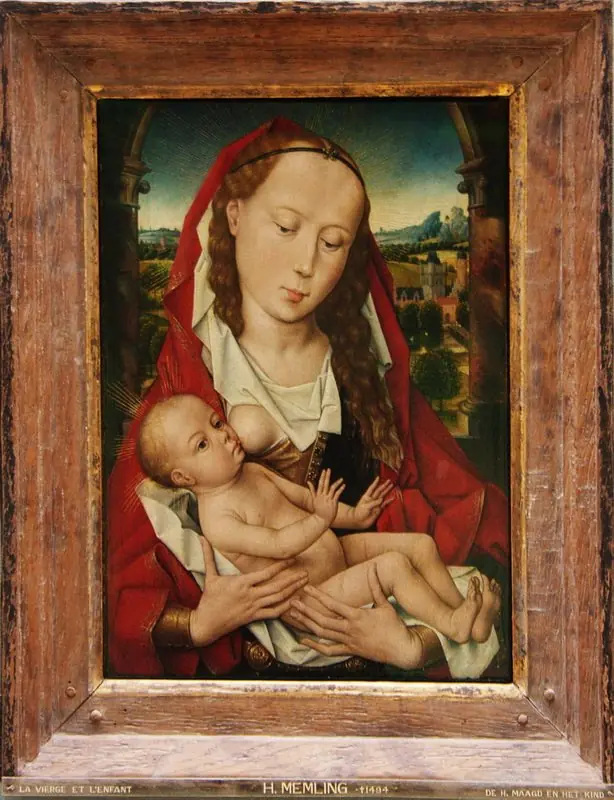
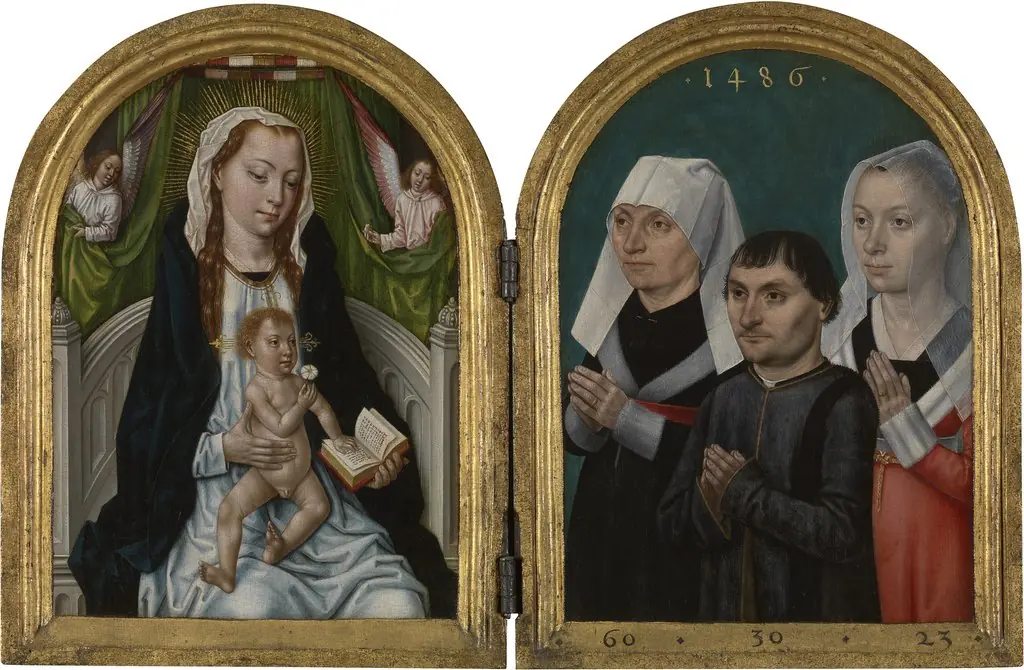
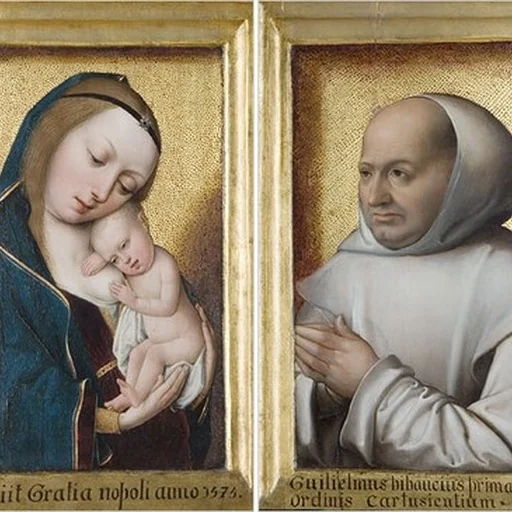
This devotional diptych juxtaposes a sacred image with a donor portrait to facilitate private prayer. The left panel depicts the Virgin and Child, representing the Madonna, while the right panel portrays the Carthusian monk Guilielmus Bibaucus (Willem van Bibaut) with hands clasped in supplication. Iconographic elements include the True Cross, emphasizing the work's religious function.
The assembly likely reflects Bibaucus's personal devotion, potentially commissioned around his 1523 appointment as prior of the Grande Chartreuse. The reverse of the portrait panel features the Five Holy Wounds, a subject the monk wrote about, further linking the object to his specific spiritual practices. Although the two panels may have been created by different artists at different times, their combination serves as a unified instrument for meditation on the divine.
Technique & Style
The diptych comprises two distinct panels executed in oil paint on wooden supports. The left panel, Virgin and Child, is painted on oak and dates to circa 1490, while the right panel, Portrait of Willem van Bibaut, is on walnut and was created around 1523. The use of oil allows for meticulous detail and subtle tonal transitions, characteristic of Netherlandish painting of the period.
Stylistically, the Virgin and Child reflects the refined drapery and spatial composition associated with followers of Rogier van der Weyden, though its attribution remains debated. The Portrait of Willem van Bibaut exhibits precise handling, particularly in the rendering of the sitter’s hands and facial features, suggesting either Flemish or French workshop practices. The reverse of the walnut panel bears devotional imagery linked to the Five Holy Wounds, underscoring its function as a portable devotional object. Condition details remain unspecified in available sources.
History & Provenance
The diptych’s left panel, Virgin and Child, has been dated to circa 1490 on oak and attributed to the Master of the Legend of the Magdalen, while the right panel, Portrait of Willem van Bibaut, is placed circa 1523 on walnut and attributed to an unknown painter of Flemish or French origin.
The portrait panel was commissioned or assembled by Guilielmus Bibaucus (1484–1535), who entered the Carthusian order and became prior of the Grande Chartreuse in 1523. Some technical analyses suggest the panels were produced at different times and only later joined as a devotional diptych. The work was exhibited in Bruges in 1902 with a short biography of the donor and later traveled to the National Gallery of Art in 2006 and the Rijksmuseum in 2016 and 2021.
The diptych is recorded in the Rijksmuseum’s holdings with the dimensions 30.4 cm × 20.7 cm for the Virgin and Child panel.
The Bibaut diptych is currently held in a private collection, having been on long-term loan to the Rijksmuseum in Amsterdam as recently as 2016. The museum catalogues the work as two distinct panels: the left panel depicting the Virgin and Child and the right panel showing the Portrait of Willem van Bibaut. Its exhibition history includes the 1902 Exposition des primitifs flamands à Bruges, where a biography of the donor was presented.
The work later traveled to the National Gallery of Art in Washington, D.C., for the 2006 exhibition Prayers and Portraits: Unfolding the Netherlandish Diptych. More recently, it was featured in the Rijksmuseum's 2021 exhibition Remember Me.
Context
Scholarship on the Bibaut diptych has evolved from viewing it as a unified work to recognizing it as an assembly of two distinct panels created decades apart. Initial assumptions of simultaneous creation were challenged by technical analysis of the wood and hinges, alongside stylistic comparisons with works in the Museum Mayer van den Bergh. Current consensus, reflected in Rijksmuseum cataloging, attributes the left panel (circa 1490) to the Master of the Legend of the Magdalen, while the right portrait (circa 1523) is ascribed to an unknown Flemish or French painter.
Debate persists regarding the left panel's attribution; Marc Rudolf de Vrij argued against the Master of the Legend of the Magdalen, suggesting instead a follower of Rogier van der Weyden. The work's significance lies in its illustration of small, portable devotional diptychs that gained prevalence in the 1520s, a topic explored during its inclusion in the 2006 exhibition Prayers and Portraits: Unfolding the Netherlandish Diptych.
Legacy
Scholars trace the diptych’s legacy through its role in redefining the chronology of early Netherlandish portraiture and devotional panels. Early exhibitions such as the 1902 Bruges show highlighted its devotional biography, while 2006 National Gallery of Art presentation and the 2021 Rijksmuseum “Remember Me” exhibition renewed public interest. Academic debate over the separate hands of the Madonna panel and the portrait, sparked by wood‑hinge analysis and comparative studies, has influenced attributions to the Master of the Legend of the Magdalen and related followers.
The work’s provenance, including ownership by Hans Wetzlar and long‑term loan to the Rijksmuseum, underscores its significance in collections of Netherlandish diptychs.
Overview
This oil painting, known as the Bibaut Diptych, dates to approximately 1523. It comprises two panels, presenting a devotional image of the Virgin and Child alongside a portrait of the monk Guilielmus Bibaucus. The work exemplifies a common format for private prayer and contemplation during the early 16th century, combining sacred imagery with a donor's likeness.
Artist & collection
Artist
Master of the portrait of Willem van Bibaut
Master of the portrait of Willem van Bibaut (1484–1537) was an artist.