Artwork
The Orange Christ
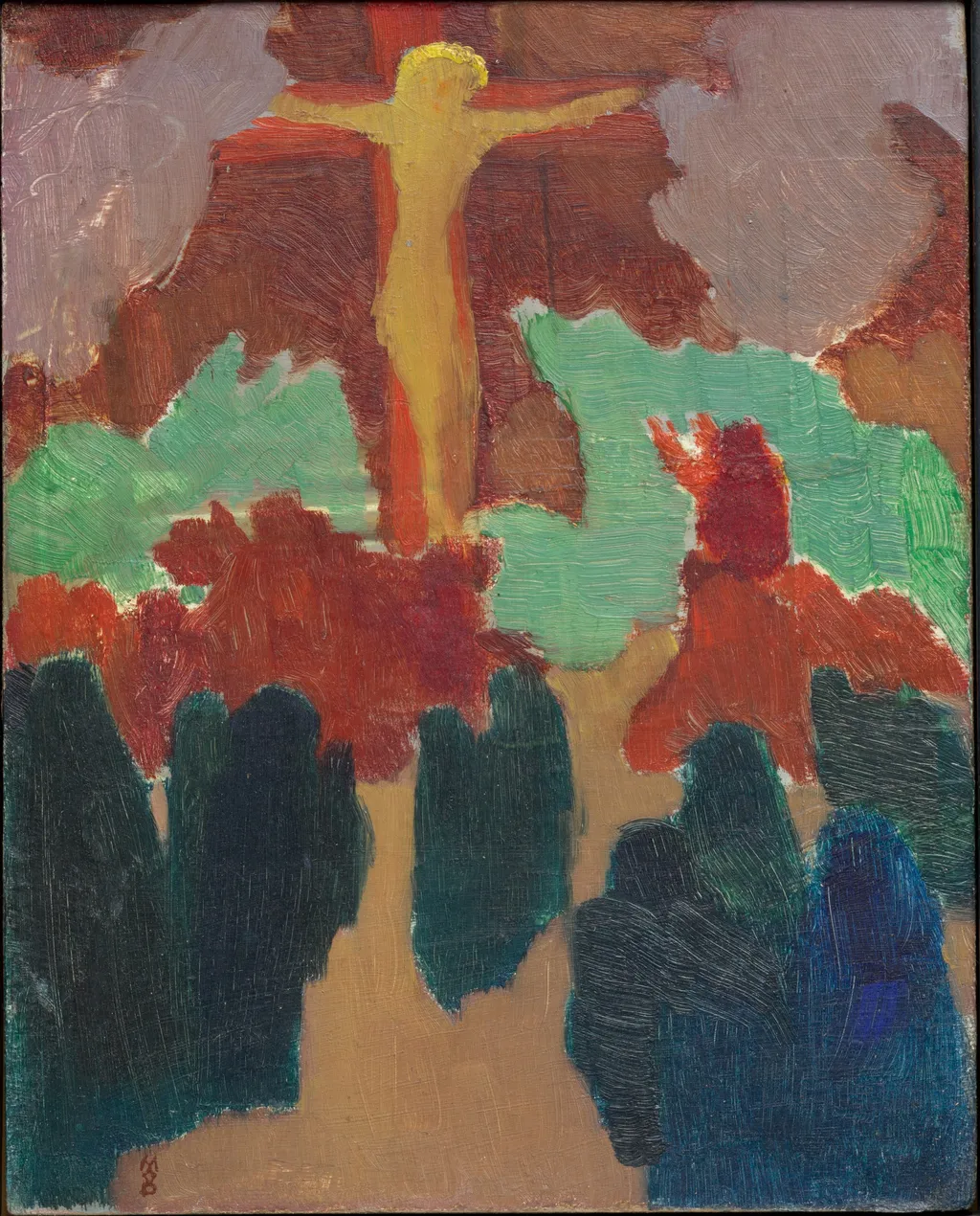
The Orange Christ is an oil painting by the Symbolist artist Maurice Denis. It dates from 1895 and is held in the collection of the Cleveland Museum of Art.
About this work
Technique & Style
The handling is consistent with the artist’s early Symbolist manner: flat planes of saturated color, simplified outlines, and a decorative arrangement of forms.
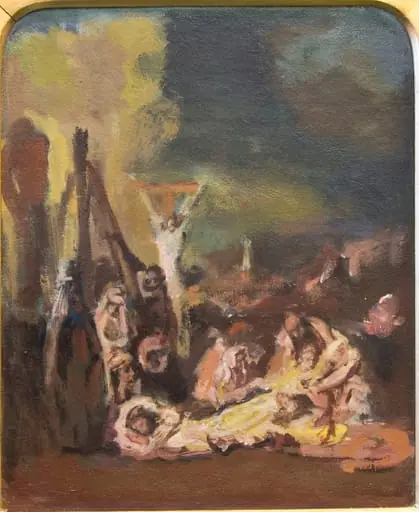
Executed in 1889, The Orange Christ is a small oil painting on cardboard by Maurice Denis. The handling is consistent with the artist’s early Symbolist manner: flat planes of saturated color, simplified outlines, and a decorative arrangement of forms. The composition centers on a golden haloed Christ figure floating before a crucifix set against a vivid orange ground, with stylized landscape elements reduced to rhythmic bands of color.
The cardboard support and oil medium allowed Denis to achieve a luminous, enamel-like surface, typical of his work from this period.
History & Provenance
The Orange Christ was created by Maurice Denis in 1889. Executed in oil paint on cardboard, the work was produced in France and depicts the crucifixion of Jesus. The painting measures 59 cm in height and 34.3 cm in width. It is currently held in the collection of the Cleveland Museum of Art.
The painting is held by the Cleveland Museum of Art, where it is part of the institution's collection. Its creation is recorded as 1889 in France, executed in oil paint on cardboard, and it measures 59 cm by 34.3 cm. The work is classified as a religious painting by Maurice Denis. Exhibition history is not documented in the sources consulted, so no exhibition record is available for this piece.
Overview
Maurice Denis's The Orange Christ, an oil painting from 1895, represents a significant work by the French artist. It depicts the crucifixion of Jesus, reflecting the Symbolist movement with which Denis was associated. This painting is part of the collection at The Cleveland Museum of Art, serving as an early example of his engagement with profound religious themes within a modern artistic context.
Subject & Meaning
The painting presents a stylized depiction of the crucifixion, a central narrative in Christian theology. Denis renders the figure of Christ in striking shades of yellow and orange, departing from traditional naturalistic portrayals. This vibrant, non-literal coloring, set against a background of red, green, and brown, aligns with Symbolist principles, aiming to evoke spiritual or emotional truths rather than merely represent objective reality.
Context
Created in 1895, The Orange Christ exemplifies Maurice Denis's early artistic direction, influenced by both Symbolism and the Les Nabis group. These movements emphasized subjective experience and spiritual content over objective representation. Denis later deepened his commitment to sacred art, becoming a key figure in its revival through his involvement with the Ateliers d'Art Sacré, making this painting an important precursor to his subsequent work.
Own this work as a print
Artist & collection
Artist
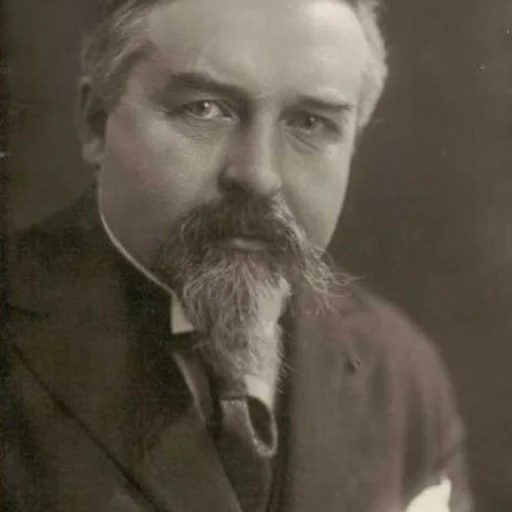
Maurice Denis (French:; 25 November 1870 – 13 November 1943) was a French painter, decorative artist, and writer.