Artwork
Springtime
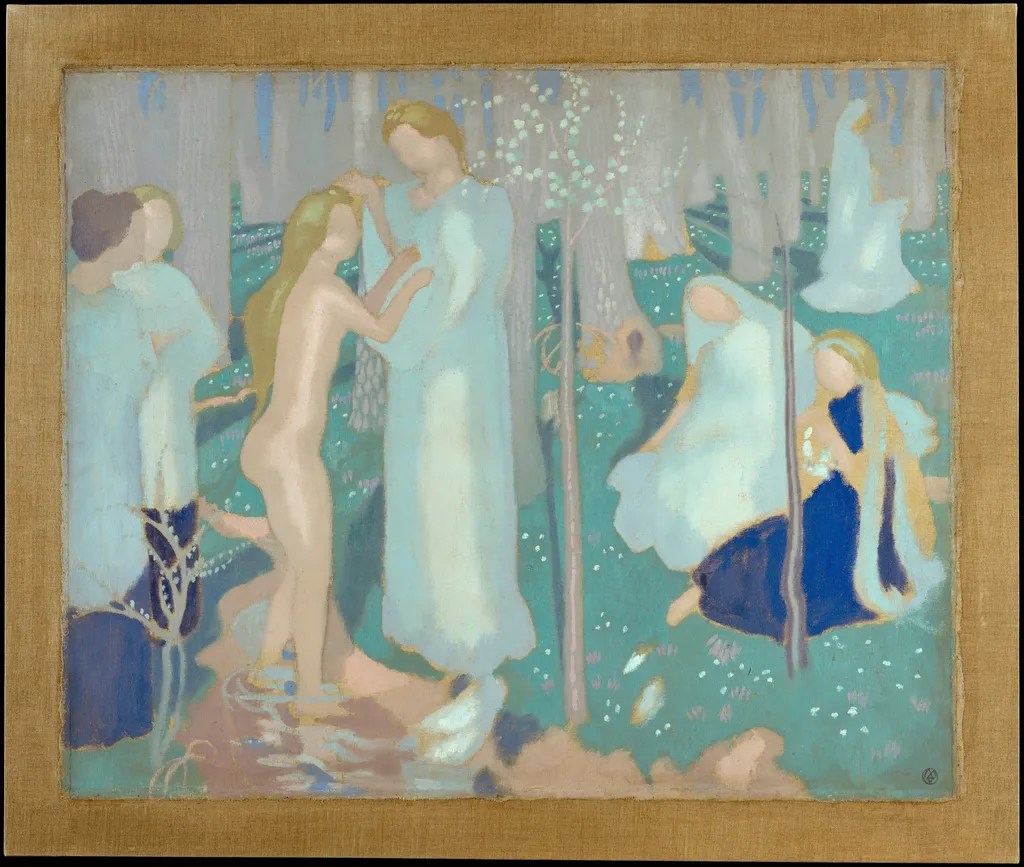
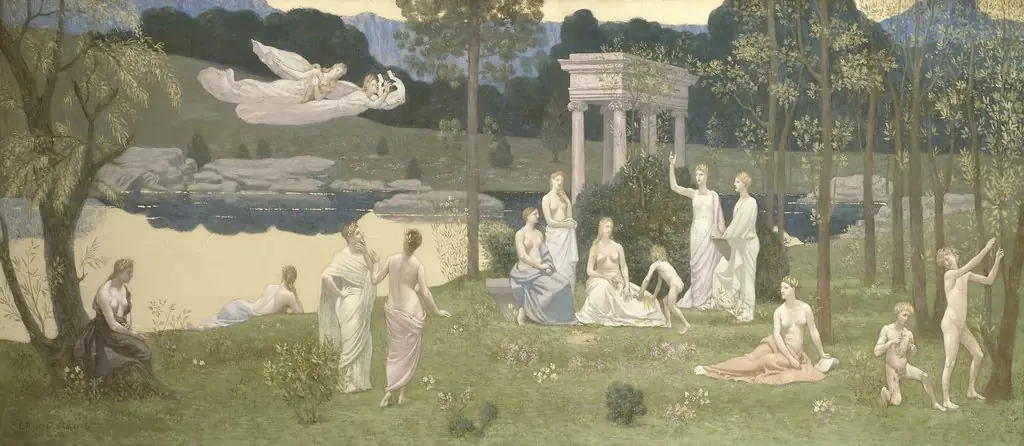
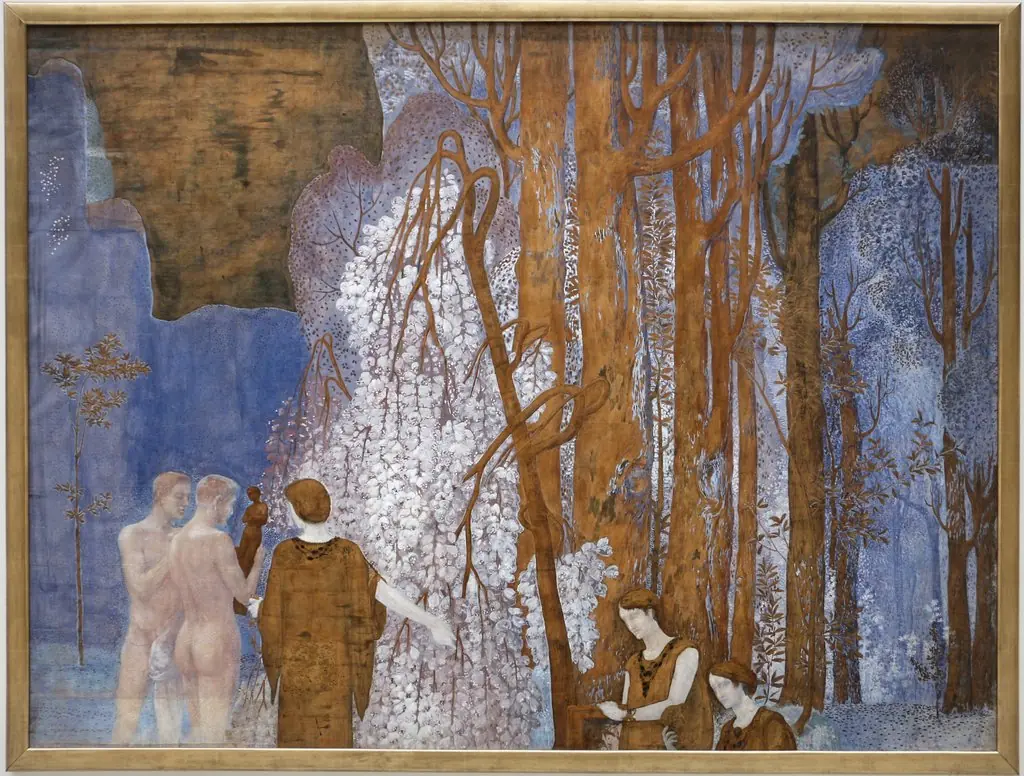
Springtime is an oil painting by the Post-Impressionist artist Maurice Denis. It dates from 1898 and is held in the collection of the Metropolitan Museum of Art.
About this work
Subject & Meaning
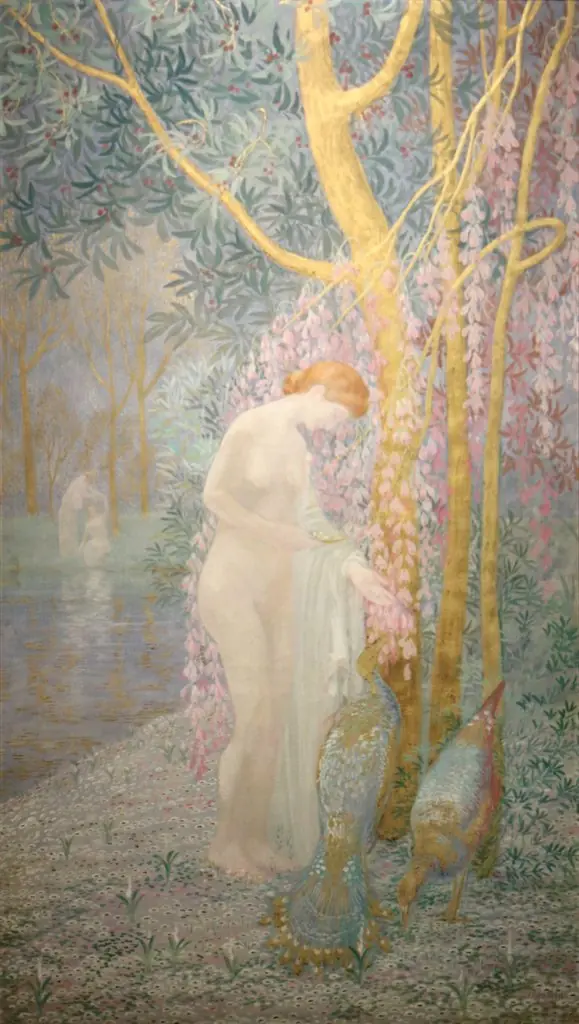
The work presents a female figure within a natural setting, utilizing the imagery of a woman and arboreal elements to convey its theme.
Maurice Denis's 1898 painting, Springtime, depicts a nude woman situated among trees. The work presents a female figure within a natural setting, utilizing the imagery of a woman and arboreal elements to convey its theme. While the specific symbolic interpretation is not detailed in the available records, the composition centers on the representation of a woman in a landscape, consistent with the visual elements identified in the artwork's description.
Technique & Style
Springtime is an oil painting on canvas, measuring approximately 80.6 cm in height and 97.8 cm in width. The work is executed in oil paint, as indicated by both the artwork's medium description and its material listing, and it is held in the collection of the Metropolitan Museum of Art. No further details regarding handling, condition, or specific stylistic techniques are provided in the sources.
History & Provenance
Maurice Denis executed the oil painting Springtime in 1898. Created on canvas, the work measures approximately 80.6 by 97.8 centimeters. The available records confirm the artist, medium, and year of inception.
While the specific circumstances regarding any original commission or the detailed chain of ownership prior to its current location are not elaborated upon in the provided documentation, the work is held within the collection of the Metropolitan Museum of Art. This institutional ownership represents the final known point in the artwork's provenance trajectory as recorded in the source data.
Context
Maurice Denis's Springtime (1898) is an oil on canvas measuring 80.6 × 97.8 cm, housed in the Metropolitan Museum of Art. The work portrays a tree alongside a nude woman, a composition noted for its symbolic simplicity. Recorded in museum catalogues as a painting by Denis, it exemplifies the technical and thematic concerns of late‑19th‑century French easel painting.
Its inclusion in a major public collection underscores its significance within Denis's oeuvre and provides a point of reference for scholarly examination of his contribution to Symbolist tendencies in fin de siècle art.
Legacy
Maurice Denis's Springtime (1898) is held in the Metropolitan Museum of Art, a placement that reflects its recognized standing in art historical discourse. The oil on canvas composition, featuring a tree, a nude woman, and a symbolic landscape, exemplifies the Symbolist emphasis on flattened planes and decorative patterning. Its inclusion in a major museum collection has contributed to ongoing scholarly attention to Denis's role in the Nabi circle and the development of early modernist aesthetics. The work's formal qualities continue to inform studies of turn-of-the-century French painting.
Overview
Maurice Denis, a French painter and writer, created Springtime in 1898 using oil paint. This work exemplifies the Post-Impressionist movement, reflecting his early associations with Les Nabis and Symbolism. The painting presents a serene, ethereal scene centered on a nude female figure within a light-filled, natural setting. It captures a moment of quiet contemplation, characteristic of Denis's approach to art during this period.
Own this work as a print
Artist & collection
Artist
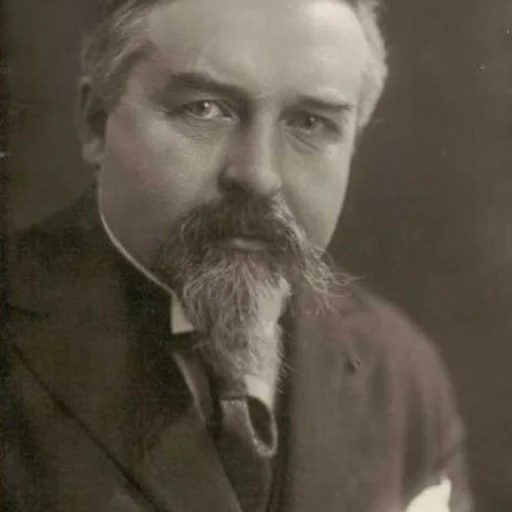
Maurice Denis (French:; 25 November 1870 – 13 November 1943) was a French painter, decorative artist, and writer.