Artwork
Vaudeville Act
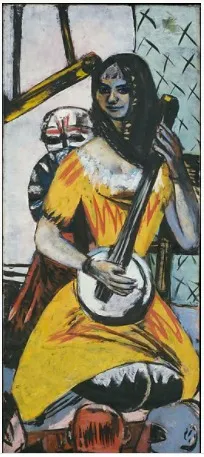
Vaudeville Act is an oil painting by the German Expressionist artist Max Beckmann. It dates from 1935 and is held in the collection of the Metropolitan Museum of Art.
About this work
Technique & Style
This elongated proportion dictates a compressed spatial arrangement, characteristic of the artist's approach to figure grouping within confined stages.
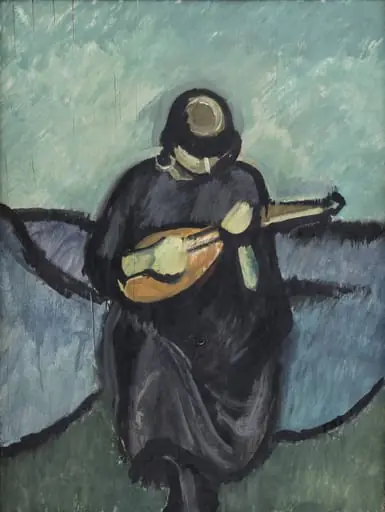
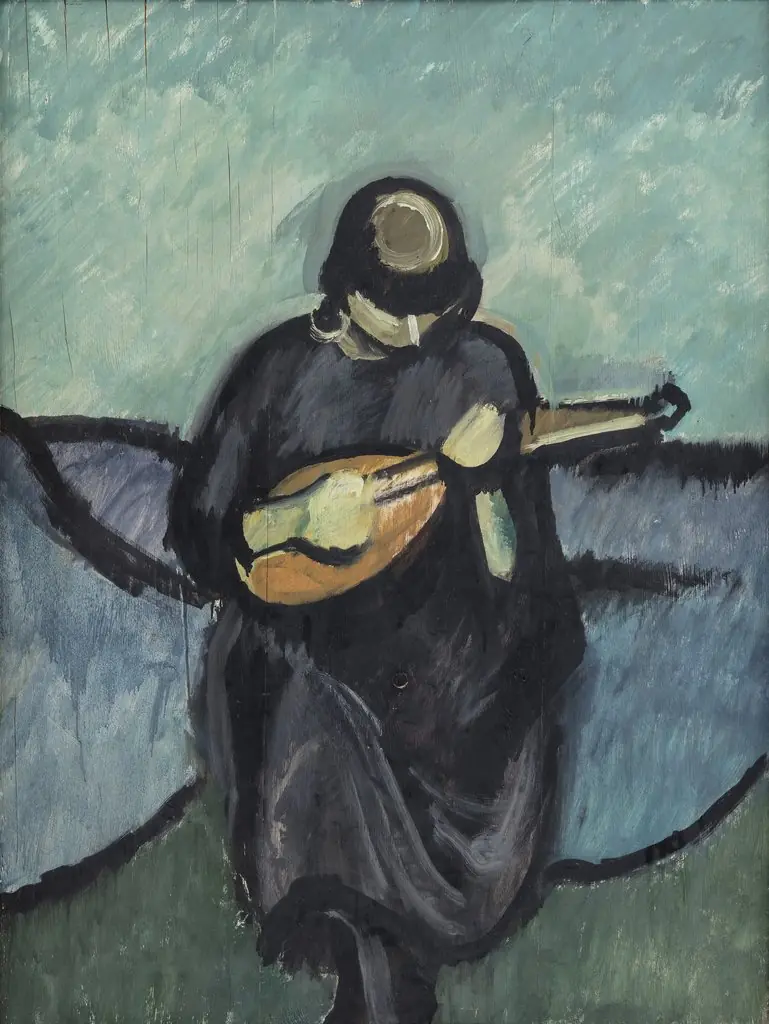
Executed in 1935, Max Beckmann's Vaudeville Act is an oil painting realized on a canvas support. The work presents a tall, narrow vertical format, measuring approximately 139.4 centimetres in height and 59.7 centimetres in width. This elongated proportion dictates a compressed spatial arrangement, characteristic of the artist's approach to figure grouping within confined stages. The composition features a woman alongside musical instruments, rendered through the application of oil paint.
History & Provenance
Vaudeville Act was painted in 1935 by the German artist Max Beckmann, who executed the work in oil on canvas. After its completion, the artwork entered the collection of the Metropolitan Museum of Art in New York, where it is presently housed and displayed. No earlier owners or transfer records are indicated in the available sources.
Overview
Max Beckmann's 1935 oil painting, Vaudeville Act, captures a moment from a theatrical performance. The artwork features a woman with a musical instrument, accompanied by a male figure, rendered with bold colors and a distinctive style. This piece, created by the prolific German artist, is housed at The Metropolitan Museum of Art, offering insight into a specific period of his career.
Subject & Meaning
The painting centers on a woman seated on a stool, holding a round instrument resembling a tambourine. Her vibrant yellow dress, adorned with red and black patterns, contrasts with her mask-like facial makeup, suggesting a stage persona. Behind her, a man in a striped shirt and hat leans against a wall, observing the scene. The figures' tense postures evoke the artificiality and drama inherent in a live performance.
Context
Max Beckmann, a German artist active in painting, drawing, printmaking, sculpture, and writing, created this work in 1935. Although his art is often categorized within German Expressionism, he consciously sought to distinguish his personal vision from the movement's more overtly emotional approaches. Vaudeville Act reflects this complex relationship, embodying elements of the tradition while maintaining Beckmann's unique artistic voice.
Artist & collection
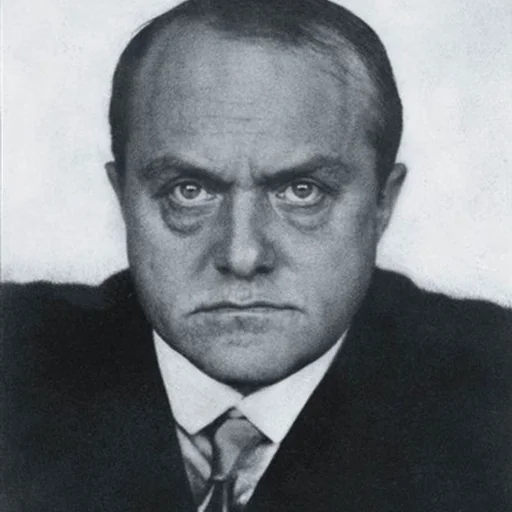
Artist
Max Carl Friedrich Beckmann (February 12, 1884 – December 27, 1950) was a German painter, draftsman, printmaker, sculptor, and writer.