Artwork
Perseus's Last Duty
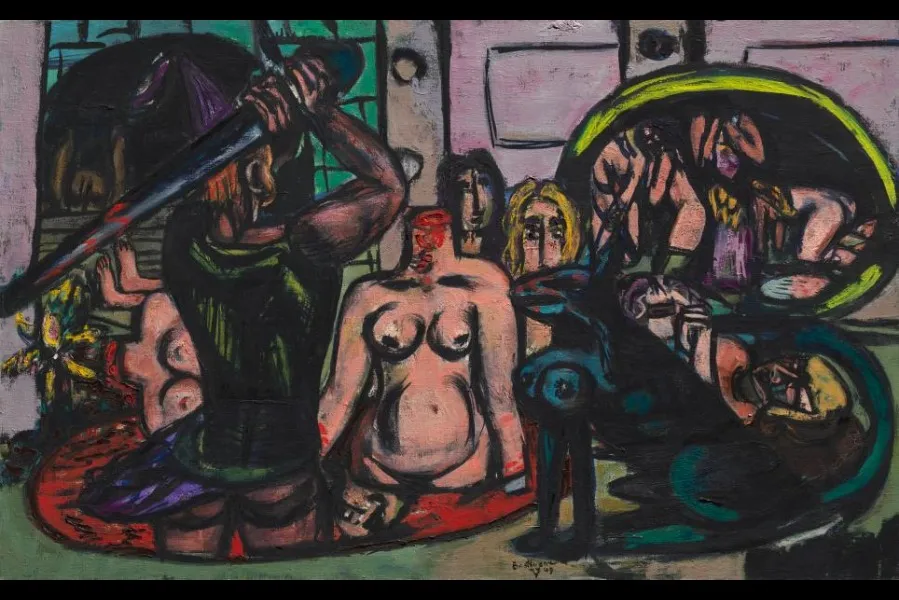
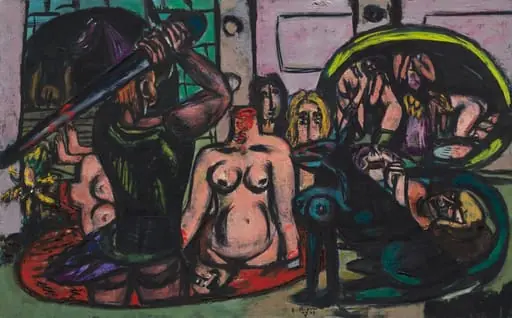
Perseus's Last Duty is an oil painting by the German Expressionist artist Max Beckmann. It dates from 1949 and is held in the collection of the Cleveland Museum of Art.
About this work
Technique & Style
The handling emphasizes bold outlines and planar fragmentation, creating a sense of compressed tension within the scene.
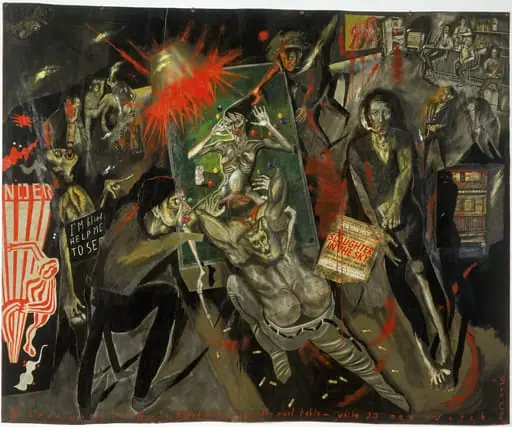
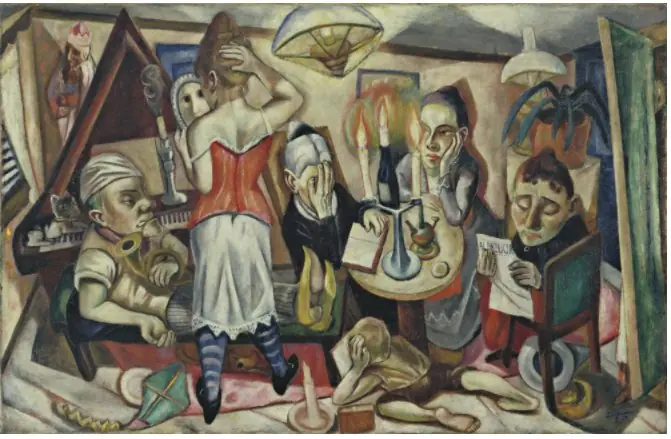
Executed in oil on canvas in 1949, Perseus’s Last Duty is a large mythological painting by Max Beckmann measuring 89.4 cm in height and 142.0 cm in width. The composition employs Beckmann’s characteristic thick impasto, with layered, tactile brushwork that builds up the figures and setting into a dense, sculptural relief. Figures are rendered with simplified, angular contours and compressed space, typical of his mature style, while the palette shifts between muted earth tones and sharp, contrasting accents to heighten the dramatic narrative. The handling emphasizes bold outlines and planar fragmentation, creating a sense of compressed tension within the scene.
History & Provenance
Max Beckmann created the oil painting Perseus's Last Duty in 1949 while working in New York City. Executed on canvas, the work measures 89.4 cm in height and 142.0 cm in width. The piece entered the collection of the Cleveland Museum of Art, where it is currently housed and identified by the accession number 2013.7.
No specific details regarding the original commission or intermediate ownership history prior to its acquisition by the museum are provided in the available records.
Max Beckmann painted Perseus's Last Duty in 1949 in New York City. The Cleveland Museum of Art holds the work under accession number 2013.7, displaying it in its collection.
The painting entered exhibitions at the Cleveland Museum of Art as part of its permanent collection displays.
Legacy
Max Beckmann's 1949 painting Perseus's Last Duty entered the collection of the Cleveland Museum of Art, where it remains on view as part of their modern European holdings. The work, depicting a mythological scene drawn from classical narratives, has been referenced in scholarly discussions of Beckmann's late oeuvre and his engagement with mythological subjects in the post‑war period. It was featured in the museum's 2013 exhibition "German Expressionism and Its Aftermath," highlighting its significance within the institution's presentation of twentieth‑century art.
Overview
Created in 1949, Perseus’s Last Duty is an oil painting by German artist Max Beckmann. The work is part of the Cleveland Museum of Art’s collection and belongs to the mythological genre, depicting a violent aftermath involving three figures. Beckmann, who worked across several media, positioned himself within the New Objectivity movement after distancing from early Expressionist tendencies.
Subject & Meaning
The composition presents a turbulent tableau: a muscular man brandishes a raised sword, his expression contorted with rage; a nude woman sits with her hands covering her face, blood streaming down her chest; and a small child clings to a standing figure, while a mirror on the wall reflects a distorted visage. The imagery suggests a brutal episode drawn from the Perseus myth, emphasizing loss and the lingering impact of violence.
Artist & collection
Artist
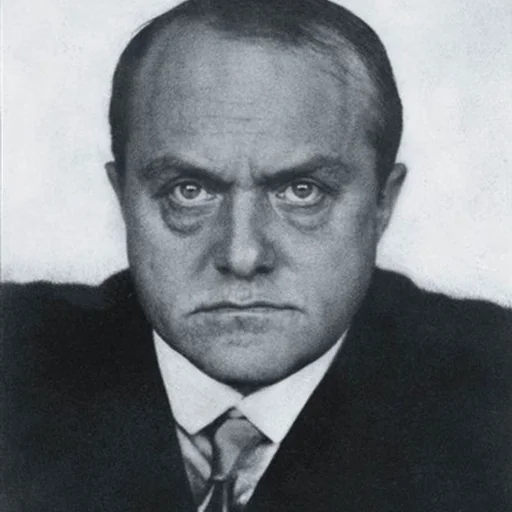
Max Carl Friedrich Beckmann (February 12, 1884 – December 27, 1950) was a German painter, draftsman, printmaker, sculptor, and writer.