Artwork
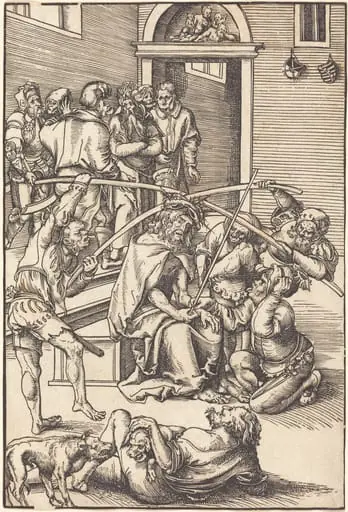
Christ Crowned with Thorns
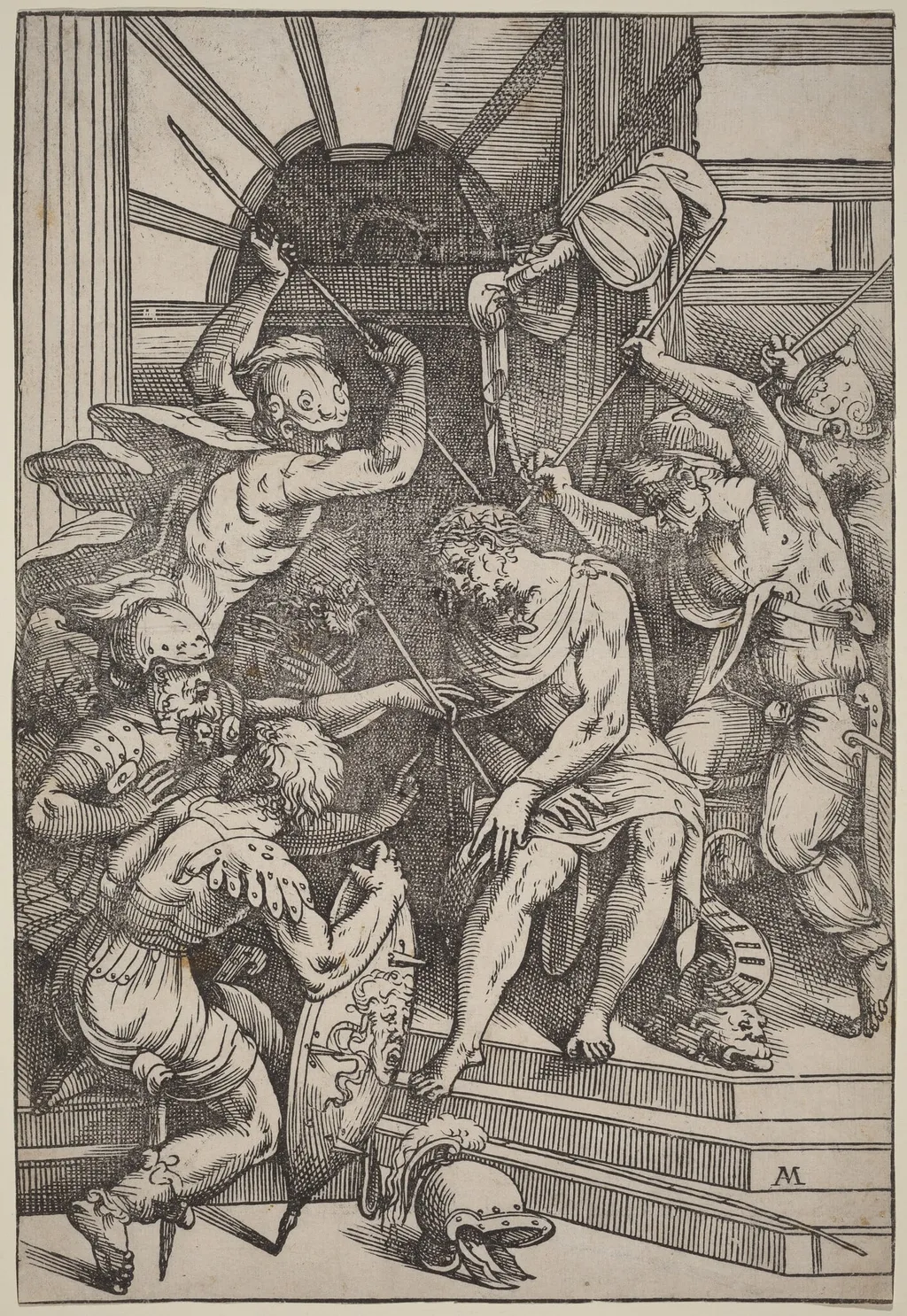
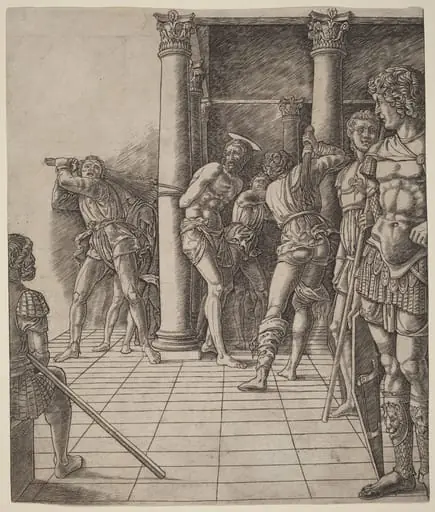
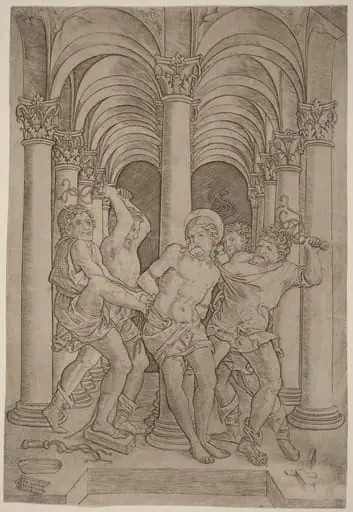
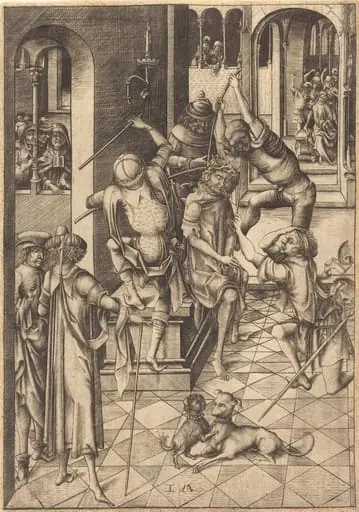
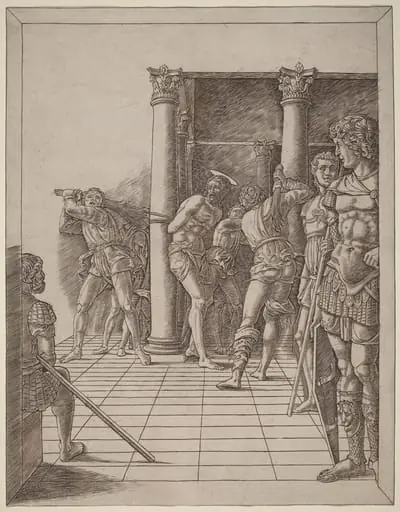
Christ Crowned with Thorns is an ink print by the Renaissance artist Meldolla, called Schiavone, Andrea. It dates from 1554 and is held in the collection of the National Gallery of Art.
- Inscription
- Inscribed:lower right in image: AM (in monogram); by later hand, upper right verso in brown ink: 2p15(?)
About this work
Overview
These surrounding figures are rendered with aggressive, angular lines, their expressions contorted in cruelty as they reach toward the victim.
Andrea Meldolla, known as Schiavone, created this woodcut titled Christ Crowned with Thorns in 1554. The work depicts the Passion narrative moment where Jesus is mocked by soldiers, who place a crown of thorns upon his head. The composition is densely packed, featuring a central figure of Christ kneeling with his head bowed in submission, surrounded by a chaotic throng of tormentors.
These surrounding figures are rendered with aggressive, angular lines, their expressions contorted in cruelty as they reach toward the victim. Schiavone utilizes the woodcut medium to create a dramatic interplay of light and shadow through vigorous hatching and cross-hatching, giving the scene a turbulent, almost stormy atmosphere. Executed during the height of the Venetian Renaissance, this print exemplifies Meldolla's distinctive style, which bridges the gap between the refined elegance of Titian and the expressive, mannerist intensity of Parmigianino.
The artist is renowned for his ability to convey movement and emotional turmoil in both painting and printmaking, and this 1554 woodcut stands as a significant example of his graphic output, demonstrating his mastery in translating complex, crowded scenes into the linear constraints of the medium.
Subject & Meaning
The composition focuses on the suffering Christ, his head bowed beneath the spiky crown, while surrounding figures, both standing and kneeling, reach toward him with expressions of anger, anguish, or torment. The arrangement emphasizes the emotional intensity of the moment of mockery and humiliation.
Technique & Style
Meldolla employed the woodcut method, carving sharp, jagged lines into the wood matrix to produce a stark, incised effect on the paper. The resulting figures are highly contorted, their limbs and faces rendered with aggressive, angular strokes that convey a sense of violence and chaos.
History & Provenance
Created in the mid‑sixteenth century, the print reflects the Venetian tradition of expressive religious imagery. It is catalogued among Meldolla’s surviving prints and has been held in several European collections, though specific ownership details remain limited.
Context
The work belongs to a period when woodcut was a primary medium for disseminating devotional images. Meldolla’s approach, marked by dramatic line work, aligns with the Mannerist tendency toward exaggerated forms and emotional excess, distinguishing it from the calmer Renaissance prints of earlier decades.
Own this work as a print
Artist & collection

Artist
Meldolla, called Schiavone, Andrea
Meldolla, called Schiavone, Andrea (1510–1563) was an artist.