Artwork
La salle des pas-perdus à l'ancien Palais-de-Justice, Paris (The Antechamber of the Palace of Justice, Paris)
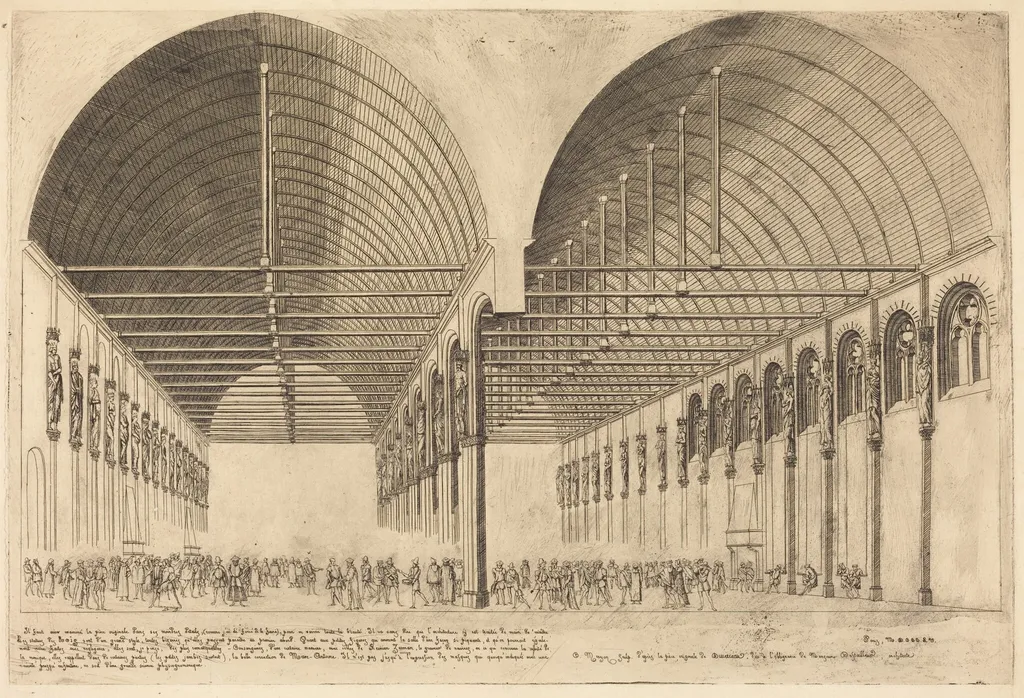
La salle des pas-perdus à l'ancien Palais-de-Justice, Paris (The Antechamber of the Palace of Justice, Paris) is an ink print by the Impressionist artist Charles Meryon. It dates from 1855 and is held in the collection of the National Gallery of Art. Created in 1855, this print presents the antechamber of Paris’s former Palais de Justice.
- Inscription
- Inscribed:"C. Meryon sculp. d'après la pièce originale de Ducerceau, due à l'obligeance de Monsieur DeStailleur, architecte" lower right composition, in plate, artist's hand. "Paris, M.D.CCC.LV." lower right composition, in plate, artist's hand. "Vue de la Grande Salle du Palais avant l'incendie de 1618...épreuve d'Artiste...il n'en existe qui huit carni" lower margin, graphite, artist's hand. "1er. Etat avec l'enscription et [illeg] la [illeg.] coupée au las de trait carré" lower margin, graphite, unknown hand. "[illeg.] de 2e cloud en 1876 un frame a [illeg.]" lower margin, graphite, unknown hand. "D-W 48 III" lower left margin, graphite, unknown hand. "17-76" lower right margin, graphite, unknown hand. "A. 1636" lower right margin, graphite, unknown hand. "100.-" lower right margin, graphite, unknown hand.
- Markings
- Marked:"LRJ" verso, black stamped ink, (Lugt 1760b). "National Gallery of Art" verso, black stamped ink, (Lugt 1932d).
About this work
Overview
Created in 1855, this print presents the antechamber of Paris’s former Palais de Justice. Executed as an etching on wove paper, the image captures a spacious hallway defined by high vaulted ceilings, arched windows, and rows of columns that frame the interior.
Subject & Meaning
The composition focuses on the architectural volume of the courtroom’s entrance, populated by numerous small figures moving along the floor. By emphasizing the emptiness of the space punctuated with human activity, the work conveys a sense of civic routine within a monumental setting.
Technique & Style
Meryon employed fine, closely spaced lines to render light and shadow on the stone surfaces, allowing the play of illumination across columns and beams to suggest depth. The monochrome palette, typical of his etchings, highlights texture and atmospheric effects without reliance on color.
History & Provenance
The print belongs to a series of urban views that Meryon produced during the mid‑nineteenth century, a period when he worked almost exclusively in etching despite his color‑vision deficiency. It stands as a representative example of his contribution to French printmaking in the 1800s.
Context
Meryon’s interest in the Gothic and historic architecture of Paris informs the choice of the Palais de Justice, a building that symbolized legal authority. The work reflects contemporary fascination with documenting the city’s monumental interiors during a time of rapid urban change.
Own this work as a print
Artist & collection
Artist
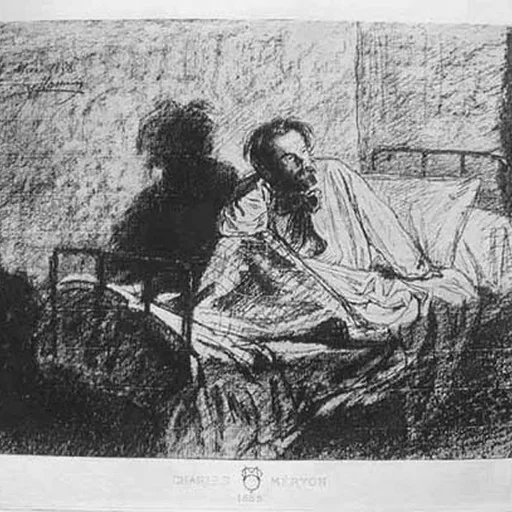
Charles Meryon (sometimes Méryon, 23 November 1821 – 14 February 1868) was a French artist who worked almost entirely in etching, as he had colour blindness.

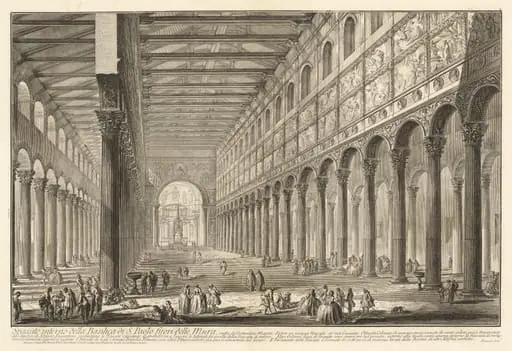 Spaccato interno della Basilica di S. Paolo fuori delle Mura
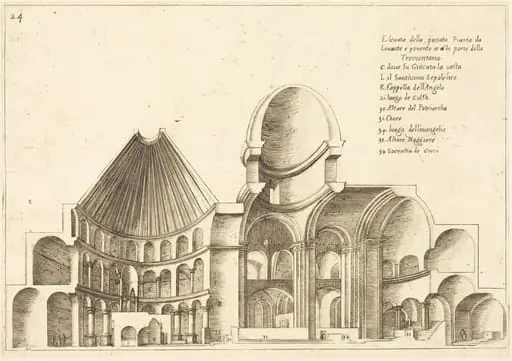 Cross-Section of the Church of the Holy Sepulchre
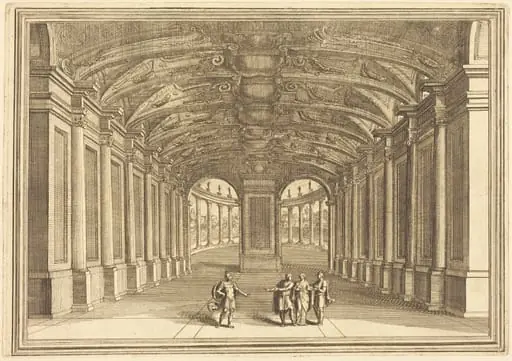 Il Greco in Troia: Plate 10
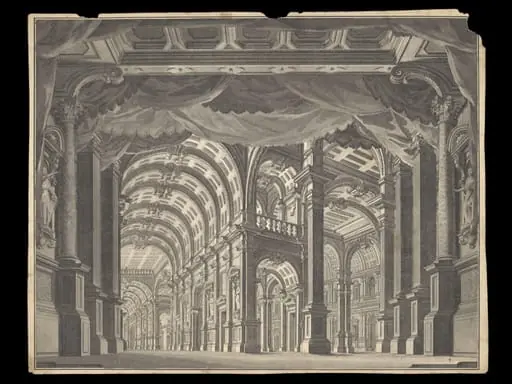 H Beard Print Collection
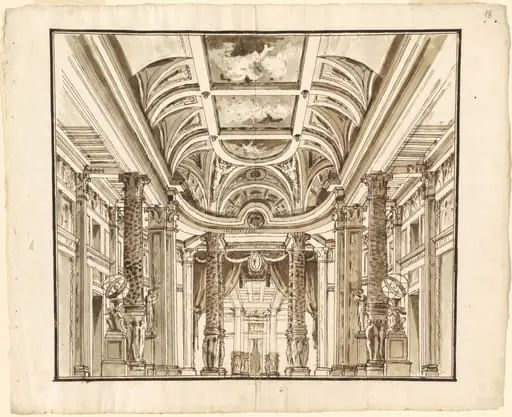 Fantasy of a Great Hall with Basketweave Columns
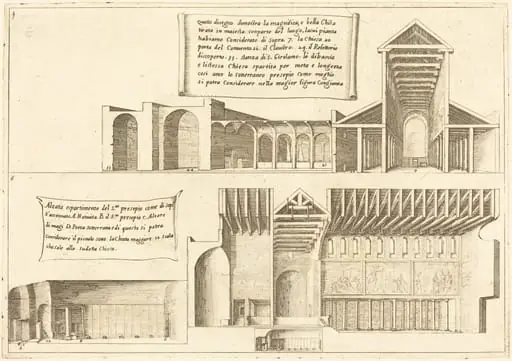 Elevation of Churches including the Holy Manger
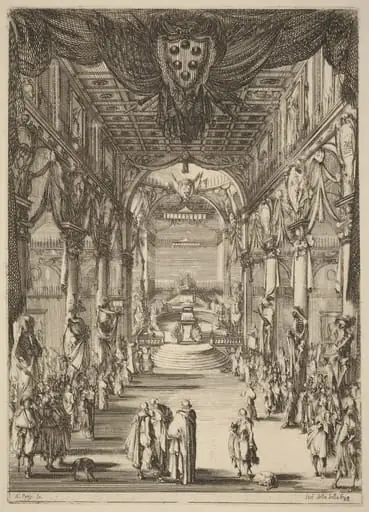 Funeral of Prince Francesco de Medici
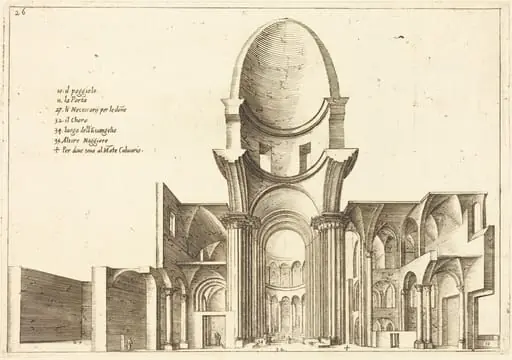 Cross-Section of a Church
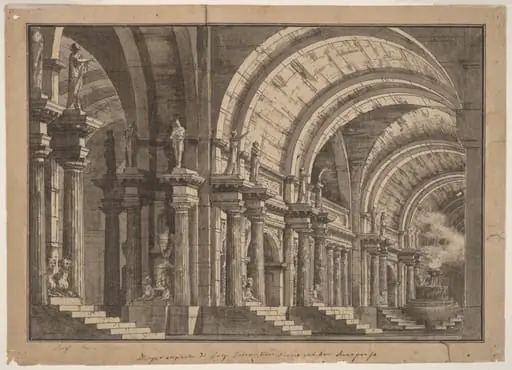 A Monumental Vaulted Hall with a Smoking Altar
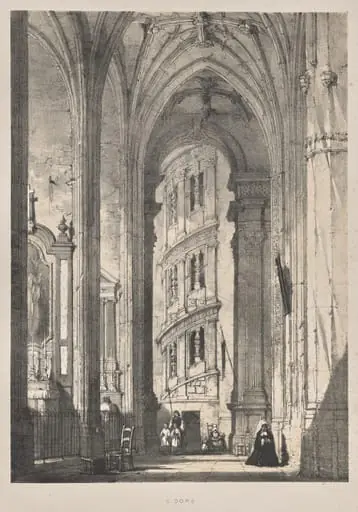 Architecture of the Middle Ages: Church of St. Gisors, Interior
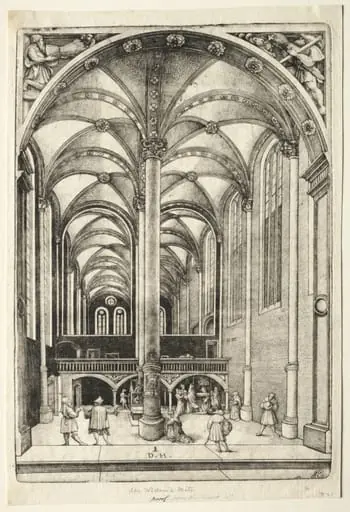 View in the interior of St. Catherine's chruch at Augsburg
- The Antechamber of the Palace of Justice, Paris