Artwork
Saint-Etienne-du-Mont, Paris (Church of St. Stephen of the Mount, Paris)
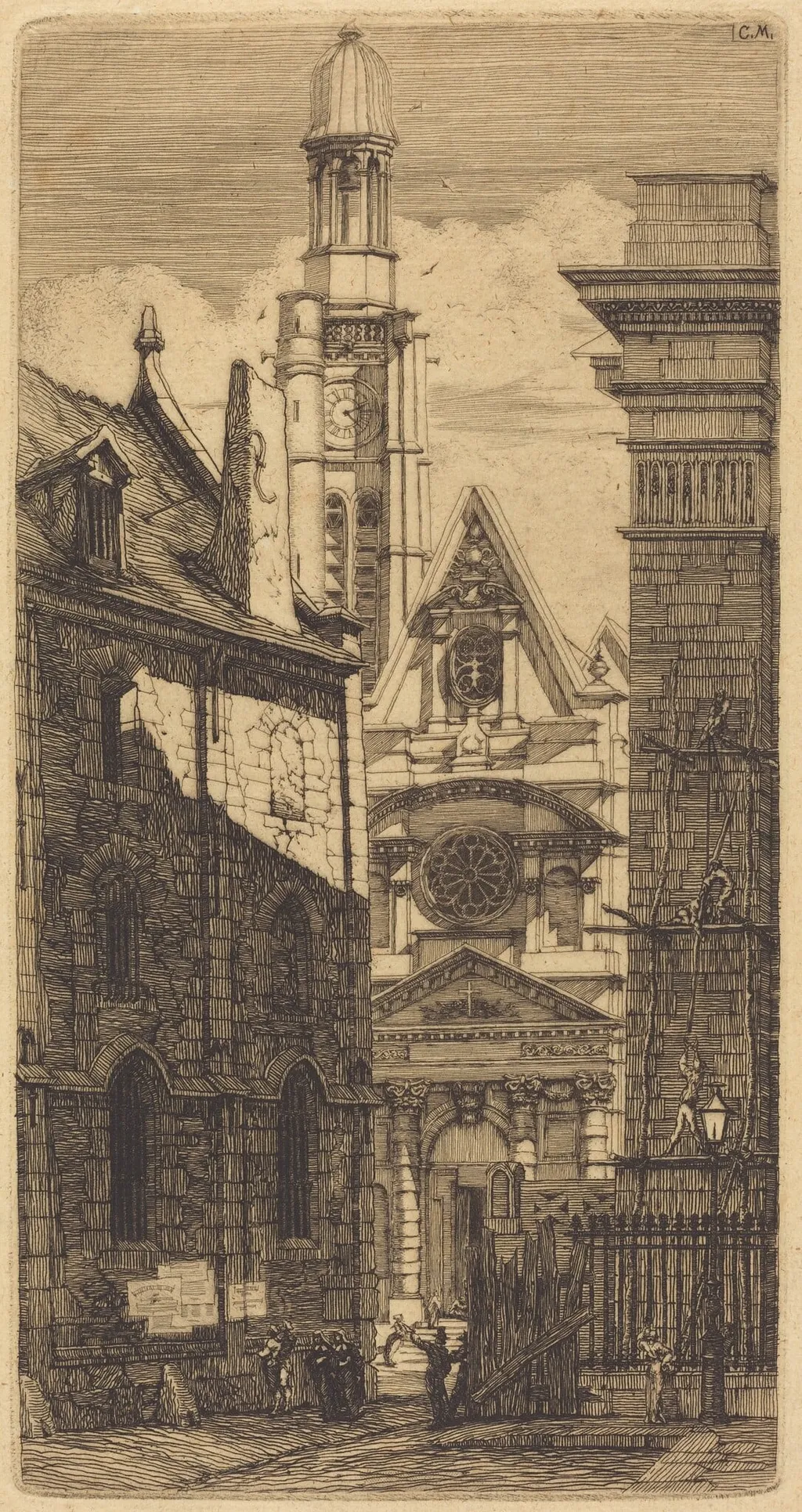
Saint-Etienne-du-Mont, Paris (Church of St. Stephen of the Mount, Paris) is an ink print by the Impressionist artist Charles Meryon. It dates from 1852 and is held in the collection of the National Gallery of Art. Created in 1852, this print depicts the Church of Saint‑Étienne‑du‑Mont in Paris.
- Inscription
- Inscribed:"C.M" upper right composition, in plate, artist's hand. Not dated. "7"[encircled and erased] lower right margin, graphite, unknown hand. "M[possible artist's signature]" verso, lower right sheet, artist's hand. "2" verso, lower center sheet, graphite, unknown hand. "c57210" verso, lower left sheet, graphite, unknown hand.
- Markings
- Marked:"LRJ" verso, black stamped ink, stamped three times, (Lugt 1760b). "National Gallery of Art" verso, black stamped ink, (Lugt 1932d). (Charles W. Dowdeswell collector's stamp) verso, black stamped ink, (Lugt 690).
About this work
Overview
Created in 1852, this print depicts the Church of Saint‑Étienne‑du‑Mont in Paris. Executed as an etching on green laid paper, the image captures the tall façade, clock tower and pointed spire, rendered with crisp, precise lines that emphasize the wet ground and the modest figures gathered beneath the arches.
Subject & Meaning
The work presents the Gothic church as a focal point of urban life, juxtaposing its stone mass and intricate carvings with the fleeting presence of pedestrians. The damp atmosphere and sharp chiaroscuro suggest a moment of quiet contemplation amid the bustling cityscape.
Technique & Style
Meryon employed traditional copper‑plate etching, incising lines that allow for both deep shadows and delicate architectural detail. The green‑toned laid paper provides a subtle background hue, enhancing the contrast of the etched lines and reinforcing the work’s overall clarity.
History & Provenance
Part of a series of architectural views that defined Charles Meryon’s career, the print reflects his lifelong fascination with Paris’s medieval structures. Meryon, a French etcher who suffered from colour blindness and later mental illness, produced these images before his death in an asylum in 1868.
Context
Meryon’s focus on Gothic monuments aligns with mid‑nineteenth‑century French interest in historic preservation and romanticized urban scenery. His personal background, his mother’s involvement with the Paris Opera, infused his work with a nuanced awareness of the city’s cultural layers.
Artist & collection
Artist
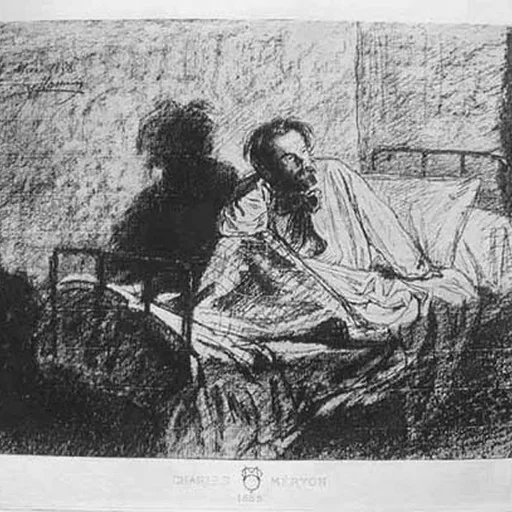
Charles Meryon (sometimes Méryon, 23 November 1821 – 14 February 1868) was a French artist who worked almost entirely in etching, as he had colour blindness.

 Apse of St.-Didier, Avignon
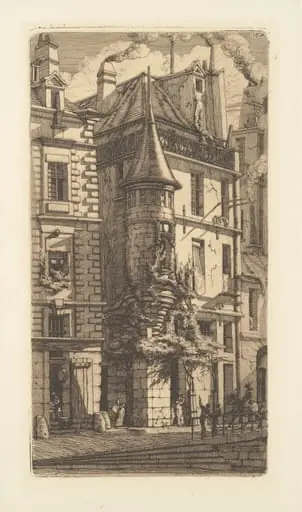 Tourelle, Rue de la Tixeranderie
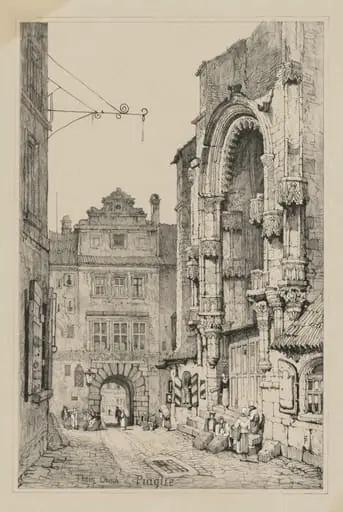 Facisimilies of Sketches made in Flanders and Germany: Thein Church, Prague
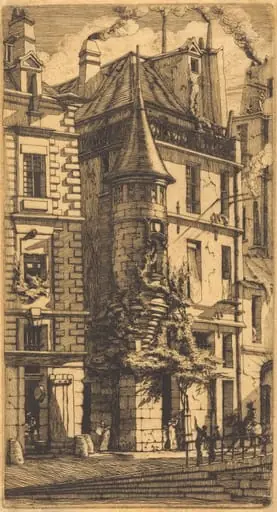 Tourelle de la Rue de la Tixéranderie, Paris (House with a Turret, Weavers' Street, Paris)
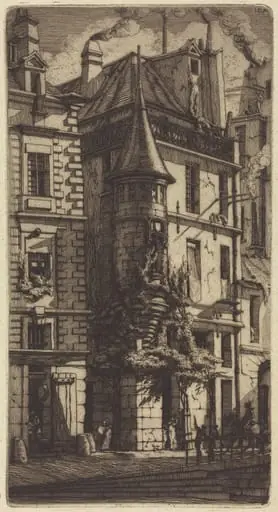 Tourelle de la Rue de la Tixéranderie, Paris (House with a Turret, Weavers' Street, Paris)
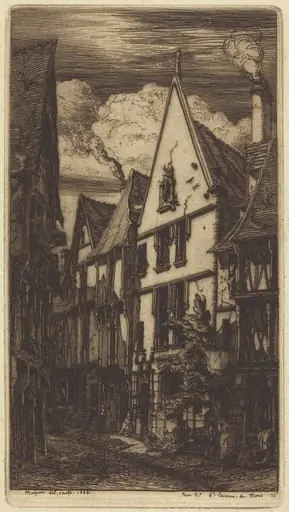 La Rue des Toiles, à Bourges
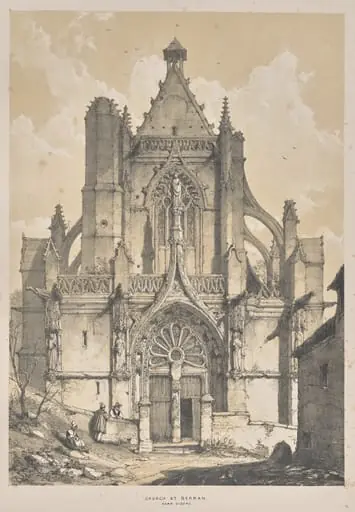 Architecture of the Middle Ages: Church at Serran, near Gisore
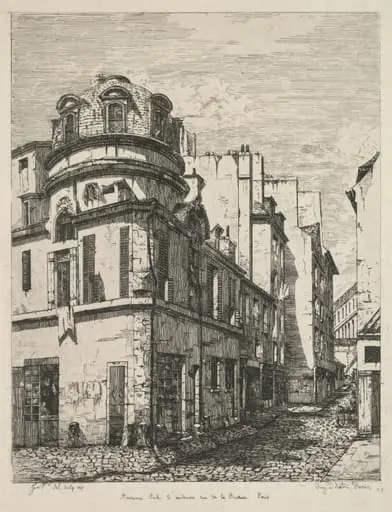 Eaux-Fortes sur le Vieux Paris: Ancienne école de médecine rue de la Bûcherie (Etchings of Old Paris: Former Medical School, rue de la Bucherie)