Artwork
Cloudy Mountains

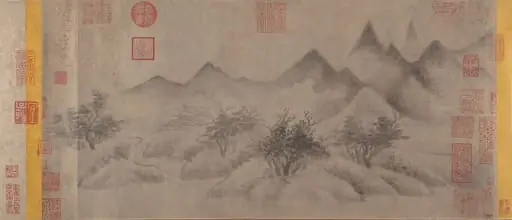
Cloudy Mountains is an unspecified painting by the Song dynasty landscape artist Mi Youren. It dates from 1130 and is held in the collection of the Cleveland Museum of Art.
- Accession no.
- 1933.220
- Credit line
- Purchase from the J. H. Wade Fund
About this work
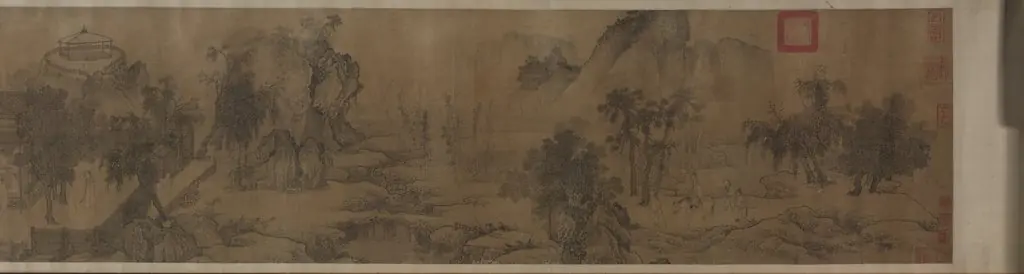
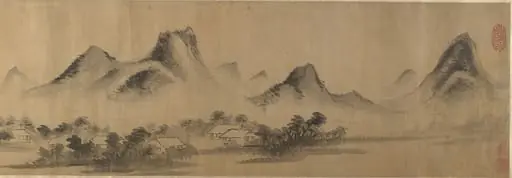
You see soft, rolling mountains half-hidden in mist, with tiny trees and a winding river below.
This painting was a thank-you gift. Mi Youren had just escaped war and found shelter in a new town. The peaceful scene is his way of saying, “This place feels like home now.”
To see how this quiet style grew, look up the subject: china, southern song dynasty (1127-1279).
Overview
Cloudy Mountains is a hand‑scroll painting that depicts a mist‑shrouded landscape of gentle hills, scattered trees, and a meandering river. The composition is rendered in soft, atmospheric tones that suggest a tranquil riverside scene, characteristic of the artist’s later period.
Subject & Meaning
The work presents a serene natural setting, likely intended as an expression of gratitude and a sense of refuge. Created after the artist’s displacement during the fall of the Northern Song, the quiet scenery conveys a feeling of safety and belonging in a new environment.
Technique & Style
Executed with wet ink applied in stippled dots, the painting achieves a hazy, layered atmosphere. This method, developed by the artist and his father, emphasizes the diffusion of light and mist, creating depth through subtle tonal variations rather than detailed line work.
History & Provenance
Mi Youren painted the piece in 1130 while staying in Xinchang, Zhejiang, after fleeing the Jurchen invasion that ended the Northern Song dynasty in 1127. He presented the scroll to his host as a token of thanks for shelter during his exile.
Context
The artwork belongs to the early Southern Song period (1127‑1279), a time when many court artists relocated southward following the loss of the northern capital. This migration fostered a shift toward softer, more contemplative landscape conventions, as reflected in the painting’s muted palette and atmospheric perspective.
Artist & collection