Artwork
Portret van Beatrix van Herreweghe
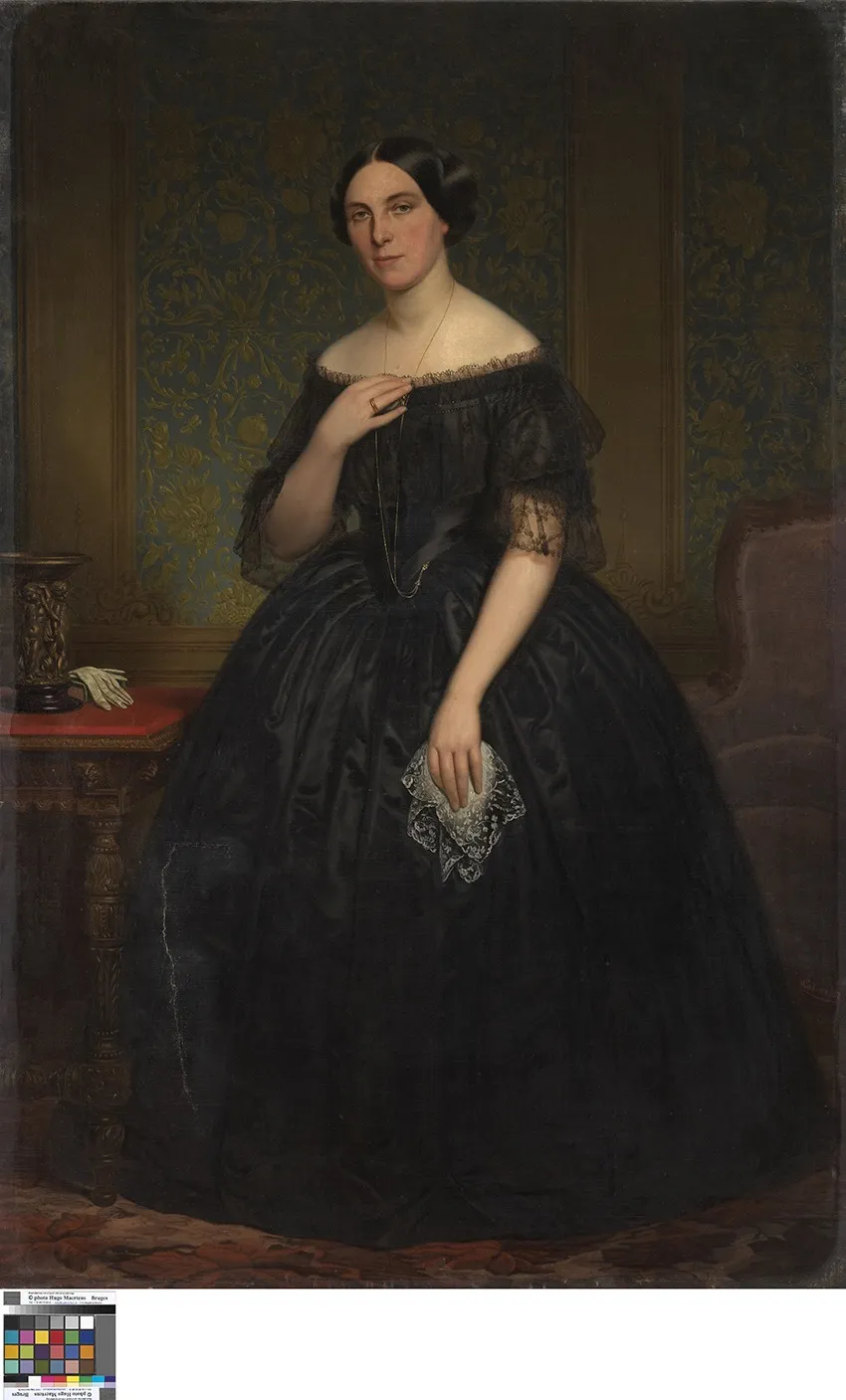
Portret van Beatrix van Herreweghe is an oil painting by the French Romanticist artist Modeste Leclercq. It dates from 1842 and is held in the collection of the Groeningemuseum.
About this work
Subject & Meaning
These objects collectively construct the visual identity of the subject, emphasizing personal adornment and domestic setting typical of the genre.
The work depicts Beatrix van Herreweghe, identified as the primary subject of this 1842 portrait by Modeste Leclercq. The composition includes specific iconographic elements that characterize the sitter's status and attire, featuring a necklace, a ring, and lace. She is seated on a fauteuil, with a glove and a table also present within the scene.
These objects collectively construct the visual identity of the subject, emphasizing personal adornment and domestic setting typical of the genre.
Technique & Style
Created in 1842, Portret van Beatrix van Herreweghe is an oil painting executed by Modeste Leclercq. The work is classified as a portrait and depicts the sitter alongside specific accessories including a necklace, lace, a glove, and a ring, as well as a fauteuil and a table. The artist utilized oil paint on a support to render these formal elements, focusing on the textures of the clothing and jewelry. The painting is currently held in the collection of the Groeningemuseum.
History & Provenance
Modeste Leclercq executed the oil painting Portret van Beatrix van Herreweghe in 1842. The work was created as a portrait depicting its subject alongside various attributes, including a necklace, gloves, lace, a ring, a table, and a fauteuil. Following its creation, the painting entered the collection of the Groeningemuseum, where it remains housed.
Legacy
The portrait of Beatrix van Herreweghe by Modeste Leclercq, painted in 1842, is housed in the Groeningemuseum and has been recognized for its detailed rendering of period attire and accessories such as a necklace, lace, and a ring. Its genre as a portrait reflects 19th-century conventions of depicting affluent subjects with symbolic objects that convey social status. The work's inclusion in the museum's collection has contributed to ongoing scholarship on early Belgian portraiture, reinforcing interest in Leclercq's role within the Romantic movement and his influence on later generations of portrait painters in Belgium.
Overview
Modeste Leclercq’s 1842 oil portrait presents a seated woman in an elaborate dark gown. The composition is confined to an interior space, where the subject’s face and hands are illuminated against a muted backdrop, creating a clear focal point.
Context
The portrait belongs to a period when Belgian artists were exploring refined domestic subjects, often emphasizing the social status of the sitter through clothing and interior details. Leclercq’s work aligns with contemporary trends that combined realistic observation with a modest, intimate atmosphere.
Artist & collection
Artist
Modeste Leclercq never left Paris, yet spent years painting the Seine’s grey-green light on blank canvases.

- Madame Mols-de Brialmont
 Marie Louise Victoria of Saxe-Coburg-Saafeld, Duchess of Kent (1786–1861)
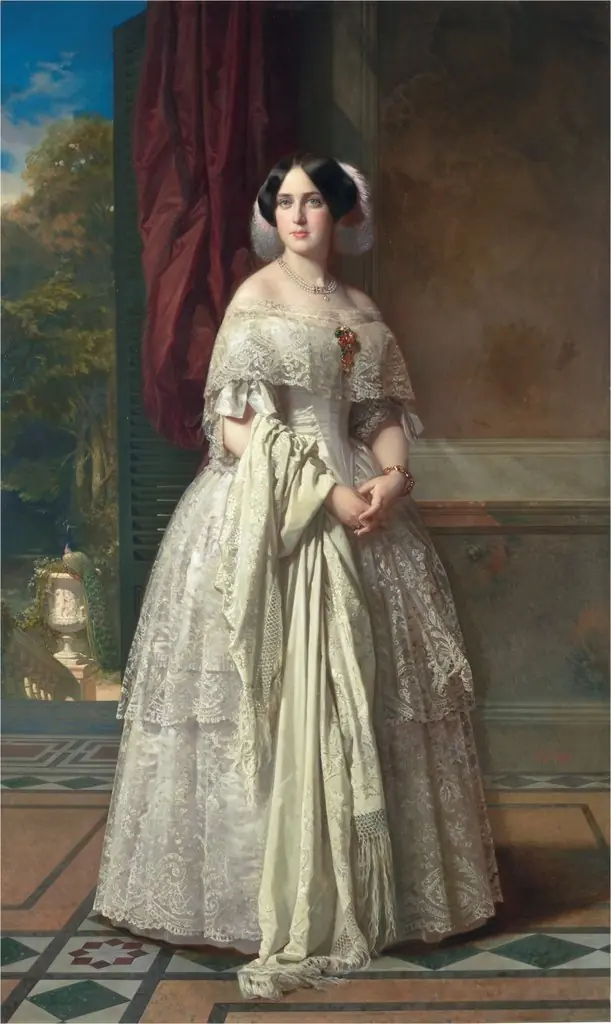 Josefa del Águila y Ceballos, later Marchioness of Espeja
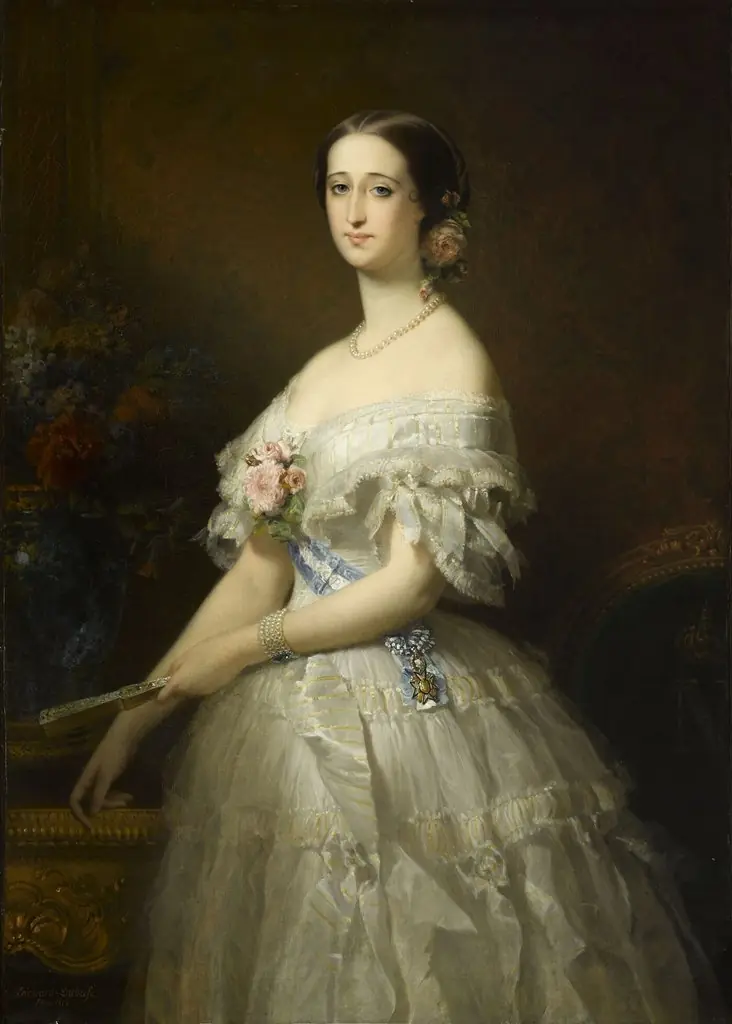 Portrait of the Empress Eugenie
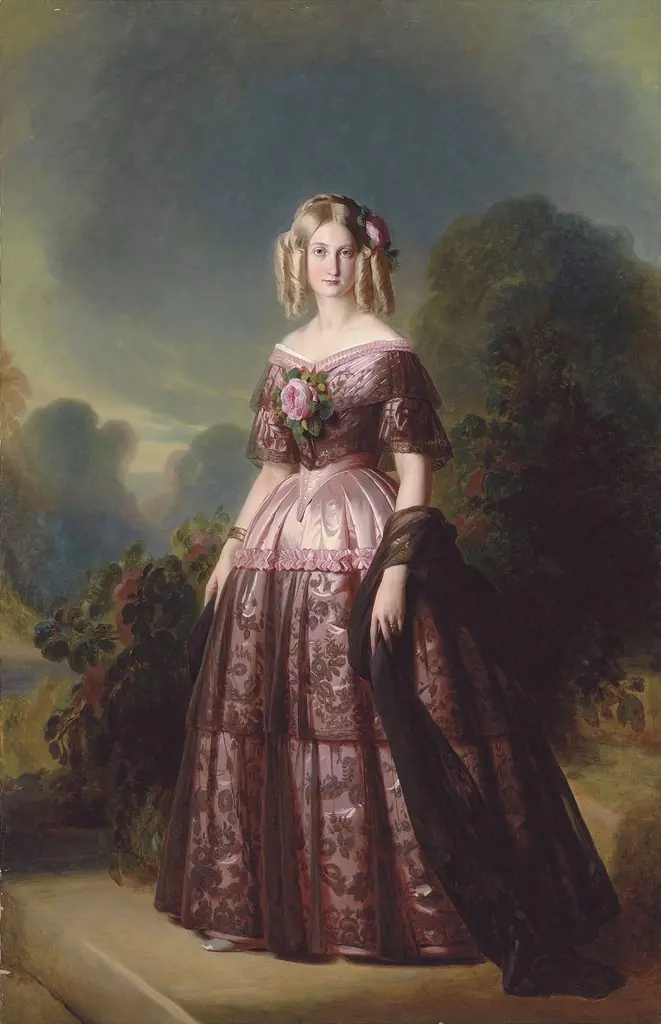 Maria Carolina of Bourbon-Two Sicilies
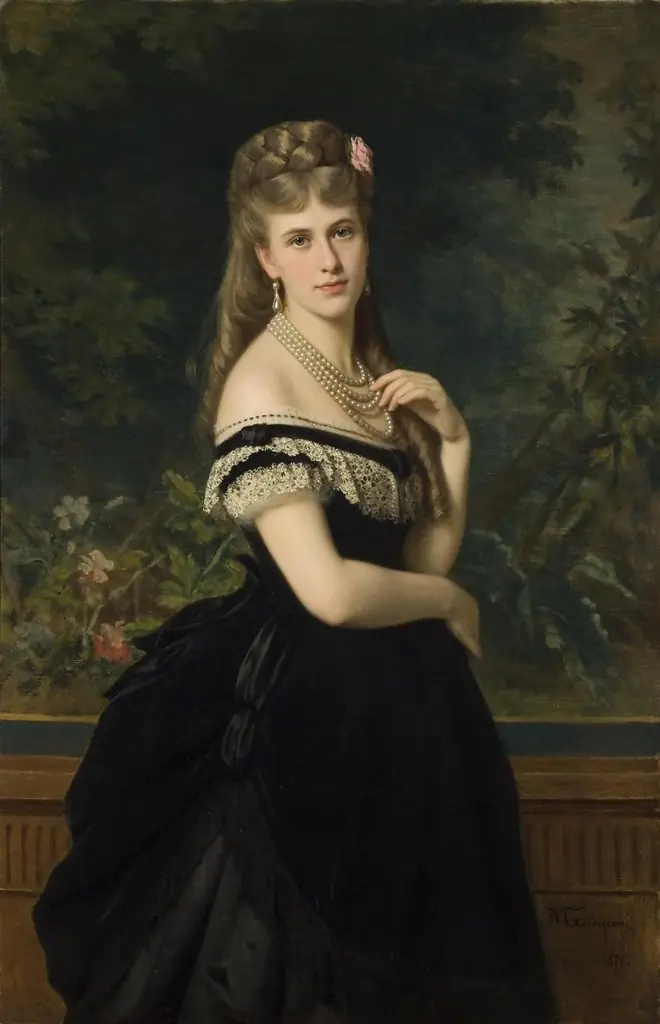 Portrait of Berg
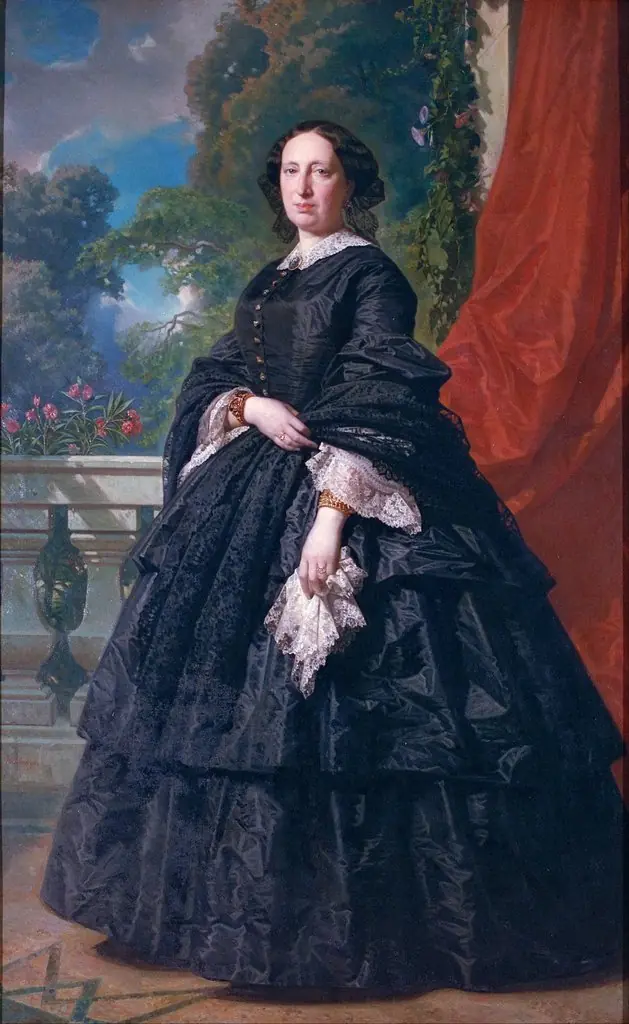 Portrait of Carlota Quintana Badia
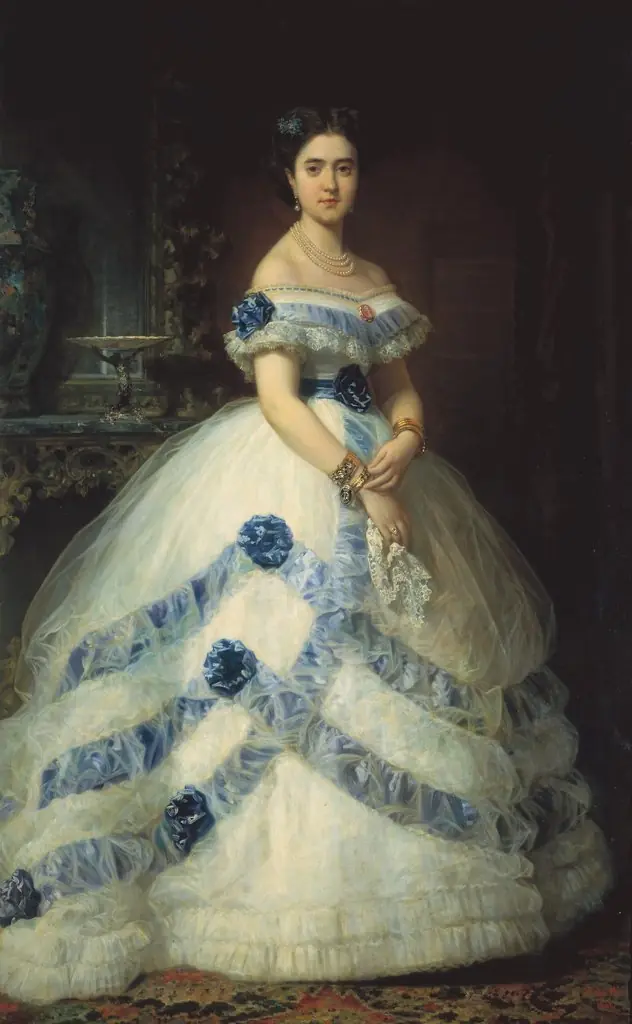 Isabel Álvarez Montes, II Marchioness of Valderas and II Duchess of Castro Enríquez
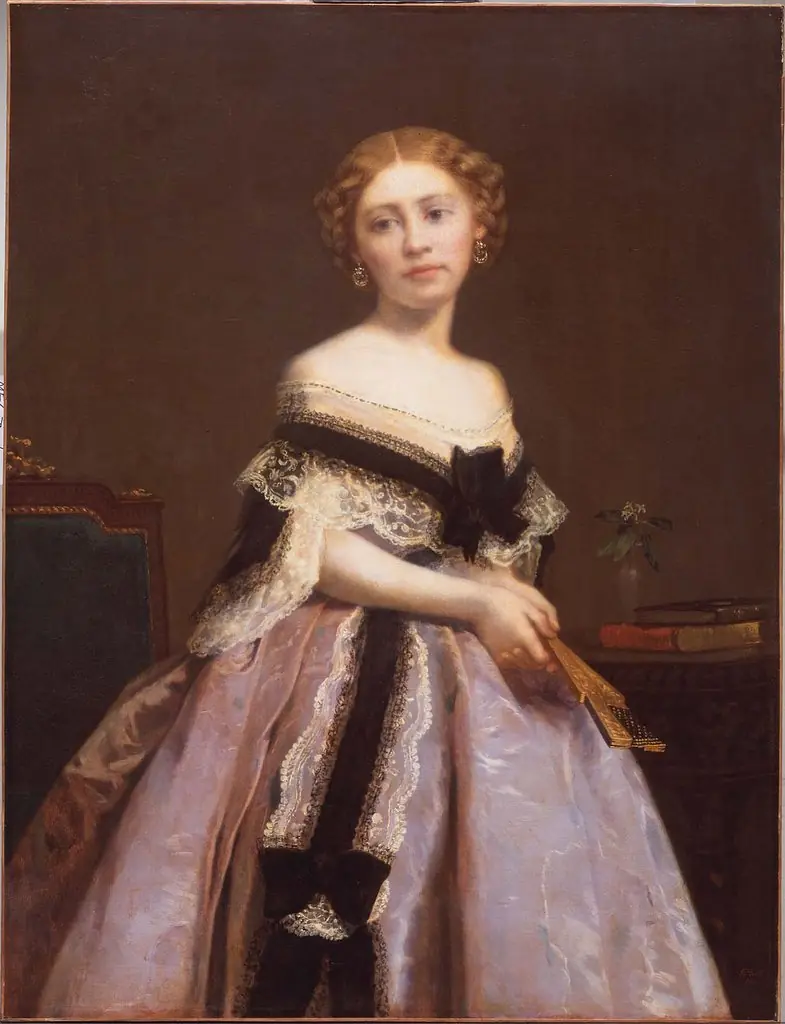 Mrs. Robert C. Winthrop (Frances Pickering Adams)
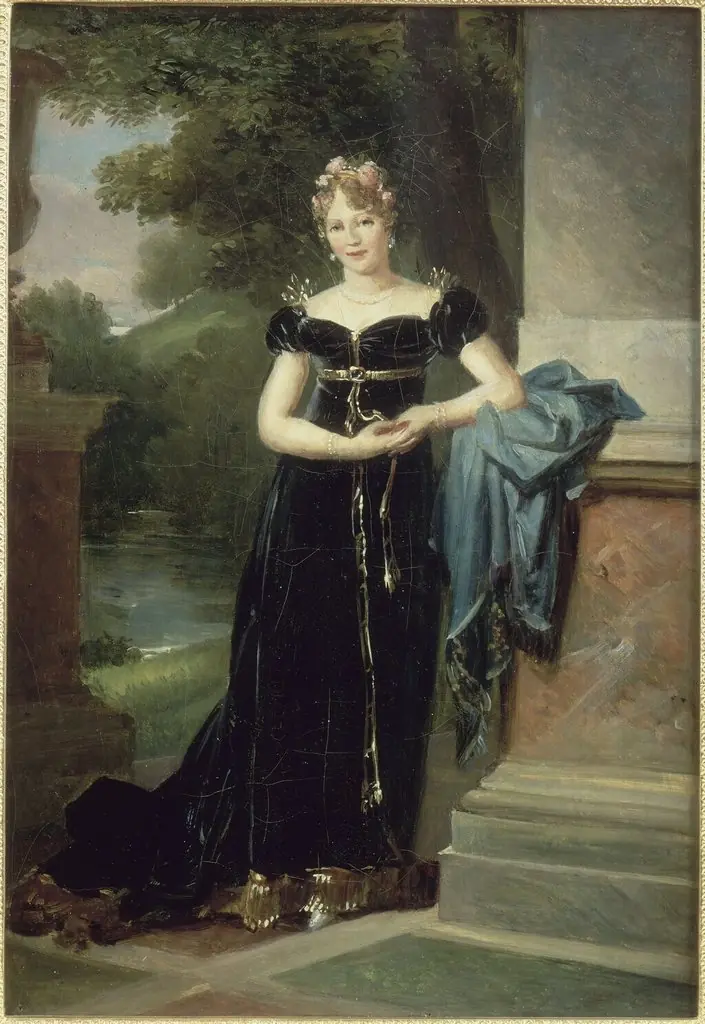 Portrait of Countess Maria Walewska.
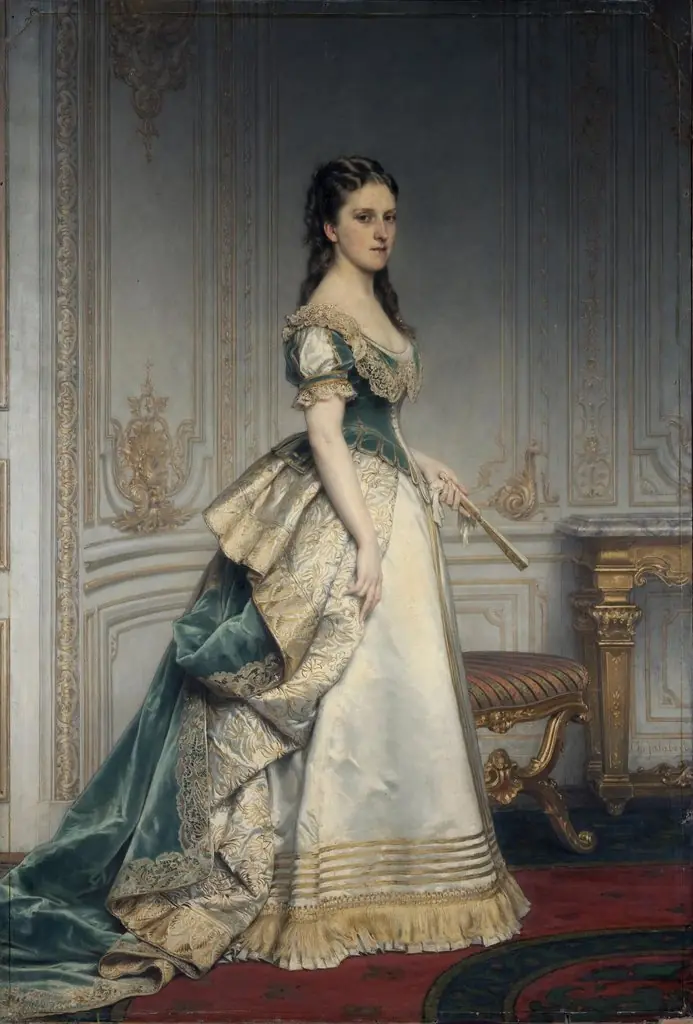 Portrait of Nadezhda Polovtseva
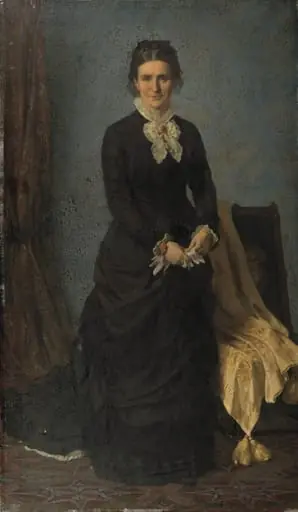 Kammerherreinde Caroline Amalie Meldahl, f. Ræder