Artwork
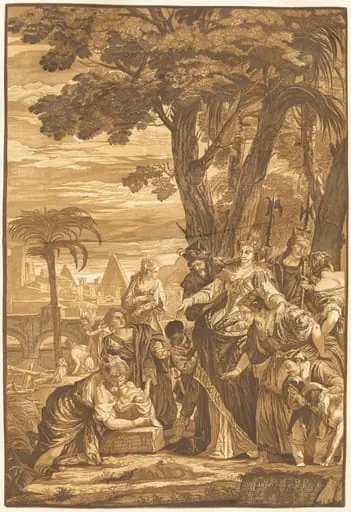
Moses saved from the water
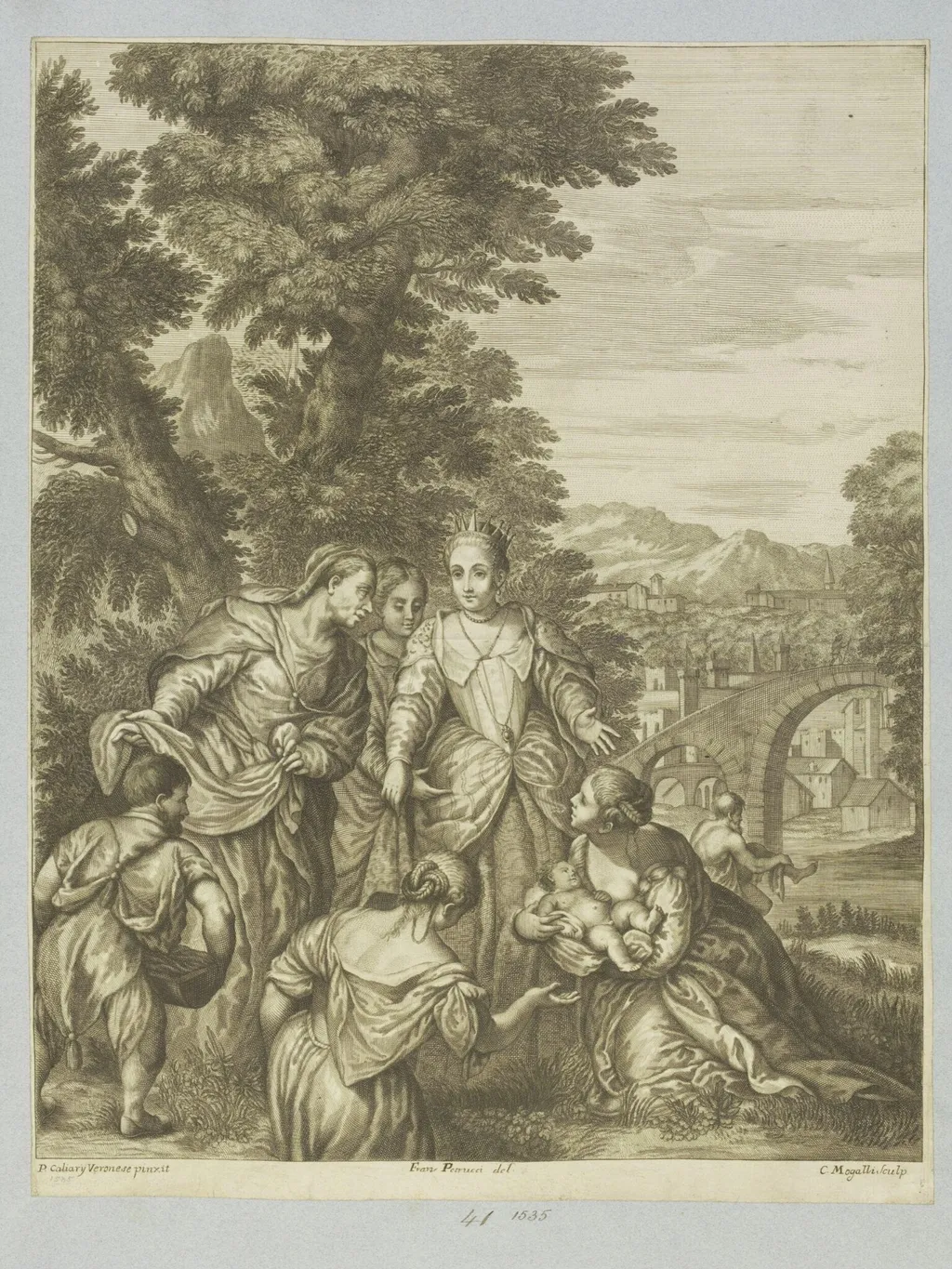
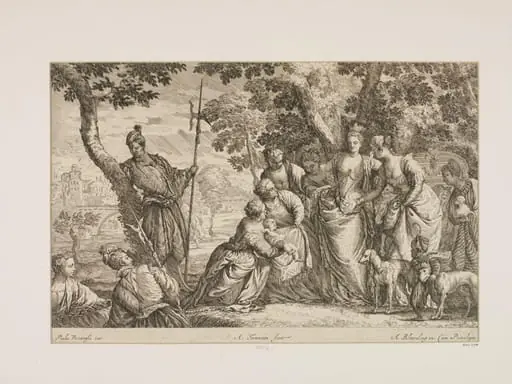
Moses saved from the water is a print by Cosimo Mogalli. It is held in the collection of the Victoria and Albert Museum.
About this work
Overview
It reproduces a composition originally painted by Paolo Veronese, which once hung in the Uffizi Gallery.
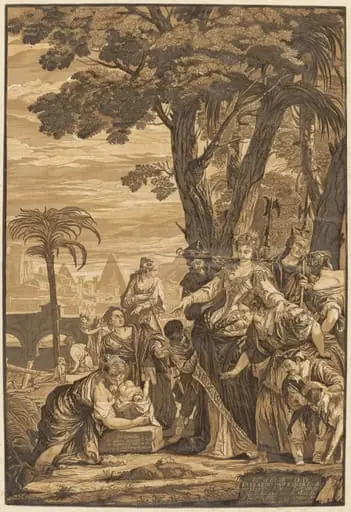
This 1750 print by Cosimo Mogalli illustrates the biblical story of Moses being found in the Nile. It reproduces a composition originally painted by Paolo Veronese, which once hung in the Uffizi Gallery. Executed as a monochrome print on paper, it translates Veronese’s narrative into a detailed engraving, preserving the dramatic grouping and landscape elements of the source while adapting them for wider dissemination through printmaking.
Subject & Meaning
The scene captures the moment when Pharaoh’s daughter discovers the infant Moses in a basket among the reeds. A royal woman, identified by her crown, cradles the child while attendants observe. The composition emphasizes divine providence and compassion, with figures arranged to draw attention to the central act of rescue.
The presence of a village and bridge in the distance situates the event within a broader, inhabited world, reinforcing its historical and spiritual significance.
Technique & Style
Mogalli employed fine linear engraving to render texture and depth, using controlled shading to model forms against the wooded backdrop. The figures are defined by contrasting tones, with light falling selectively to highlight the central group. The background recedes through delicate hatching, suggesting distance without overwhelming the narrative focus. This approach reflects the printmaker’s skill in translating painterly effects into the constraints of intaglio technique.
History & Provenance
The print derives from a lost oil painting by Paolo Veronese, documented as part of the Uffizi’s collection in the 16th century. Mogalli’s 1750 reproduction was likely made to meet demand for religious imagery among collectors and institutions. As a reproductive print, it served both as a study tool and a devotional object, extending the reach of Veronese’s composition beyond the confines of the gallery.
Context
In mid-18th-century Europe, biblical narratives remained central to artistic patronage and public education. Reproductive prints like Mogalli’s allowed widespread access to compositions by celebrated painters, especially when originals were inaccessible. The choice of Veronese’s composition reflects enduring admiration for his dramatic storytelling and rich figural arrangements, even as print culture democratized visual culture.
Legacy
Mogalli’s print preserves a visual interpretation of a biblical episode that had been rendered by major Renaissance artists. While Veronese’s original is no longer extant, this engraving offers insight into how his composition was understood and disseminated. It stands as a testament to the role of printmaking in sustaining artistic traditions across generations and geographies, bridging high art and popular imagery.
Own this work as a print
Artist & collection
Artist
Cosimo Mogalli made prints in Italy during the late 1600s and early 1700s. His engravings show religious scenes like *Holy Family* and *Moses saved from the water*. These prints copy the look of oil paintings but use…

 The Finding of Moses
 The Finding of Moses
 The Finding of Moses
 Infant Moses
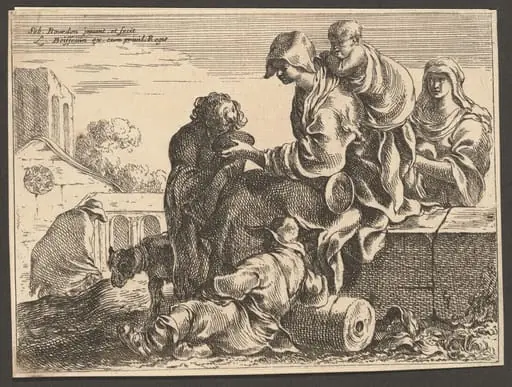 A Drinking Child with Resting Peasants
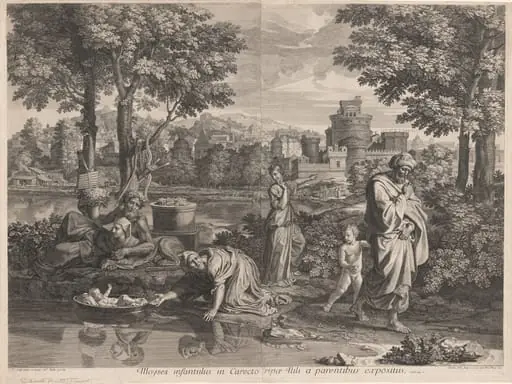 Moyses infantulus in Carecto ripae Nili a parentibus expositus (Baby Moses Placed in the Nile by his Parents)
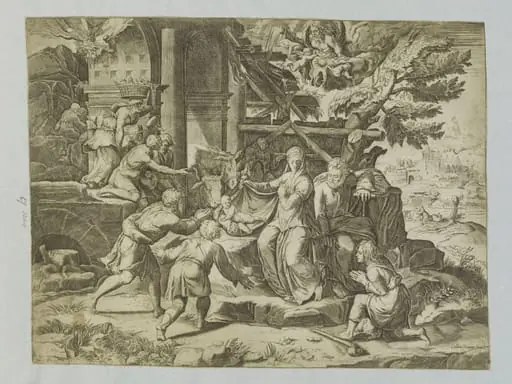 Adoration of the Shepherds
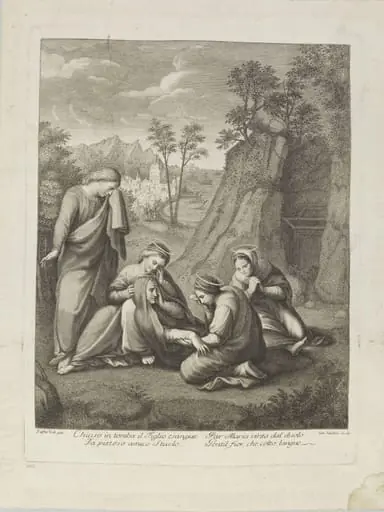 The three Maries at the tomb of Jesus Christ
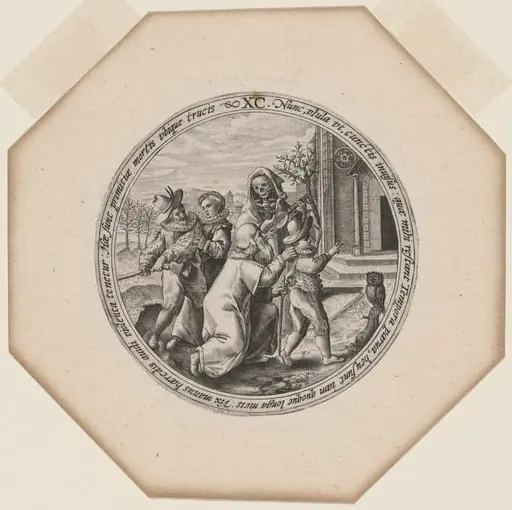 XC: Ninety Years
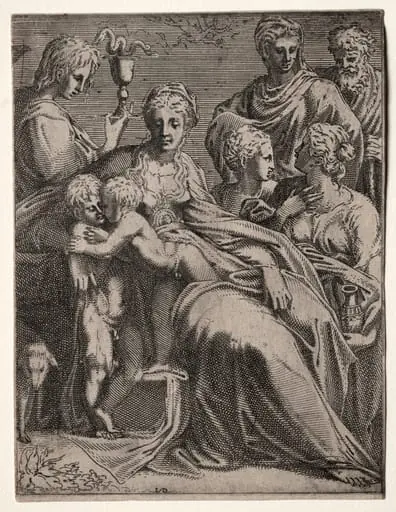 Sacred Conversation
- Finding of Moses
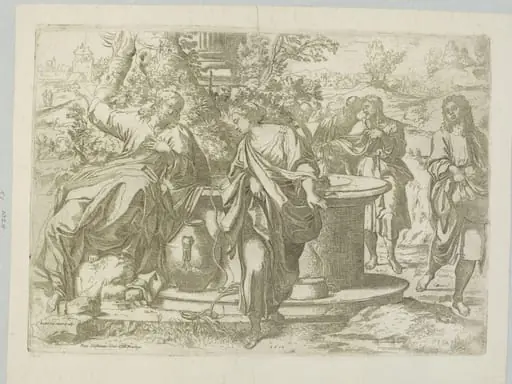 Christ and the Woman of Samaria