Artwork
Stilleven met vissen
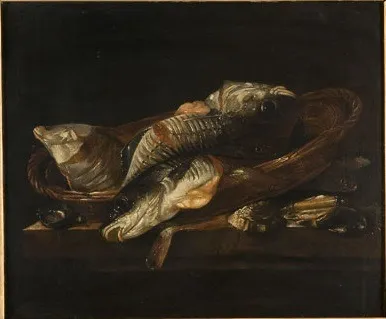
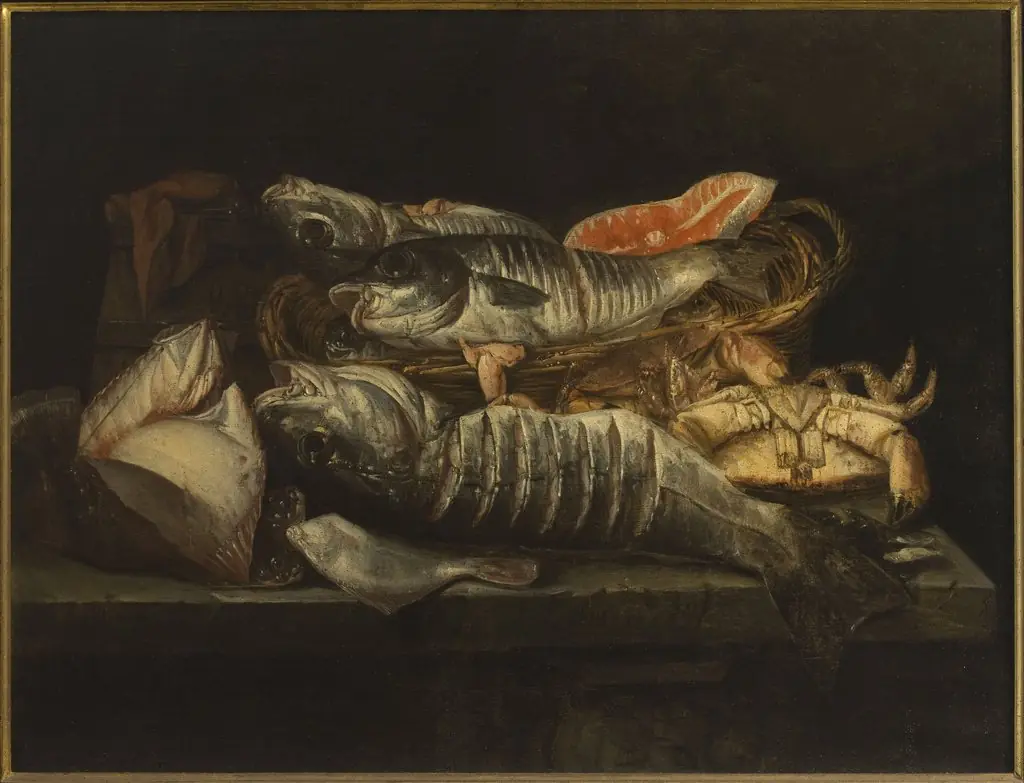
Stilleven met vissen is an oil painting by the Dutch Golden Age artist Monogrammist BVDA. It dates from 1650 and is held in the collection of the Rijksmuseum.
About this work
Subject & Meaning
Such depictions often served to showcase the abundance of the sea and could carry moral or religious undertones related to consumption and transience.
The painting depicts an arrangement of fish laid out on a surface, a typical subject within Dutch Golden Age still-life compositions. Such depictions often served to showcase the abundance of the sea and could carry moral or religious undertones related to consumption and transience.
The work is attributed to the anonymous Monogrammist BVDA and is housed in the Rijksmuseum collection, reflecting its significance within Dutch cultural heritage.
Technique & Style
The work is an oil painting executed on canvas, reflecting typical 17th-century Dutch still-life practices. Its composition features a restrained arrangement of fish rendered with careful brushwork and subtle tonal modeling, characteristic of the Monogrammist BVDA's approach to naturalistic detail. The surface bears the handling marks of centuries of storage in the Rijksmuseum depot, with varnish layers indicating historical interventions.
History & Provenance
Stilleven met vissen is an oil painting on canvas measuring 51 cm by 62 cm, created in 1650 by the artist known as Monogrammist BVDA. The work entered the collection of the Rijksmuseum and has remained part of the Cultural Heritage Agency of the Netherlands Art Collection, currently held in the Rijksmuseum depot.
The painting was catalogued as a still‑life work and is documented in both internal records and external databases, confirming its attribution to Monogrammist BVDA and its provenance within the institutional holdings.
Stilleven met vissen is held in the collection of the Rijksmuseum, where it is stored at the depot of the Cultural Heritage Agency of the Netherlands Art Collection (RCE). The canvas, measuring 51 by 62 cm, is catalogued as part of the Rijksmuseum's holdings alongside the RCE-managed art collection. No exhibition history is documented in the available sources.
No exhibition history is documented in the available sources.
Context
Stilleven met vissen, painted in 1650 by Monogrammist BVDA, exemplifies the Dutch Golden Age still-life tradition, depicting fish with meticulous detail characteristic of the period. The work is part of the Rijksmuseum's collection in Amsterdam, where it is housed in the depot RCE, reflecting its significance within institutional holdings of 17th-century Dutch art. Scholarship emphasizes its role within the broader context of monogrammist workshops, where attribution to BVDA highlights the practice of anonymous or semi-anonymous production for the open market, distinct from named masters.
This painting contributes to understanding the evolution of still-life as a genre, balancing realism with compositional harmony, and is frequently cited in studies of Dutch painting's commercial networks and artistic anonymity.
Legacy
Stilleven met vissen by Monogrammist BVDA exerted influence through its inclusion in the Rijksmuseum collection, shaping later still-life interpretations in Dutch art. Its precise composition and use of oil on canvas established a benchmark for subsequent generations of painters working within the genre.
Overview
Stilleven met vissen is an oil painting dating from around 1650, attributed to the anonymous artist known as Monogrammist BVDA. The work is part of the collection of the Rijksmuseum in Amsterdam. It presents a quiet still‑life arrangement featuring fish and shellfish rendered with meticulous detail against a dark backdrop.
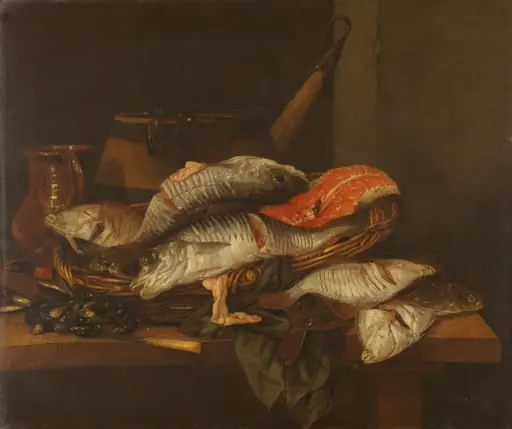
Artist & collection
Artist
This 17th-century Dutch still-life artist signed works only with the monogram BVDA.

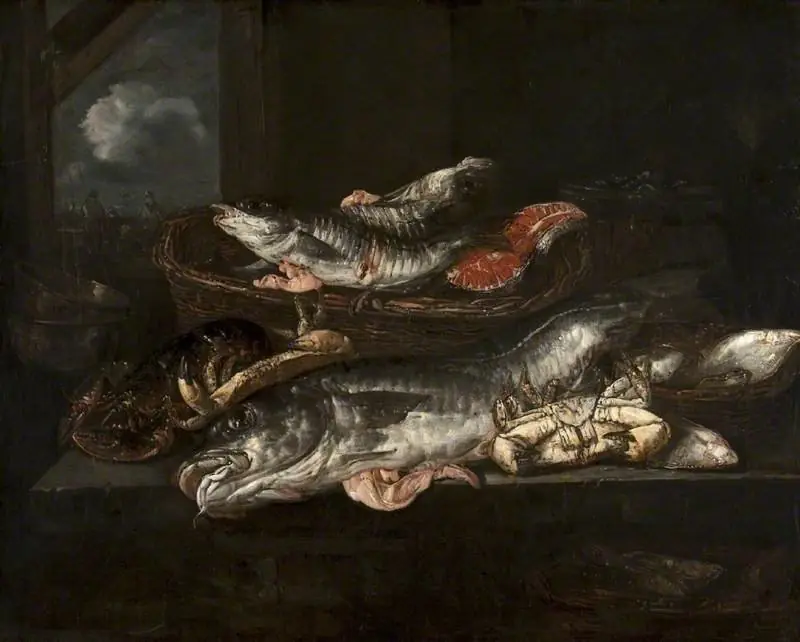 Still Life: Haddock, Plaice, Crabs and Lobster
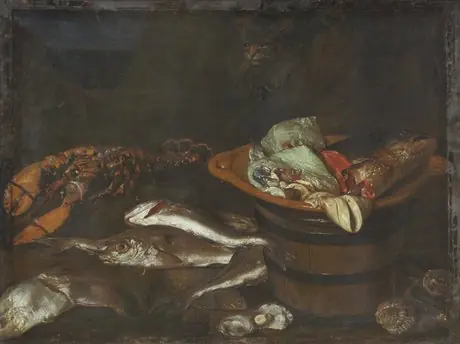 Still life. fishes
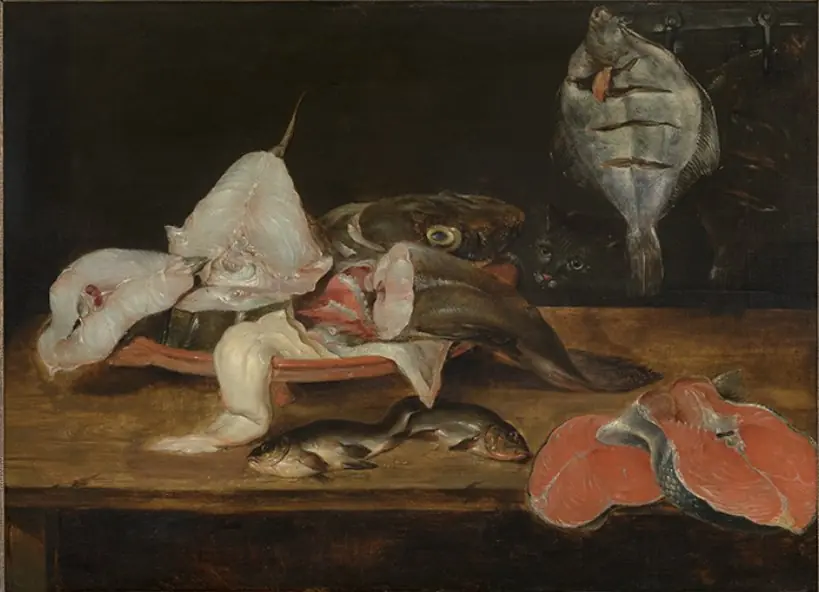 Stilleven met vis
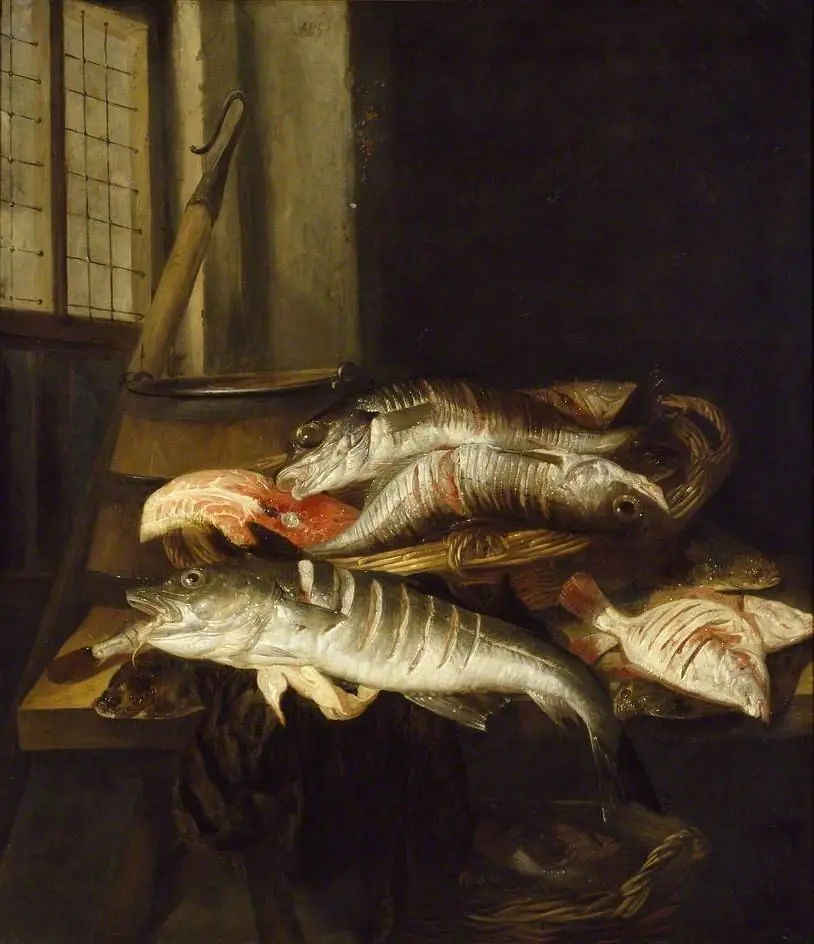 Interior with Still Life of Fish
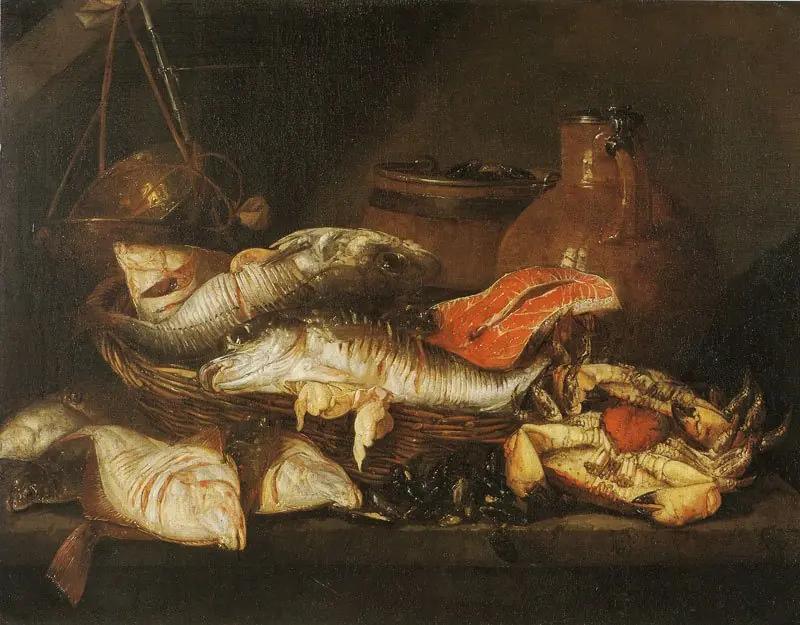 Fish in a Basket near a Scale
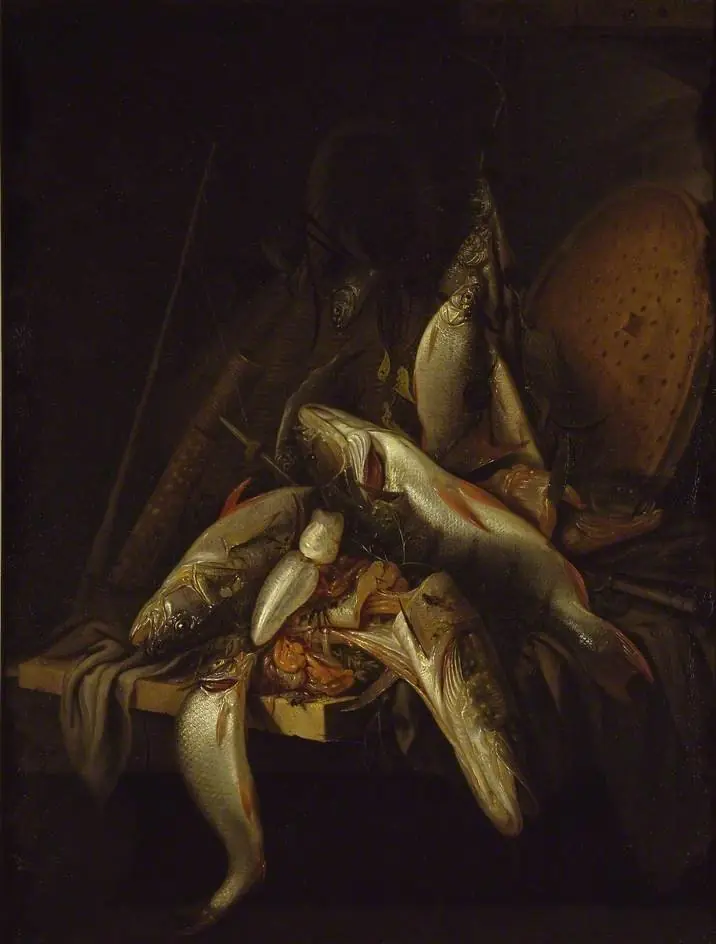 Still Life of Fish
 Still Life with Fish and Crustaceans on a Table
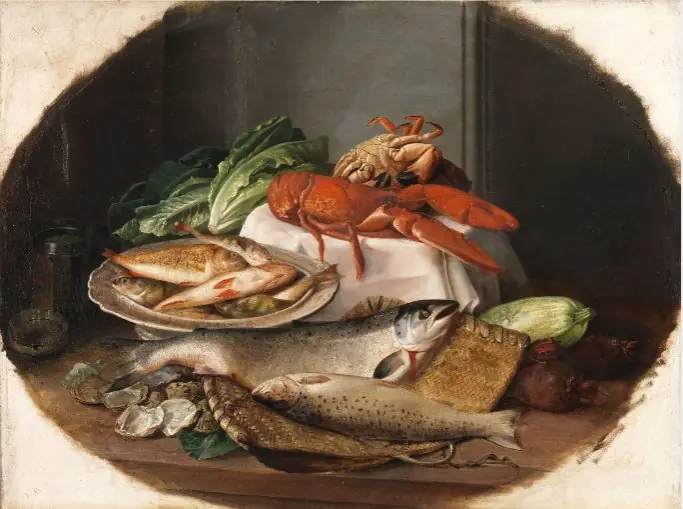 A Still Life with Fish
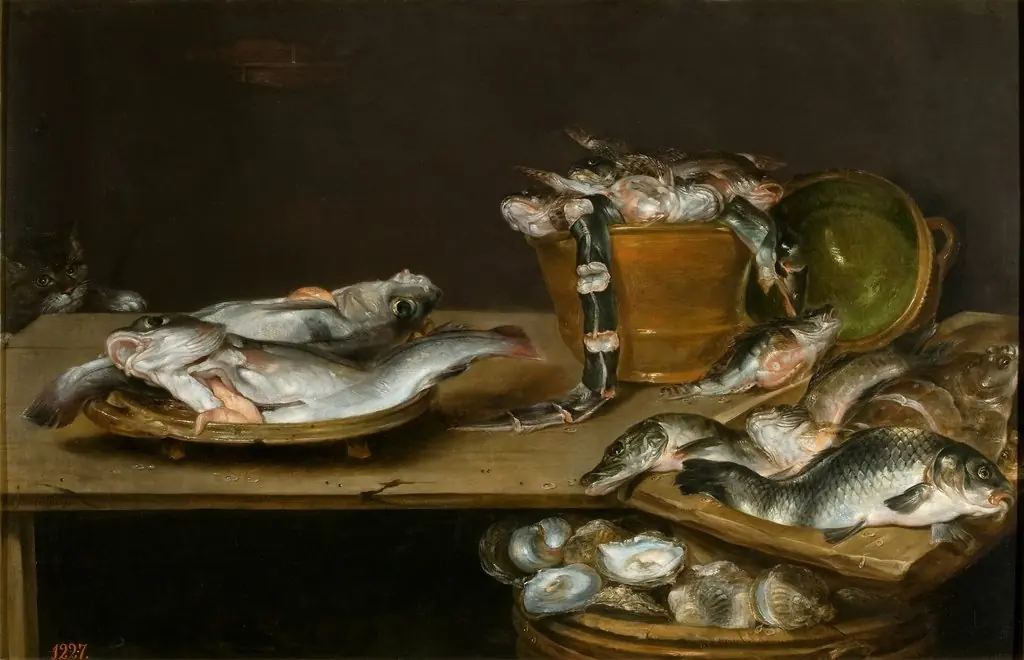 Still Life of Fish and Oysters with a Cat
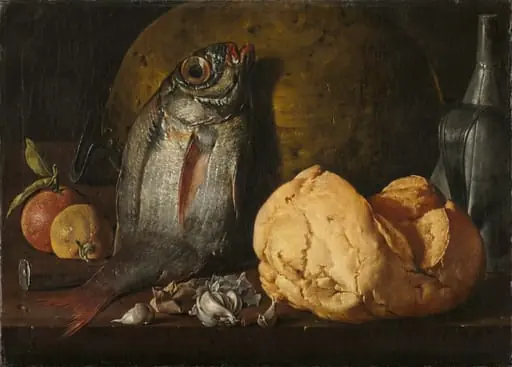 Still Life with Fish, Bread, and Kettle