Artwork
Le Villaige de Brimeu
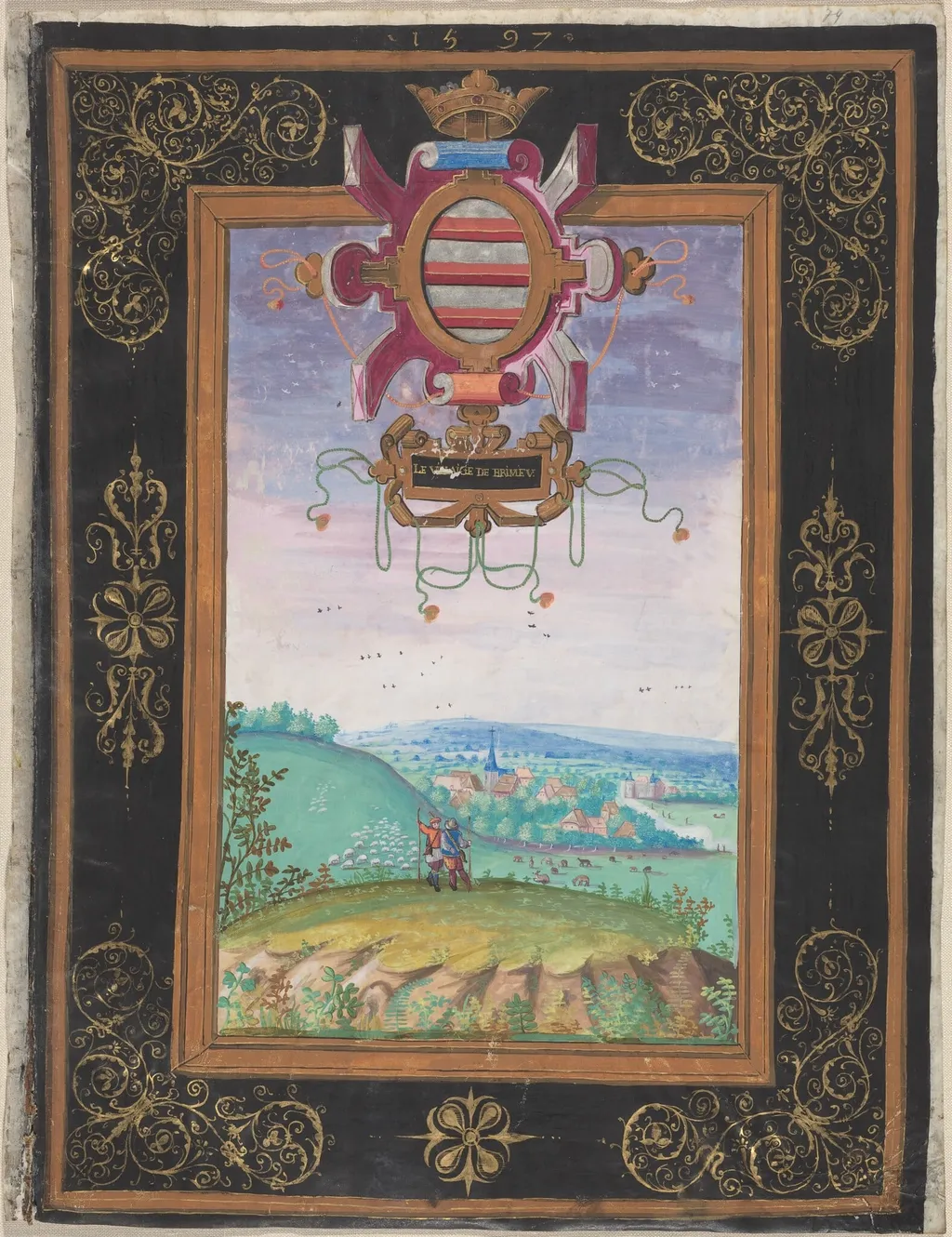
Le Villaige de Brimeu is a gouache drawing by the Renaissance artist Adrien Montigny. It dates from 1597 and is held in the collection of the National Gallery of Art.
About this work
Overview
Adrien Montigny’s drawing entitled Le Villaige de Brimev dates from around 1597. Executed in gouache and watercolor on vellum, the work measures a modest size and presents a pastoral tableau framed by ornamental borders. The composition combines a heraldic device at the top with a bucolic village scene below, reflecting the conventions of late‑sixteenth‑century decorative drawing.
Subject & Meaning
The central image depicts a lone figure in a bright red coat strolling past a modest settlement, its church spire rising above a cluster of thatched roofs.
The central image depicts a lone figure in a bright red coat strolling past a modest settlement, its church spire rising above a cluster of thatched roofs. Sheep graze on the gently undulating hills, suggesting a peaceful, agrarian setting. The heraldic shield crowned and striped, bearing the inscription “Le Villaige de Brimev,” signals a connection to a noble family and likely served as a visual affirmation of their territorial claim or prestige.
Technique & Style
Montigny employed the translucency of watercolor together with the opacity of gouache to render delicate atmospheric effects and crisp details. The vellum support allows for fine line work, while the gold‑toned swirls and floral motifs along the margins provide a decorative flourish typical of Renaissance manuscript illumination. The palette of muted greens, earth tones and the vivid red of the traveler reflects the period’s balanced colour sensibility.
History & Provenance
Created at the close of the sixteenth century, the drawing was probably commissioned by a member of the Brimev lineage for display in a private collection or as part of a larger heraldic program. Its survival on vellum suggests careful preservation, and it now resides in a museum collection dedicated to early modern European drawings, where it contributes to the understanding of regional identity representation in Renaissance art.
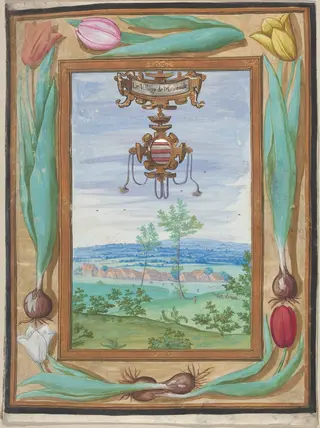
Own this work as a print
Artist & collection

 Saint Bonaventure Arriving and Preaching in Lyon
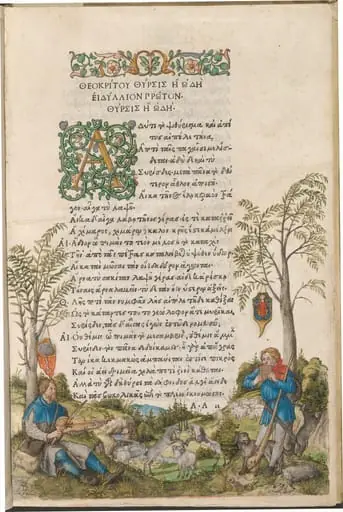 A Pastoral Landscape with Shepherds Playing a Viola and Panpipes
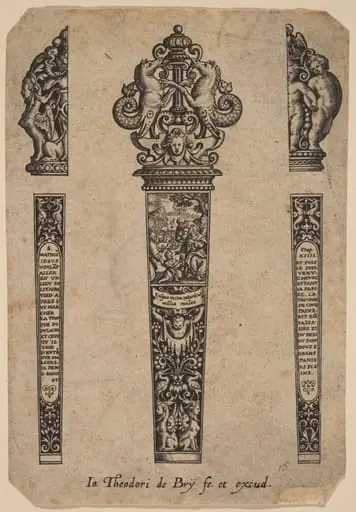 Ornament for Knife Handle
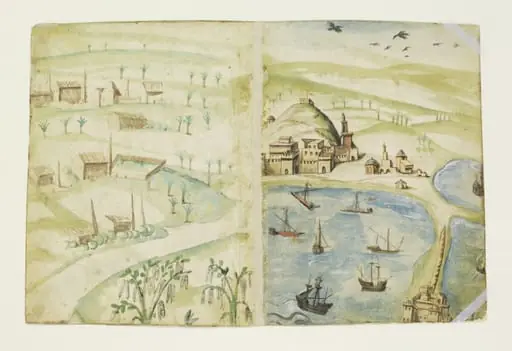 Untitled
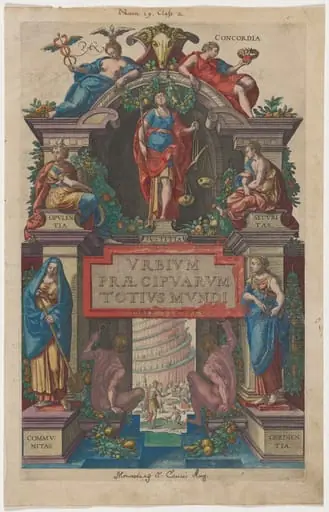 Title Page to Urbium Praecipuarum Totius Mundi
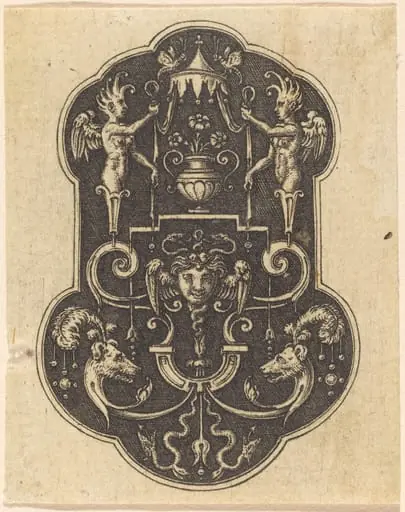 Head of Medusa
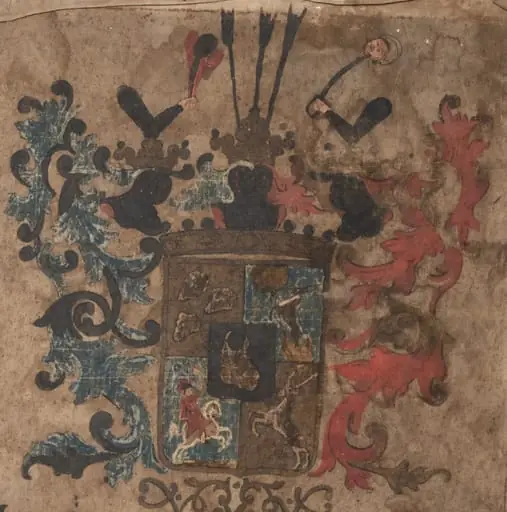 Blazonul funerar al contelul Miklós Wass din Țaga
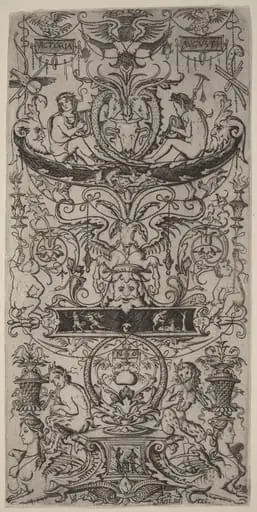 Ornament Panel: Victoria Augusta
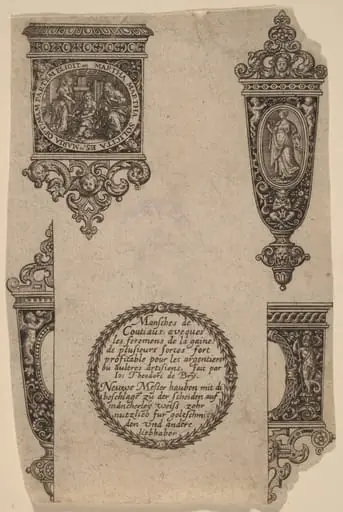 Ornament for Knife Handle
 Ornament Panel Inscribed Victoria Augusta
 A Donor with a Coat of Arms (Schildbegleiter und Wappenschild mit Schrägbalken)
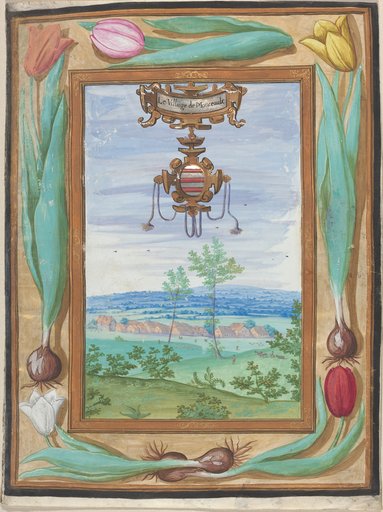
- Le Villaige de Monceaulx