Artwork
The Artist's Sister at a Window
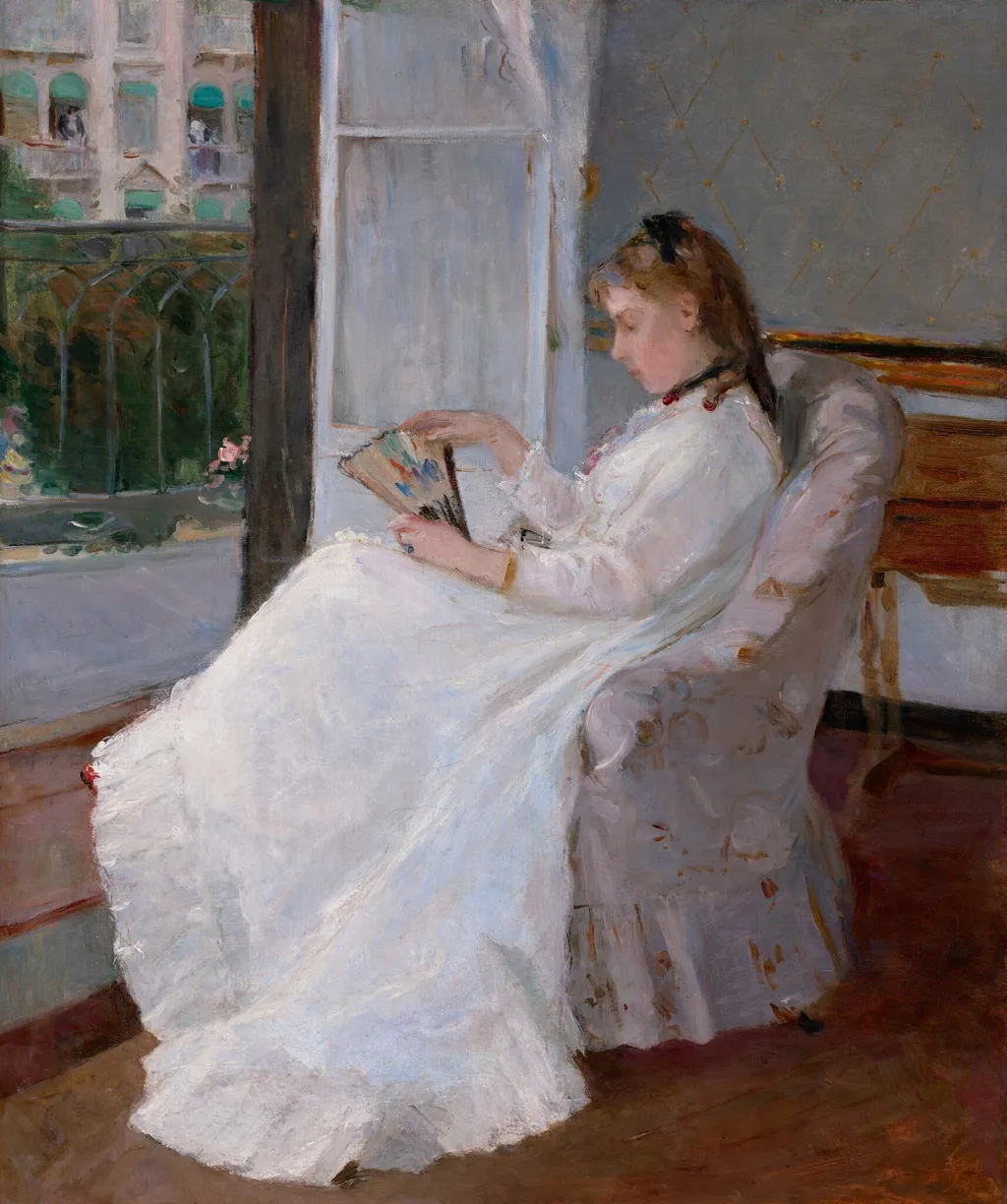
The Artist's Sister at a Window is an oil painting by the Impressionist artist Berthe Morisot. It dates from 1869 and is held in the collection of the National Gallery of Art.
About this work
Subject & Meaning
The composition emphasizes a quiet domestic scene that foregrounds the sitter's presence and the intimate familial bond shared with Morisot.
The Artist's Sister at a Window portrays the artist's sister, Edma Morisot, seated near an open window within a modest interior. The composition emphasizes a quiet domestic scene that foregrounds the sitter's presence and the intimate familial bond shared with Morisot. By rendering Edma in this private setting, the work functions as a portrait of sisterly identity and the limited public role of women in the late-19th-century bourgeois household.
The window serves as a visual motif that suggests both a literal view outward and a symbolic framing of interior contemplation, reinforcing the painting's focus on domestic tranquility and personal connection.
Technique & Style
Executed in 1869, this portrait utilizes oil paint applied to a canvas support. The work measures 54.8 by 46.3 centimeters. As a genre portrait, the piece depicts Edma Morisot.
The composition focuses on the sitter positioned at a window, a subject arrangement characteristic of Morisot's approach during this period. The physical object remains extant within the collection of the National Gallery of Art in Washington, D.C., where its material composition of oil and canvas is preserved. The specific handling of the brushwork and the current condition of the surface are not detailed in the available records, though the medium and dimensions are firmly established.
History & Provenance
Painted in 1869 by Berthe Morisot, The Artist's Sister at a Window depicts Edma Morisot in oil on canvas. The provenance begins with the artist, who gave the work to her sister, Mme. Pontillon, in Paris. It passed by inheritance to Pontillon's daughter, Mme. E. Forget, in Paris by 1941, who lent it to an exhibition at the Orangerie in Paris that year.
By 1945, the painting was recorded in the collection of Ernest Rouart in Paris, shown at Durand-Ruel; Rouart had married the artist's daughter Julie Manet, making him a cousin of Mme. Forget. By 1952 it had entered the collection of Capt. Edward H. Molyneux in Paris, France. On 15 August 1955 it was sold to Ailsa Mellon Bruce in New York, who in 1970 bequeathed it to the National Gallery of Art.
The painting entered the National Gallery of Art in Washington, D.C. as part of the 1970 bequest of Ailsa Mellon Bruce, who had acquired it on 15 August 1955 from Captain Edward H. Molyneux, Paris. Its documented exhibition history includes a 1941 show at the Orangerie in Paris, where it was lent by Mme E. Forget, and a 1945 exhibition at Durand-Ruel in Paris, where it was listed as belonging to Ernest Rouart. It was also included in the traveling show "Paris 1863–1874: Revolution in der Kunst."
Legacy
The painting entered the National Gallery of Art in 1970 through the bequest of Ailsa Mellon Bruce, ensuring its preservation and scholarly access. Its earlier visibility in the 1941 l'Orangerie exhibition in Paris and the 1945 Durand-Ruel show highlighted its significance within Morisot's body of work. As a portrait of the artist's sister Edma, the work exemplifies the intimate family subjects that have become central to discussions of Morisot's role in Impressionism and to broader narratives about women artists' domestic sphere.
Consequently, the piece is frequently cited in studies of gender and artistic practice in the late nineteenth century.
Overview
Berthe Morisot, a French painter and printmaker, created The Artist's Sister at a Window in 1869. This oil on canvas work portrays her sister, Edma Morisot, standing by a window and observing the world outside. The painting provides a quiet, intimate view into the artist's personal life, reflecting a focus on domestic subjects that would become a hallmark of her oeuvre.
Context
Although Berthe Morisot later became a central figure in the Impressionist movement, The Artist's Sister at a Window from 1869 aligns more closely with Realist tendencies in its direct depiction of everyday life. Morisot had already begun exhibiting at the prestigious Paris Salon in 1864, establishing her presence in the art world before she joined the groundbreaking first Impressionist exhibition in 1874 alongside peers like Edgar Degas and Camille Pissarro.
Own this work as a print
Artist & collection
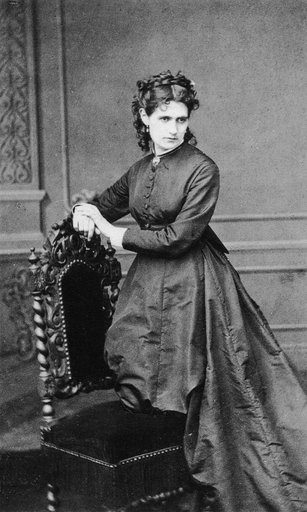
Artist
Berthe Marie Pauline Morisot was a French painter, printmaker and a member of the circle of painters in Paris who became known as the Impressionists.