Artwork
The Mother and Sister of the Artist
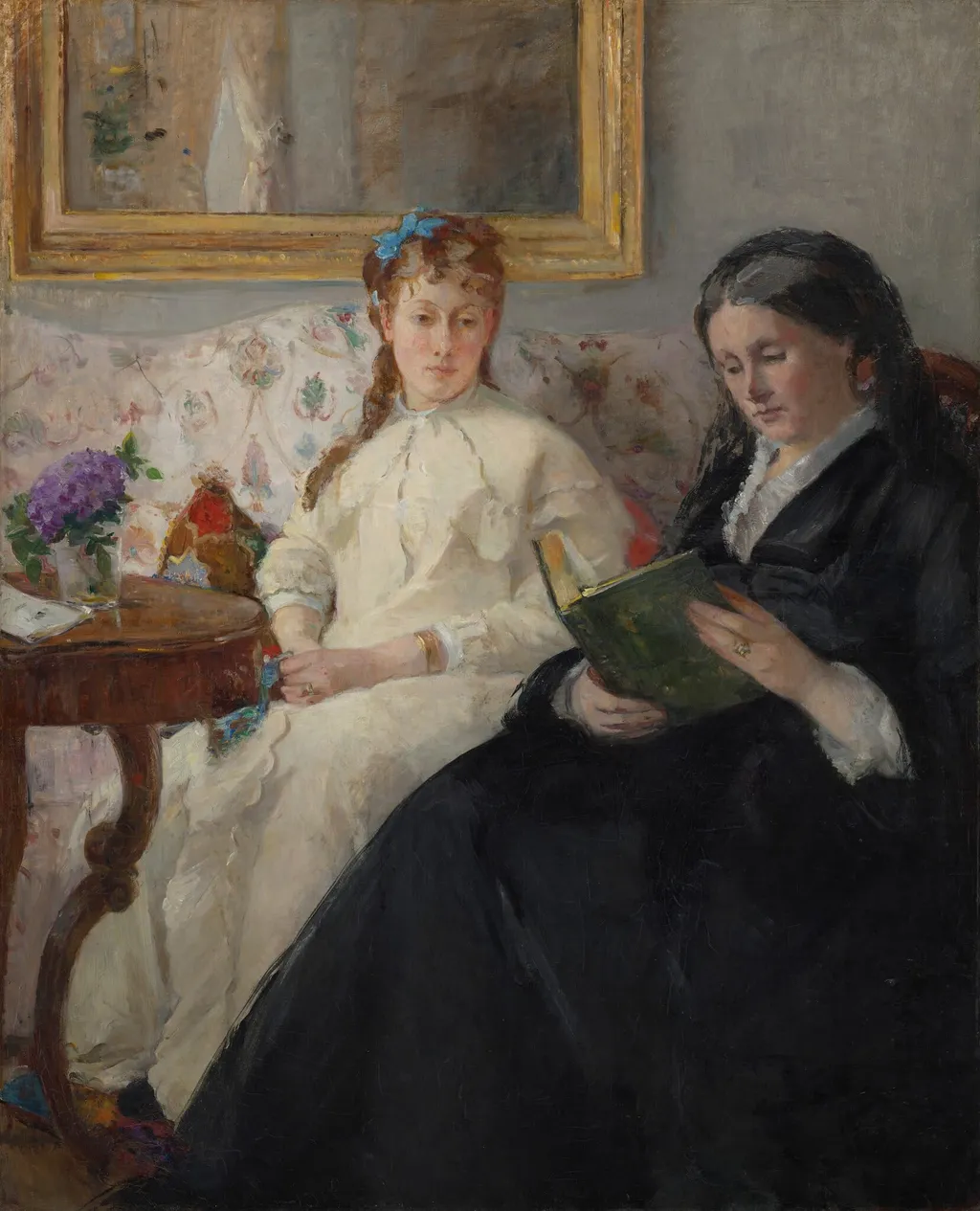
The Mother and Sister of the Artist is an oil painting by the Impressionist artist Berthe Morisot. It dates from 1870 and is held in the collection of the National Gallery of Art.
About this work
Berthe Morisot's sister Edma sits with their mother standing beside her, a closed fan in Edma's lap. Soft light falls on their faces and dark dresses in a quiet room. Morisot painted it in 1870, when women artists rarely exhibited, using loose brushstrokes that keep the scene personal and alive.
Subject & Meaning
The painting shows Berthe Morisot's mother, Marie-Joséphine, seated and reading, while her sister Edma Pontillon, pregnant with her first child, sits nearby.
The painting shows Berthe Morisot's mother, Marie-Joséphine, seated and reading, while her sister Edma Pontillon, pregnant with her first child, sits nearby. The work is a double portrait that records a domestic moment in the Morisot household in Paris. Edma's pregnancy is noted in contemporary accounts of the sitters.
The composition uses light to separate the figures: Edma is illuminated by a window, whereas the mother is placed in darker tones, and the mother's black dress contrasts with Edma's pale robe. A mirror and period furnishings signal the family's affluent bourgeois status. Manet later altered the canvas, adding black passages that Morisot disliked, underscoring the work's complicated reception before the Salon.
Technique & Style
Created between 1869 and 1870, this vertical double portrait is executed in oil paint on canvas, measuring 101 by 81.8 centimeters. The work exhibits a loose brushstroke characteristic of the artist's early style, where drawing remains more dominant than color, prefiguring the more sketch-like approach of her later career. A distinctive formal element is the heavy use of black, a color atypical for Impressionism but present due to the intervention of Édouard Manet.
Before the 1870 Salon, Manet reportedly applied black paint to the mother's dress, head, and background, a modification that created a stark contrast with the sister's pale, illuminated robe. The composition features differentiated lighting, with the younger woman bathed in window light while the mother sits in relative shadow, set against an interior background including a mirror and furniture.
History & Provenance
Created between 1869 and 1870, this double portrait depicts the artist's mother, Marie-Joséphine Thomas, and her sister, Edma Pontillon, who was pregnant with her first child at the time. During its final stages in late 1869, Morisot sought advice from Pierre Puvis de Chavannes before Édouard Manet intervened, applying black paint to the mother's dress and background shortly before the 1870 Salon. The painting entered the modern market when Paul Rosenberg sold it to Chester Dale on May 15, 1930; it had previously remained within the family, passing from the artist to her sister Mme Pontillon, and subsequently to Pontillon's daughter, Mme Forget.
Upon Dale's death in 1962, the painting was bequeathed to the National Gallery of Art in Washington, D.C., in 1963, where it has remained. It was exhibited at the Paris Salon of 1870.
Context
The Mother and Sister of the Artist (1869–1870) exemplifies Berthe Morisot's early adherence to the Salon system, distinguishing her career path from her peer Édouard Manet, whose works faced frequent rejection. The painting was positively received at the Salon of 1870, despite contemporary critics categorizing such domestic scenes as merely "feminine painting." Art-historical analysis highlights the work's significance in documenting the gendered constraints of the era; the sitter Edma Pontillon, depicted while pregnant, represents the sacrifice of artistic practice for marriage, a theme reinforced by the artist's correspondence regarding her sister's abandonment of painting.
The composition also reflects Morisot's complex artistic development, notably the controversial intervention by Manet, who applied heavy black tones to the mother's dress, creating a stylistic anomaly within Impressionism. Following the artist's death, the work fell into obscurity until it regained scholarly attention in the mid-20th century, cementing its status as a key document of female artistic experience in the Second Empire.
Legacy
Following Berthe Morisot's death, The Mother and Sister of the Artist was withdrawn from public view and did not regain attention until the mid-20th century, when scholars renewed interest in her work. The painting entered the collection of American collector Chester Dale, who purchased it in May 1930 from Paul Rosenberg's gallery. Dale bequeathed the canvas to the National Gallery of Art in Washington, D.C., in 1963, where it has remained on display as part of the museum's permanent holdings.
Overview
Berthe Morisot's oil on canvas, The Mother and Sister of the Artist, created between 1869 and 1870, depicts two significant figures in her life. This painting, sometimes referred to as The Reading, is held in the collection of the National Gallery of Art in Washington, D.C. It offers a glimpse into the intimate domestic sphere, a common theme in Morisot's work.
Own this work as a print
Artist & collection
Artist
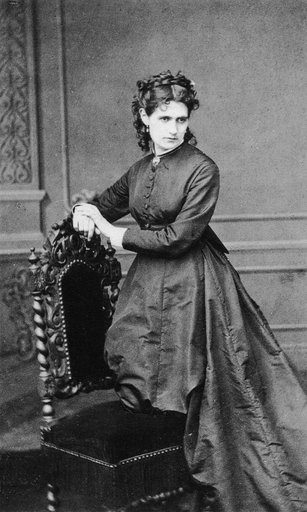
Berthe Marie Pauline Morisot was a French painter, printmaker and a member of the circle of painters in Paris who became known as the Impressionists.

 Compared in the Impressionism course