Artwork
The Finding of Moses
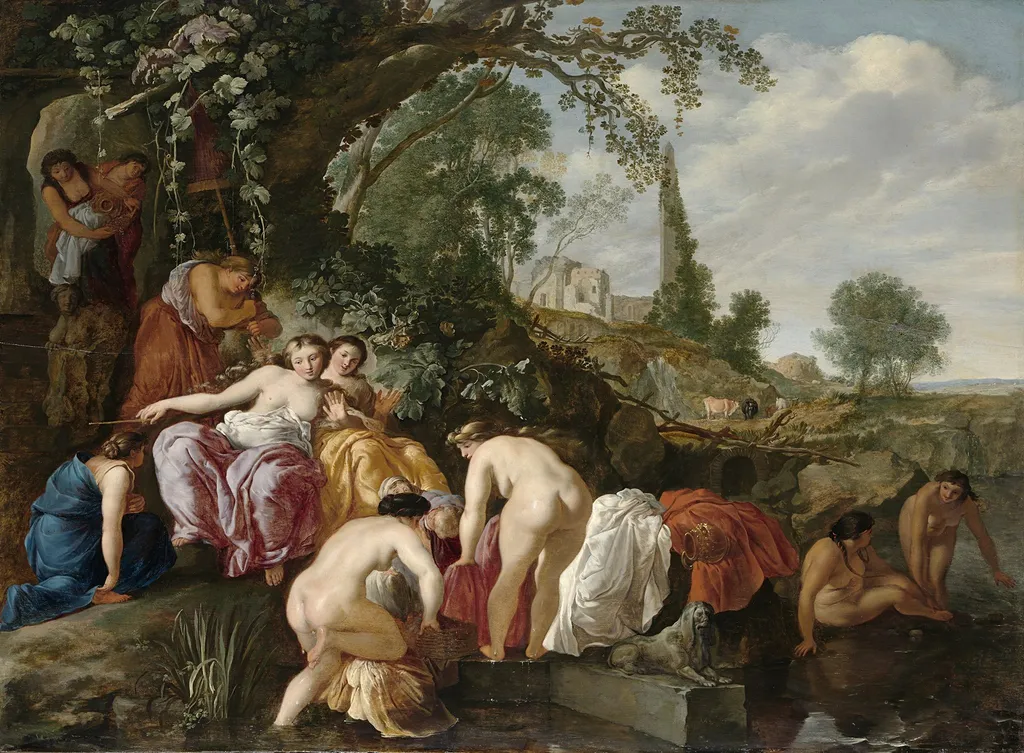
The Finding of Moses is an oil painting by the Dutch Golden Age artist Moses van Uyttenbroeck. It dates from 1625 and is held in the collection of the Rijksmuseum.
About this work
Subject & Meaning
The work is classified as religious art, situating it within a long European tradition of Old Testament subjects treated by history painters.
The painting depicts the Finding of Moses, a narrative episode drawn from the Book of Exodus in which the infant Moses, hidden by his mother to save him from Pharaoh's decree, is discovered among the bulrushes along the Nile and rescued by Pharaoh's daughter. The work is classified as religious art, situating it within a long European tradition of Old Testament subjects treated by history painters. A tree is explicitly identified as part of the depicted scene, likely providing the riverside setting in which the discovery takes place and reinforcing the pastoral, natural context typical of the iconography.
As a religious painting by Moses van Uyttenbroeck, the work participates in the early seventeenth-century Dutch interest in biblical storytelling, presenting the moment of salvation as both a moral exemplar of divine providence and a popular subject for visual meditation on mercy and deliverance.
Technique & Style
The Finding of Moses is executed in oil paint on panel, a support typical of Dutch cabinet pictures of the period. The painting measures 73.5 cm in height by 99.5 cm in width, giving it a horizontal format suited to the narrative breadth of the scene. Its classification as a religious painting and its depiction of a tree are consistent with a landscape-tinged biblical treatment, in which the figures are placed within a natural outdoor setting rather than an architectural interior. The medium and support together indicate a relatively small-scale, finely worked composition on a rigid wooden ground.
No information on condition, handling, or specific stylistic qualities is provided in the available sources.
History & Provenance
Moses van Uyttenbroeck created The Finding of Moses in 1625. Executed in oil paint on a panel measuring 73.5 by 99.5 cm, the work depicts the biblical scene of the infant Moses being discovered. The painting's known ownership history includes the art dealer P. de Boer, from whose collection it entered the holdings of the Rijksmuseum.
The Finding of Moses is held by the Rijksmuseum. Its inventory number is not specified in the source. The work has been part of the Rijksmuseum collection since its acquisition, reflecting its status as a notable example of 17th-century religious painting.
It has been exhibited in various displays within the museum, including thematic presentations of Dutch Golden Age art. The painting measures 73.5 cm in height and 99.5 cm in width, confirming its substantial scale. Its provenance is linked to the Rijksmuseum and Kunsthandel P. de Boer, indicating a documented path through the art market before institutional acquisition. The artwork remains accessible for scholarly study and public viewing as part of the museum's permanent holdings.
Context
The Finding of Moses is a 1625 oil painting on panel attributed to Flemish artist Moses van Uyttenbroeck, depicting the biblical moment of Moses' discovery in the Nile. Stylistically rooted in early 17th-century religious painting, the work reflects van Uyttenbroeck's engagement with Antwerp school traditions while anticipating later Dutch Baroque developments. Its compositional focus on the finding narrative, rendered in precise detail across a 73.5 cm by 99.5 cm format, demonstrates the artist's synthesis of religious subject matter with emerging naturalistic approaches in Flemish art of the period.
Legacy
The Finding of Moses by Moses van Uyttenbroeck, painted in 1625, entered the collection of the Rijksmuseum and was later traded through Kunsthandel P. de Boer. Its status as a religious painting on panel has been noted in scholarly surveys of Dutch Golden Age art, influencing discussions of biblical narrative representation in 17th‑century Dutch art. The work’s dimensions, 73.5 cm by 99.5 cm, are recorded in the Rijksmuseum catalogue, and its provenance through the dealer P. de Boer is documented in museum records.
Overview
The Finding of Moses is a 1625 oil painting by Moses van Uyttenbroeck, held at the Rijksmuseum.
Own this work as a print
Artist & collection

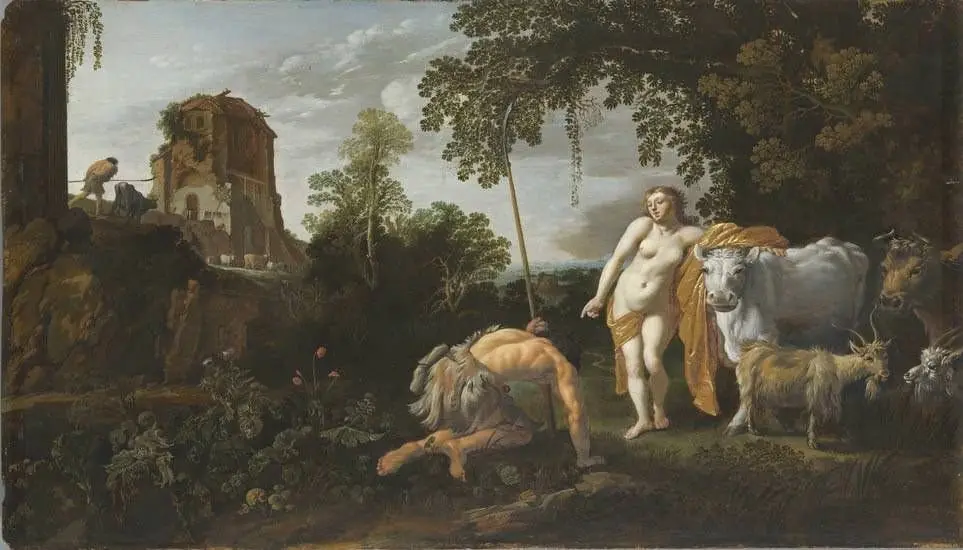
- Diana and Actaeon
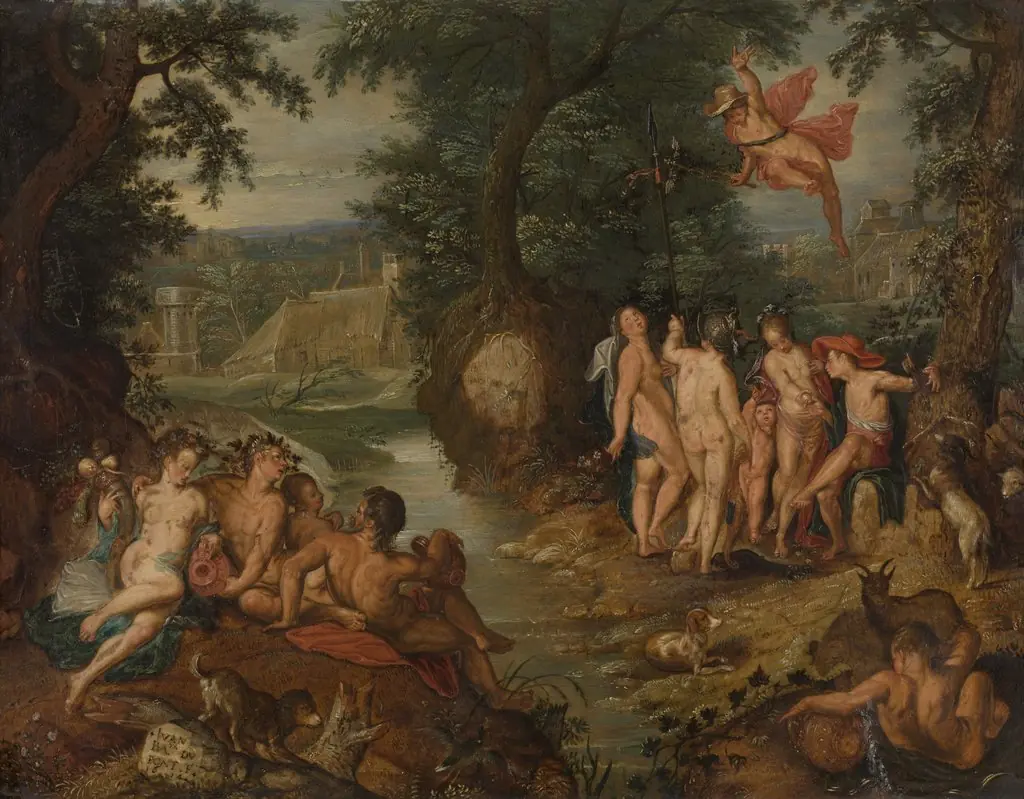 judgement of Paris
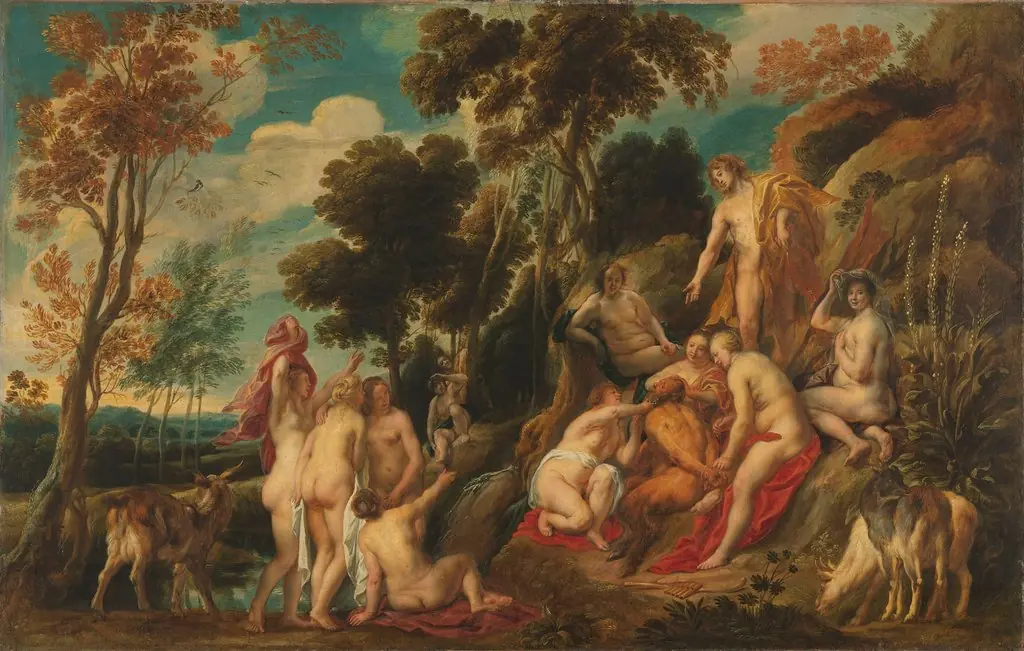 Marsyas punished by the Muses
 Untitled
 Abundance and the Four Elements
 Diana und Aktäon
 Europa riding the bull
 The wedding of Thetis and Peleus
 Diana and her Nymphs
 Pharaoh's daughter discovers Moses in the rush basket
 Bacchus and Ariadne on the Island of Naxos
 Minerva Visits the Muses