Artwork
Posthumous portrait of the Mughal emperor Muhammad Shah (reigned 1719–1748) holding a falcon (recto)
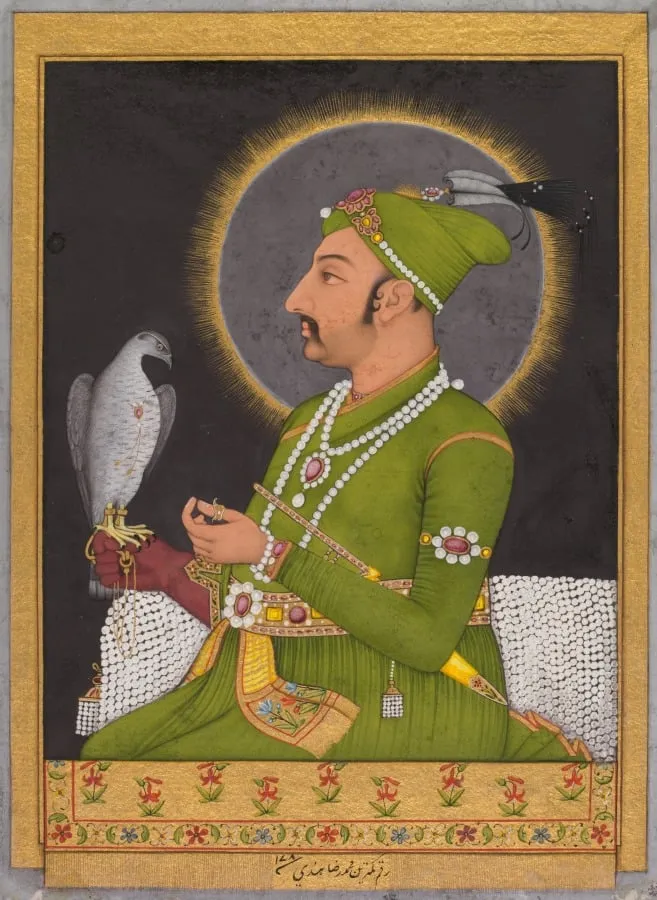
Posthumous portrait of the Mughal emperor Muhammad Shah (reigned 1719–1748) holding a falcon (recto) is an unspecified painting by the Mughal Painting artist Muhammad Rizavi Hindi. It dates from 1764 and is held in the collection of the Cleveland Museum of Art. This painting is a posthumous portrait of Muhammad Shah, a Mughal emperor who ruled from 1719 to 1748.
- Accession no.
- 2013.347.a
- Credit line
- Gift in honor of Madeline Neves Clapp; Gift of Mrs. Henry White Cannon by exchange; Bequest of Louise T. Cooper; Leonard C. Hanna Jr. Fund; From the Catherine and Ralph Benkaim Collection
About this work
Overview
This painting is a posthumous portrait of Muhammad Shah, a Mughal emperor who ruled from 1719 to 1748. It depicts him seated on a floor cushion, holding a falcon.
Subject & Meaning
The emperor's royal status is conveyed through symbolic elements: a golden halo, a luxurious carpet with lilies, and a floor cushion. These details evoke the wealth and power of the Mughal imperial past.
Technique & Style
The artist has created a sense of depth by using the carpet and border as a window sill, drawing the viewer's eye into the scene. The signature in Persian is discreetly integrated into the fringed border of the carpet.
History & Provenance
The painting was created after Muhammad Shah's death, when the Mughal court was in decline. It is likely from Mughal India, possibly from Uttar Pradesh or Lucknow.
Artist & collection

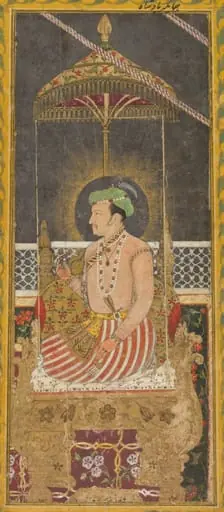
- Posthumous portrait of Emperor Jahangir under a canopy (recto)
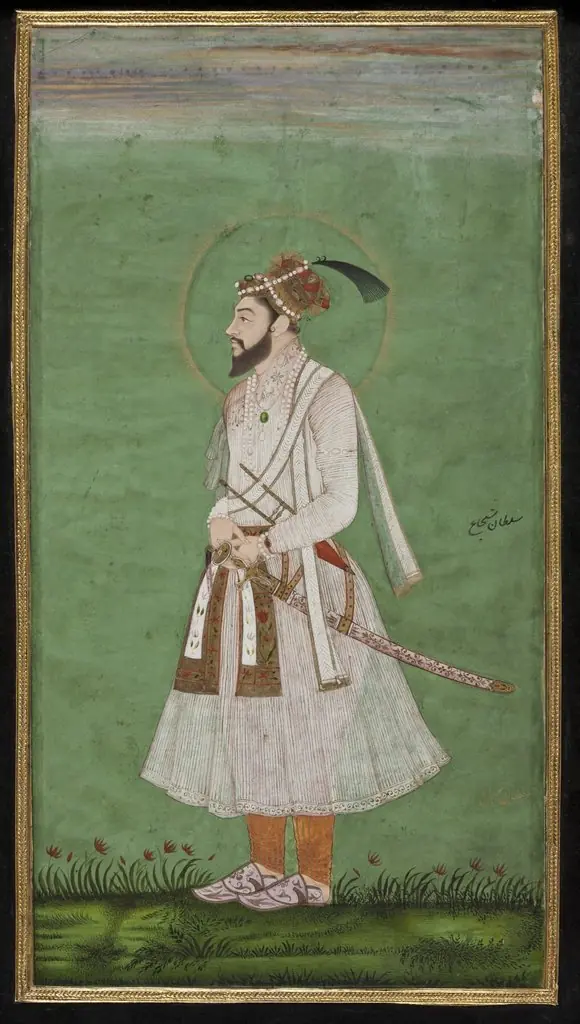 Portrait of a Mughal Prince, possibly a copy of a portrait of Sultan Shuja (1616-1659)
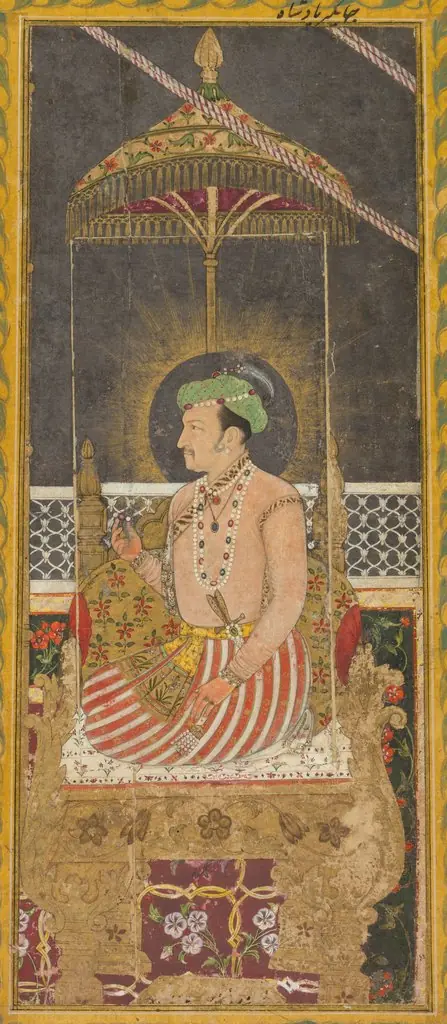 Posthumous portrait of Emperor Jahangir under a canopy (recto)
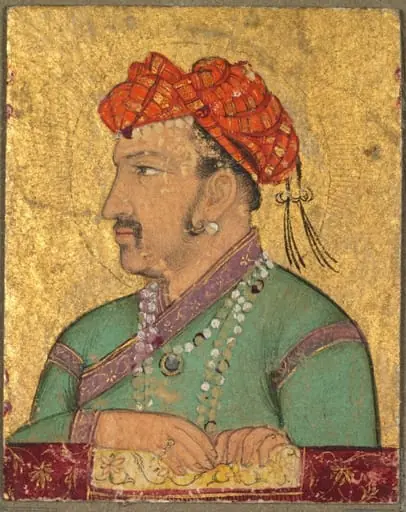 Portrait Jewel of Emperor Jahangir
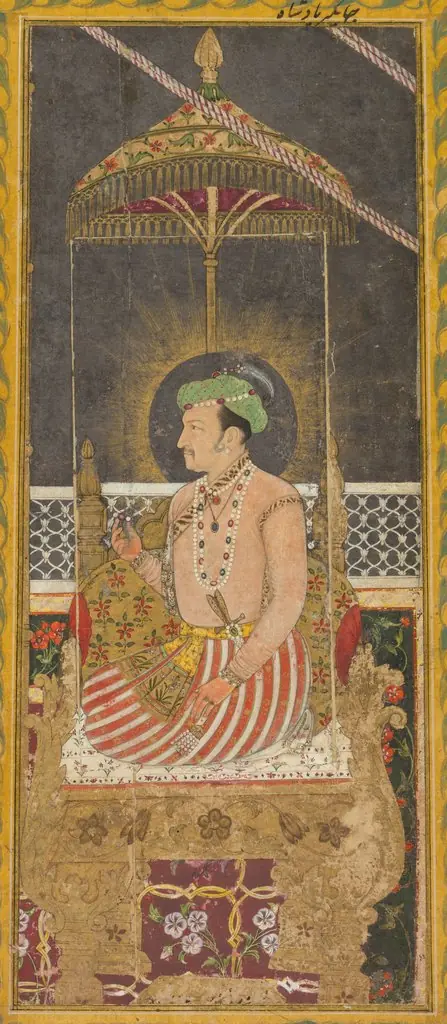 Posthumous portrait of Emperor Jahangir under a canopy (recto); Calligraphy (verso)
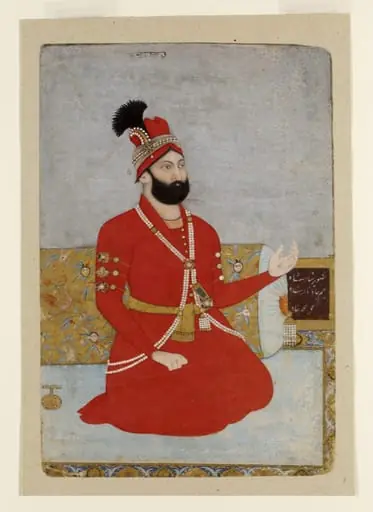 Nadir Shah
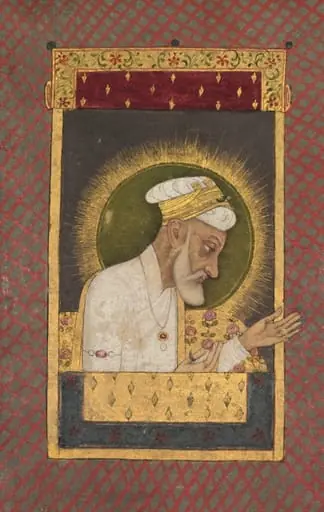 Portrait of Emperor Alamgir (Aurangzeb)
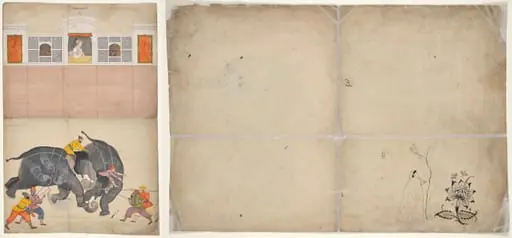 Two Elephants Fighting in a Courtyard Before Muhammad Shah