Artwork
Portrait of Emperor Alamgir (Aurangzeb)
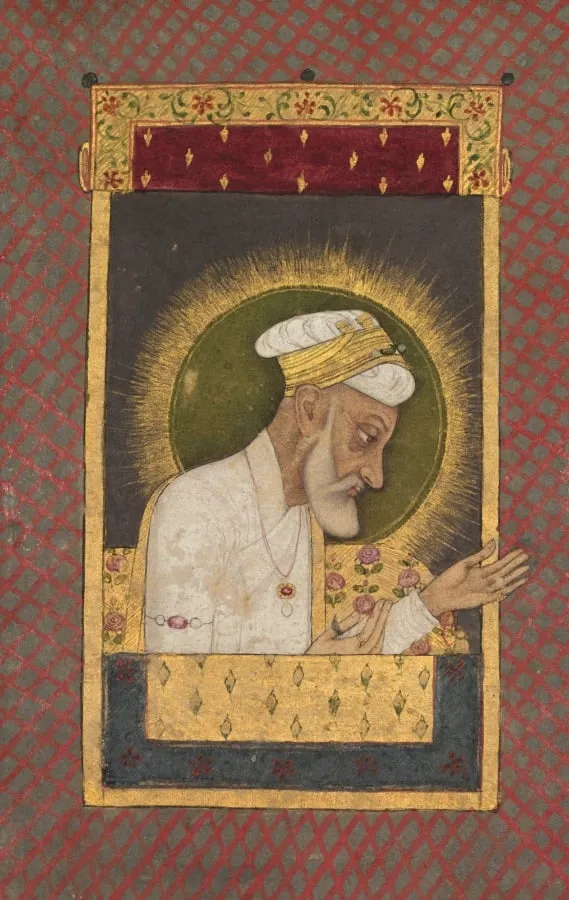
Portrait of Emperor Alamgir (Aurangzeb) is an unspecified painting by the Baroque artist Unknown. It dates from 1700 and is held in the collection of the Cleveland Museum of Art. This small painting depicts Emperor Alamgir, also known as Aurangzeb, the sixth ruler of the Mughal dynasty in India.
- Accession no.
- 1944.498
- Credit line
- Purchase from the J. H. Wade Fund
About this work
An old man with a long white beard sits at a small balcony window, a golden halo glowing behind his head.
An old man with a long white beard sits at a small balcony window, a golden halo glowing behind his head. He wears a simple white robe and a turban, his hands resting on the railing.
This is Emperor Alamgir, also called Aurangzeb, who ruled India in the late 1600s. The window, called a jharokha, was where rulers showed themselves to the public. Small portraits like this were gifts for loyal supporters. The halo suggests he ruled with divine approval.
To see more of his court, look up court of Alamgir (reigned 1658–1707).
Overview
This small painting depicts Emperor Alamgir, also known as Aurangzeb, the sixth ruler of the Mughal dynasty in India.
Subject & Meaning
The emperor is shown seated at a jharokha window, a balcony where he would appear to the public, conveying a sense of benevolence and divine authority through his halo.
Technique & Style
The portrait features a simple, dignified representation of the emperor, with a long white beard and traditional attire, set against a subtle background that emphasizes his figure.
History & Provenance
Created during the late 1600s, this portrait was likely a gift to a loyal supporter, as was the custom with such small-scale images.
Context
The jharokha window was a significant architectural feature in Mughal palaces, serving as a symbol of the ruler's connection to his subjects.
Artist & collection









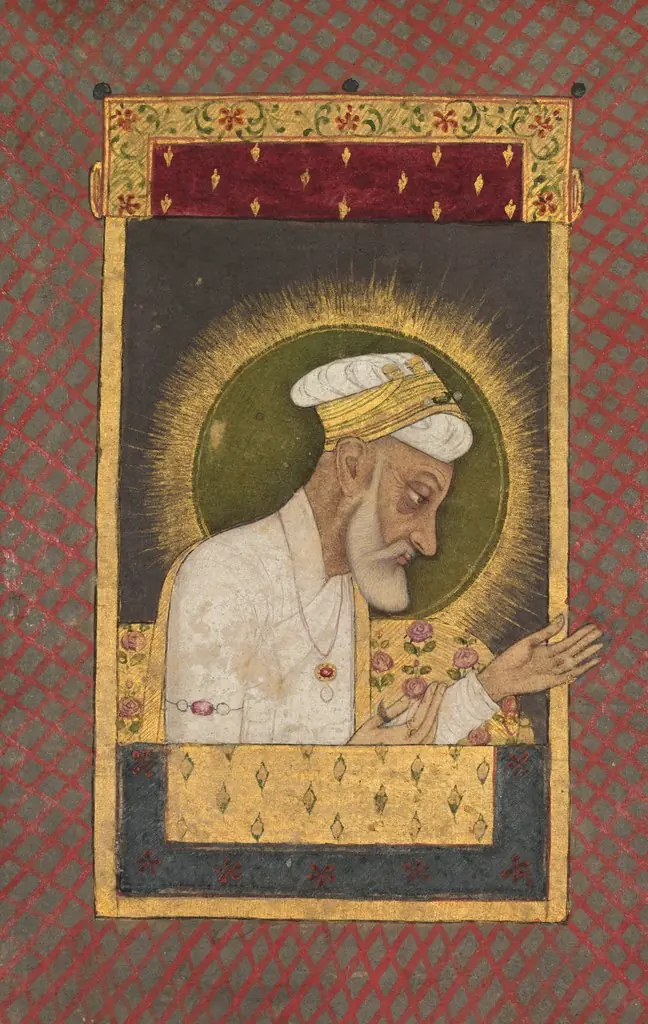 Portrait of Emperor Alamgir (Aurangzeb)
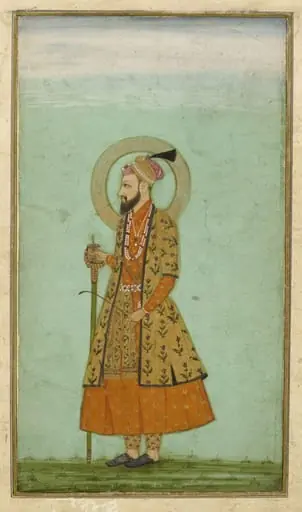 The emperor 'Alamgir (Aurangzeb)
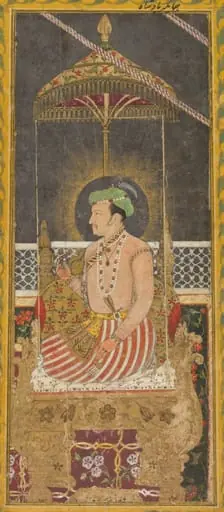 Posthumous portrait of Emperor Jahangir under a canopy (recto)
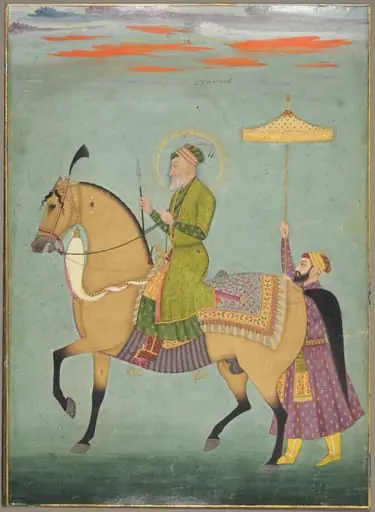 The Emperor Alamgir (reigned 1658–1707) on Horseback
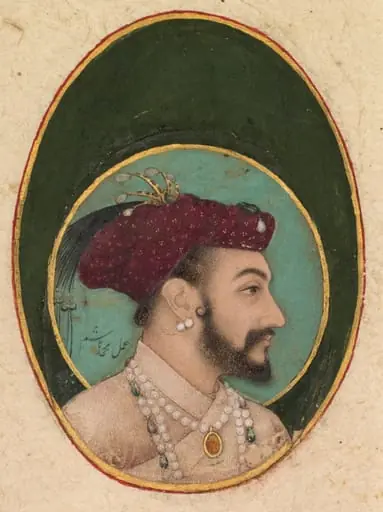 Shah Jahan
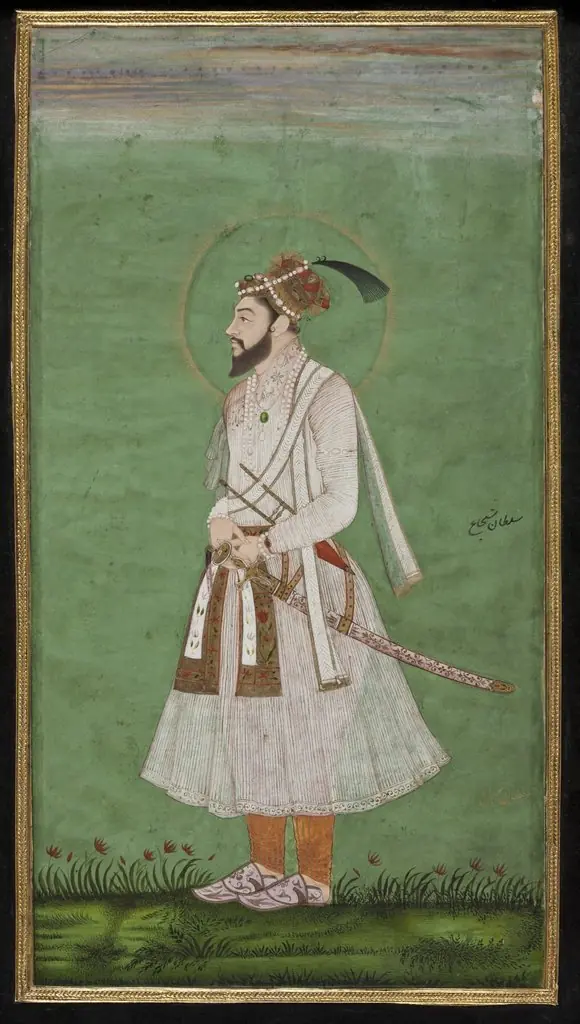 Portrait of a Mughal Prince, possibly a copy of a portrait of Sultan Shuja (1616-1659)
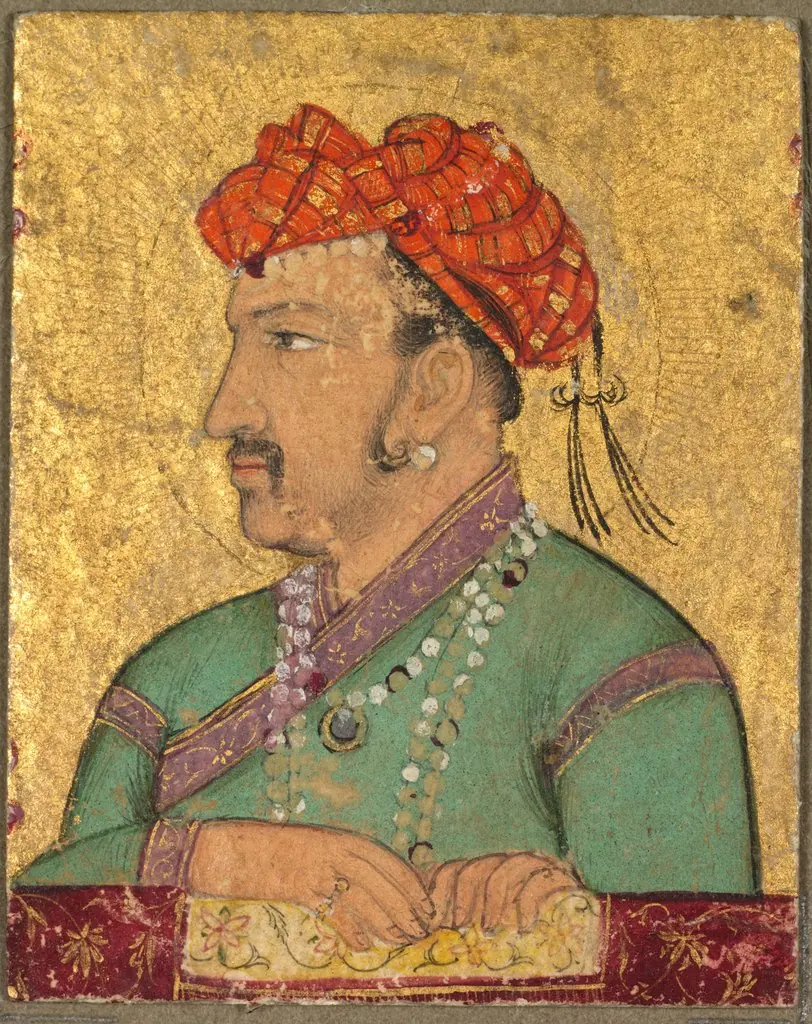 Portrait Jewel of Emperor Jahangir
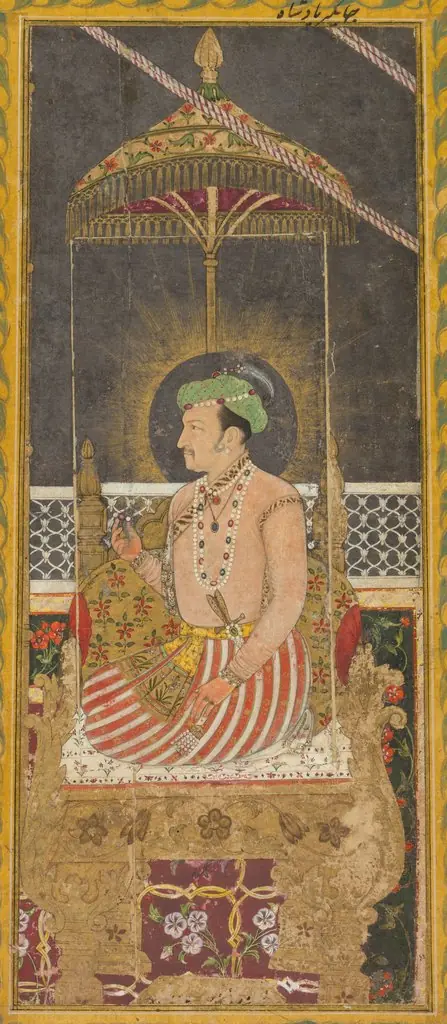 Posthumous portrait of Emperor Jahangir under a canopy (recto)
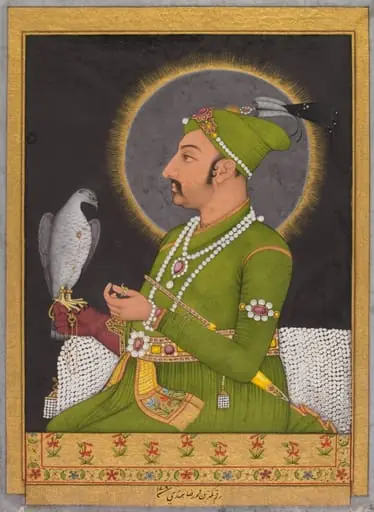 Posthumous portrait of the Mughal emperor Muhammad Shah (reigned 1719–1748) holding a falcon (recto)
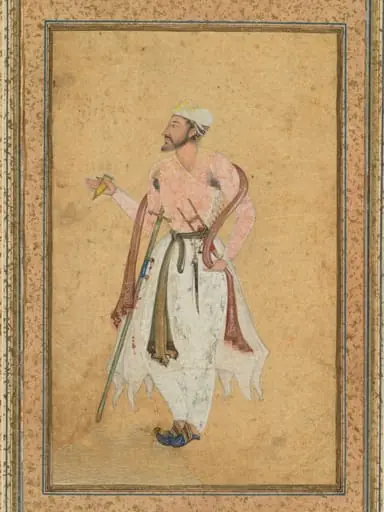 A Mughal courtier