Artwork
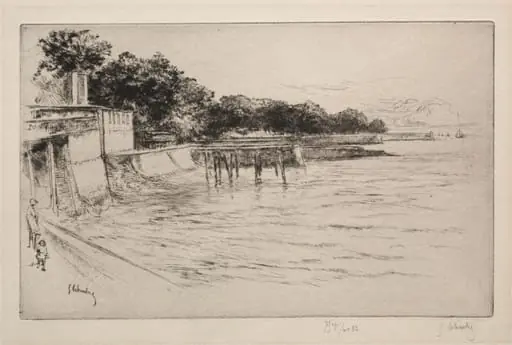
Evening, Port of Genoa
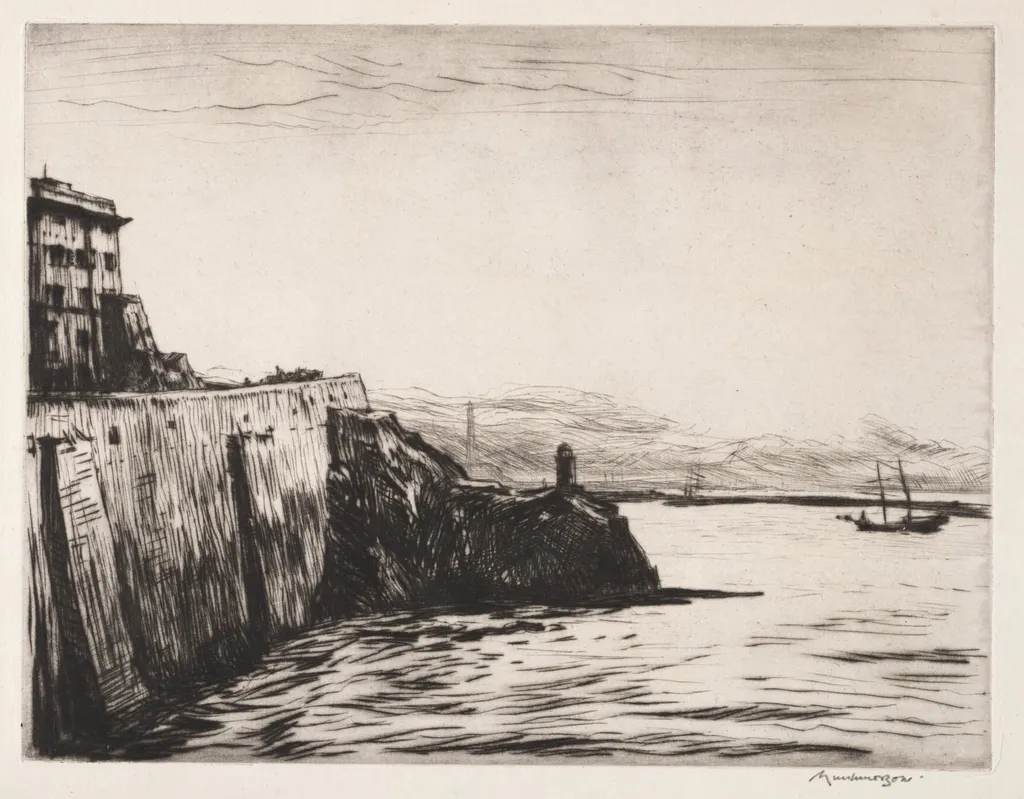
Evening, Port of Genoa is a print by Muirhead Bone. It dates from 1915 and is held in the collection of the Cleveland Museum of Art.
- Accession no.
- 1941.635
- Credit line
- Gift of Leonard C. Hanna Jr.
About this work
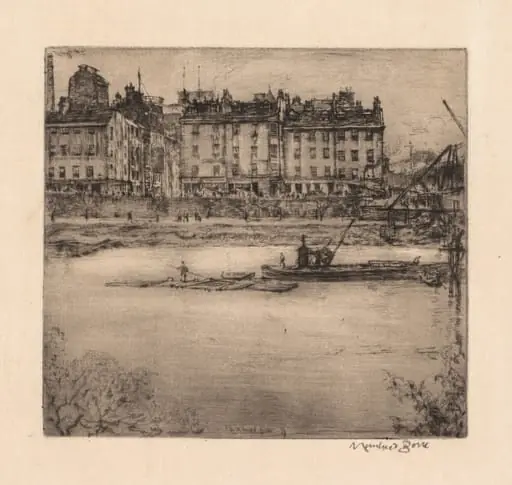
The composition features a prominent stone wall on the left, with a tower rising from it, while a body of water occupies the right side.
This painting depicts a serene evening scene at the Port of Genoa. The composition features a prominent stone wall on the left, with a tower rising from it, while a body of water occupies the right side. A small boat is visible in the distance.
The artist has employed a range of dark tones, with the stone wall and tower rendered in deep shadows. The water, on the other hand, is depicted in lighter shades, creating a sense of contrast between the two elements. The overall atmosphere of the painting is one of tranquility, with the soft lighting and gentle colors contributing to a sense of calm.
If you're interested in exploring more works by this artist, you might want to look up Muirhead Bone (British, 1876–1953).
Overview
Created in 1915 by Scottish artist Muirhead Bone, Evening, Port of Genoa is an etching that captures the quiet atmosphere of Genoa’s harbor at dusk. Bone, known for his precise draftsmanship and interest in urban and maritime architecture, used the medium of etching to render the scene with subtle tonal gradations. The work reflects his broader engagement with European ports and his role in the Etching Revival of the early 20th century.
Subject & Meaning
The scene depicts the Genoese port at twilight, with a weathered stone wall and a tall tower anchoring the left side, while the water stretches across the right. A solitary boat drifts in the distance, suggesting the end of daily activity. The absence of human figures and the muted lighting evoke a contemplative stillness, emphasizing the enduring presence of architecture and sea over transient human labor.
Technique & Style
Bone employed fine etching lines and controlled aquatint to achieve a range of dark and light tones. The stone structures are rendered in deep, textured shadows, while the water is suggested through lighter, softer washes. This contrast enhances the sense of depth and calm.
His technique prioritizes clarity and structure over dramatic effect, aligning with the precision characteristic of the Etching Revival movement.
History & Provenance
The print was made during Bone’s early career, before his official appointment as a war artist in World War I. It likely originated from his travels in Italy, where he documented coastal towns and industrial sites. The work entered institutional collections in the decades following its creation, reflecting its recognition as a representative example of British printmaking in the interwar period.
Context
In 1915, Europe was engulfed in war, yet Bone chose to focus on a peaceful Mediterranean port. His choice to depict Genoa’s harbor, rather than battlefields, reflects a broader interest in documenting the quiet resilience of everyday places. This work aligns with contemporaneous efforts by artists to preserve the visual record of urban and maritime life amid global upheaval.
Legacy
Muirhead Bone’s Evening, Port of Genoa remains a quiet but significant example of early 20th-century British printmaking. It exemplifies the Etching Revival’s commitment to technical mastery and observational detail. While less known than his wartime works, this print underscores his consistent focus on architecture and place, influencing later generations of topographical artists.
Own this work as a print
Artist & collection
Artist
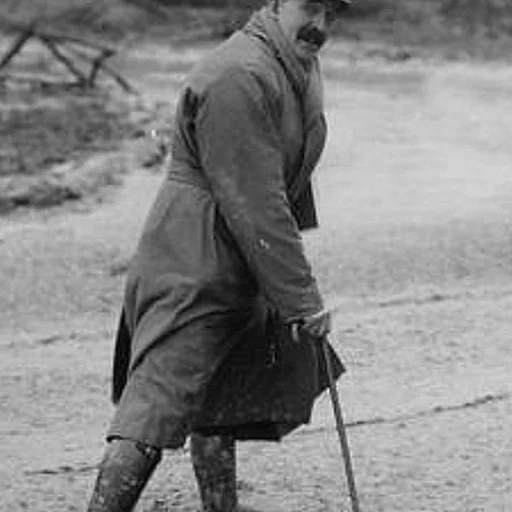
Sir Muirhead Bone (23 March 1876 – 21 October 1953) was a Scottish etcher and watercolourist who became known for his depiction of industrial and architectural subjects and his work as a war artist in both the First and Second World Wars.

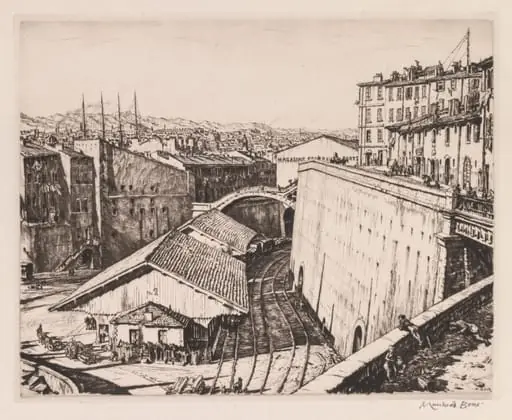
- Port of San Remo
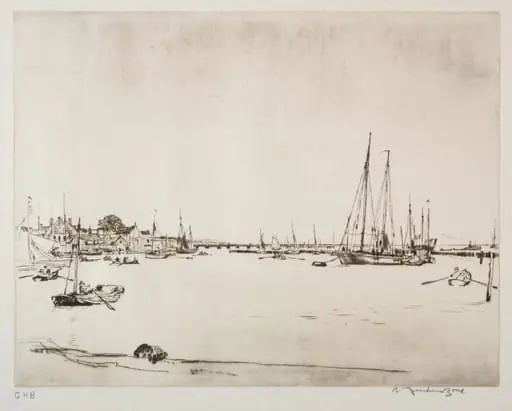 Yarmouth, Isle of Wight
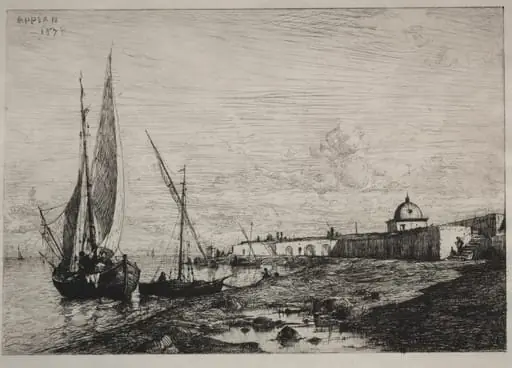 The Port at San Remo
![The Harbor at Viareggio [La Darsena], by Uberto dell'Orto](https://artifactworldgallery.com/img/uberto-dell-orto--the-harbor-at-viareggio-la-darsena--bbec93909bc4f582-w320.webp) The Harbor at Viareggio [La Darsena]
The Harbor at Viareggio [La Darsena]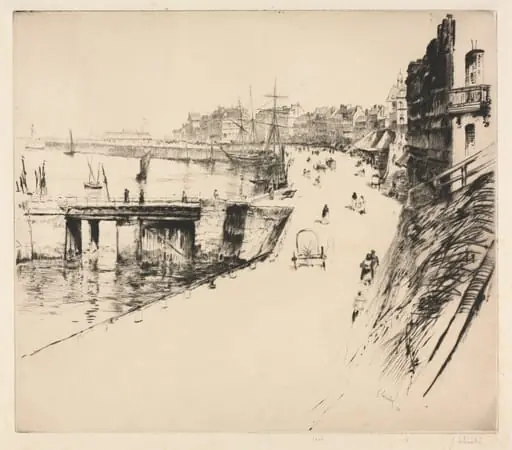 The Dam of Treport
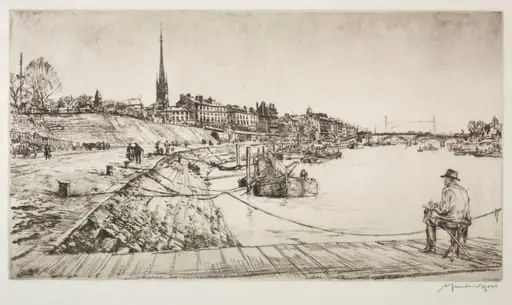 Rouen
Rouen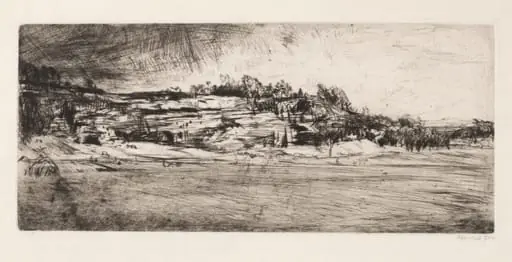 Spring at Cardross
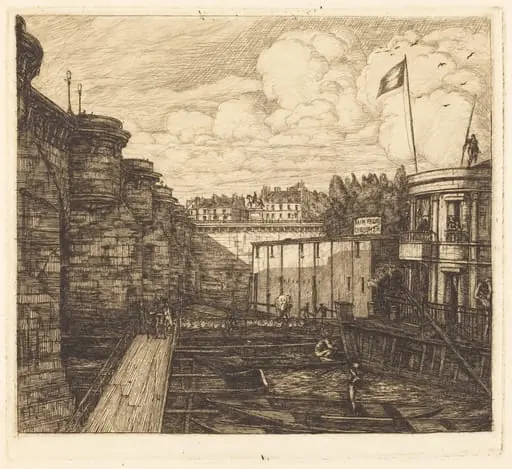 Bain-froid chevrier, dit "de l'École" (Chevrier's Cold-Bath Establishment, Sometimes called the "School-Baths")
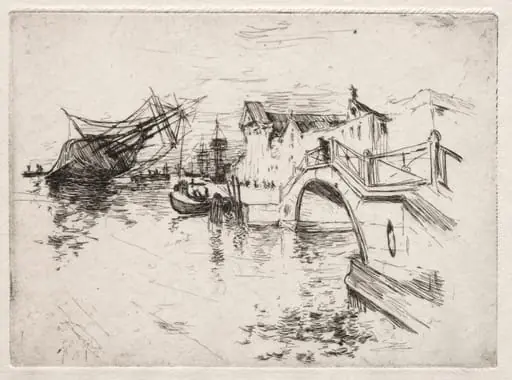 Venice
 Saint-Servan
 Bain-froid chevrier, dit "de l'École" (Chevrier's Cold-Bath Establishment, Sometimes called the "School-Baths")
 La grève désertée