Artwork
Hugo Grotius
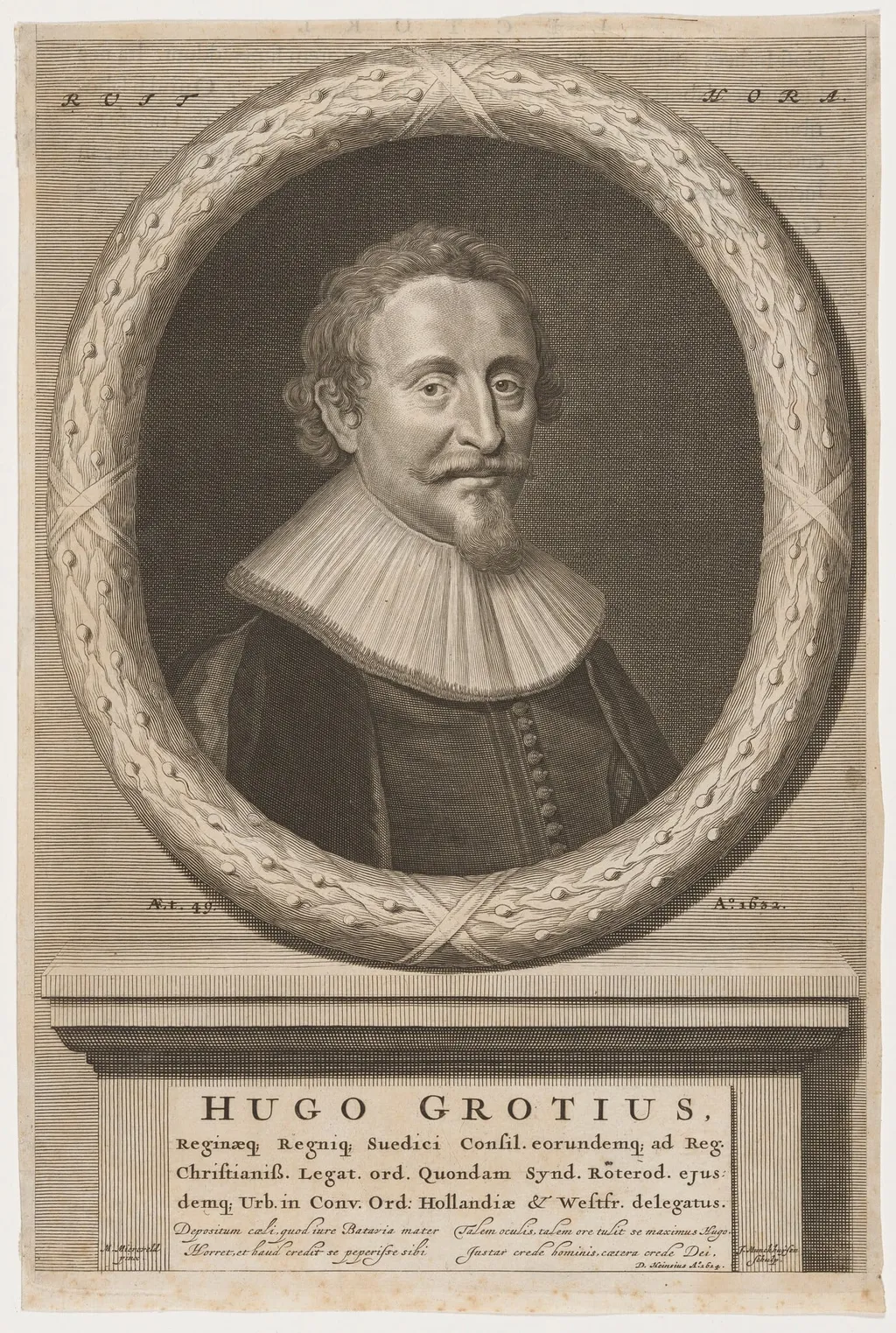
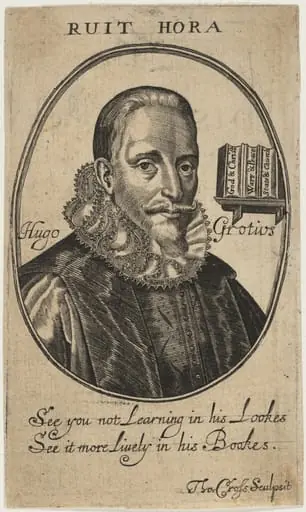
Hugo Grotius is an ink print by the Baroque artist Johannes van Munnickhuysen. It dates from 1632 and is held in the collection of the National Gallery of Art.
About this work
Overview
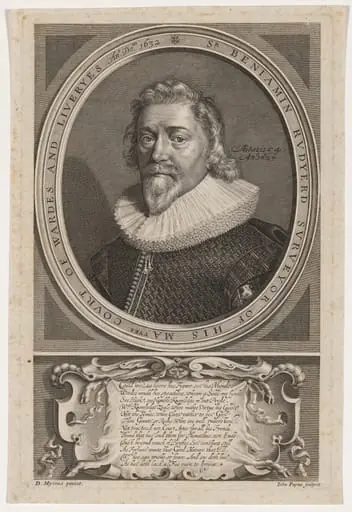
Johannes van Munnickhuysen's 1632 engraving, Hugo Grotius, is a black-and-white portrait of the renowned Dutch jurist and scholar. The work features a detailed, oval-framed likeness of Grotius, characterized by a beard, curly hair, a white collar, and a dark, buttoned coat.
Subject & Meaning
The subject, Hugo Grotius, was a prominent figure in Dutch Golden Age intellectual circles, known for his contributions to international law and theology. The engraving likely served to commemorate and disseminate his likeness among contemporaries, reflecting his esteemed status.
Technique & Style
The engraving employs intricate lines and shading techniques to achieve a three-dimensional effect, enhancing the realism of Grotius' facial features and attire. The decorative oval border, adorned with swirls and dots, adds a touch of elegance, framing the subject.
History & Provenance
Created in 1632 by Johannes van Munnickhuysen, specific details regarding the engraving's original commission, circulation, and current location are not provided in the available information.
Context
This work is situated within the broader tradition of 17th-century Dutch portrait engraving, which often captured likenesses of esteemed individuals for widespread distribution, facilitating the dissemination of their intellectual and social influence.
Legacy
As a portrait of a pivotal historical figure, Hugo Grotius contributes to the visual record of Grotius' legacy, though its direct impact on art historical developments or specific influences on later works is not detailed in the provided context.
Own this work as a print
Artist & collection