Artwork
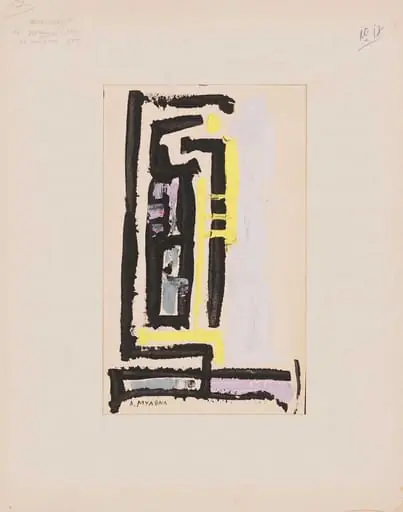
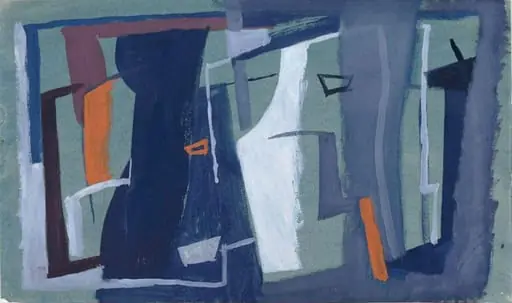
Γυναίκα με άρπα
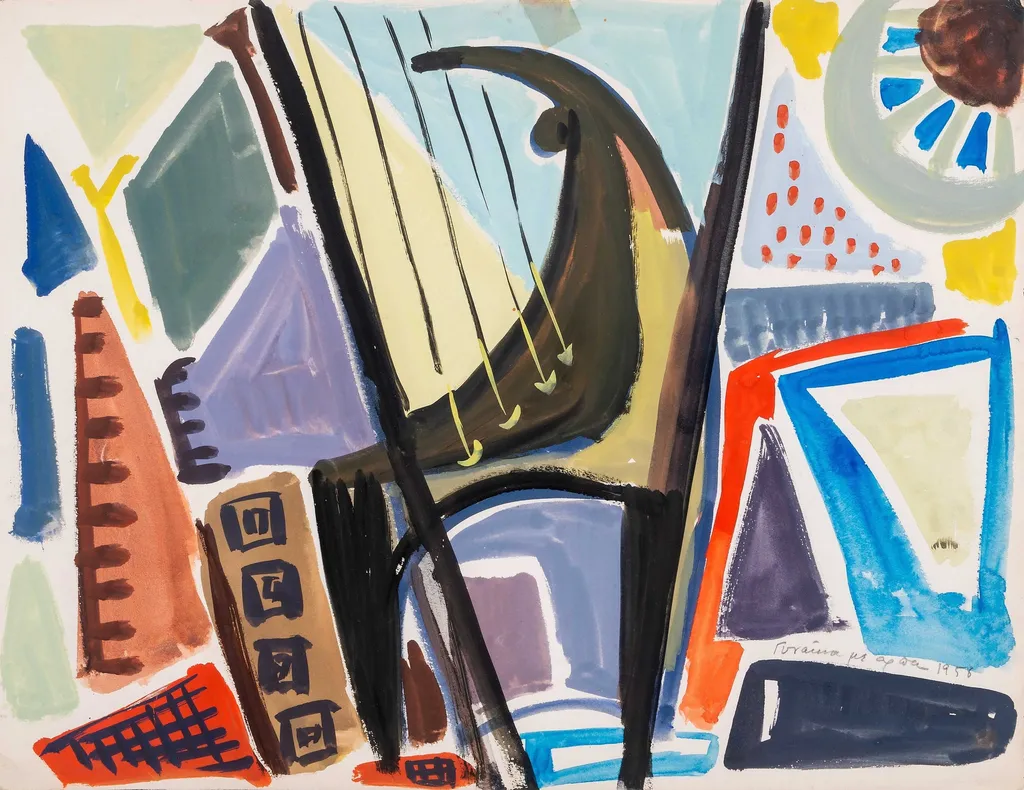
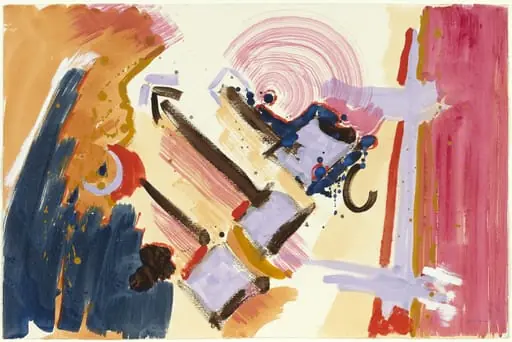
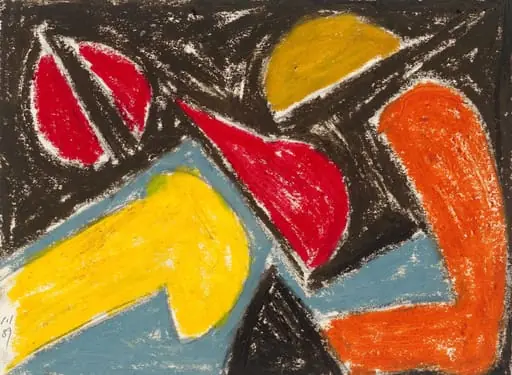
Γυναίκα με άρπα is a drawing by Alex Mylona. It dates from 1956 and is held in the collection of the Metropolitan Organisation of Museums of Visual Arts of Thessaloniki – MOMus.
About this work
Overview
The composition rejects naturalistic representation in favor of abstracted form, where color functions as a structural element rather than a descriptive one.
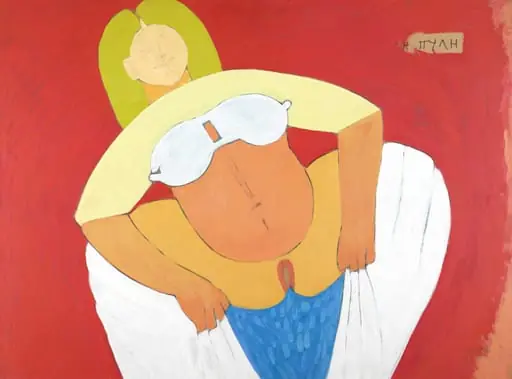
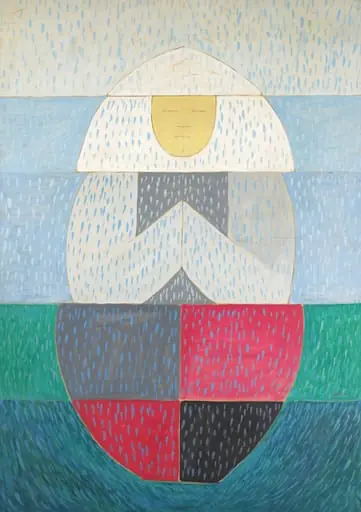
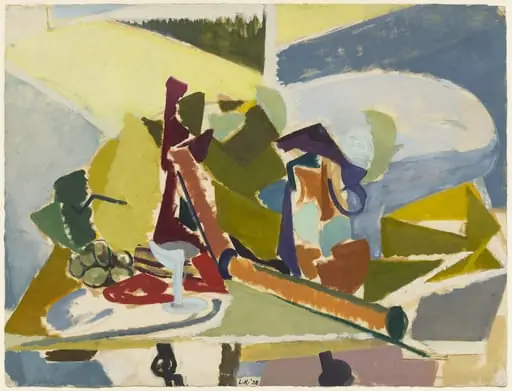
Alex Mylona's drawing depicts a female figure holding a harp, rendered through a structured arrangement of flat, angular shapes. The composition rejects naturalistic representation in favor of abstracted form, where color functions as a structural element rather than a descriptive one. Each plane is distinctly bounded, creating a sense of layered geometry that defines the figure without relying on traditional modeling or contour.
Subject & Meaning
The subject is a woman with a harp, but the focus lies not in narrative or emotion, but in the formal relationship between shape and color. The harp, a symbol often tied to music and poetry, is reduced to its structural essence, merging with the figure’s angular limbs. This abstraction suggests a meditation on form and rhythm, aligning the human body with the geometric architecture of the instrument.
Technique & Style
Mylona constructs the image using sharply defined, flat color fields that resemble cut paper or collage. There is no shading or gradation; edges are crisp and deliberate. The figure is fragmented into geometric segments, triangles, trapezoids, rectangles, each assigned a single hue. This method emphasizes structure over texture, prioritizing composition over realism, a hallmark of her mid-century approach.
History & Provenance
The work originates from Alex Mylona’s broader practice in the 1960s and 1970s, during which she explored abstraction in drawing and printmaking. While specific provenance details for this piece are not widely documented, it aligns with her exhibitions in Greek avant-garde circles and her association with the New Greek Art movement, which sought to redefine national identity through modernist forms.
Context
Mylona’s geometric abstraction emerged in post-war Greece, a period marked by cultural reevaluation and engagement with international modernism. Her work reflects influences from Cubism and Constructivism, yet remains distinct in its restrained palette and emphasis on flatness. Unlike contemporaries who embraced expressionism, she pursued clarity and order, positioning her art within a broader European dialogue on form.
Legacy
Mylona’s approach to abstraction influenced later generations of Greek artists interested in non-representational drawing. Her use of color as form, rather than decoration, contributed to a shift in how figuration could be deconstructed without losing symbolic resonance. Though less known internationally, her work remains a significant reference in discussions of modern Greek art’s engagement with geometric abstraction.
Artist & collection
Artist
Alex Mylona (Athens, 1920 – 2016) was a Greek sculptor, known for her multidimensional and experimental approach to art.
Museum
Metropolitan Organisation of Museums of Visual Arts of Thessaloniki – MOMus
Continue through works from the same source collection.