Artwork
Natură statică cu piersici
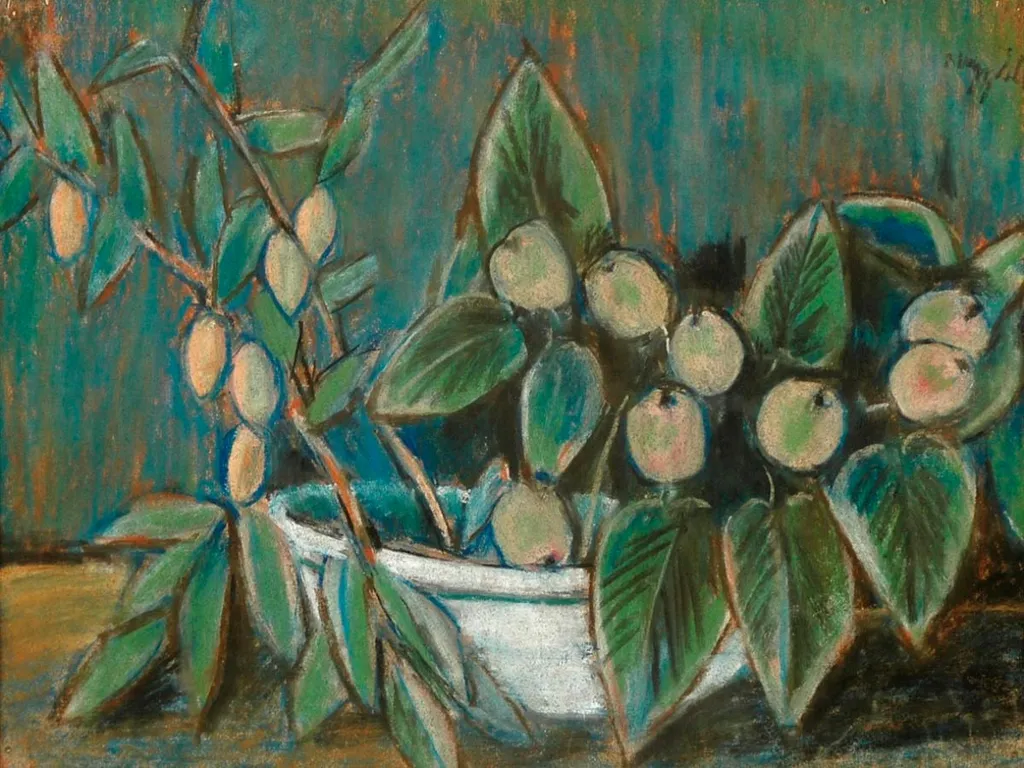
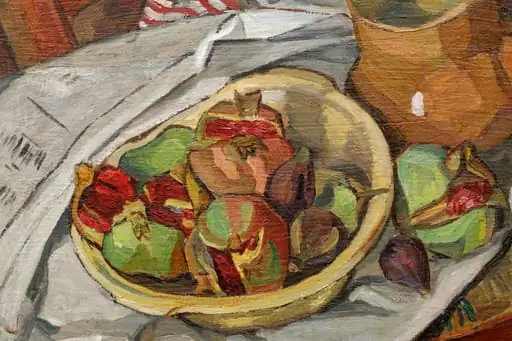
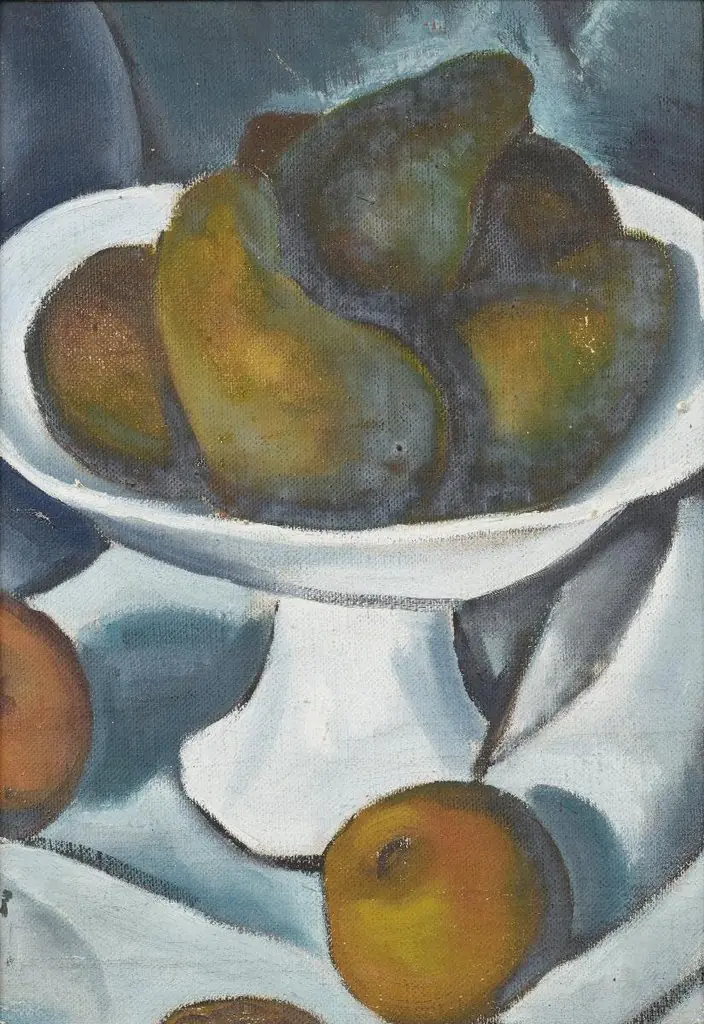
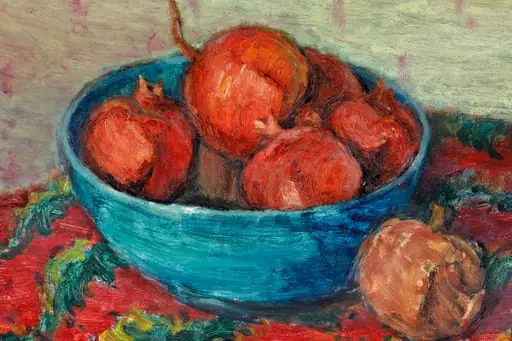
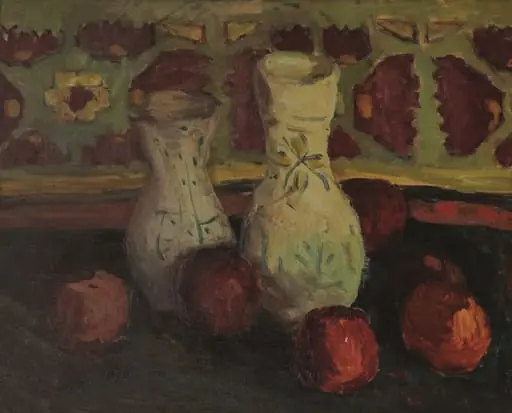
Natură statică cu piersici is a drawing by István Nagy. It is held in the collection of the Museum of Art Cluj-Napoca. This drawing depicts a simple arrangement of peaches on a branch, placed in a white ceramic vessel.
About this work
Overview
The background, composed of irregular blue and dark lines, implies a textured wall without defining it explicitly.
This drawing depicts a simple arrangement of peaches on a branch, placed in a white ceramic vessel. Rendered with loose, rapid strokes, it captures the fleeting quality of a spontaneous observation. The artist focused on form and light rather than detail, suggesting a study made in real time. The background, composed of irregular blue and dark lines, implies a textured wall without defining it explicitly.
Subject & Meaning
The subject is a humble still life: a single branch of peaches, their surfaces rendered with subtle fuzziness and soft modeling. There is no symbolic or narrative layer, only the quiet presence of fruit, observed closely. The composition emphasizes transience, as if the moment of ripeness is being recorded before it passes. The simplicity invites attention to natural form rather than ornamentation.
Technique & Style
The artist employed quick, sketchy lines to suggest volume and shadow, avoiding heavy outlines. Light is indicated through varied pressure and density of strokes, particularly on the peaches’ curved surfaces. The leaves, edged with yellow, are rendered with minimal detail, while the background uses gestural marks to imply depth. The approach is observational and immediate, prioritizing movement over finish.
History & Provenance
The work’s origin is undocumented, but its style aligns with late 19th- or early 20th-century drawing practices, where artists used quick studies to train perception. It likely originated in a private sketchbook or studio exercise, not intended for public display. No known exhibition or collector history accompanies the piece, suggesting it remained a personal exercise.
Context
This drawing reflects a broader trend among artists of the period who turned to everyday subjects as subjects worthy of close study. Rather than idealized still lifes, such works embraced the ordinary, fruit, leaves, simple vessels, as vehicles for exploring light, texture, and form. The sketchy technique echoes the influence of plein air drawing and the rejection of academic polish.
Legacy
Though unsigned and unattributed, the drawing exemplifies how informal studies contributed to artistic development. Its emphasis on direct observation and economical mark-making continues to inform drawing pedagogy. It serves as a quiet reminder that artistic insight often emerges not in finished works, but in the unassuming moments of looking closely.
Artist & collection
Artist
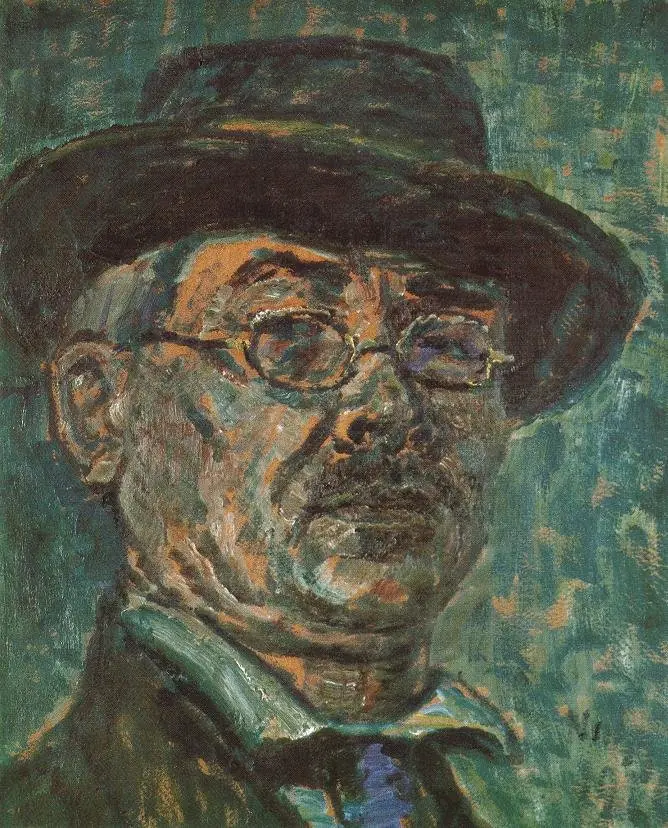
István Nagy painted a single oil self-portrait in 1920. The canvas shows the artist in the quiet glow of his studio, the background softened by the muted light of a north-facing window. Simple tools, a wooden palette, a…