Artwork
Needlefish (Yagara)
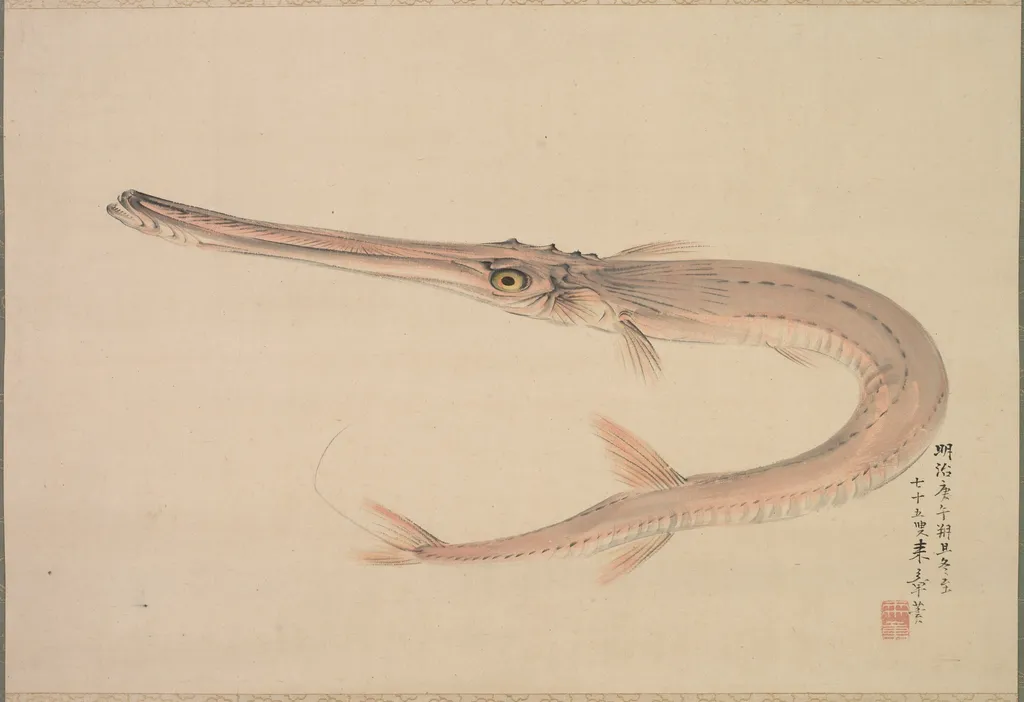
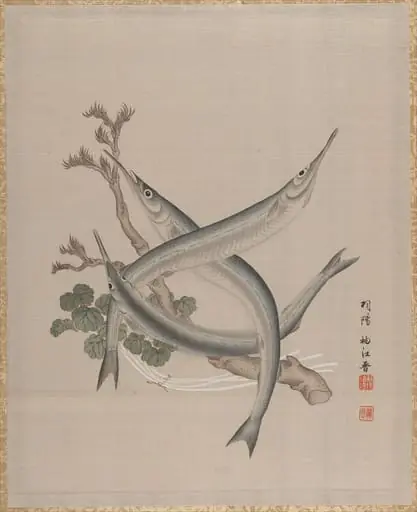
Needlefish (Yagara) is an unspecified painting by the Nihonga artist Nakajima Raishō. It dates from 1870 and is held in the collection of the Cleveland Museum of Art.
About this work
Technique & Style
Created in 1870 by Nakajima Raishō, Needlefish (Yagara) is a painting executed in Japan.
Created in 1870 by Nakajima Raishō, Needlefish (Yagara) is a painting executed in Japan. The work is classified as a painting, indicating the use of traditional pigments and binding media applied to a support surface, though the specific materials such as ink, color, or the nature of the support (paper or silk) are not detailed in the available records. The piece is currently held in the collection of the Cleveland Museum of Art.
As a work from the late Edo period by an artist active until 1871, the painting reflects the stylistic traditions of its time, focusing on the naturalistic depiction of the needlefish subject.
History & Provenance
Needlefish (Yagara) was painted in 1870 by the Japanese artist Nakajima Raishō while he was working in Japan. The sources do not record any commission or earlier owners; the work’s known provenance begins with its acquisition by the Cleveland Museum of Art, where it is catalogued as accession number 1991.56 and remains part of the museum's holdings of Japanese art, representing the artist's work from the late Edo period.
Overview
Needlefish (Yagara) is an 1870 painting by Japanese artist Nakajima Raishō. Executed in a modest palette, the work portrays a single needlefish against an unadorned beige field. The piece belongs to the collection of the Cleveland Museum of Art, where it is displayed among other works from the late‑nineteenth century.
Subject & Meaning
The composition centers on a slender needlefish, its body forming a gentle curve that suggests movement through water. The fish’s pointed snout, diminutive eye, and longitudinal dark stripes emphasize its streamlined form, inviting contemplation of the creature’s natural elegance and the quiet stillness of its environment.
Context
The work emerges from a time when Japanese artists were responding to increased contact with Western markets, often producing naturalistic studies of flora and fauna for export. Needlefish, a common marine species, offered a subject that could be rendered with precision, aligning with contemporary tastes for detailed, scientifically informed depictions.
Own this work as a print
Artist & collection

 The Viper-mouth (Silurus cataphractus)
 Untitled
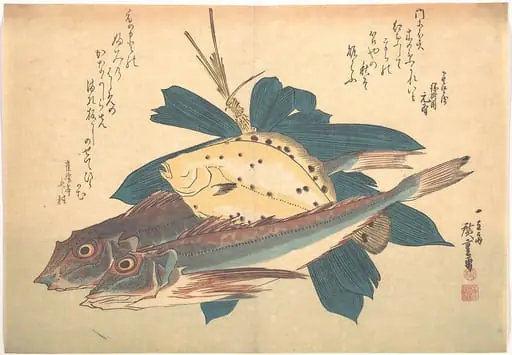 魚づくし かれい かながしらに笹|Kanagashira and Karei Fish, from the series Uozukushi (Every Variety of Fish)
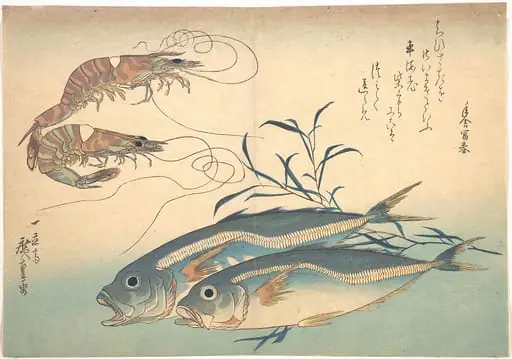 魚づくし 車海老 鯵にたで|Aji Fish and Kuruma-ebi, from the series Uozukushi (Every Variety of Fish)
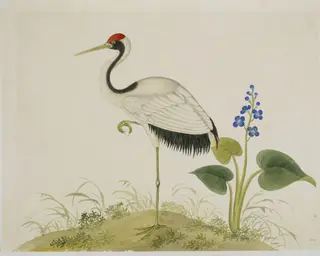 Red-Crowned Crane
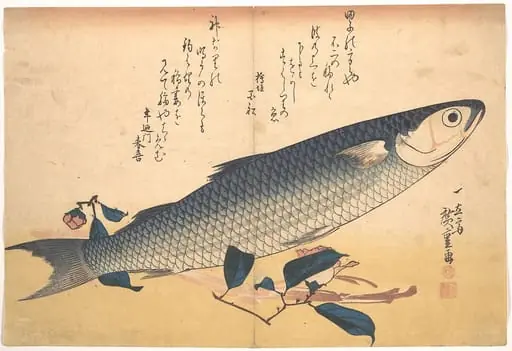 魚づくし ぼらにうど|Bora Fish with Camellia, from the series Uozukushi (Every Variety of Fish)