Artwork
전 일호 남계우 나비와 모란 조선|傳 一濠 南啓宇 蝴蝶圖 朝鮮|Butterflies and Peonies
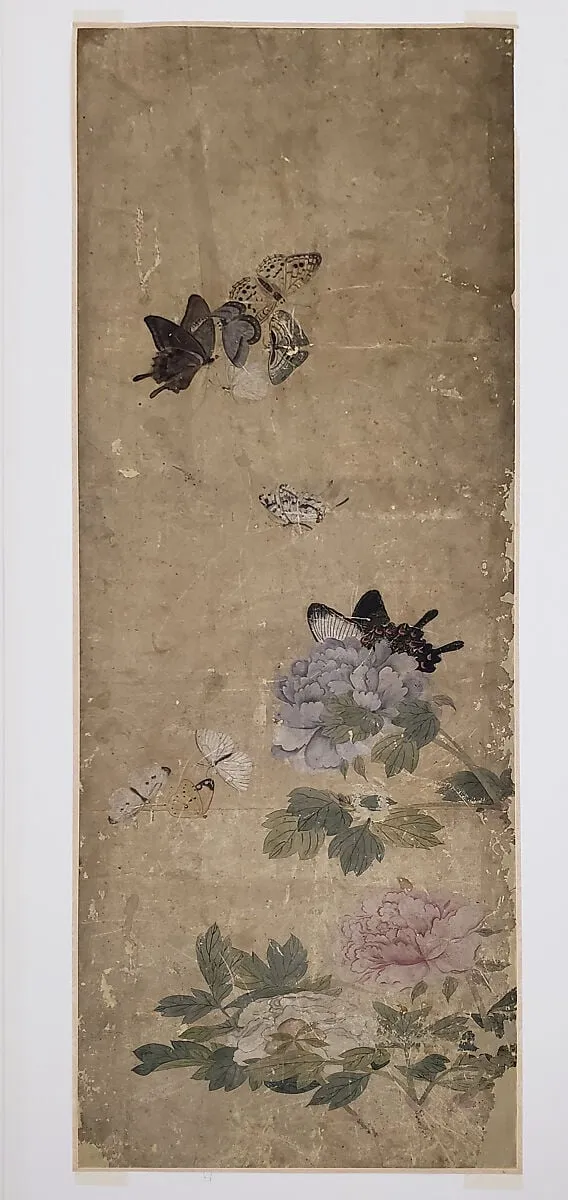
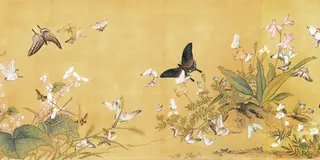
전 일호 남계우 나비와 모란 조선|傳 一濠 南啓宇 蝴蝶圖 朝鮮|Butterflies and Peonies is an ink painting by the Korean Minhwa artist Nam Gye-u. It dates from 1850 and is held in the collection of the Metropolitan Museum of Art.
About this work
Subject & Meaning
Created in 1850, the composition focuses on these specific natural elements, with the peony (Paeonia) and the butterfly serving as the primary subjects.
The work depicts a still-life arrangement featuring peonies and butterflies, rendered in ink and color on silk. Created in 1850, the composition focuses on these specific natural elements, with the peony (Paeonia) and the butterfly serving as the primary subjects. While the sources confirm the visual representation of these flora and fauna, they do not provide explicit details regarding the specific iconographic traditions, symbolic interpretations, or the deeper cultural meanings traditionally associated with this combination in the context of Nam Gye-u's oeuvre.
The painting is classified strictly as a still life, emphasizing the aesthetic presentation of the depicted organisms rather than narrating a specific allegorical story based on the available documentation.
Technique & Style
Attributed to Nam Gye-u and dated to 1850, this work is executed in ink and color on a silk support. The painting serves as a still-life depiction of butterflies and peonies, utilizing traditional East Asian brushwork techniques on a textile medium. The composition is presented in a vertical format, measuring 92.1 cm in height and 31 cm in width.
The use of silk as the ground suggests a delicate handling of the pigment, allowing for the nuanced rendering of the floral and insect subjects characteristic of the genre. The work is currently held in the collection of the Metropolitan Museum of Art.
History & Provenance
The work titled 전 일호 남계우 나비와 모란 was created in 1850 by the Korean painter Nam Gye-u using ink and color on silk, depicting a butterfly alongside peonies (Paeonia). It is classified as a still-life painting and was produced during the Joseon period. According to the Metropolitan Museum of Art's catalog, the painting entered the museum's collection and remains on view in New York, where it is recorded with an inception date of 1850-01-01 and dimensions of 92.1 cm in height by 31 cm in width. The work is attributed to Nam Gye-u and is documented as part of the museum's holdings.
The artwork Butterflies and Peonies, attributed to Nam Gye-u and dated to 1850, is held in the collection of the Metropolitan Museum of Art in New York. The museum's records list the piece as a painting executed in ink and color on silk, measuring 92.1 cm in height and 31 cm in width. While the work is part of the institution's permanent holdings, the provided sources do not specify a unique accession or inventory number for this specific entry.
Furthermore, the available documentation contains no details regarding the painting's exhibition history, including past or upcoming displays at the museum or other venues. The work remains documented within the museum's collection based on its attribution to the Joseon-era artist and its depiction of butterflies and peonies.
Legacy
Nam Gye-u's 'Butterflies and Peonies' (1850) entered the Metropolitan Museum of Art collection, securing its status as a representative example of 19th‑century Korean court painting and ensuring continued scholarly examination of the artist’s technique. The museum’s acquisition and display of the silk work have positioned it within broader narratives of East Asian flora‑fauna motifs, influencing perceptions of Korean aesthetic contributions abroad. Its inclusion in major exhibitions and catalogues has reinforced Nam Gye-u’s reputation as a pioneer of Korean still‑life, encouraging further research into the cultural context of butterfly and peony symbolism in Joseon art.
Overview
Butterflies and Peonies is a mid-19th-century Korean painting attributed to Nam Gye-u, a prominent figure of the late Joseon Dynasty known for his realistic depictions of nature. Executed in 1850 on silk using ink and mineral colors, the work features a close-up composition of two large, blooming peonies rendered in soft pinks and whites. Their full, rounded petals occupy the lower portion of the frame, creating a sense of immediate presence.
Above the flowers, five butterflies with varying wing patterns in black and orange flutter dynamically, their forms captured with precise brushwork that suggests motion. The artist employs a delicate technique to balance the weight of the heavy blossoms with the lightness of the insects, avoiding heavy outlines in favor of subtle gradations of color. This piece exemplifies Nam Gye-u's mastery of the 'flower and bird' genre, which flourished in Korea during the 19th century as artists moved toward more naturalistic observation rather than purely symbolic representation.
The work reflects the period's aesthetic appreciation for the transient beauty of the natural world, combining technical skill with a refined, observational approach that distinguishes it from earlier, more stylized traditions.
Context
The motif of peonies holds significant cultural resonance within Korean and Chinese artistic traditions, frequently appearing in various forms of visual art. These flowers are often associated with wealth, honor, and good fortune. The inclusion of butterflies further enriches this symbolism, as they are commonly linked to joy, longevity, and the cycle of life. This painting exemplifies a long-standing tradition of depicting auspicious natural elements.
Artist & collection