Artwork
Geese Returning Home
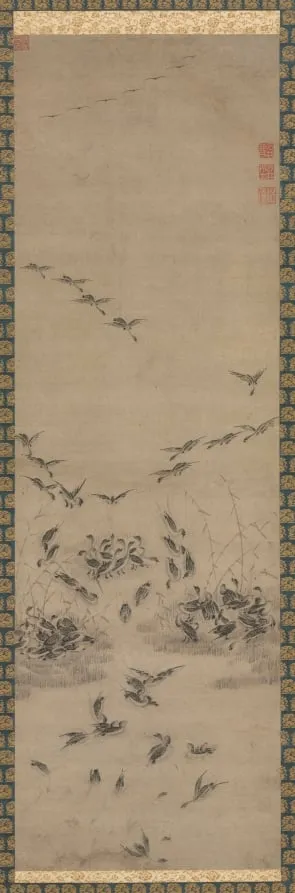
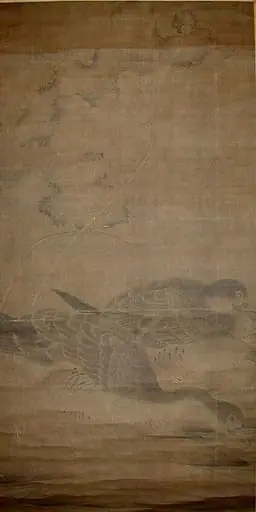
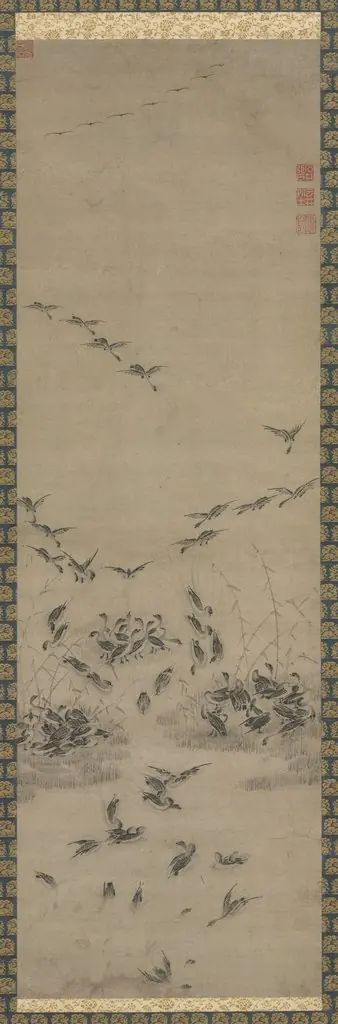
Geese Returning Home is an unspecified painting by the Baroque artist Unknown. It dates from 1604 and is held in the collection of the Cleveland Museum of Art. The work is a vertical hanging scroll that depicts a group of wild geese interacting with a marshland environment.
- Accession no.
- 1993.159
- Credit line
- Mr. and Mrs. William H. Marlatt Fund
About this work
The scroll is from the Joseon dynasty, when scholars and artists often worked together to make quiet, nature-based scenes.
You see a tall scroll of wild geese flying, landing, and feeding in a marsh. Some dip their heads under water; others stand on one leg.
In Korea, geese meant the seasons changing. They flew south for winter, so artists used them to show autumn or early winter in paintings. The scroll is from the Joseon dynasty, when scholars and artists often worked together to make quiet, nature-based scenes.
To see more like this, look up korea, joseon dynasty (1392–1910).
Overview
The work is a vertical hanging scroll that depicts a group of wild geese interacting with a marshland environment. The birds are shown in various poses: some descending toward the water, others gathering together, a few grazing among reeds, and several dipping their heads beneath the surface. The composition captures a moment of seasonal migration within a tranquil natural setting.
Subject & Meaning
In Korean visual culture, geese function as a conventional emblem of seasonal transition. Their annual movement from northern regions such as Siberia to the Korean Peninsula during the autumn months signals the onset of colder weather. By portraying the birds in a marsh, the artist conveys the arrival of late autumn or early winter, linking the natural scene to the broader rhythm of the calendar.
Technique & Style
Executed in ink and light color washes on silk, the scroll employs delicate brushwork to render the birds’ feathers and the reflective water. The artist balances line and tone, using swift, confident strokes for the geese’s bodies while rendering the surrounding vegetation with softer, stippled marks. This restrained approach reflects the aesthetic preferences of the Joseon scholarly tradition, emphasizing simplicity and observation.
History & Provenance
The piece dates to the Joseon dynasty (1392–1910), a period when literati artists frequently collaborated on works that merged poetry, calligraphy, and painting. Although the specific creator is unknown, the scroll follows the conventions of court and scholarly workshops of the era. It has remained within Korean collections, illustrating the continuity of the dynasty’s artistic heritage.
Context
During the Joseon period, the intellectual elite valued artworks that depicted quiet natural scenes, using them as vehicles for moral reflection and seasonal awareness. The geese motif, common in both court and private settings, served as a visual reminder of the impermanence of time and the need for harmonious living with nature.
Artist & collection