Artwork
明/清 佚名 王淵(僞款) 百花圖 卷|The Hundred Flowers
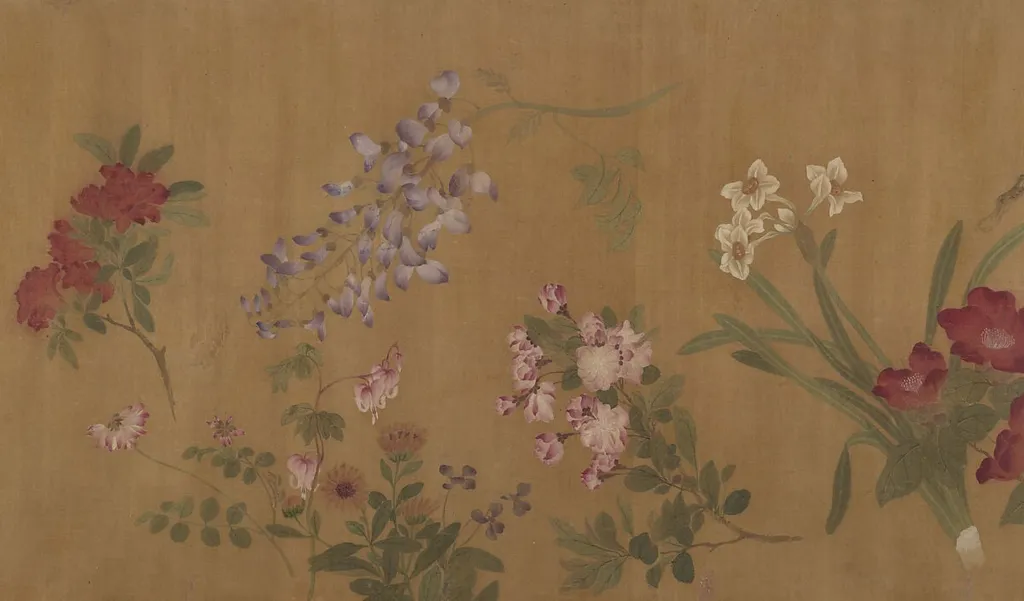
明/清 佚名 王淵(僞款) 百花圖 卷|The Hundred Flowers is an ink painting by the Ming dynasty painting artist Wang Yuan. It dates from 1330 and is held in the collection of the Metropolitan Museum of Art. This hand‑scroll painting on silk presents a lush arrangement of peonies, chrysanthemums and orchids rendered in ink and muted colour.
About this work
Subject & Meaning
The iconography centers on the botanical diversity of the blooms, which are presented in a continuous format typical of the handscroll genre.
The work is a handscroll depicting a dense arrangement of flowers, classified as a still life. As suggested by its title, The Hundred Flowers, the composition focuses entirely on floral subjects rendered in ink and color on silk. The iconography centers on the botanical diversity of the blooms, which are presented in a continuous format typical of the handscroll genre.
While attributed with a spurious signature of Wang Yuan, the painting's primary representational function is the detailed illustration of various flower species.
Technique & Style
The Hundred Flowers is executed as a handscroll in ink and color on silk, a traditional format and support pairing for Chinese painting. The work belongs to the still-life genre and depicts flowers rendered in this monochrome-and-color technique on the long, horizontal silk ground.
Measuring 247.7 cm in height by 32.1 cm in width, the scroll takes the form of an elongated vertical composition read as it is unrolled. The piece is held in the collection of the Metropolitan Museum of Art.
History & Provenance
Attributed to Wang Yuan, this handscroll depicting flowers is dated to 1330. The work, executed in ink and color on silk, was created in China. It is currently held in the collection of the Metropolitan Museum of Art, where it is cataloged with dimensions of 247.7 cm in height and 32.1 cm in width.
While the entity title notes the attribution as a spurious signature from the Ming or Qing dynasty, the recorded inception remains fixed at 1330.
Overview
This hand‑scroll painting on silk presents a lush arrangement of peonies, chrysanthemums and orchids rendered in ink and muted colour. The composition unfolds horizontally, inviting the viewer to move through a garden‑like scene as the scroll unrolls.
Context
Flower paintings were a popular genre in Ming and Qing China, often used to convey moral or poetic ideas. This piece aligns with that tradition, employing the same motifs and techniques found in other silk works by anonymous or court artists of the era.
Artist & collection


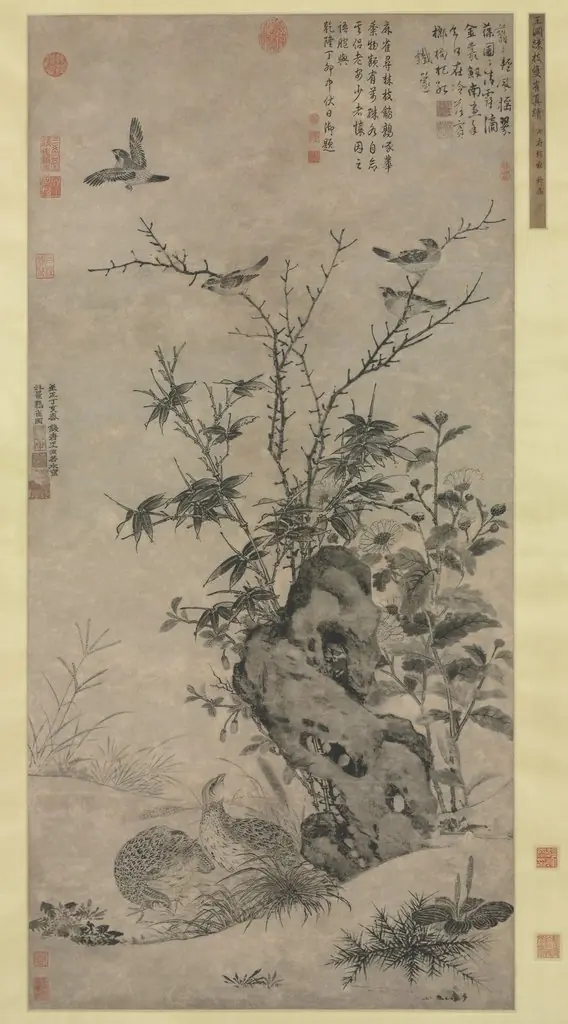
- 清 (傳)惲壽平 百花圖 卷|One Hundred Flowers
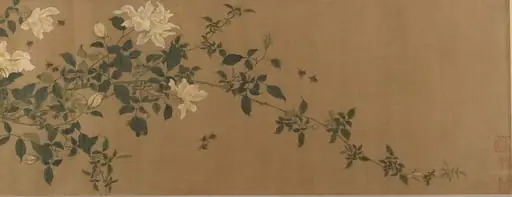 清 佚名 趙昌(僞款) 蜂王圖 卷|Yellow Roses and Bees, Pink Roses and Wasps
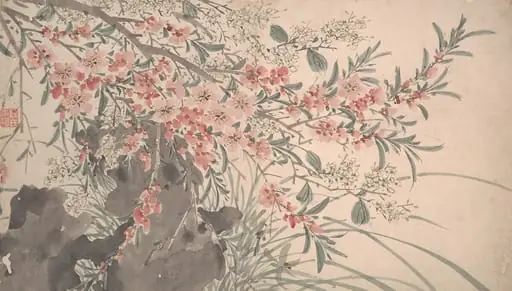 明 仿陳淳 雜花圖 冊|Garden Flowers
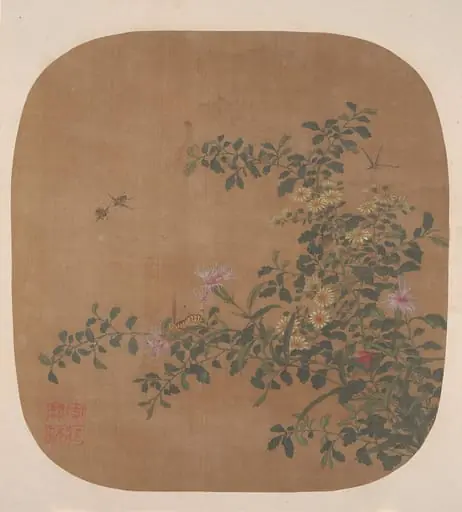 清 佚名 蜂舞花叢 册頁|Flowers and Bees
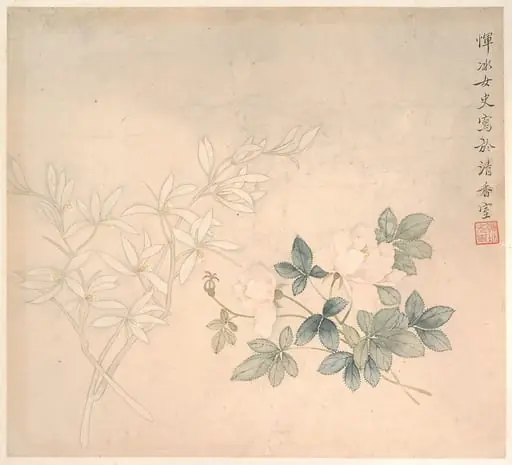 清 惲冰 花卉圖 册页|Flower Study
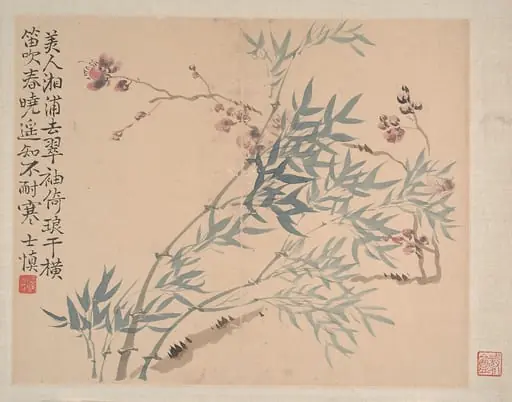 清 汪士慎 山水花卉圖 冊|Landscapes and Flowers
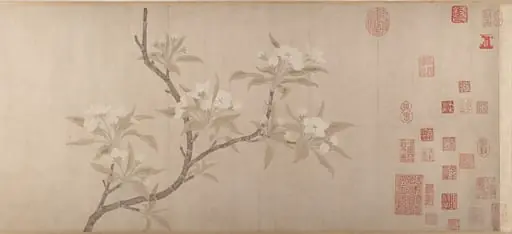 元 佚名 倣錢選 梨花圖 卷|Pear Blossoms
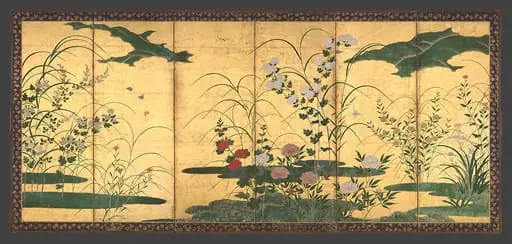 四季花草図屏風|Flowers and Grasses of the Four Seasons
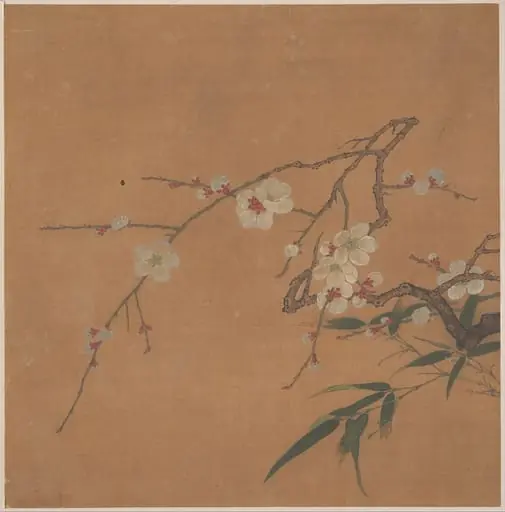 明/清 佚名 梅竹圖 冊頁|Flowering Plum and Bamboo
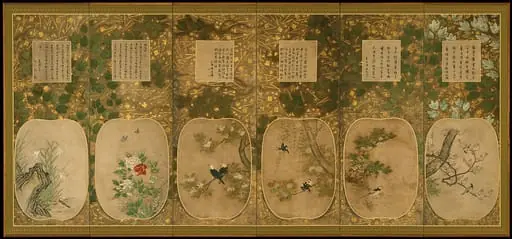 十二ヶ月花鳥図書画挿絵貼屏風|Birds and Flowers of the Twelve Months with Chinese Calligraphy