Artwork
The Hand as the Mirror of Salvation
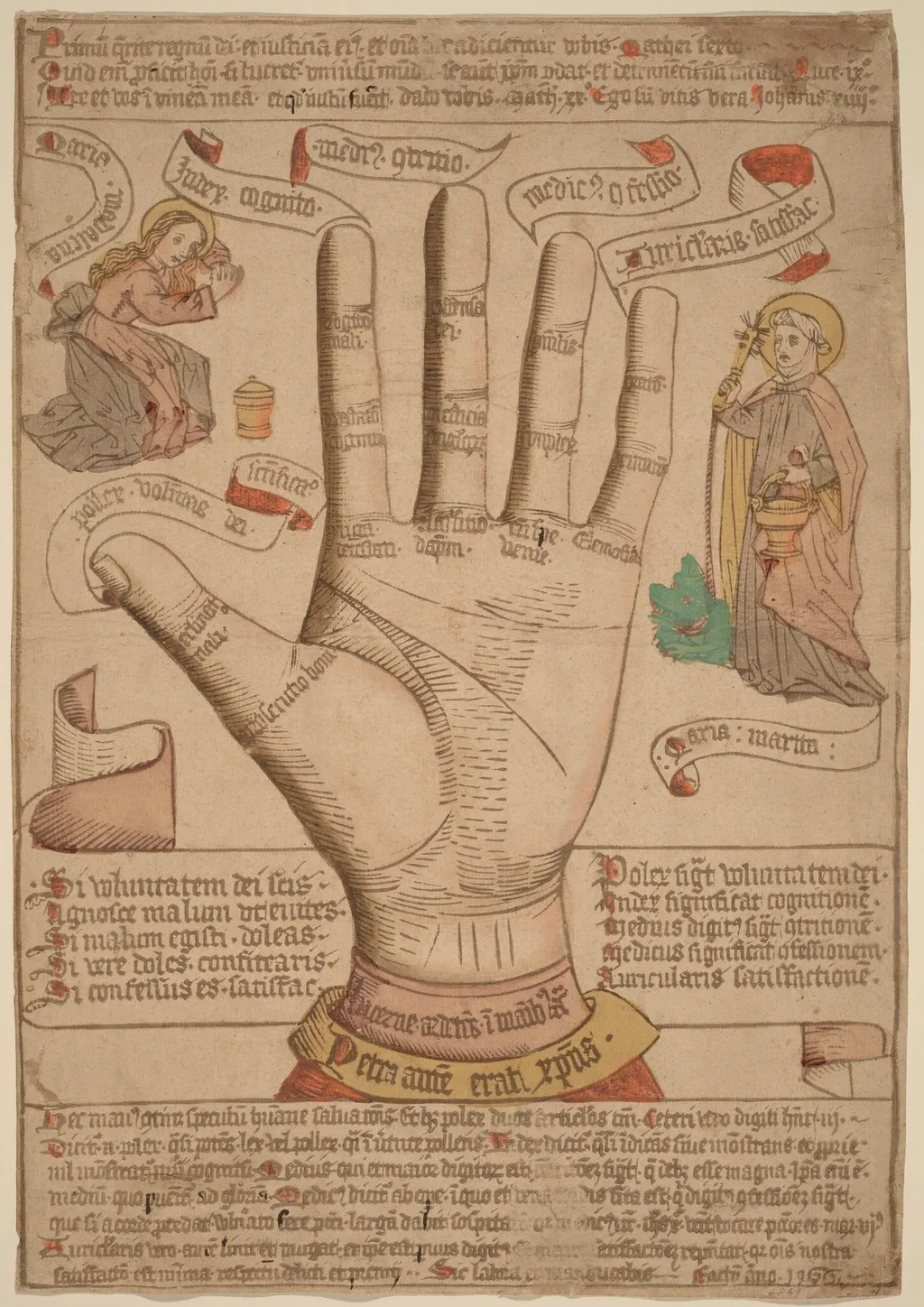
The Hand as the Mirror of Salvation is an ink print by the Renaissance artist Netherlandish 15th Century. It dates from 1466 and is held in the collection of the National Gallery of Art.
- Inscription
- Inscribed:at top, in block: Primum querite regnum dei et iusticiam eius et omnia hec adicientur vobis. Mathei sexto. (Seek ye therefore first the kingdom of God and his justice: and all these things shall be added unto you. Matthew 6[:33]) / Quid enim proficit homini si lucretur vniuersum mundum se autem ipsum prodat et detrimentum sui faciat Luce ix (For what is a man advantaged, if he gain the whole world and lose himself and cast away himself? Luke 9[:25]) / Ite et vos in vineam meam et quod iustum fuerit dabo vobis Matth. xx. (Go you also into my vineyard and I will give you what shall be just. Matthew 20[:4]) Ego sum vitis vera Johannis xiiij. (I am the true vine. John [verse 15:1].) at upper left, in banderole, in block: Maria Madalena; at right center, in banderole, in block: Maria Martha in banderoles above fingers, in block, from left to right (thumb to little figure): pollex voluntas dei sanctificatio / Index cognitio / medius contritio / medicus confessio / Auricularis satisfact[tio]; on thumb, in block: declinatio mali (avoid evil) / prosecutio boni (pursue the good); on index finger, in block: Cogitatio mali (know evil) / detestatio co[gnice?] / fuga detestatis (flee the accursed); on middle finger, in block: Offensa dei (offenses against god) / mesticia angelorum (sadness of the angels) / Acquisitio dampni (the acquisition of harm); on ring finger, in block: humilis (humility) / simplex (sincerity) / cum spe venie (with the hope of grace); on little finger, in block: oratio (prayer) / Jeiunium (fasting) / Elemosia (alms) in banderole at lower left, in block: Si voluntatem dei scis / Agnosce malum vt euites. / Si malum egisti doleas. / Si vere doles confitearis. / Si confessus es satisfac. (If you know the will of God, recognize evil, so that you may avoid it. If you have done evil, regret it. If you regret it, confess it. When you have confessed it, do penance.); in banderole at lower right, in block: Polex significat voluntatem dei. / Index significat cognitionem. / Medius digitus significat contritionem. / Medicus significat confessionem. / Auricularis satisfactionem. (The thumb signifies God's will, the index finger understanding, the middle finger contrition, the ring finger confession, the little finger repentance.) at lower center, on sleeve, in block: Lucerne ardentes in manibus (the lamps in your hands should be burning in order to recognize the advent of the Lord); at lower center, on cuff, in block: Petra autem erat Christus (yet Christ was a rock) at bottom, in block: Hec manus continent specululm humane saluationis. Et habet polex duos articulos tantum ceteri vero digiti habent iij. / Dicitur nam polex quasi potens lex vel pollex qui in uirtute pollens. Index dicitur quasi indicans siue monstrans et proprie / nil monstratur nisi congnitum. Medius qui et maior digitorum est contritionem signat que debet esse magna. Jpsa enim est / medium quo peruenitur ad gloriam. Medicus dicitur ab opere in quo et vena cordis sita est qui dignitus confessionem signat / que si a corde procedat Vulnerato fece peccati largam dabit sospitatem quam medicus noster. Ihesus Christus venit vocare peccatores mar vj9. / Auricularis vero autem linit et purgat et ipse est paruus digitus. Et me[rite] satisfactionem representat quia omnis nostra / satisfactio est minima respectu delicti et premij. Sic labora et manducabis. Factum anno 1466. [translations (with some abbreviations resolved for legibility) from Parshall, Peter, and Rainer Schoch. _Origins of European Printmaking: Fifteenth-Century Woodcuts and Their Public._ Washington, DC: National Gallery of Art, 2005, p. 294-295.]
About this work
Overview
The Hand as the Mirror of Salvation is a woodcut print, enhanced with hand-coloring in rose, green, yellow, and gray, and printed in brown ink through a friction technique. The composition centers on a colossal hand supporting a mirror, accompanied by two diminutive figures on its fingers.
Subject & Meaning
The dominant hand, holding a mirror, symbolizes a reflective pathway to salvation. Two figures, one gazing upwards and the other pointing at the mirror, suggest contemplation and guidance. Surrounding text, woven around the hand like ribbons, implies a connection between the written word and spiritual enlightenment.
Technique & Style
Executed as a woodcut, the piece leverages the medium's inherent textures. Hand-coloring adds depth, with the brown ink of the print contrasting against the vibrant, yet muted, hues of rose, green, yellow, and gray. The style emphasizes bold lines and flat, colored areas, characteristic of woodcut printing.
Context
Created in a period when woodcut was a prevalent method for mass-producing images, this work likely served religious or devotional purposes, given its thematic focus on salvation and contemplation. The use of simple, recognizable imagery suggests it may have been intended for a broad audience.
Artist & collection

Artist
These prints show Christ’s suffering in bold, hand-colored images from 15th-century Northern Europe.

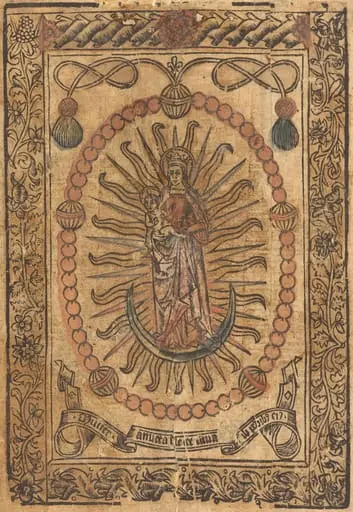 The Madonna and Child in a Rosary
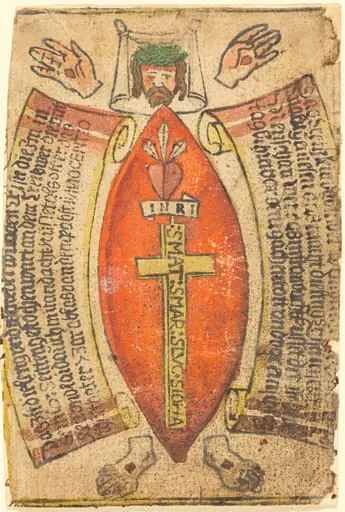 The Measure of the Side Wound and the Body of Christ
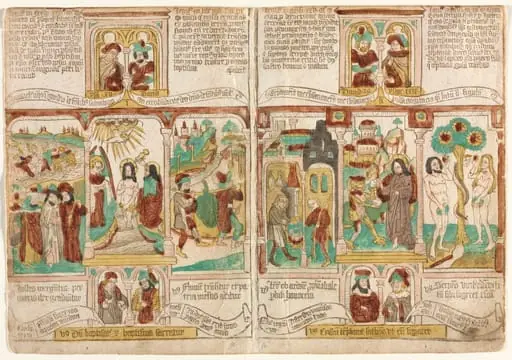 The Bible of the Poor (Biblia Pauperum),
Pharaoh's Army Drowned in the Red Sea; Baptism of Christ; and Moses' Spies Returning with Grapes from Canaan
Esau Selling Jacob his Birthright; Temptation of Christ; and Temptation of Adam and Eve
The Bible of the Poor (Biblia Pauperum),
Pharaoh's Army Drowned in the Red Sea; Baptism of Christ; and Moses' Spies Returning with Grapes from Canaan
Esau Selling Jacob his Birthright; Temptation of Christ; and Temptation of Adam and Eve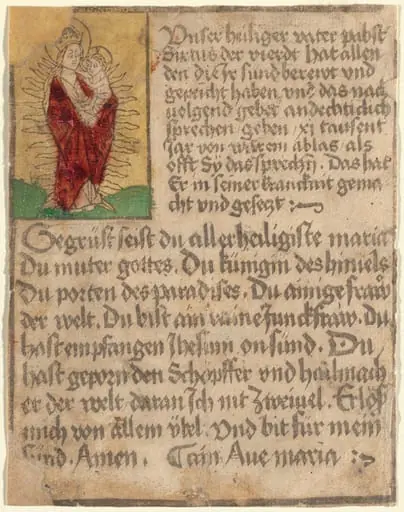 Madonna and Child in a Glory with an Indulgence and a Prayer
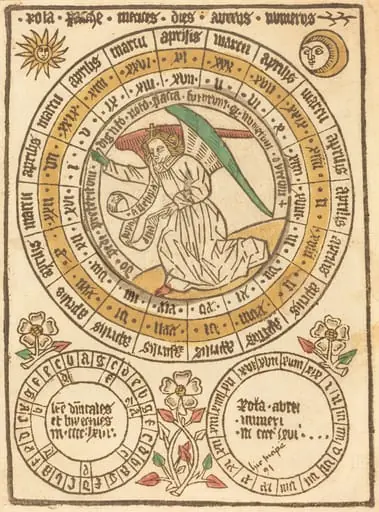 An Easter Calendar Beginning with the Year 1466
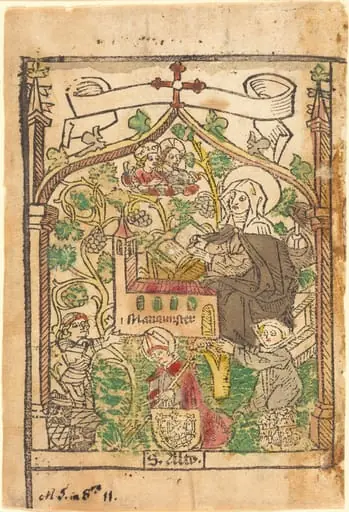 Saint Alto, Saint Bridget and the Founders of the Mariamunster
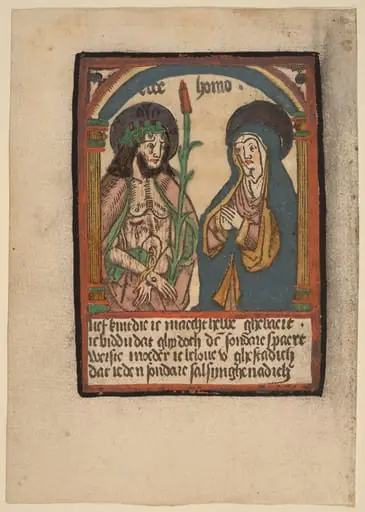 The Man of Sorrows and His Mother
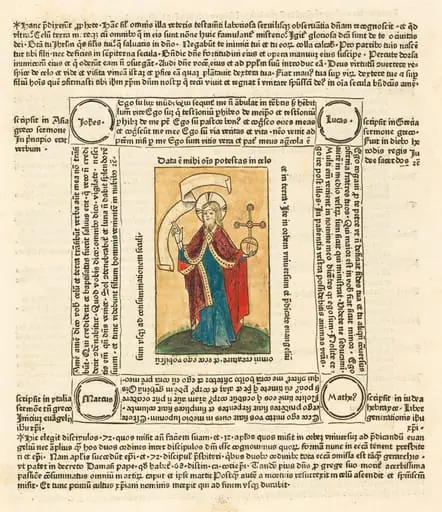 Christ as Salvator Mundi
!["Obliterate the Trace of the Pot in the Ashes" [fol. 32 verso / 33 recto], by French early 16th Century](https://artifactworldgallery.com/img/french-early-16th-century--obliterate-the-trace-of-the-pot-in-the-ashes-fol-32-verso-33--e808688d684304b0-w320.webp) "Obliterate the Trace of the Pot in the Ashes" [fol. 32 verso / 33 recto]
"Obliterate the Trace of the Pot in the Ashes" [fol. 32 verso / 33 recto]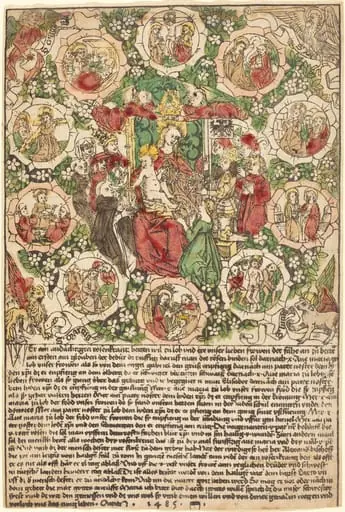 Madonna with the Rosary
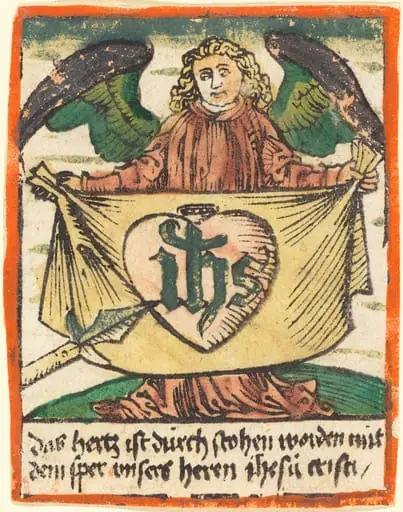 Sacred Monogram in a Sacred Heart on a Cloth Held by an Angel
- The Way of Salvation