Artwork
Christ as the Man of Sorrows
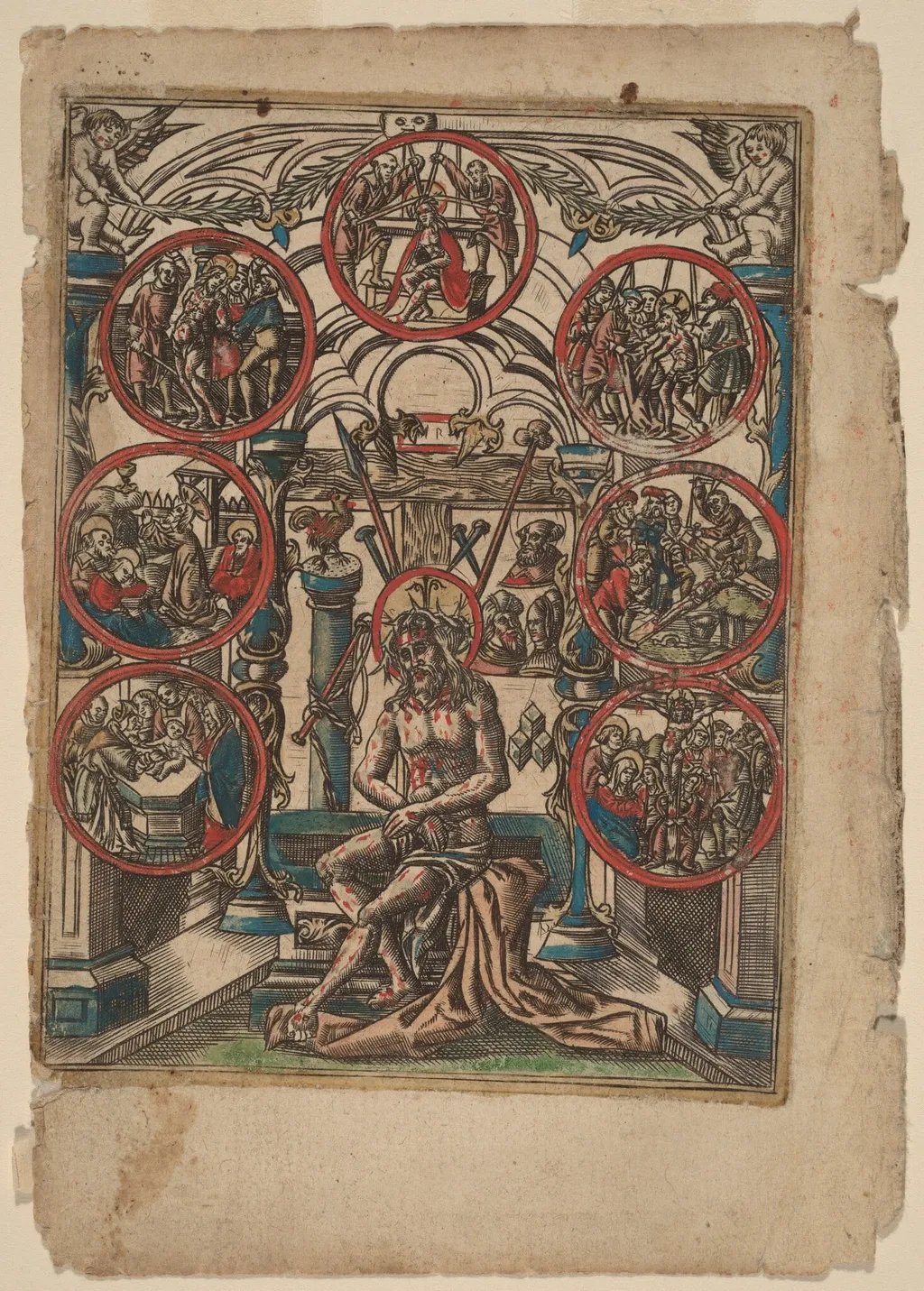
Christ as the Man of Sorrows is an ink print by the Renaissance artist Netherlandish 16th Century. It dates from 1501 and is held in the collection of the National Gallery of Art.
About this work
Overview
This hand-colored engraving depicts Christ as the Man of Sorrows, a representation emphasizing Christ's suffering. The composition is densely populated with symbolic elements, set against a vibrant, patterned background.
Subject & Meaning
At the center, a kneeling Christ figure displays wounds and bound hands, embodying sorrow. Surrounding scenes in seven circles illustrate various stages of passion and devotion, collectively serving as a visual reminder of Christ's ordeal, a common devotional theme in 16th-century religious art.
Technique & Style
Executed as a hand-colored engraving, the piece combines precise, almost mechanical linework with vibrant manual coloring. The style blends meticulous detail with expressive chromatic accents, characteristic of embellished prints from the era.
History & Provenance
While specific provenance details are not provided, the artwork's style and theme are consistent with 16th-century European devotional prints, suggesting its origin within this timeframe and context.
Context
Emerging from a period where religious devotion was paramount, this engraving would have functioned as a tool for personal reflection and meditation on Christ's suffering, aligning with the spiritual practices of the time.
Legacy
As part of the Man of Sorrows tradition, this engraving contributes to a broader artistic and religious lineage, influencing subsequent depictions of Christ's passion in various media.
Artist & collection

Artist
This artist carved scenes with fine lines, mostly religious and mythological ones.

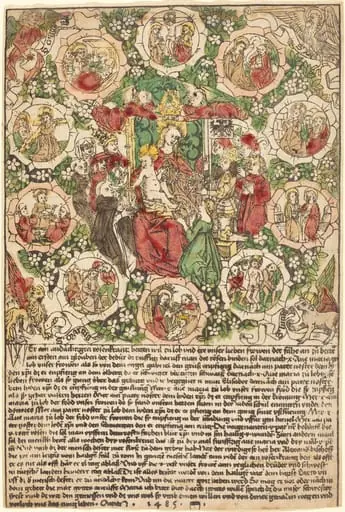 Madonna with the Rosary
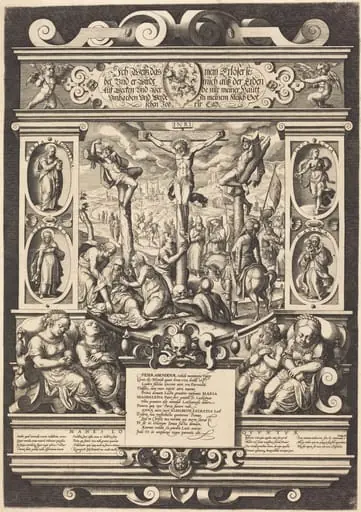 Funeral Monument to the Daughters of Feuerabend
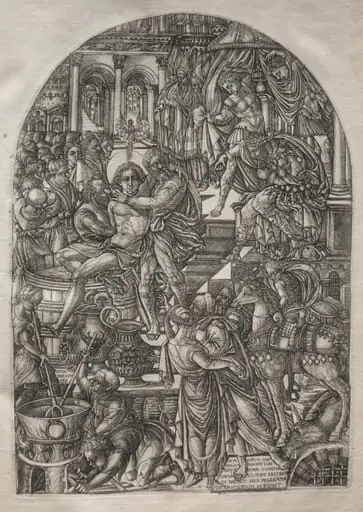 The Apocalypse: The Martyrdom of St. John the Evangelist
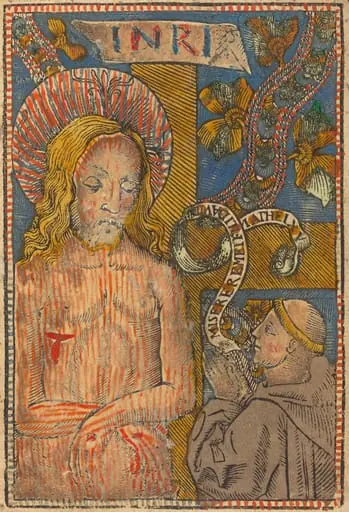 The Man of Sorrows with a Franciscan
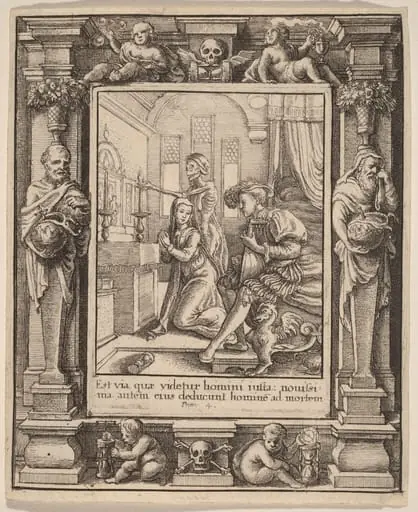 Nun
Nun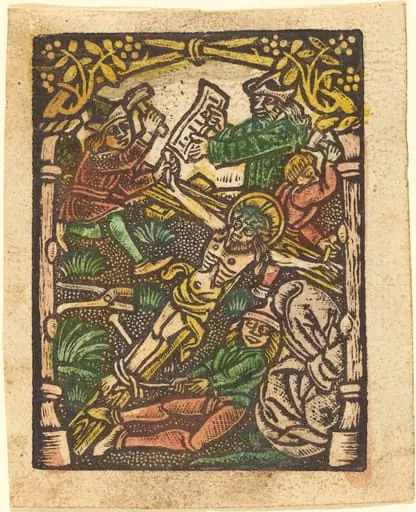 Christ Nailed to the Cross
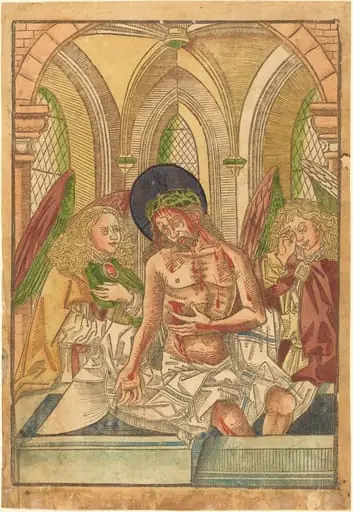 Christ in the Tomb with Two Angels
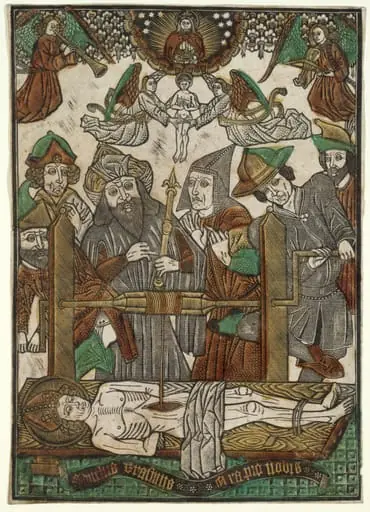 The Martyrdom of St. Erasmus
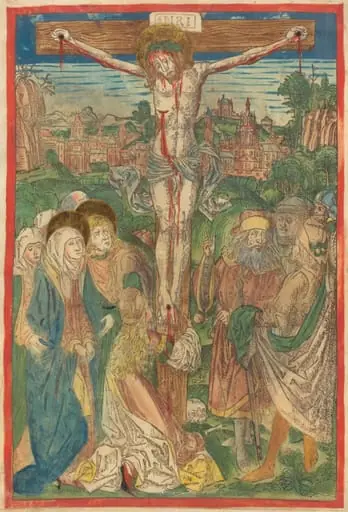 The Crucifixion with Saint Mary Magdalene
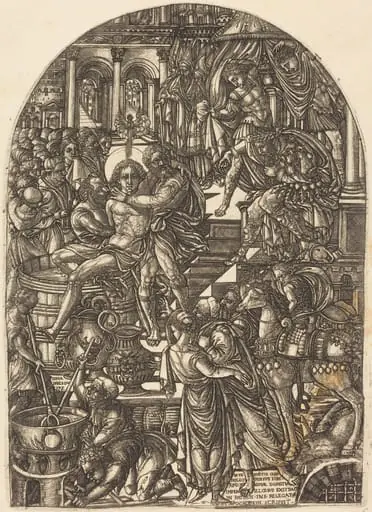 The Martyrdom of Saint John the Evangelist