Artwork
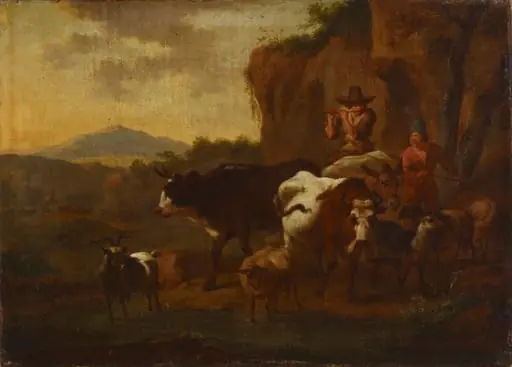
Landscape with Herdsmen and Herd (copy ?)
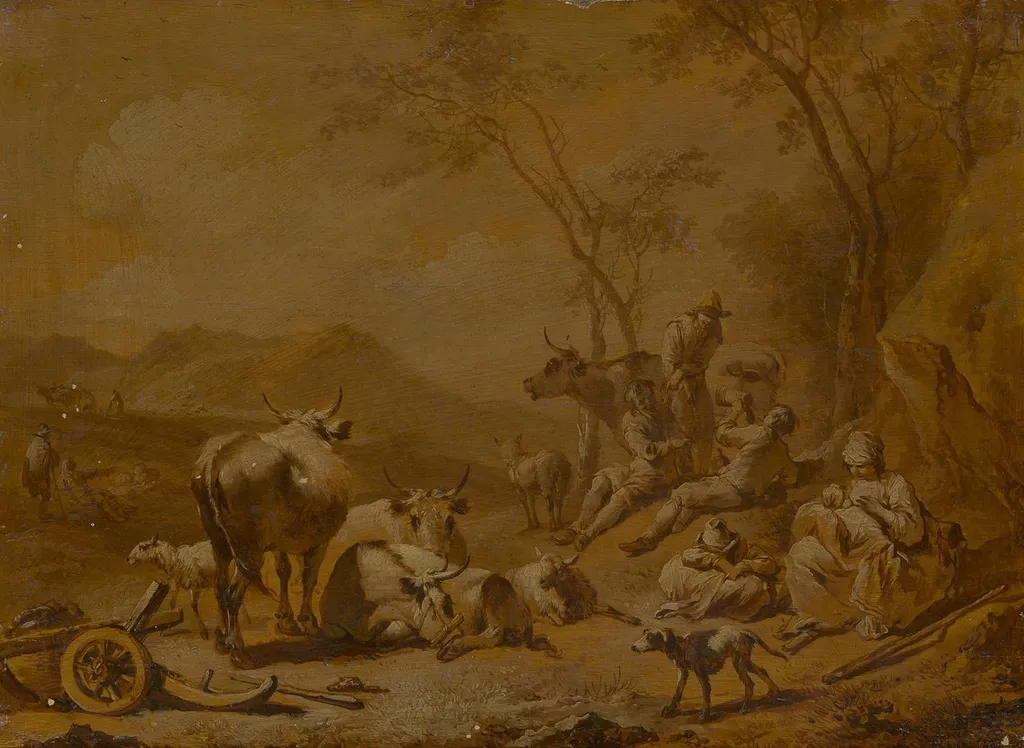
Landscape with Herdsmen and Herd (copy ?) is an unspecified painting by the Dutch Golden Age artist Nicolaes Pieterszoon Berchem. It dates from 1670 and is held in the collection of the Hermitage Museum.
About this work
Technique & Style
Created in the Netherlands in 1670, the composition reflects the conventions of Dutch pastoral landscape painting.
This work is a landscape painting on a support measuring 30 cm in height and 41.5 cm in width. Stylistically, the piece aligns with the landscape genre, depicting rural subjects such as cattle and a herder. Created in the Netherlands in 1670, the composition reflects the conventions of Dutch pastoral landscape painting.
The classification of the artwork includes a question regarding its authorship, noted as a potential copy, which impacts the assessment of its handling and execution.
History & Provenance
The painting was created in 1670 by Nicolaes Pieterszoon Berchem in the Netherlands. It is held in the collection of the Hermitage Museum. The work is catalogued with the qualifier "copy?", indicating uncertainty about whether it is an original or a copy.
Context
The work is part of the Hermitage Museum collection and exemplifies the Dutch Golden Age landscape tradition, reflecting Nicolaes Pieterszoon Berchem's focus on pastoral scenes with cattle and herders. Scholarship highlights its role within Berchem's broader output of idealized Italianate landscapes, though its reception history is sparsely documented. The painting's composition and technique align with 17th-century Dutch landscape conventions, situating it within the artist's mature period of activity in the Netherlands.
Its attribution as a copy remains debated, with stylistic analysis linking it to Berchem's workshop practices during his prolific period in the 1670s.
Legacy
The composition of Landscape with Herdsmen and Herd (copy?) influenced subsequent pastoral scenes in Dutch art, particularly in its treatment of cattle and herders within expansive countryside settings. Artists of the 18th century referenced Berchem's approach to integrating livestock with landscape composition, a technique that persisted in later genre paintings. The work's presence in the Hermitage Museum has contributed to scholarly discussions of 17th-century Dutch landscape traditions, though its attribution history reflects ongoing debates about workshop copies.
Overview
Created circa 1670, this oil painting presents a tranquil rural tableau where herders attend to a flock of sheep and a herd of cattle amid a dry, rocky terrain. The composition is anchored by an empty cart in the foreground and a dog moving among the animals, all rendered in subdued earth tones that emphasize the quiet, everyday atmosphere of the scene.
Subject & Meaning
The work focuses on the simple labor of pastoral life, showing figures seated or standing with staffs as they supervise grazing livestock. The absence of overt narrative elements suggests a straightforward celebration of agrarian routine, inviting viewers to contemplate the harmony between humans, animals, and the rugged landscape.
Artist & collection
Artist
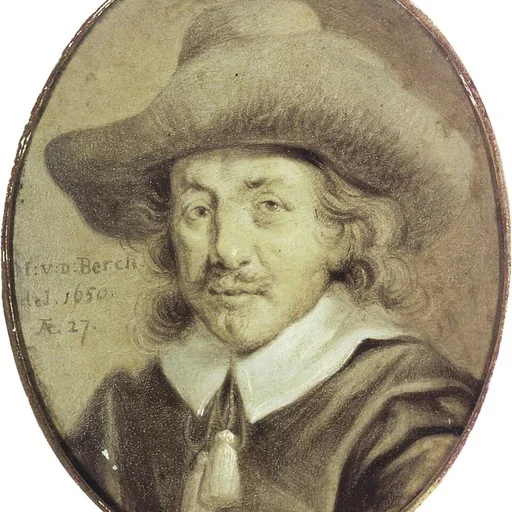
Nicolaes Pieterszoon Berchem (1 October 1620 – 18 February 1683) was a highly esteemed and prolific Dutch Golden Age painter of pastoral landscapes, populated with mythological or biblical figures, but also of a number of allegories and…

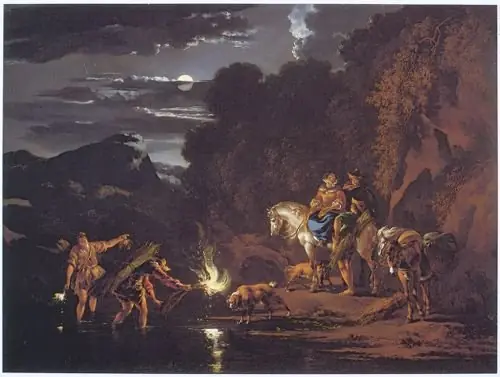
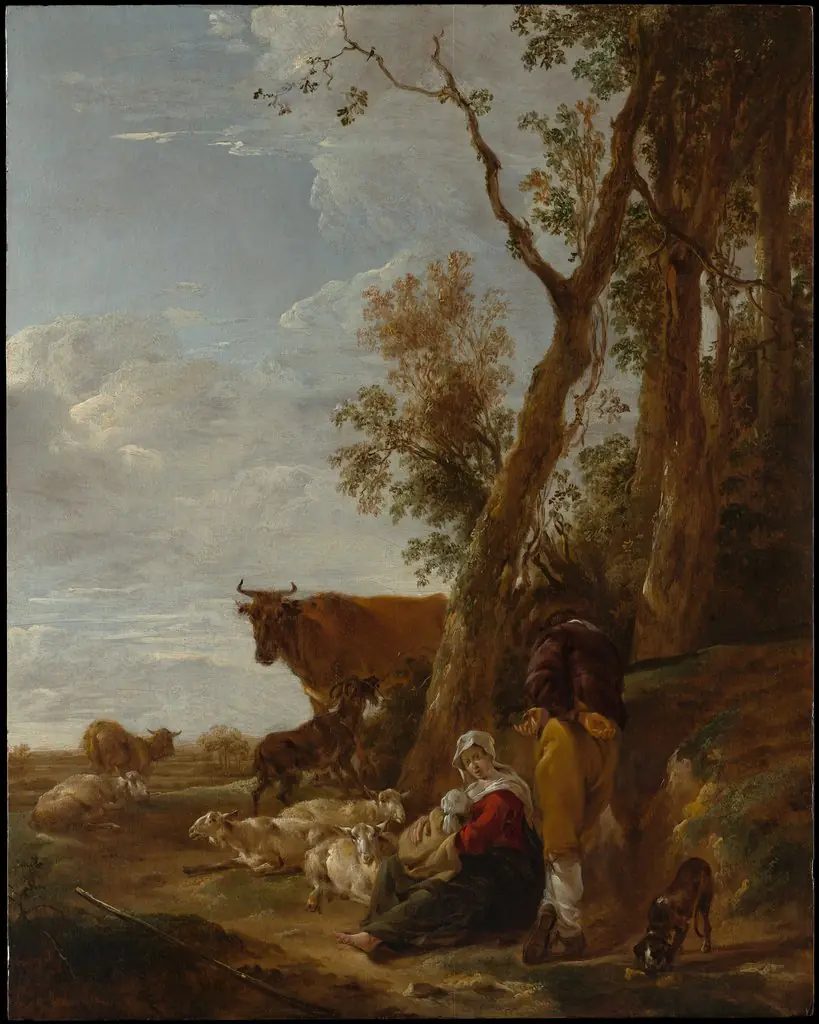
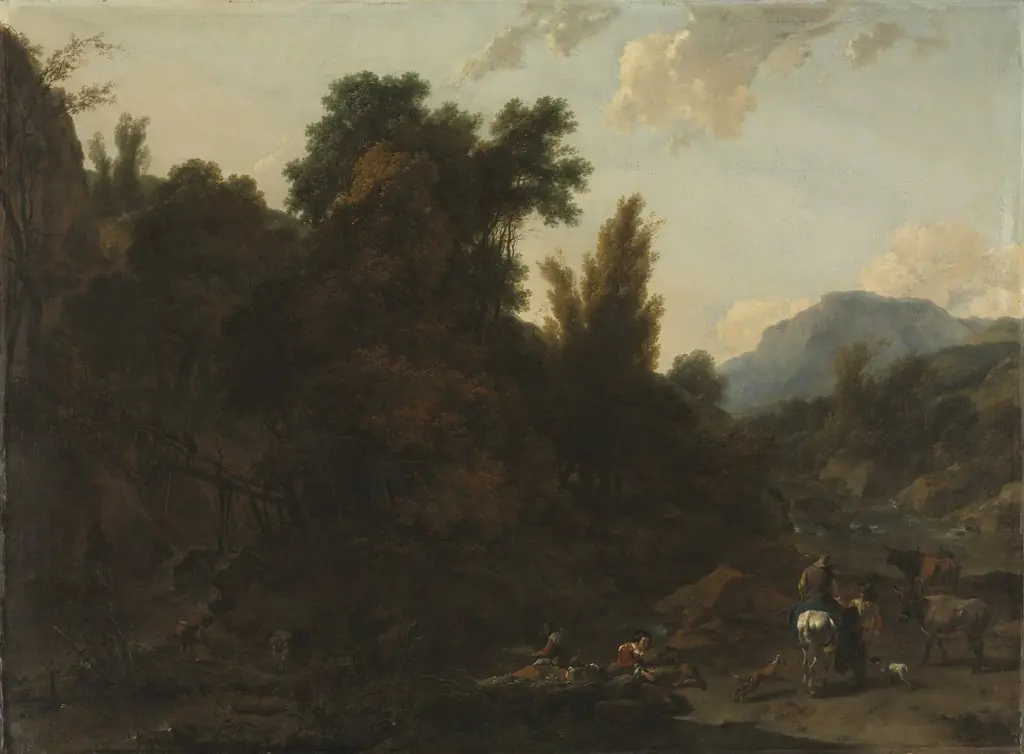
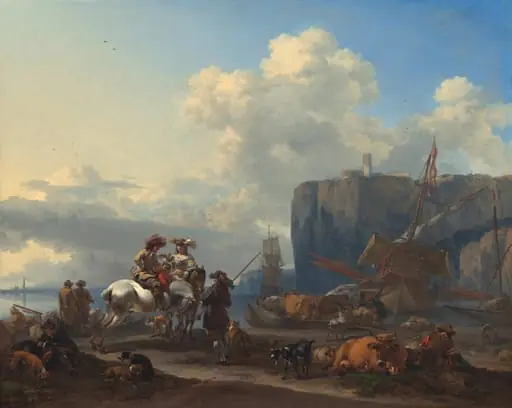
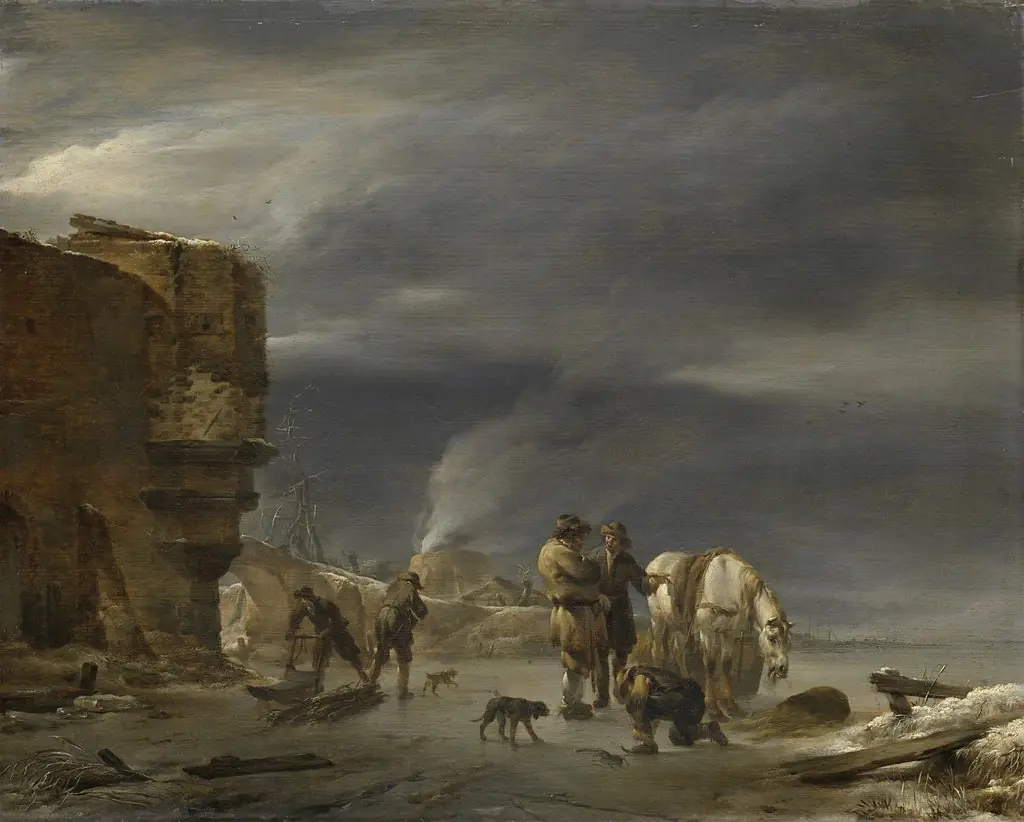
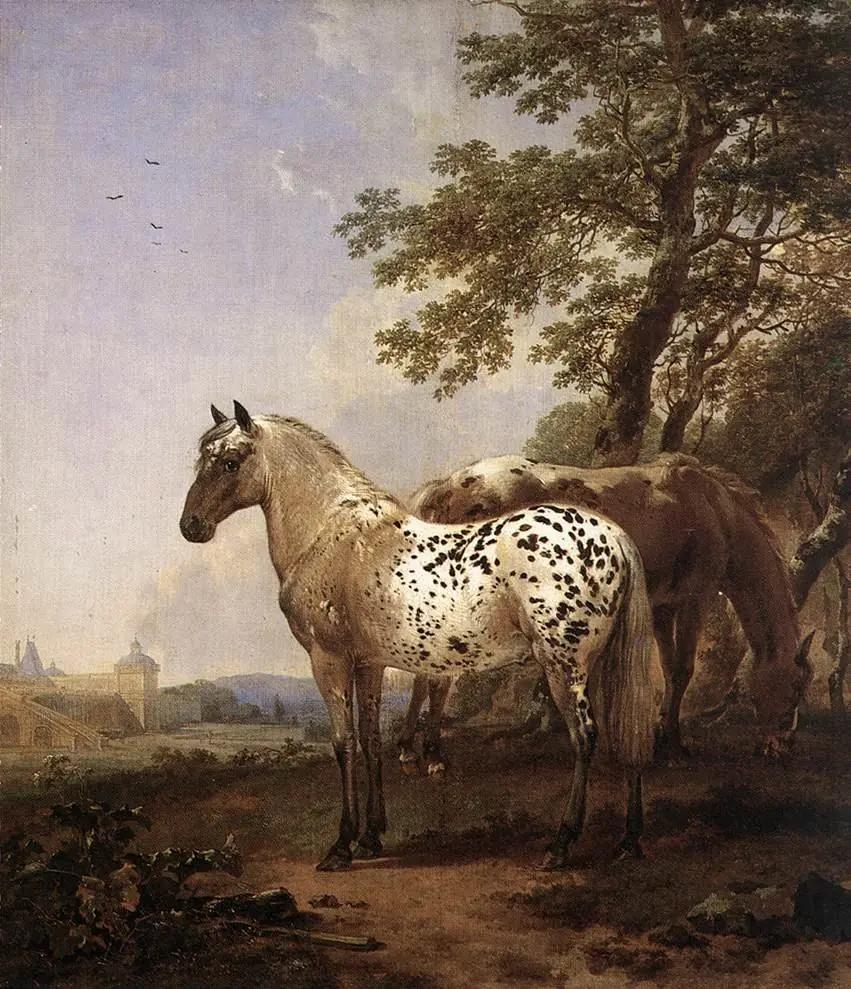
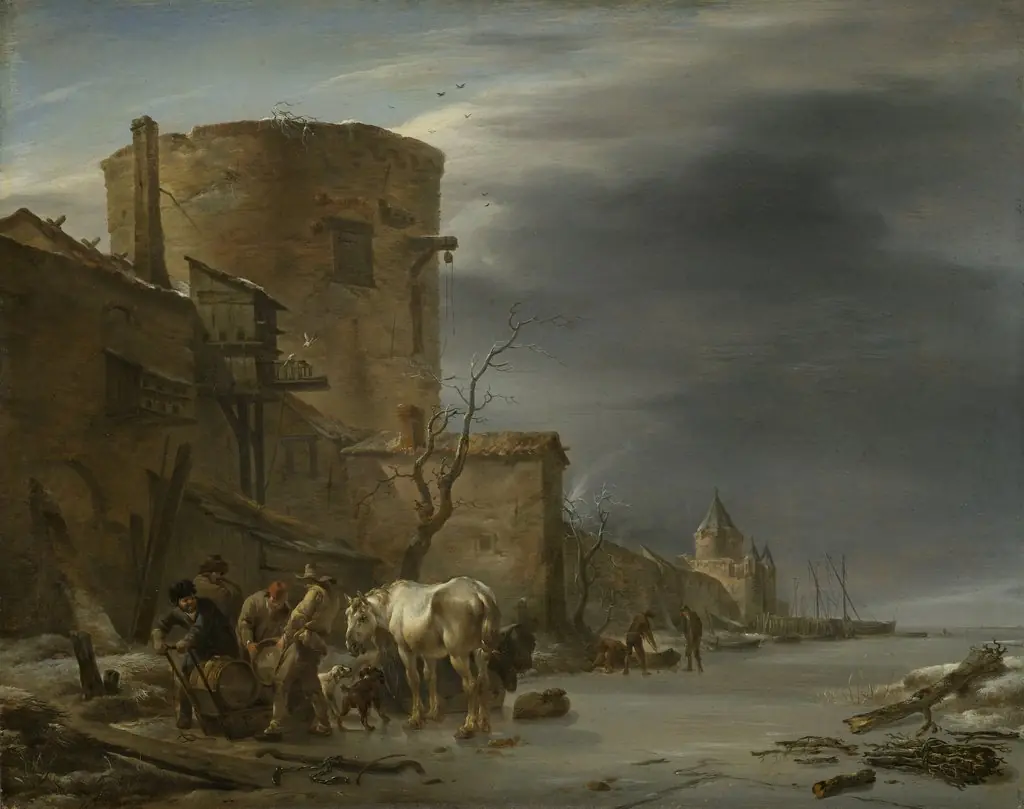
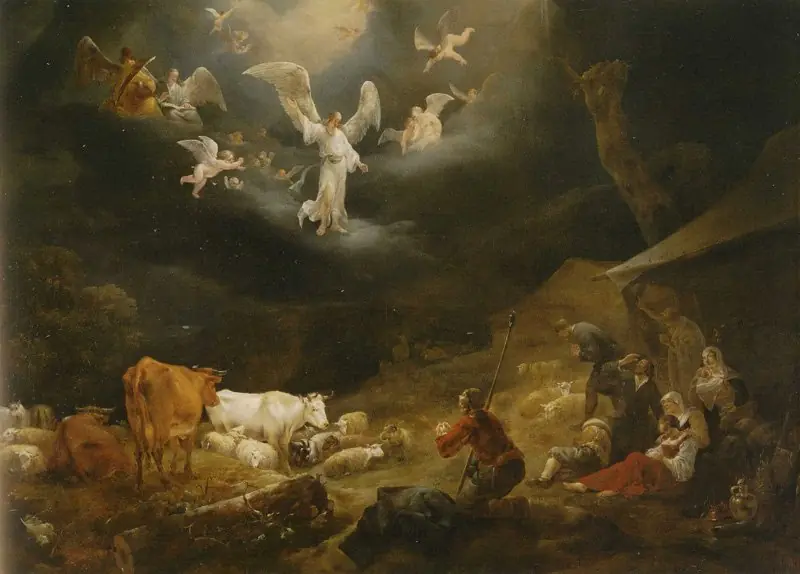
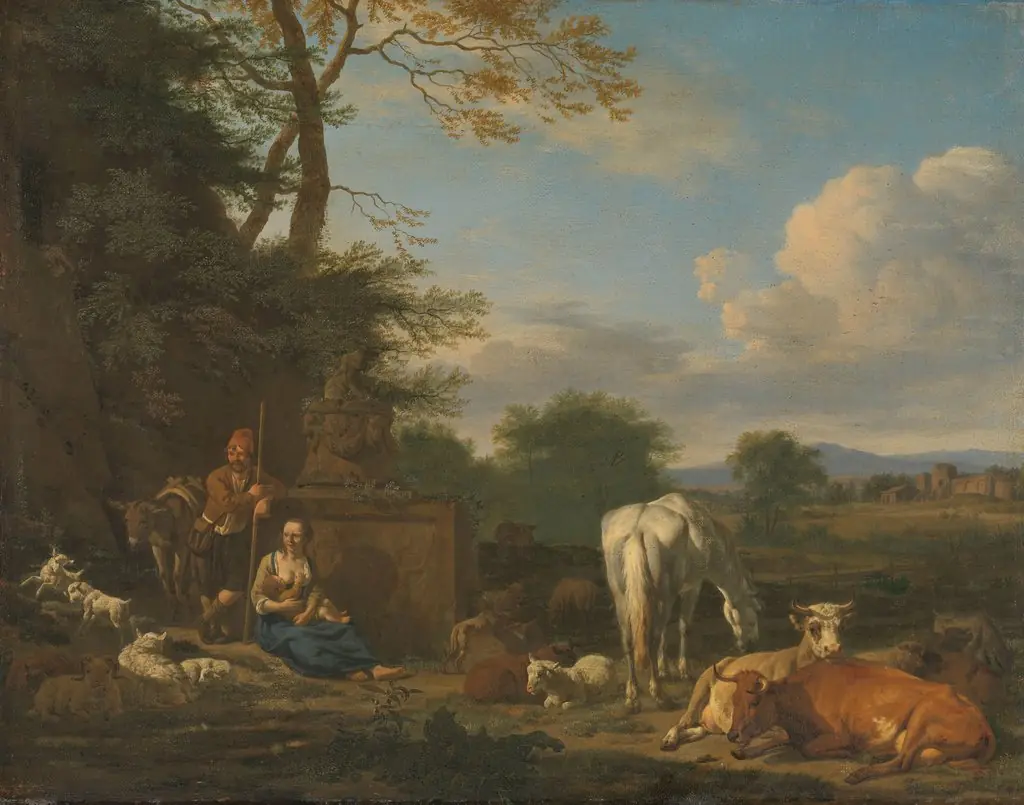 Arcadian landscape with resting herdsmen and cattle
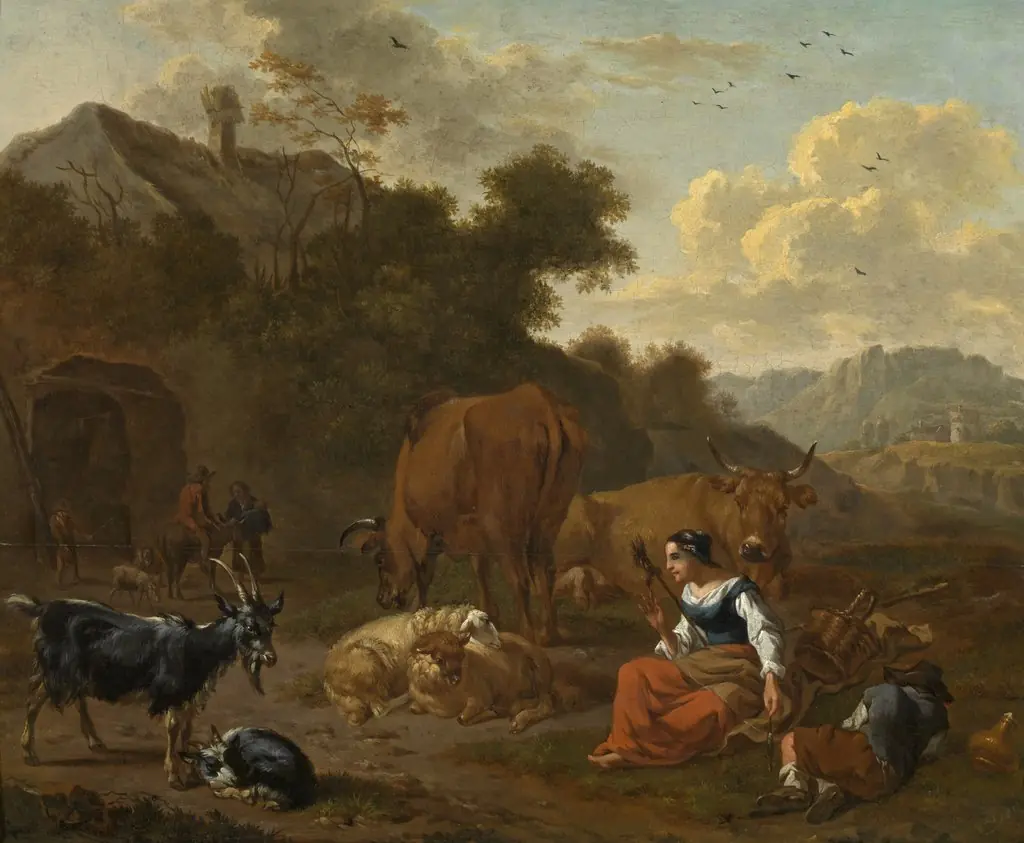 Landscape with a Spinner and Cattle
 Huilua soittava paimen ja karjaa
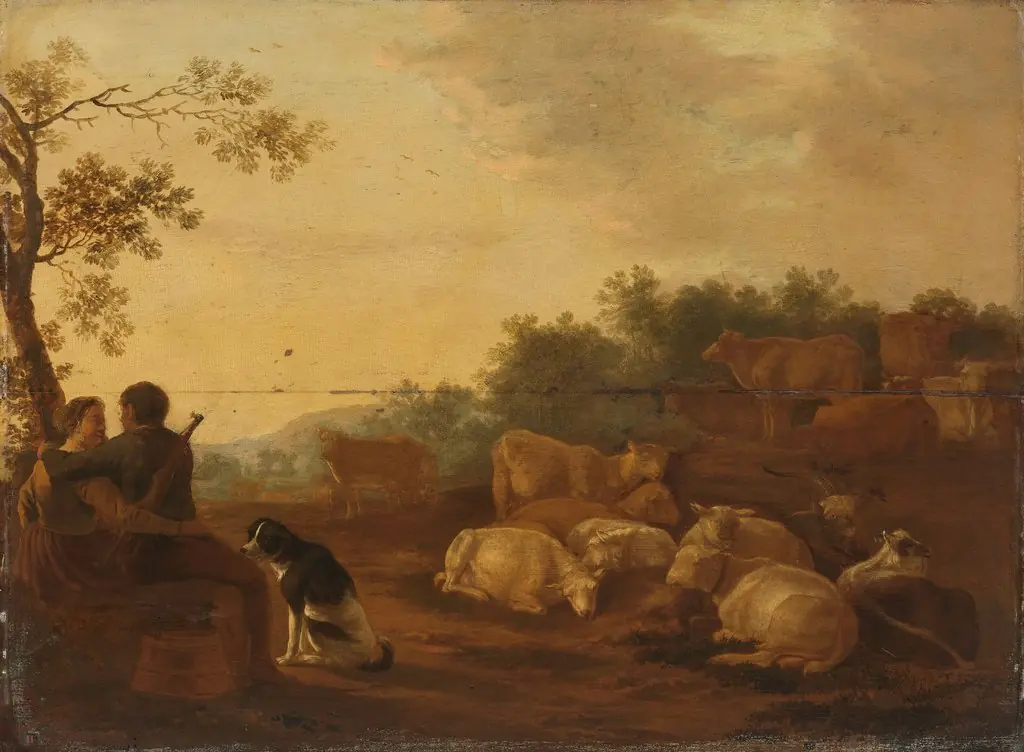 Landscape with sheperd, sheperdess and cattle
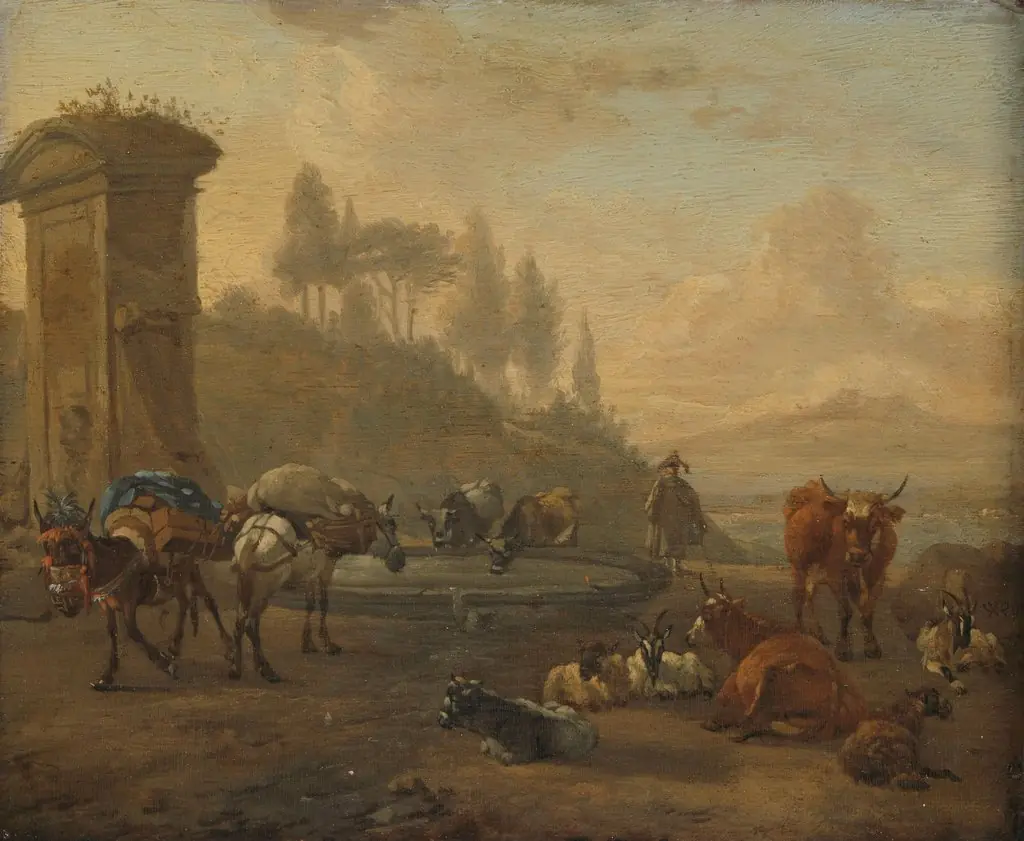 Herd near a fountain
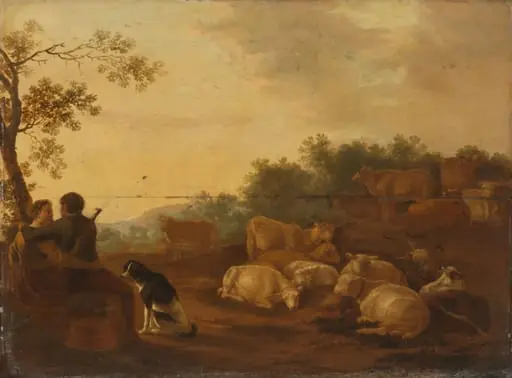 Landscape with sheperd, sheperdess and cattle
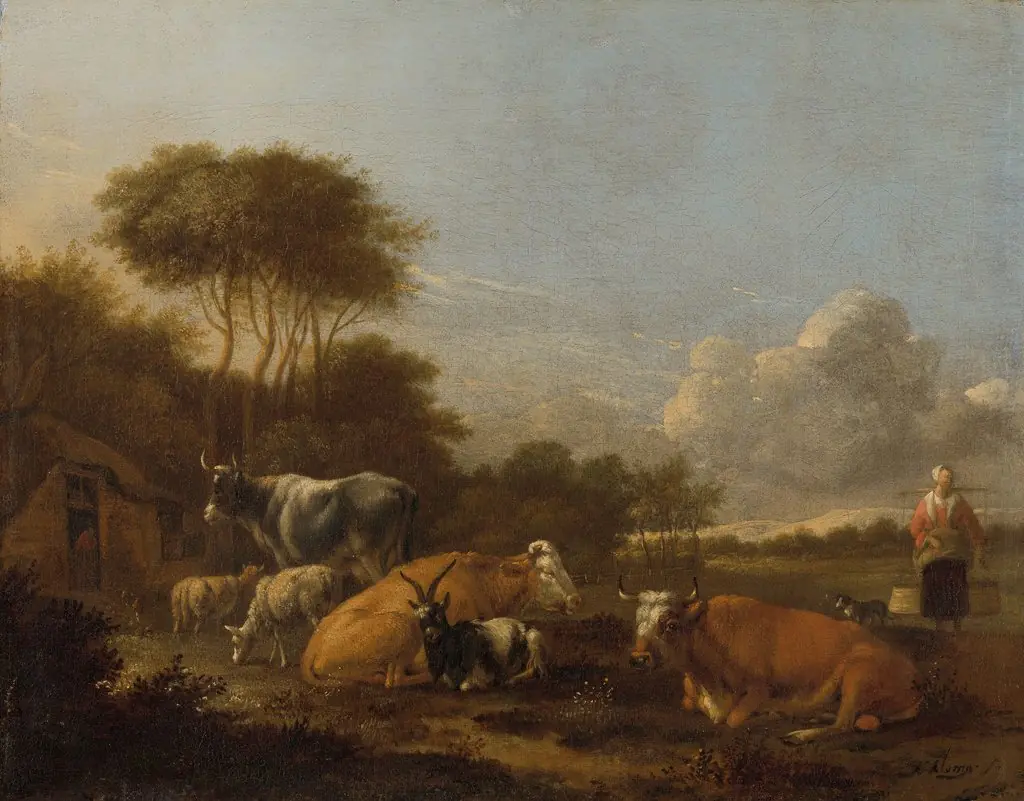 Landscape with Cattle (SK-C-162)
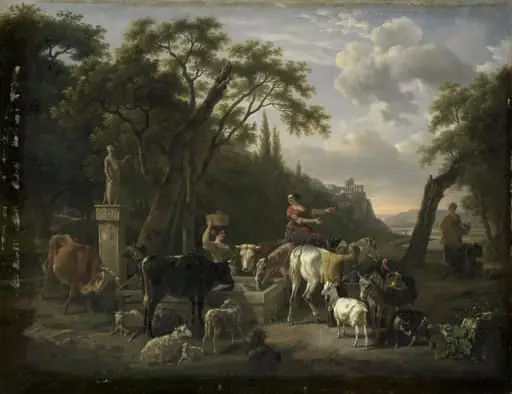 Italian Landscape with Shepherds and Animals at a Fountain