Artwork
View of an Italian Port
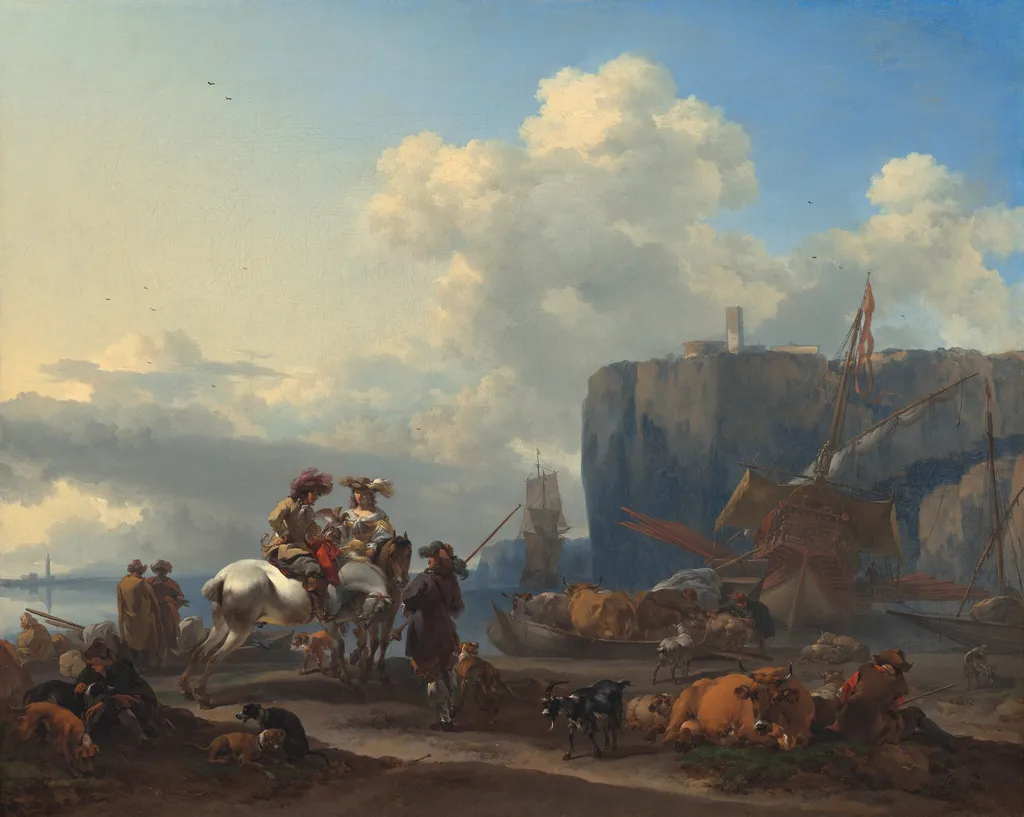
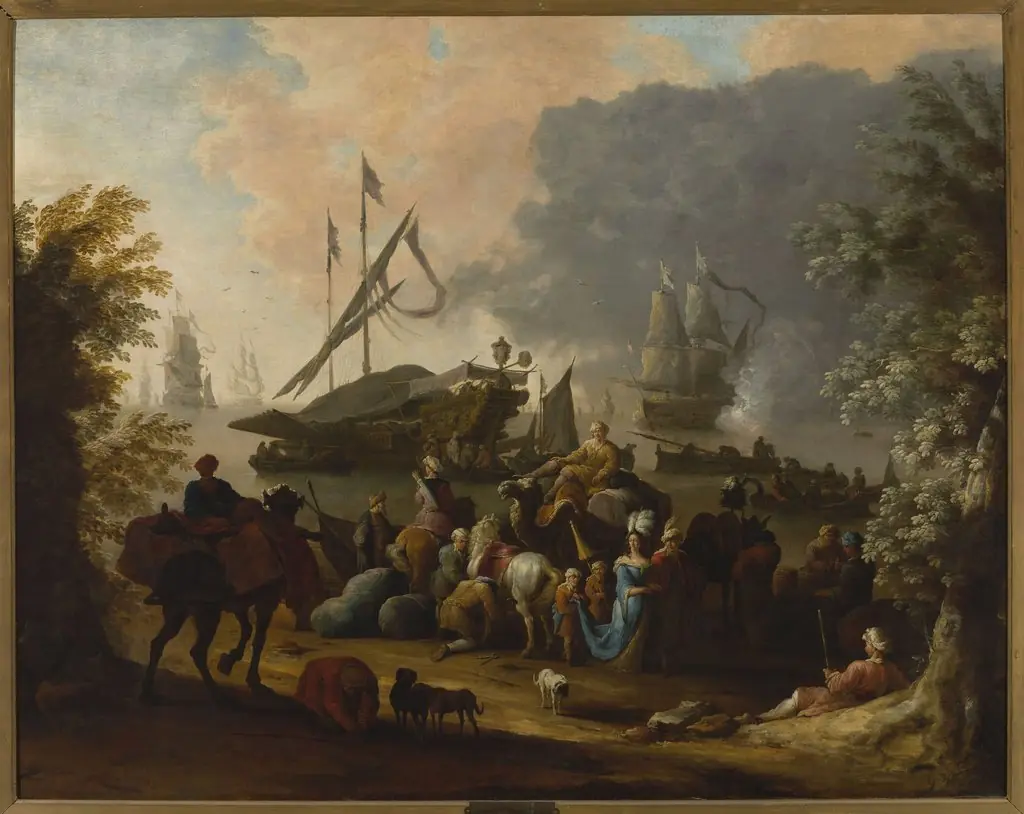
View of an Italian Port is an oil painting by the Baroque artist Nicolaes Pieterszoon Berchem. It dates from 1664 and is held in the collection of the National Gallery of Art.
- Inscription
- Inscribed:lower right: Berchem
About this work
Technique & Style
Executed in oil on canvas, the work measures 48 cm in height and 59.
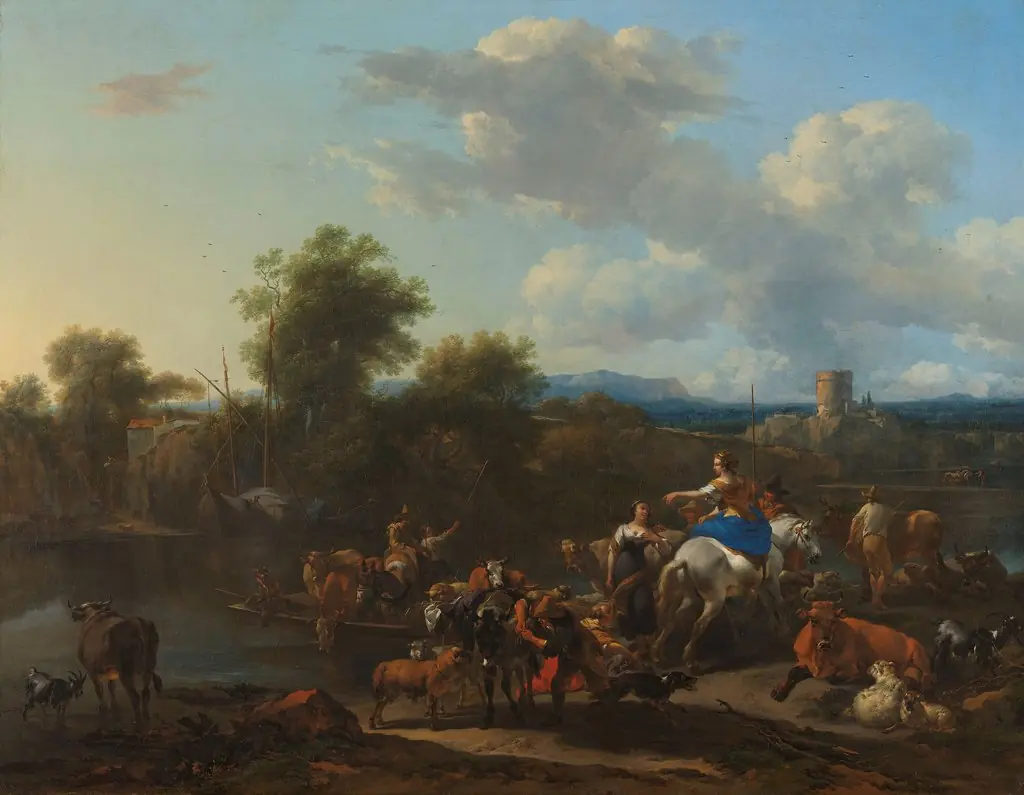
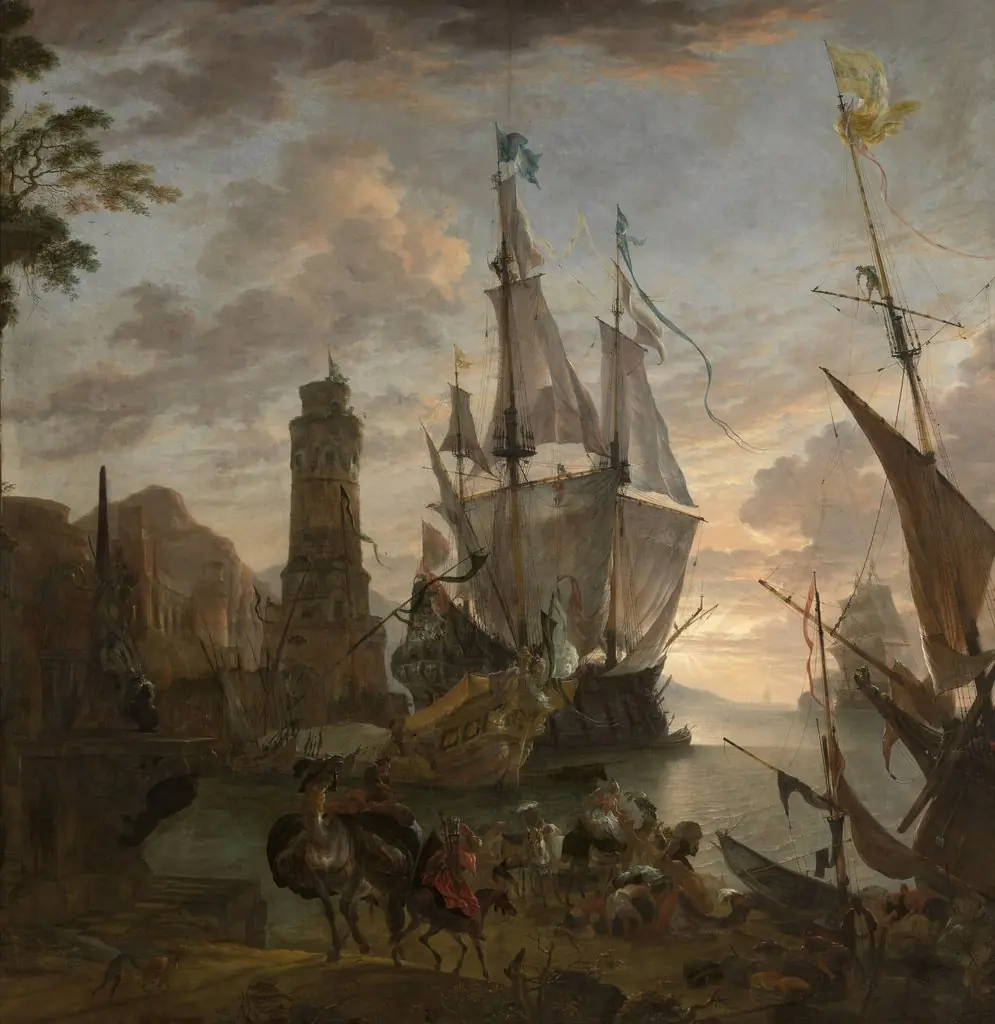
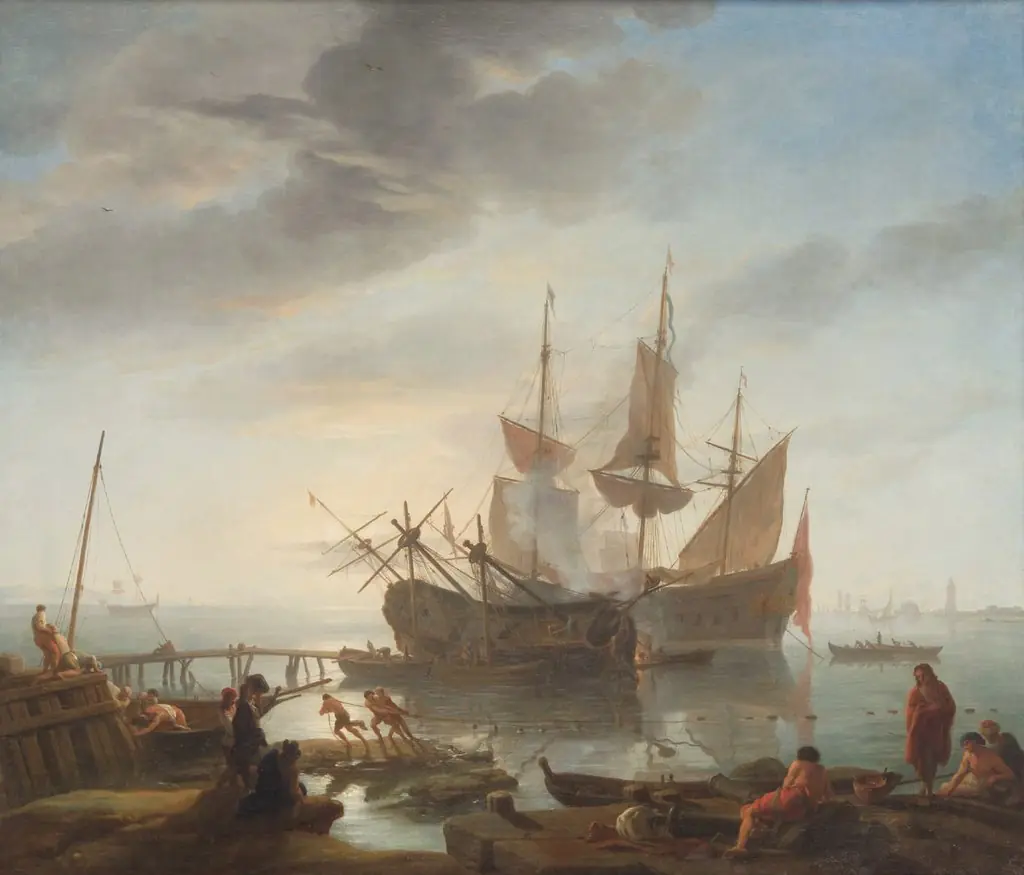
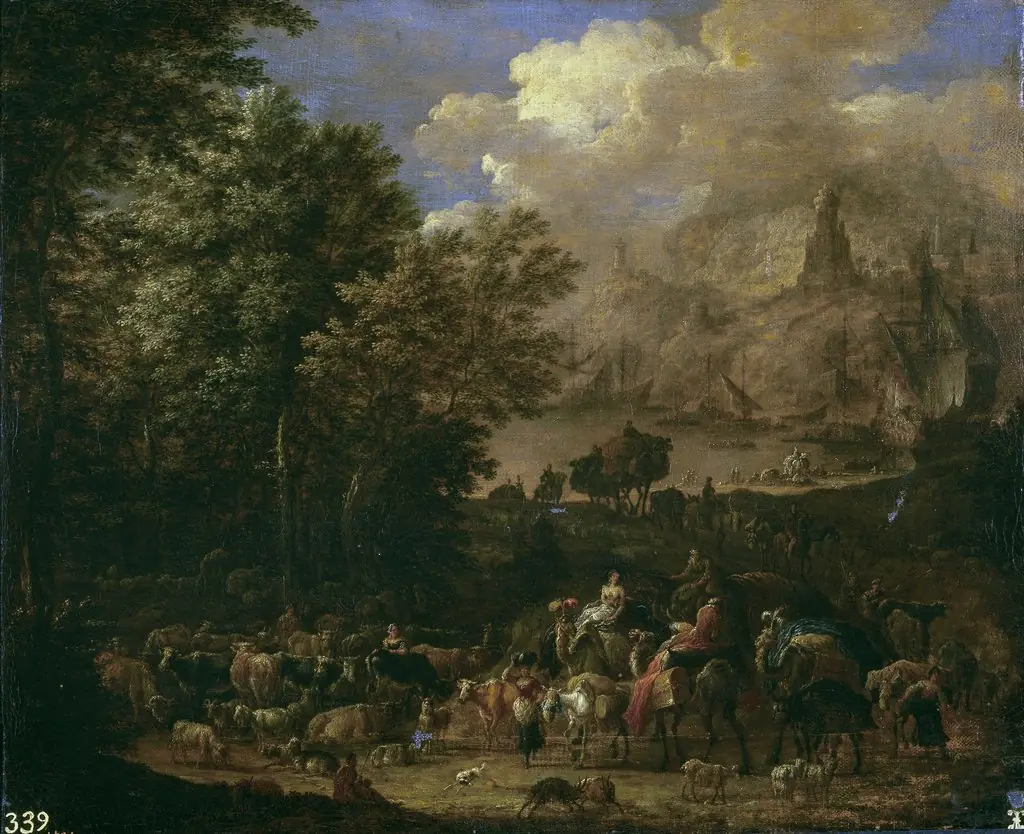
Executed in oil on canvas, the work measures 48 cm in height and 59.5 cm in width. Berchem's handling combines smoothly blended passages with crisp, luminous highlights, particularly on fabrics and architectural edges, while retaining visible, energetic brushwork in foliage and water to convey movement and light. The composition balances warm golden tones against cooler blues and greens, using a restricted palette dominated by ochres, umbers, and lead-tin yellow to evoke Mediterranean sunlight and shade.
The scene's perspectival construction is underpinned by a low horizon and receding orthogonal lines in quayside buildings and rigging, guiding the eye toward the distant harbor mouth. Figures are rendered with quick, assured strokes, their costumes and gestures contributing to an anecdotal yet harmonious narrative amid the architectural and naval setting.
History & Provenance
The painting was created by Nicolaes Pietersz Berchem in 1664 as an oil on canvas landscape.
Its documented provenance begins with Johan van Lanschot of Leiden, recorded by 1753. By inheritance it passed to his son-in-law, Pieter Cornelis van Leyden (1717–1788), then to their son Diederik van Leyden (1744–1810/1811). In 1804 the collection was sold for 100,000 florins to a consortium led by L.B. Coclers, A.J. Paillet, and A. de Lespinasse de Langeac; the sale took place in Paris at Paillet and H. Delaroche on 5–8 November 1804 (1st day, lot 8).
It later belonged to H. Delaroche, John Parke (sold London, 8–9 May 1812, lot 37), John Smith, and John Webb. It was acquired by Chevalier Sébastien Érard, whose estate sale in Paris on 7–14 August 1832 (originally scheduled for 23 April) included the work as lot 62. It was purchased at that sale by Alexis-Nicolas Pérignon for Jonkheer Johan Steengracht van Oostcapelle, passing by inheritance to his son Hendrik and then to his nephew Hendricus Adolphus Steengracht van Duivenvoorde.
The painting was sold from his estate at Galerie Georges Petit, Paris, on 9 June 1913 (lot 4), and subsequently entered a private collection.
The work is now held in the collection of the National Gallery of Art, Washington, D.C. Specific accession numbers and exhibition history are not provided in the available records.
Overview
Nicolaes Pieterszoon Berchem, a prominent Dutch Golden Age artist, painted View of an Italian Port around 1664. This oil on canvas work exemplifies his contribution to the Dutch Italianate landscape tradition, a genre that romanticized the scenery of Italy. The painting depicts a bustling harbor, populated with figures, animals, and vessels, characteristic of the artist's celebrated output.
Subject & Meaning
The composition presents a vibrant Italian port, teeming with activity. Onlookers and travelers on horseback and foot congregate by the water's edge, surrounded by various animals and ships docked or sailing. This depiction reflects the era's fascination with idealized Italian vistas, blending elements of daily life with a picturesque, pastoral sensibility often inspired by Berchem's own experiences or studies of the Italian peninsula.
Context
Berchem was a leading figure among the second generation of Dutch artists who specialized in Italianate landscapes. This genre gained considerable popularity in the Netherlands, offering a romanticized vision of Italy's ancient ruins and idyllic countryside. Berchem's prolific production of such scenes solidified his reputation and influence within this distinct artistic tradition, making him one of its most recognized proponents.
Own this work as a print
Artist & collection
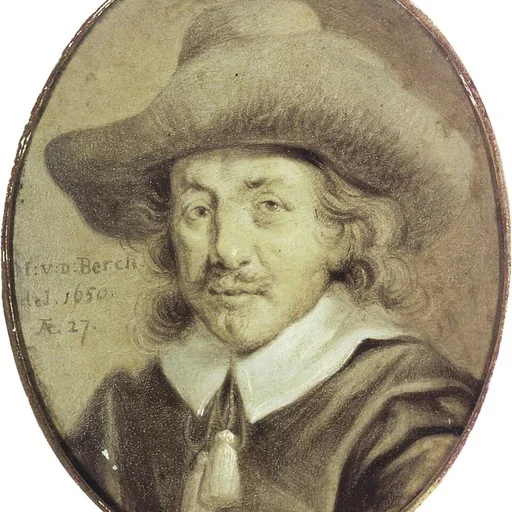
Artist
Nicolaes Pieterszoon Berchem (1 October 1620 – 18 February 1683) was a highly esteemed and prolific Dutch Golden Age painter of pastoral landscapes, populated with mythological or biblical figures, but also of a number of allegories and…