Artwork
Chariot of Apollo
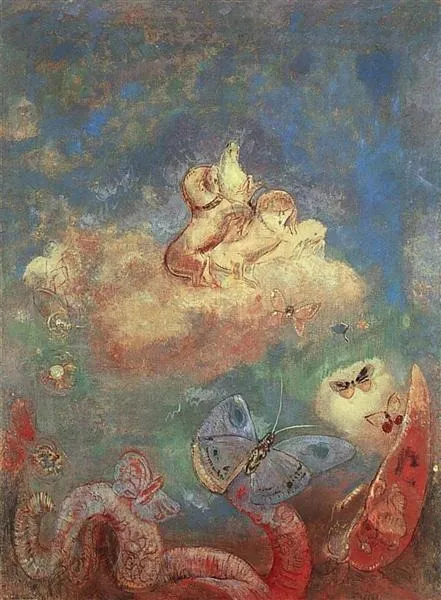
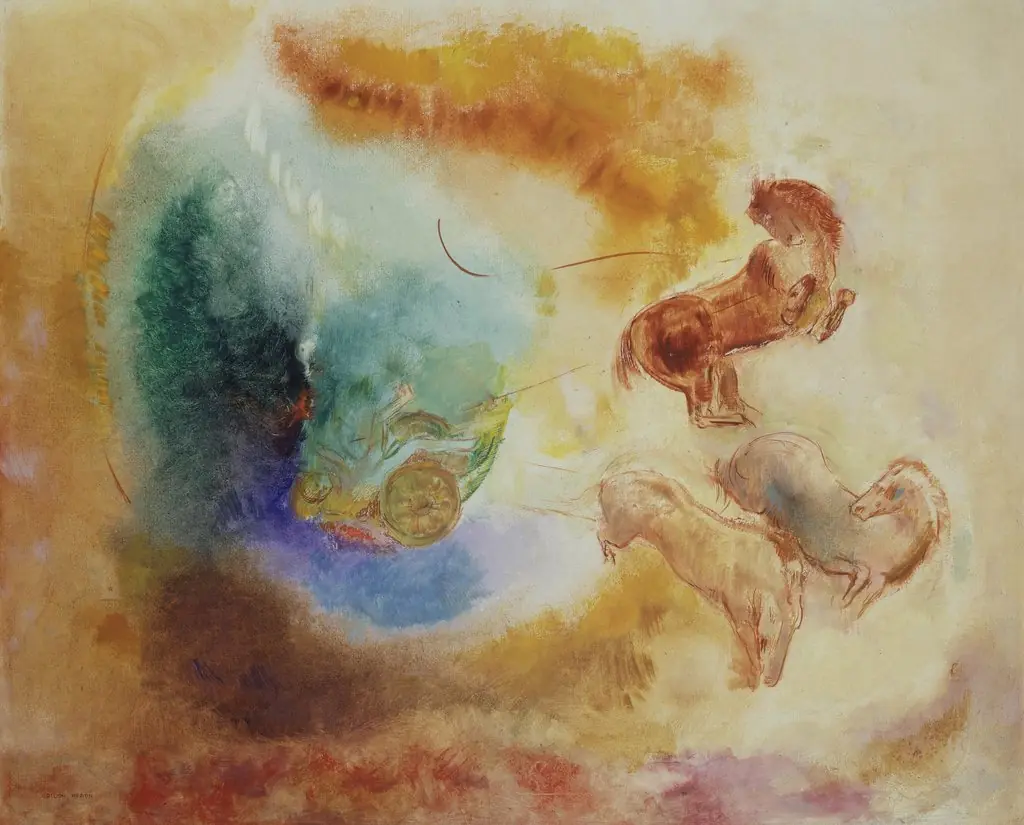
Chariot of Apollo is an oil painting by the Symbolist artist Odilon Redon. It dates from 1912 and is held in the collection of the Museum of Modern Art.
About this work
Overview
This work emerged late in his career, following his transition from monochromatic noirs to vibrant color-based media in the 1890s.
Odilon Redon painted Chariot of Apollo in 1912 using oil on canvas. This work emerged late in his career, following his transition from monochromatic noirs to vibrant color-based media in the 1890s. It reflects his sustained interest in myth and the unseen, blending celestial imagery with delicate, floating forms.
The painting is part of the Museum of Modern Art’s collection, representing a key moment in Symbolist visual language.
Subject & Meaning
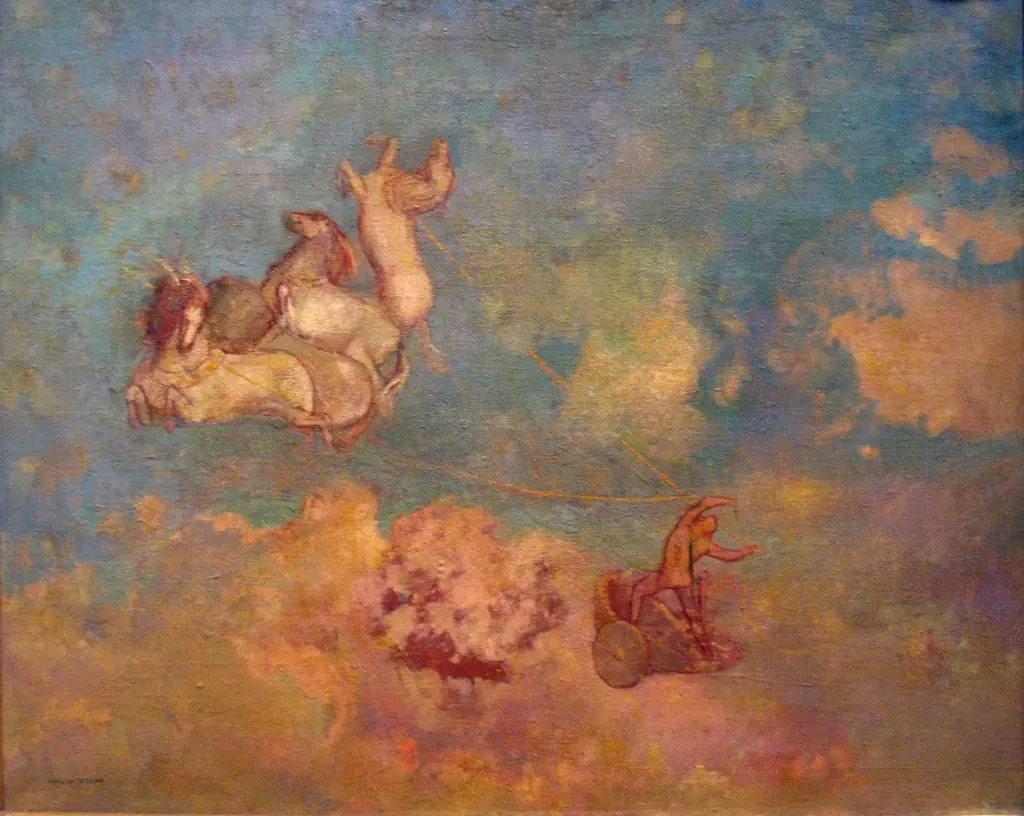
The painting portrays Apollo’s chariot ascending through the heavens, drawn by two horses, surrounded by butterflies and ethereal creatures. Rather than literal myth, Redon evokes a spiritual ascent, the chariot as a vessel of light and transformation. Butterflies, recurring in his work, suggest the soul’s passage between realms. The scene resists clear narrative, inviting contemplation over interpretation.
Technique & Style
Redon employed layered oil paint to create luminous, atmospheric effects. Soft transitions between blue and gray clouds establish depth, while the halo around the chariot radiates with subtle tonal shifts. Brushwork is fluid, suggesting motion without sharp definition.
The integration of delicate, airborne forms with the solid chariot structure balances weight and weightlessness, characteristic of his mature Symbolist style.
History & Provenance
Created in 1912, the painting was made during Redon’s final decade, when he focused almost exclusively on color. It entered the Museum of Modern Art’s collection after his death, reflecting institutional recognition of his late work. Unlike his earlier prints, which circulated widely, this oil painting remained in private hands before its acquisition, marking a shift in how his color works were valued.
Context
In early 20th-century France, Symbolism was waning as modernist movements gained ground. Redon, however, continued exploring inner vision and myth, distancing himself from realism and impressionism. Chariot of Apollo aligns with broader fin-de-siècle interests in transcendence and the metaphysical, yet its quiet intensity sets it apart from more theatrical contemporaries.
Legacy
Redon’s late color works, including this painting, influenced later Surrealists and abstract artists drawn to psychological depth over literal representation. While not widely exhibited in his lifetime, Chariot of Apollo now stands as a testament to his unique synthesis of myth, emotion, and color. It remains a quiet but persistent voice in the evolution of modern symbolic painting.
Artist & collection

Artist
Odilon Redon (born Bertrand Redon; French: ; 20 April 1840 – 6 July 1916) was a French Symbolist draftsman, printmaker, and painter.