Artwork
Pandora
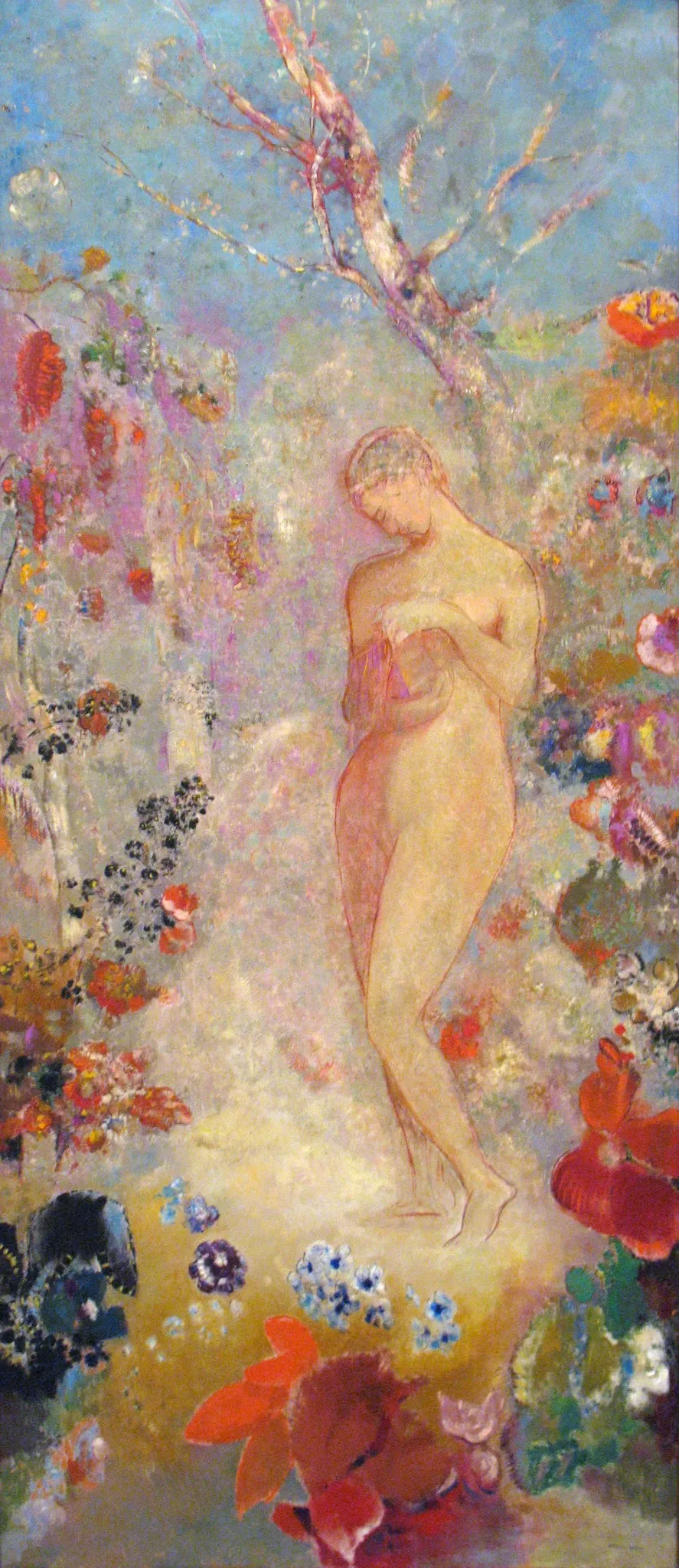
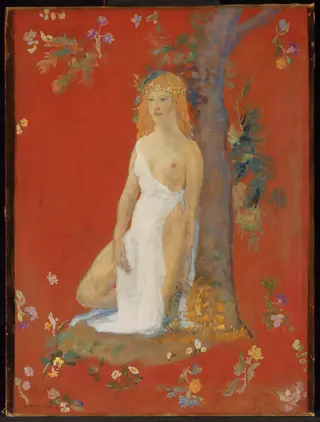
Pandora is an oil painting by the Symbolist artist Odilon Redon. It dates from 1914 and is held in the collection of the Metropolitan Museum of Art.
About this work
Subject & Meaning
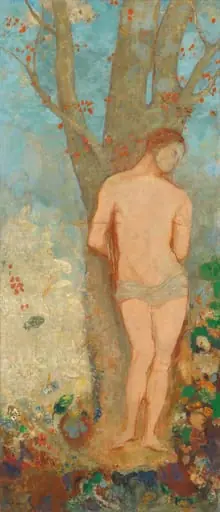
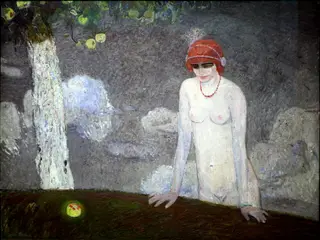
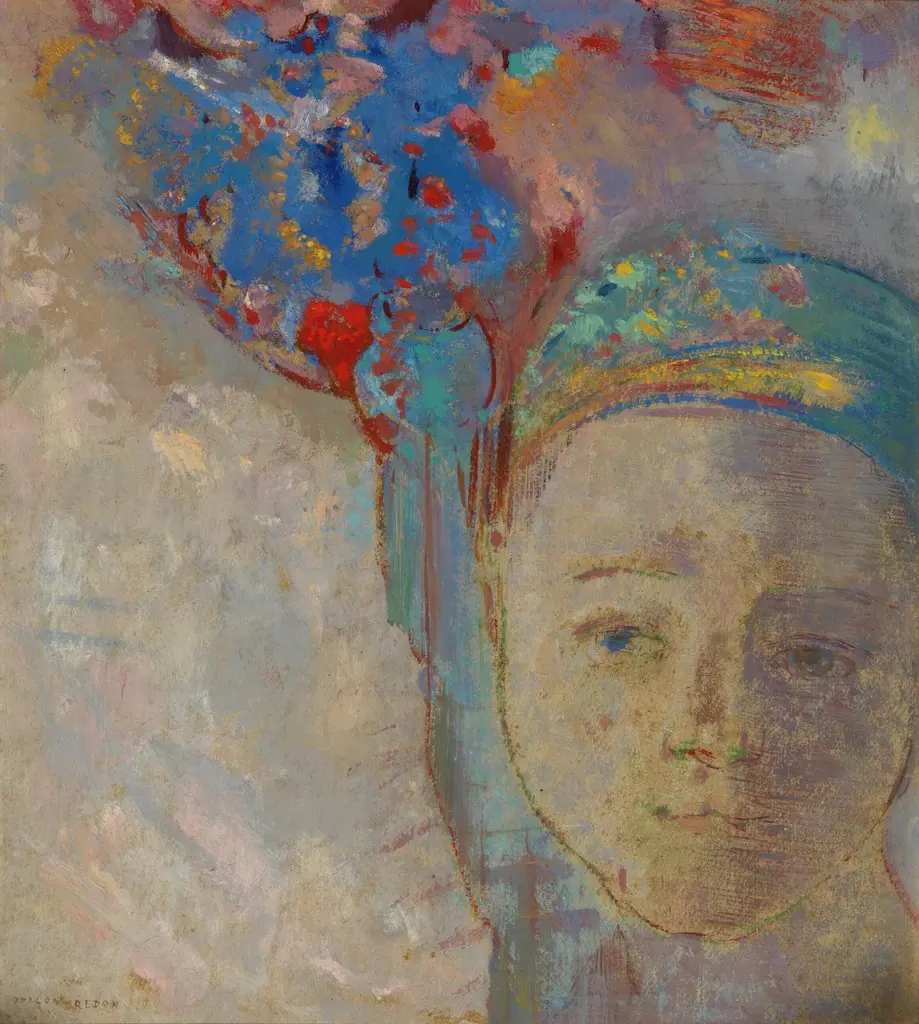
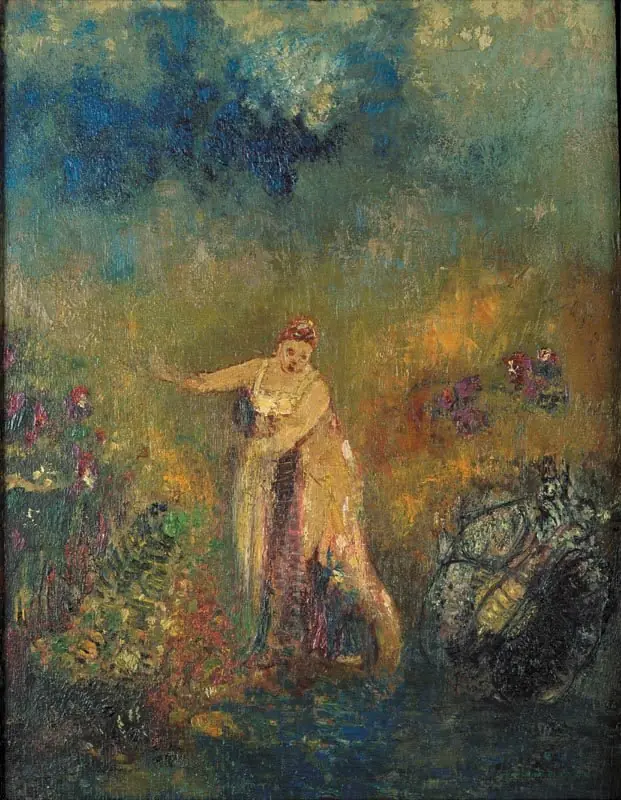
Redon's painting depicts a nude figure alongside a flower, rendered in oil on canvas.
Redon's painting depicts a nude figure alongside a flower, rendered in oil on canvas. In the classical mythological tradition, Pandora, the first woman in Greek myth, is most famously associated with the jar (pithos) and the unleashing of evils upon the world. Redon's pairing of a nude with a bloom evokes this dual register of beauty and latent danger: the flower becomes a contemporary stand-in for the mythological vessel, its petals suggesting both generative abundance and the fragility of what is released.
By 1914, when Redon produced this work, the artist had long been preoccupied with mythological subjects, treating them as vehicles for symbolic resonance rather than narrative description. The vertical, narrow format (143.5 × 62.2 cm) reinforces the figure's emblematic, almost iconic presence, framing her as an emblem of feminine allure and ambiguous promise rather than a specific moment from the myth.
Technique & Style
Pandora is an oil painting executed on canvas, a medium and support consistent with Redon's mature practice. The work takes the form of a tall, narrow vertical composition, measuring 143.5 cm in height by 62.2 cm in width, a pronounced upright format that emphasizes the figure's elongation. Its subject matter combines a nude with flowers, allowing Redon to juxtapose the human form with botanical motifs in a single field. The painting is held in the Metropolitan Museum of Art collection.
No source addresses the painting's specific handling, brushwork, condition, or stylistic classification beyond the identification of medium, support, and dimensions.
History & Provenance
Odilon Redon's Pandora was painted in 1914. It is executed in oil paint on canvas and measures 143.5 by 62.2 centimetres. The painting is held in the collection of the Metropolitan Museum of Art under accession number 60.19.1.
No information on a commissioning party or prior owners before its accession by the Metropolitan Museum of Art is documented in the available sources, and no exhibition history is documented.
Overview
Odilon Redon's painting Pandora, created in 1914, is a notable example of the Symbolist movement. Executed in oil paint, the work features the mythological figure of Pandora within a vibrant floral setting. It reflects a significant phase in the French artist's development, where he moved away from his earlier monochromatic works towards a more colorful and imaginative visual language.
Context
This painting emerged from a pivotal period in Redon's artistic journey. After establishing his reputation with charcoal drawings and lithographs, he transitioned to pastels and oils in the 1890s, fully abandoning his monochromatic style by 1900. Pandora thus represents his later engagement with color and light, aligning with the Symbolist emphasis on subjective experience and evocative imagery.
Artist & collection

Artist
Odilon Redon (born Bertrand Redon; French: ; 20 April 1840 – 6 July 1916) was a French Symbolist draftsman, printmaker, and painter.