Artwork
蔦紅葉図|Autumn Ivy
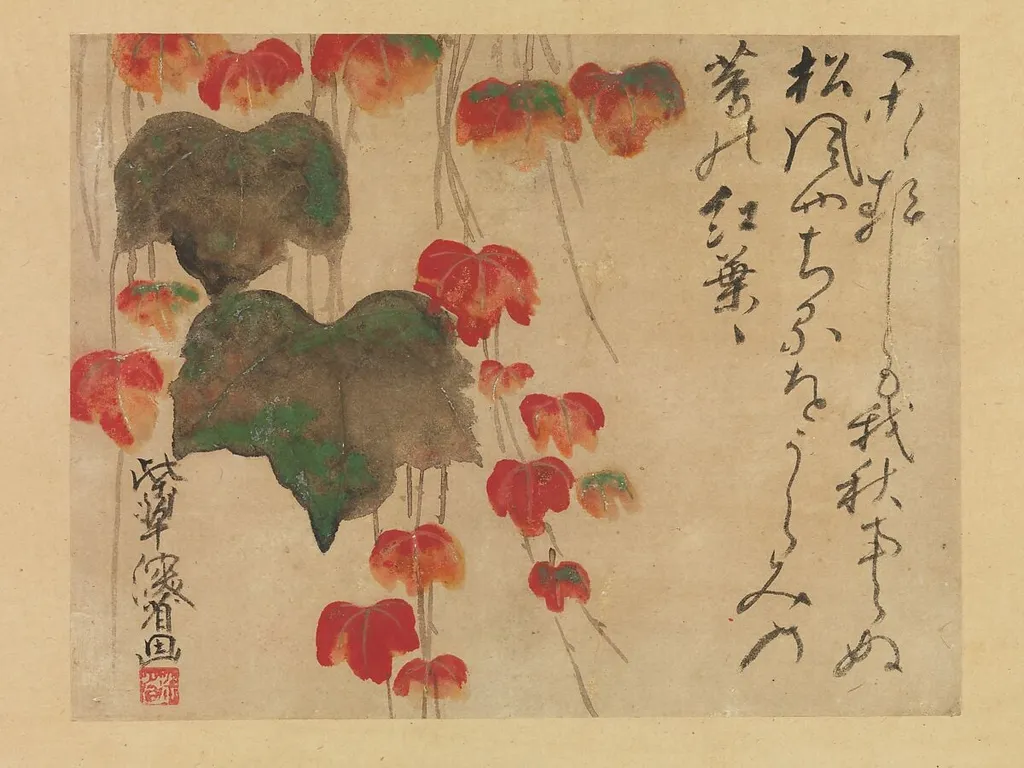
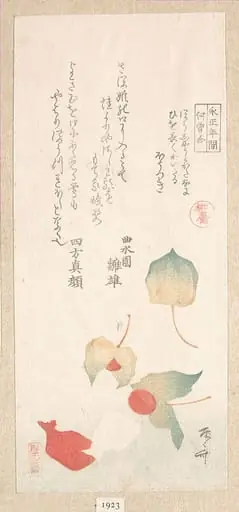
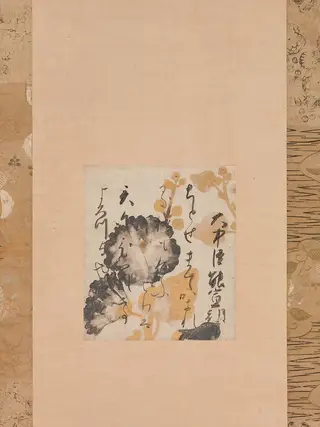
蔦紅葉図|Autumn Ivy is an ink painting by the Baroque artist Ogata Kenzan. It dates from 1732 and is held in the collection of the Metropolitan Museum of Art.
About this work
Subject & Meaning
Through this imagery, the album leaf evokes themes of transience and the passage of time associated with the changing seasons and the wandering monk figure.
The work depicts ivy leaves in their autumnal state, rendered with ink, color, and gold on paper. This botanical subject serves as a visual reference to a specific episode from The Tales of Ise. In the narrative alluded to by the painting, the protagonist meets a transient monk while traveling the path to Mount Utsu.
Through this imagery, the album leaf evokes themes of transience and the passage of time associated with the changing seasons and the wandering monk figure.
Technique & Style
The work titled Autumn Ivy (蔦紅葉図) is an Edo‑period album leaf mounted as a hanging scroll. It is executed in ink, color and gold leaf applied to paper, a technique typical of Japanese painting of the era. The composition presents stylized ivy vines rendered with fine brushwork and subtle gold highlights, referencing a scene from The Tales of Ise in which the protagonist meets a wandering monk on the path to Mount Utsu.
The painting's formal qualities combine delicate line, muted palette and ornamental gold, emphasizing the fleeting beauty of autumn foliage.
History & Provenance
Autumn Ivy (蔦紅葉図) was created by Ogata Kenzan in 1732 during the Edo period. The work is an album leaf mounted as a hanging scroll, executed in ink, color, and gold on paper, and depicts ivy in autumn foliage. Its subject references a scene from The Tales of Ise, evoking a poetic moment in which the protagonist encounters a wandering monk near Mount Utsu.
The painting is held in the collection of the Metropolitan Museum of Art in New York, where it is classified as an Edo period work by Kenzan. The provided sources confirm the institution's custody but do not specify an accession number, nor do they record any exhibitions featuring the work.
Context
Created in 1732 by Ogata Kenzan, Autumn Ivy is a work of the Edo period that exemplifies the artist's use of ink, color, and gold on paper. The painting is notable for its literary allusion, specifically recalling an episode from The Tales of Ise where the protagonist meets a transient monk on the path to Mount Utsu. This integration of poetic narrative with botanical observation situates the piece within the broader tradition of Japanese painting, where visual subjects often serve as vehicles for classical references. It is currently held by the Metropolitan Museum of Art.
Overview
Ogata Kenzan's "Autumn Ivy" is an Edo period painting, originally an album leaf, executed with ink, color, and gold on paper. The work presents a single ivy leaf, vibrant in its autumnal transformation. It subtly references a classical literary episode from The Tales of Ise, where a traveler encounters a monk on Mount Utsu, imbuing the natural subject with narrative depth and contemplative beauty.
Artist & collection